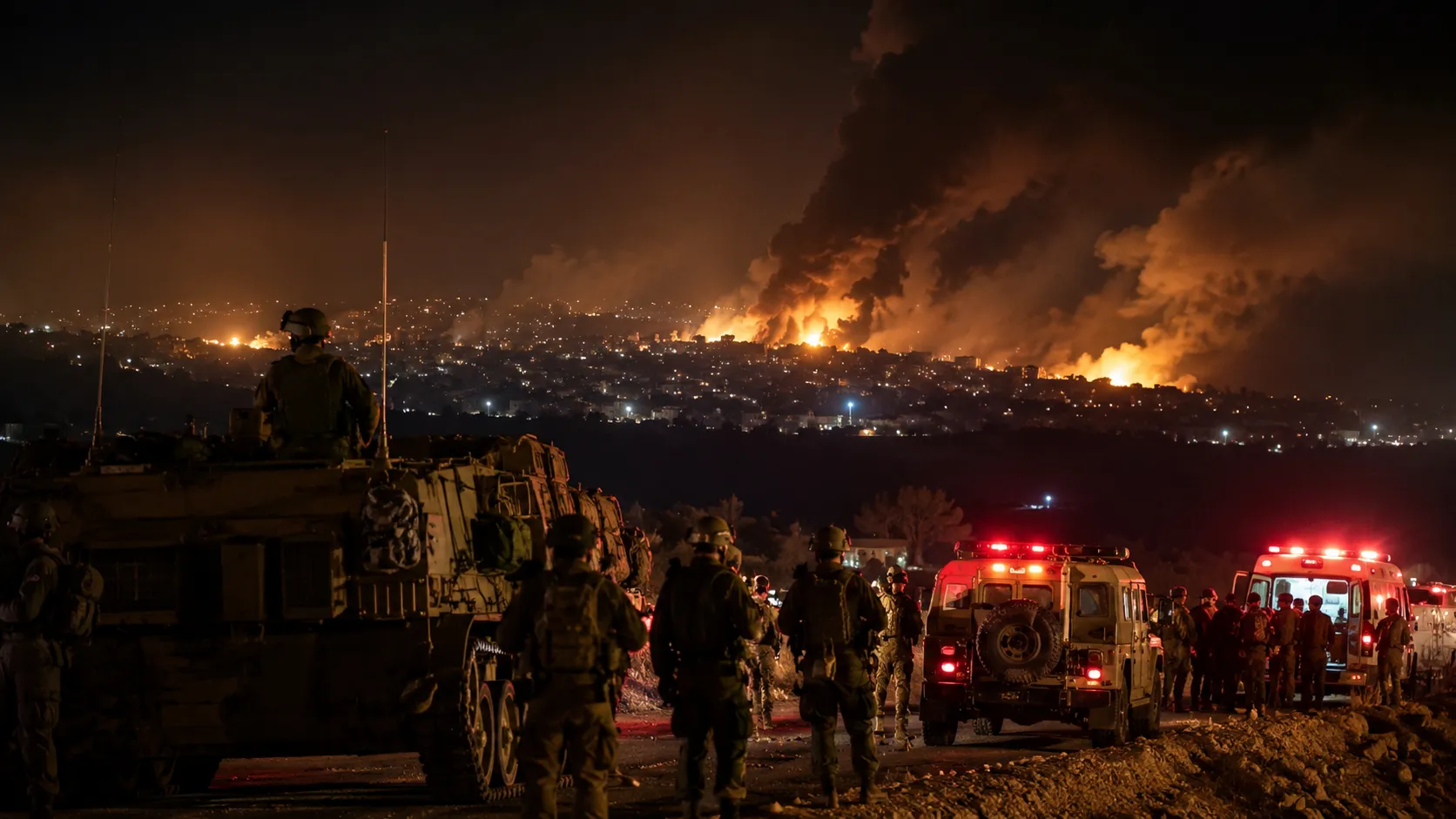
Nine People, Including Lebanese Army Officers, Were Killed In Israeli Strikes This Week. The Incident Highlights How Ceasefires Can Exist On Paper While Conflict Continues On The Ground.
Just days after Israel and Lebanon announced a U.S.-brokered ceasefire framework, violence returned to southern Lebanon.
Israeli airstrikes killed nine people, including three members of the Lebanese Armed Forces—a brigadier general, a captain and another soldier—in one of the most serious incidents involving Lebanon's military since the latest ceasefire efforts began. Lebanese officials condemned the attacks as violations of sovereignty and accused Israel of undermining ongoing peace efforts. Israel acknowledged carrying out strikes but said the intended targets were suspected Hezbollah operatives rather than Lebanese military personnel.
At first glance, the incident appears to be another ceasefire violation in a region accustomed to conflict.
The reality is more complicated. The latest fighting exposes a recurring problem that has defined much of the Middle East's modern history. Agreements may be signed by governments, but wars often involve multiple actors with different objectives, loyalties and strategic calculations. When those interests diverge, ceasefires can become less a permanent solution and more a temporary pause between rounds of fighting.The deaths of Lebanese army officers have therefore become symbolic of a larger failure.The Lebanese military was expected to play a central role in implementing the ceasefire by expanding state control in southern Lebanon and reducing the influence of armed non-state groups. Instead, its personnel have become casualties of a conflict they were supposed to help contain.
The Ceasefire Was Fragile From The Beginning
The latest agreement was never a traditional peace treaty.
Rather than representing a comprehensive settlement, the arrangement focused on reducing hostilities and creating conditions for future negotiations. Under the proposal, Lebanese state forces would gradually assume greater control in designated areas while Hezbollah would reduce its military presence. Israel, meanwhile, maintained that it would continue acting against what it considered immediate security threats.
That structure created obvious challenges.
A ceasefire is easier to enforce when all major combatants agree to its terms. In this case, Hezbollah rejected key aspects of the proposal and publicly criticized the agreement. Israeli officials simultaneously insisted they would continue military operations against perceived threats regardless of the diplomatic framework. The result was a ceasefire that reduced some violence without fully eliminating the conditions that produced it. This helps explain why the region never experienced the sense of stability usually associated with successful peace agreements.Military activity continued, tensions remained high and both sides accused each other of violations almost immediately after negotiations concluded.
Lebanon Is Caught Between Regional Powers
One reason the conflict remains difficult to resolve is that Lebanon's crisis extends beyond Lebanon itself.
The country's southern border has increasingly become part of a wider geopolitical confrontation involving Israel, Iran, Hezbollah and the United States. Decisions made in Tehran, Jerusalem and Washington often influence events inside Lebanon as much as decisions made in Beirut. This reality complicates efforts by Lebanese leaders attempting to restore stability and strengthen state institutions.
The situation has become particularly sensitive because Hezbollah occupies a unique position within Lebanese society.
The organization functions simultaneously as a political movement, a military force and an Iranian regional ally. Supporters view it as a resistance movement capable of defending Lebanon against Israeli military action. Critics argue that its independent military capabilities undermine state sovereignty and expose the country to repeated cycles of conflict. These competing perspectives make consensus extremely difficult even within Lebanon itself. The recent strikes therefore represent more than a security incident.They reflect a broader struggle over who ultimately controls Lebanon's security future: the state, Hezbollah or external regional powers.
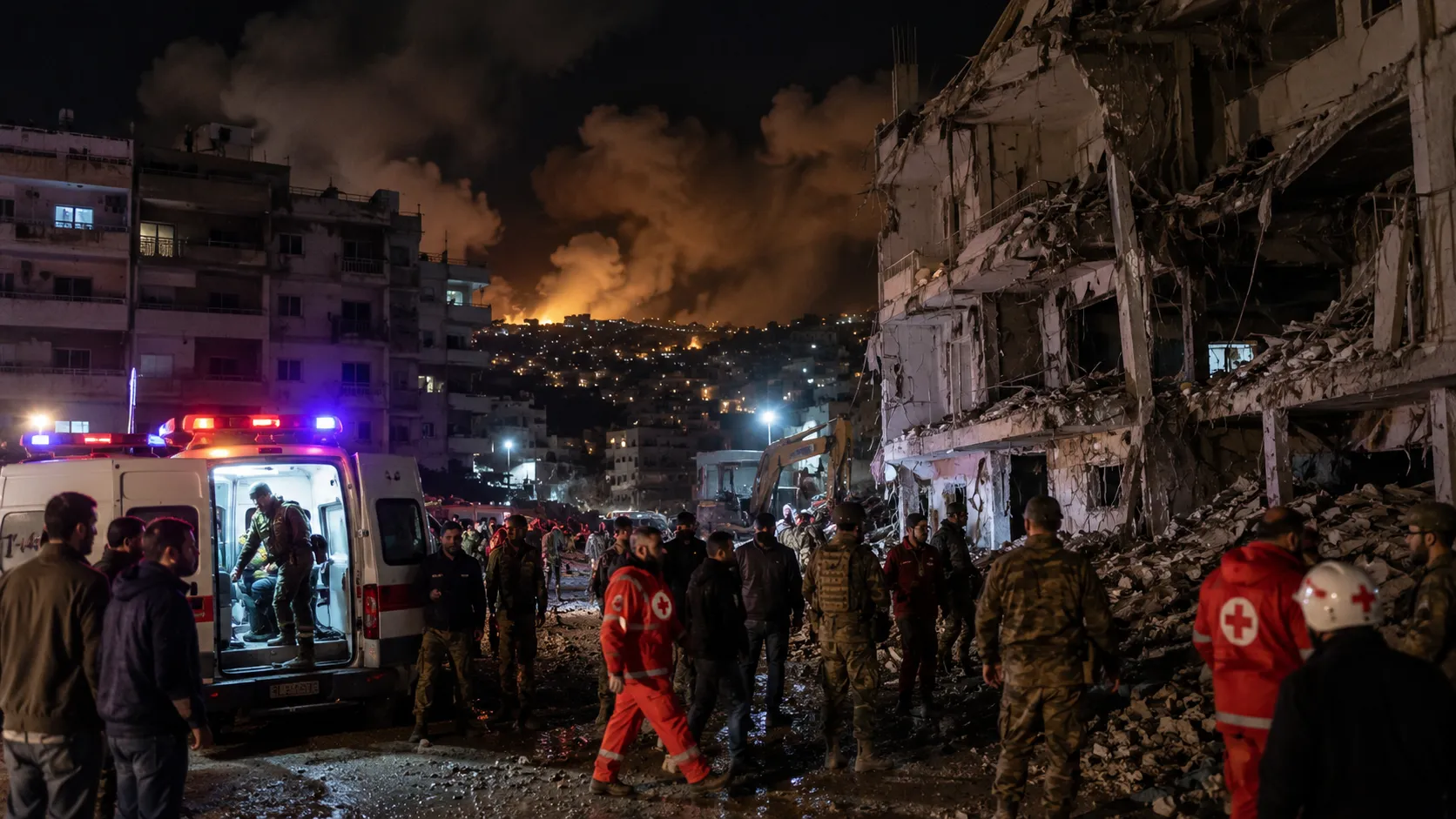
The Human Cost Continues To Rise
While diplomatic discussions focus on military strategy and geopolitical calculations, civilians continue bearing the consequences.
The broader conflict has displaced more than a million people across Lebanon and caused thousands of deaths since hostilities escalated earlier this year. Entire communities in southern Lebanon have been emptied as residents flee advancing military operations and repeated airstrikes. Infrastructure damage has expanded while hospitals, emergency services and local governments struggle to cope with growing humanitarian pressures.
The deaths of army officers have drawn particular attention because they symbolize the erosion of institutions intended to preserve stability.
When soldiers responsible for implementing peace become casualties of ongoing violence, confidence in the political process inevitably weakens. For many Lebanese citizens, the incident reinforces fears that negotiations alone may not be sufficient to end the conflict. That uncertainty has become one of the defining features of the current crisis.Communities hoping for a return to normal life remain caught between ceasefire announcements and renewed military operations.
Why The Incident Matters Beyond Lebanon
The significance of the strikes extends beyond the immediate casualties.
The Middle East is currently experiencing one of its most volatile periods in years, with tensions involving Israel, Iran, Hezbollah and the United States overlapping across multiple fronts. Any escalation in Lebanon risks affecting broader regional stability, particularly as diplomatic efforts continue regarding Iran and wider security arrangements throughout the region.
Investors, governments and energy markets are all watching developments closely.
The region remains critical to global trade routes, energy supplies and international security. Prolonged instability can influence everything from oil prices to shipping costs and diplomatic relations between major powers. Events that might once have been viewed as localized confrontations increasingly carry international implications.This is one reason global attention remains focused on southern Lebanon despite numerous competing crises elsewhere.The conflict sits at the intersection of several larger geopolitical struggles unfolding simultaneously.
The Bigger Story
The deaths of nine people, including Lebanese army officers, are tragic in their own right.
But the larger story is about the limits of diplomacy when political agreements fail to address underlying power struggles. The latest ceasefire was designed to create breathing room for negotiations. Instead, it has revealed how difficult it remains to separate local conflicts from broader regional rivalries.
Peace agreements can stop fighting temporarily.
They cannot automatically resolve questions about sovereignty, security, political influence and regional power. Until those issues are addressed, ceasefires may continue to function as pauses rather than solutions.And that may be the most troubling lesson from the latest violence in Lebanon.The region is not struggling to negotiate peace.It is struggling to create conditions where peace can survive.