What Started As A Small Pre-Match Confusion Between Gujarat Titans And Rajasthan Royals Quickly Turned Into A Massive Debate About Fairness, Match Protocols And The Growing Pressure Around High-Stakes Cricket
The IPL 2026 Qualifier 2 between the Gujarat Titans and Rajasthan Royals was supposed to be remembered for its playoff intensity, Shubman Gill’s captaincy and Rajasthan’s remarkable season. Instead, before a single ball was bowled, the match produced one of the most unusual controversies of the tournament. A rare double-toss incident created confusion among players, broadcasters and fans, immediately becoming the dominant discussion across social media and cricket circles. What normally lasts less than a minute suddenly became the defining talking point of the evening.
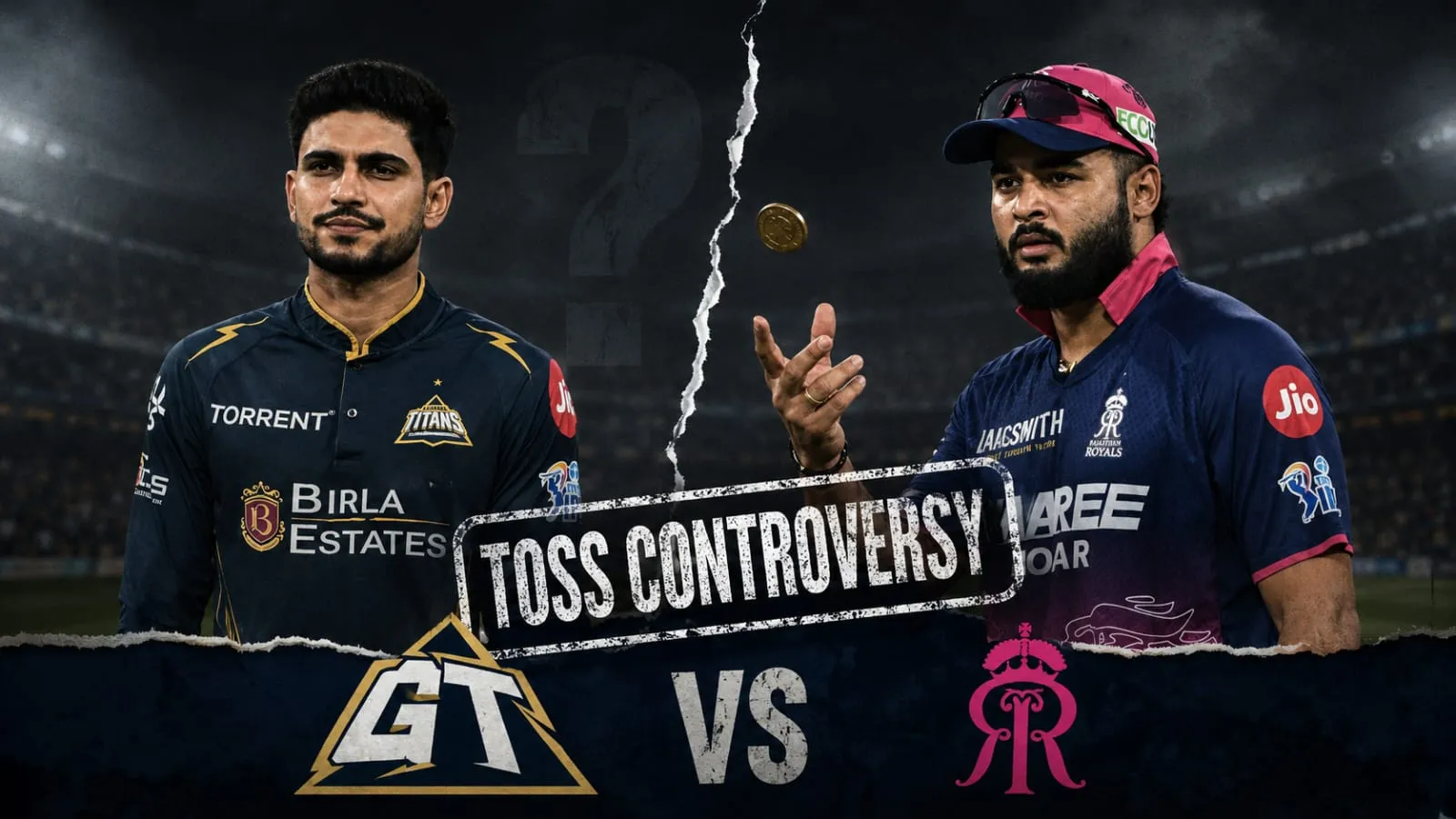
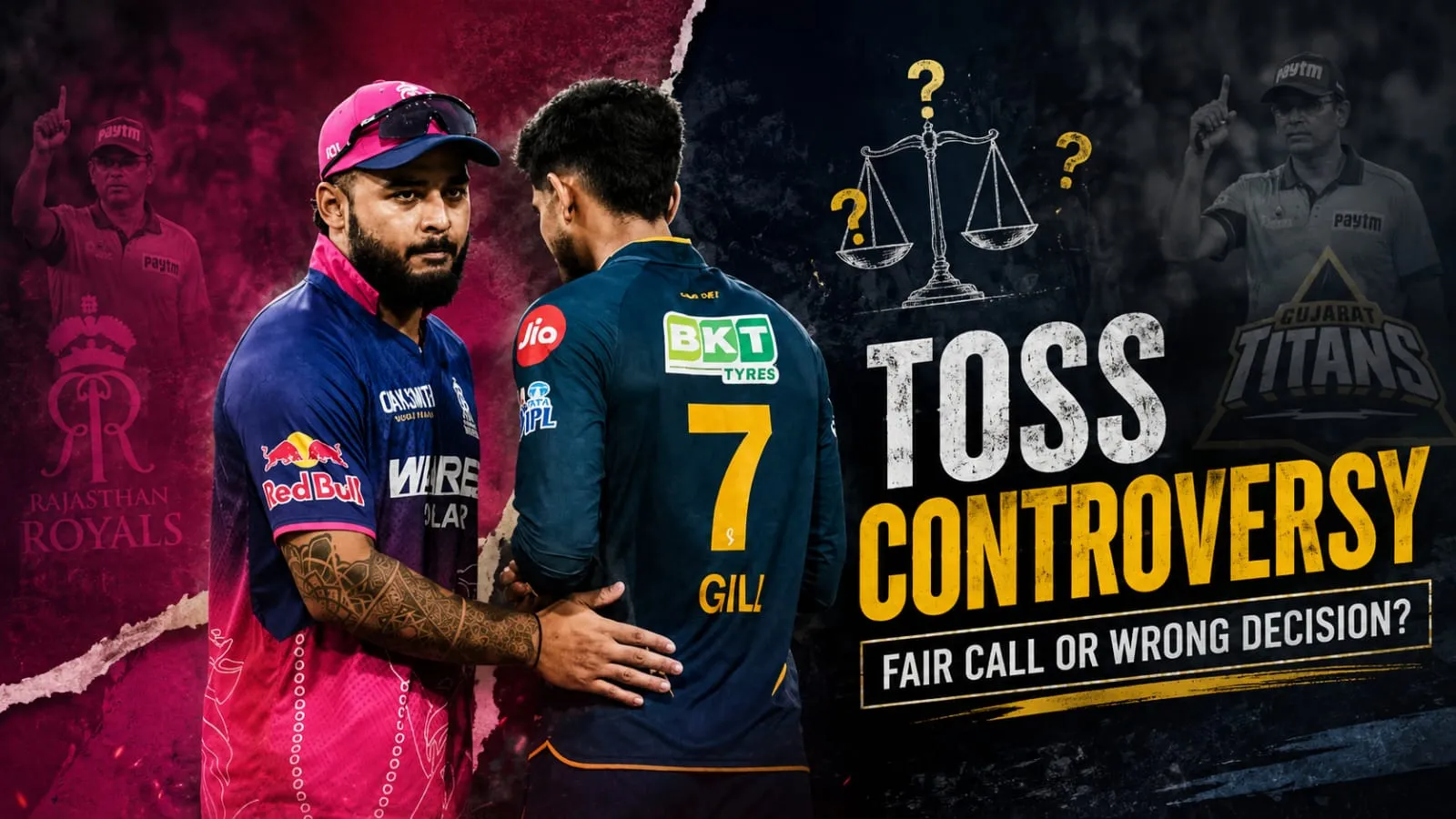
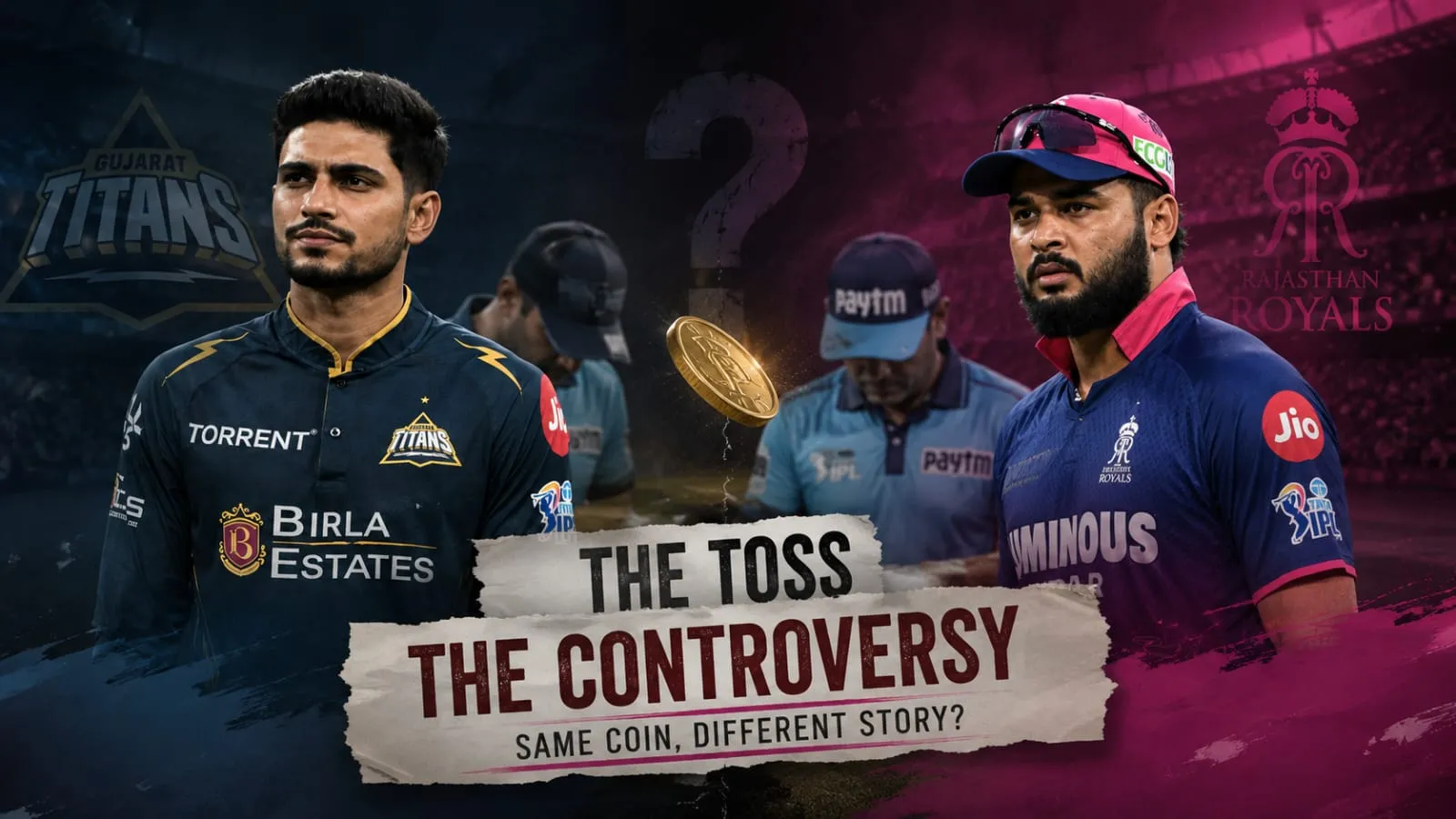
The controversy began during the official toss ceremony. Gujarat Titans captain Shubman Gill flipped the coin while Rajasthan Royals captain Riyan Parag made the call. The coin reportedly landed in Gujarat’s favor, appearing to give Gill the toss win. However, match referee Prakash Bhatt stated that he had not clearly heard Parag’s call because of the noise and confusion around the moment. As a result, officials decided that the toss could not be considered valid and ordered an immediate re-toss before the first result was officially recorded.
The second toss completely changed the outcome.
This time Parag made his call clearly and Rajasthan Royals won the toss. The team immediately chose to bat first, reversing what appeared to be Gujarat Titans’ earlier advantage. Television cameras captured visible frustration from Shubman Gill, who looked surprised by the decision to repeat the toss. Within minutes, clips of the incident spread across social media platforms, with fans debating whether the re-toss was justified and whether better procedures should exist for such situations.
The reason the incident became so significant is because tosses carry enormous strategic importance in modern T20 cricket.
While a toss may seem like a simple formality, teams often build their match plans around conditions, dew, pitch behavior and chasing advantages. In knockout matches, where a single result can end an entire season, even small procedural controversies attract intense scrutiny. Many fans argued that once the coin had landed, the result should have stood. Others defended the officials, pointing out that if the referee could not confirm the original call, a re-toss was the only practical solution available.
The incident also revived memories of earlier toss controversies in cricket history.
Observers quickly compared it to the famous 2011 ODI World Cup final toss between India and Sri Lanka, where crowd noise created confusion regarding Kumar Sangakkara’s call and forced officials to repeat the toss. Similar situations have occurred in domestic and international cricket over the years, but they remain extremely rare because toss procedures are usually straightforward and carefully managed. The Qualifier 2 incident reminded viewers that even one of cricket’s simplest traditions can become controversial under pressure.
The online reaction was immediate and enormous.
Fans flooded social media with slow-motion videos, screenshots and debates about whether Gujarat Titans had been unfairly treated. Some viewers believed Rajasthan Royals had gained an unintended advantage through the re-toss, while others argued that the officials simply followed protocol once uncertainty emerged. Sports creators, cricket pages and commentators amplified the discussion further, turning the toss itself into one of the biggest IPL talking points of the week. The controversy generated almost as much engagement as the match that followed.
Ironically, the actual result of the match dramatically changed the narrative.
Despite losing the re-toss and the accompanying controversy, Gujarat Titans produced one of their strongest performances of the season. Rajasthan Royals posted a massive total after a brilliant innings from teenage sensation Vaibhav Sooryavanshi, but Gujarat responded with a dominant chase led by a spectacular century from Shubman Gill. The Titans eventually secured a convincing seven-wicket victory and booked their place in the IPL 2026 final.
That outcome ultimately prevented the controversy from becoming even larger.
Had Gujarat lost the match, the re-toss would likely have remained a major point of dispute for weeks because fans would have linked the result directly to the decision. Instead, Gujarat’s victory removed much of the competitive impact from the incident. While supporters continued debating the fairness of the process, the match result itself ensured that the controversy remained more symbolic than consequential. Rajasthan benefited from the re-toss result, but they were unable to convert that advantage into a victory.
The larger impact of the incident lies in what it revealed about modern sports culture.
Every moment in major tournaments is now recorded, clipped, analyzed and debated in real time. A procedural decision lasting only a few seconds can dominate digital conversations because fans increasingly experience sport through social media as much as through the match itself. The double-toss controversy became a perfect example of how quickly small moments can transform into national discussions when millions of viewers are watching simultaneously.
The episode may also push organizers to examine match protocols more closely.
Many fans and analysts suggested that officials should use clearer verbal confirmations or additional audio support during tosses to avoid similar situations in the future. While the controversy did not change the tournament outcome, it exposed how avoidable confusion can overshadow major sporting events and shift attention away from the cricket itself. In the end, the Qualifier 2 toss controversy did not eliminate Gujarat Titans or decide the match. What it did create was one of the most discussed moments of IPL 2026. A routine pre-match ritual suddenly became a national talking point, sparked debates about fairness and highlighted how every detail in modern cricket is scrutinized under the spotlight.
And for a few hours, the most dramatic battle of the evening happened before the first ball was even bowled.