New Delhi: India's retail inflation surged to an eighteen-month high of 4.38 percent in June, driven primarily by rising food and fuel prices, according to the latest Consumer Price Index data released by the government's statistical authorities. The reading marks a notable acceleration from previous months and represents the highest level of consumer price inflation recorded in the country since the early part of 2025, adding a fresh and complicating dimension to the Reserve Bank of India's ongoing efforts to balance growth support with price stability amid an increasingly challenging global backdrop.
The uptick in inflation comes at a particularly delicate moment for Indian policymakers, who have spent much of 2026 navigating a complex set of crosscurrents, including a weakening rupee, volatile global crude oil prices driven by escalating tensions in the Middle East, and slowing but still-resilient domestic economic growth. The convergence of these pressures is now beginning to show up unmistakably in the inflation data, raising fresh questions about the trajectory of monetary policy through the remainder of the fiscal year.
WHAT IS DRIVING THE INFLATION SURGE
The June inflation print reflects the combined impact of several distinct but interconnected pressures. On the food front, price increases across key staples and vegetables have contributed meaningfully to the overall inflation reading, a pattern that economists have partly attributed to seasonal factors but also to broader concerns about the trajectory of this year's monsoon, which carries significant implications for agricultural output and, by extension, food prices in the months ahead. Any shortfall in monsoon rainfall relative to historical norms tends to feed through into higher food prices with a lag, as reduced agricultural output constrains supply even as demand for staples remains relatively inelastic.
On the fuel front, the primary driver has been the sustained increase in global crude oil prices stemming from the ongoing conflict between the United States and Iran, which has repeatedly disrupted shipping through the Strait of Hormuz, one of the world's most critical energy chokepoints. As a heavily oil-import-dependent economy, India's domestic fuel prices are directly and immediately sensitive to movements in global crude benchmarks, and the sustained elevation in prices through much of 2026 has begun to feed through into transportation costs, which in turn cascade into the prices of a wide range of goods and services that rely on road and rail freight for distribution across the country.
Compounding these direct price pressures is the continued weakness of the Indian rupee against the US dollar, which has been trading near record-low levels through much of the year. A weaker rupee increases the domestic currency cost of imported goods, including not just crude oil but also a range of other imported inputs used across Indian manufacturing and consumer goods sectors, adding a further layer of imported inflation to the domestic price picture.
RBI'S DELICATE BALANCING ACT
The Reserve Bank of India's Monetary Policy Committee, which has maintained the benchmark repo rate at 5.25 percent through recent policy meetings while adopting a neutral stance, now faces an increasingly complex set of trade-offs as it weighs its next moves. The central bank had, in its most recent policy review, already lowered its GDP growth projection for the current fiscal year to 6.6 percent from an earlier estimate of 6.9 percent, explicitly citing the drag from elevated energy prices and broader global uncertainty. The fresh inflation data now adds pressure from the opposite direction, potentially constraining the central bank's room to consider rate cuts as a means of supporting growth, even as the case for monetary easing appeared to be building in earlier parts of the year.
This is precisely the kind of stagflationary pressure — slowing growth combined with rising inflation — that central banks globally find most challenging to navigate, as the conventional policy tools available to address either concern individually tend to work at cross purposes with the other. Cutting interest rates to support growth risks further fuelling inflationary pressures, particularly given the currency's sensitivity to interest rate differentials with other major economies, while raising rates or maintaining a tighter stance to combat inflation risks further dampening an already moderating growth trajectory.
Economists tracking the RBI's policy deliberations have noted that the central bank's own inflation projections for FY27 had already been revised upward in recent assessments, reflecting a recognition that the combination of elevated crude prices and rupee weakness was likely to keep imported inflation pressures elevated through the year, even as domestic core inflation, stripped of volatile food and fuel components, has remained comparatively more contained.
IMPLICATIONS FOR ORDINARY INDIANS
Beyond the technical policy debate, the practical implications of rising inflation are being felt directly by Indian households, particularly those in lower and middle-income brackets who spend a disproportionately large share of their budgets on food and fuel, the very categories driving the current inflation surge. Rising transportation costs, driven by higher fuel prices, tend to have particularly broad-based effects across the economy, as they feed into the price of virtually every good that must be moved from producer to consumer, amplifying the inflationary impact well beyond the direct cost of fuel itself.
For a country where a significant proportion of the population continues to operate with limited financial buffers against sudden price increases, sustained inflation in essential categories like food and fuel carries meaningful implications for household welfare and consumption patterns. Policymakers have historically been acutely sensitive to this dynamic, given the political and social significance attached to the affordability of essential goods in India's broader public discourse.
THE MONSOON WILDCARD
A critical variable that will significantly influence the trajectory of inflation over the coming months is the performance of this year's monsoon season. India's agricultural sector remains heavily dependent on monsoon rainfall, and any significant deviation from normal rainfall patterns — whether a deficit that constrains agricultural output or excessive rainfall that damages standing crops — carries the potential to meaningfully affect food price trajectories in the second half of the fiscal year.
Weather-related uncertainty has been explicitly flagged by independent economic assessments, including a recent Deloitte India Economic Outlook report, as a key downside risk to both the growth and inflation outlook for the current fiscal year, with particular emphasis on the potential impact of adverse weather patterns on agricultural output and, by extension, food price stability. Policymakers will be watching monsoon progress closely over the coming weeks, given its outsized influence on the inflation trajectory heading into the crucial festive season, when consumption patterns typically see a significant seasonal uptick.
MARKET IMPLICATIONS
The higher-than-expected inflation reading is likely to feature prominently in market participants' assessments of the RBI's next policy moves, with implications that extend across equity, currency, and fixed income markets. Bond markets, in particular, tend to be highly sensitive to inflation surprises, given the direct relationship between inflation expectations and the trajectory of interest rates. A sustained upward trend in inflation readings could see bond yields drift higher as markets price in a reduced likelihood of near-term monetary easing, with corresponding implications for the cost of borrowing across the broader economy.
For equity markets, the inflation data adds to an already complex mix of factors that investors are weighing, including the ongoing geopolitical volatility stemming from the Middle East conflict, the ongoing Q1 FY27 corporate earnings season, and broader questions about the trajectory of global growth. Rate-sensitive sectors, including real estate, automobiles, and consumer durables, which tend to benefit disproportionately from lower borrowing costs, may face a more challenging environment if the inflation data reduces the likelihood of near-term rate cuts.
LOOKING AHEAD
As India navigates this increasingly complex inflation picture, the coming months will be critical in determining whether the current uptick proves to be a transient phenomenon driven primarily by external factors, including the Middle East conflict's impact on oil prices, or the beginning of a more sustained period of elevated price pressures that could force policymakers into a more challenging set of trade-offs between supporting growth and containing inflation.
Much will depend on factors largely outside India's direct control, including the trajectory of the US-Iran conflict and its impact on global oil prices, as well as the performance of this year's monsoon season, both of which carry the potential to significantly influence the inflation path over the coming quarters. For now, the eighteen-month high inflation reading serves as a stark reminder of just how interconnected India's domestic price stability has become with developments in far-flung corners of the globe, from the shipping lanes of the Persian Gulf to the weather patterns that determine the fate of the country's agricultural harvest.
HOW INDIA'S INFLATION COMPARES GLOBALLY
Placed in a global context, India's current inflation reading of 4.38 percent remains comparatively moderate when measured against the historical experience of several other major economies that have grappled with considerably more severe inflationary episodes in recent years. Nonetheless, the trajectory of the increase, coming from a base of considerably lower readings earlier in the fiscal year, has drawn attention precisely because it represents a meaningful deviation from the disinflationary trend that had characterised much of the preceding period, when easing food prices and moderating global commodity costs had allowed inflation to settle comfortably within the Reserve Bank of India's target band.
Economists have cautioned against complacency simply because the headline number remains within a range that many would consider manageable by historical standards, arguing that the underlying trajectory and the specific drivers behind the increase, particularly the externally-driven fuel price component tied to the volatile Middle East situation, matter as much as the absolute level of inflation itself when assessing the appropriate policy response. A rapidly accelerating trend, even from a moderate base, can quickly evolve into a more serious inflationary challenge if the underlying drivers, in this case elevated crude prices and rupee weakness, continue to persist or intensify over successive months.
SECTORAL IMPACT ACROSS THE INDIAN ECONOMY
The inflationary pressures evident in the June data are likely to have differentiated effects across various sectors of the Indian economy. Consumer-facing businesses, particularly those in the fast-moving consumer goods space, have historically faced a difficult balancing act during periods of rising input costs, weighing the need to protect profit margins against the risk that price increases passed on to consumers could dampen demand, particularly among price-sensitive segments of the population who represent a substantial share of the overall consumer base for many mass-market products.
The transportation and logistics sector, given its direct and immediate exposure to fuel costs, has been among the most visibly affected by the current inflationary environment, with freight operators and logistics companies facing margin pressure that many have sought to partially offset through fuel surcharges passed on to their customers, a practice that itself contributes to the broader cascading effect of fuel price inflation across the wider economy as these surcharges filter through to the final prices of goods transported using affected logistics networks.
Real estate and construction, sectors that are simultaneously exposed to input cost inflation through materials like cement and steel, as well as to broader interest rate trends that influence buyer affordability, represent another area where policymakers and industry participants are watching the inflation and monetary policy trajectory closely, given the sector's outsized importance to both employment generation and its role as a bellwether for broader consumer and investor confidence in the Indian economy.
WHAT ECONOMISTS ARE WATCHING NEXT
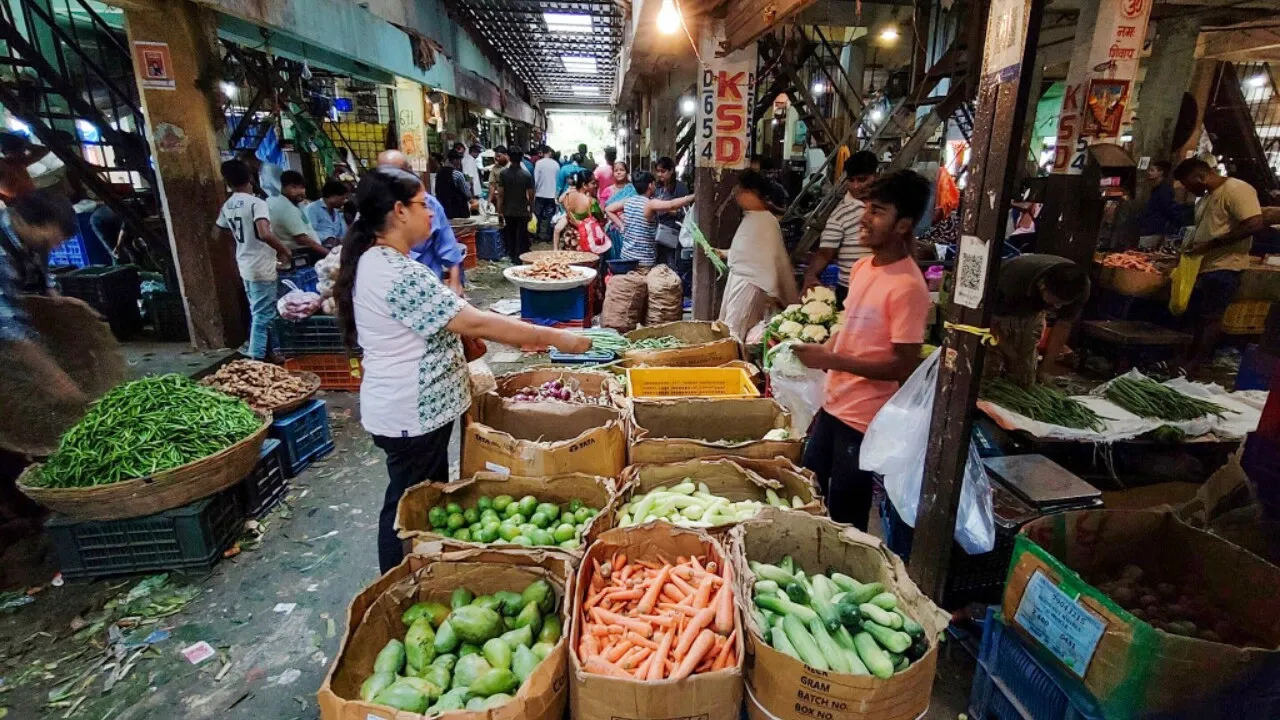
Looking ahead, economists tracking India's inflation trajectory have identified several key data points and developments that are likely to prove decisive in shaping the path of prices over the coming months. Foremost among these is the progress and eventual outcome of the current monsoon season, given its outsized historical influence on food price trends, which typically represent the single largest component of India's consumer price index basket and therefore exert a disproportionate influence on the headline inflation reading.
Equally important will be the trajectory of global crude oil prices, which remains almost entirely a function of how the ongoing conflict between the United States and Iran evolves over the coming weeks and months. Any further escalation that meaningfully disrupts shipping through the Strait of Hormuz carries the potential to push crude prices, and by extension Indian fuel and broader inflation readings, meaningfully higher, while a genuine and durable diplomatic resolution could provide welcome relief on this front, allowing the Reserve Bank of India greater latitude to focus its policy attention on supporting the growth side of its dual mandate.