What Started As A Spiritual And Wellness Tradition Is Quietly Entering A Very Different Conversation Around Competition, Global Recognition And Cultural Identity
For decades, yoga occupied a deeply familiar place inside India’s cultural and spiritual landscape. It was practiced inside homes, schools, community spaces and wellness centers because the discipline itself often represented far more than physical movement alone. Breathing, posture, mindfulness and balance frequently formed part of a larger philosophy connected with wellbeing and self-awareness. Across generations, yoga largely existed outside the world of medals, rankings and scoreboards because people traditionally approached it as a personal practice rather than a competitive activity.
Something very different now appears to be unfolding beneath that older understanding.
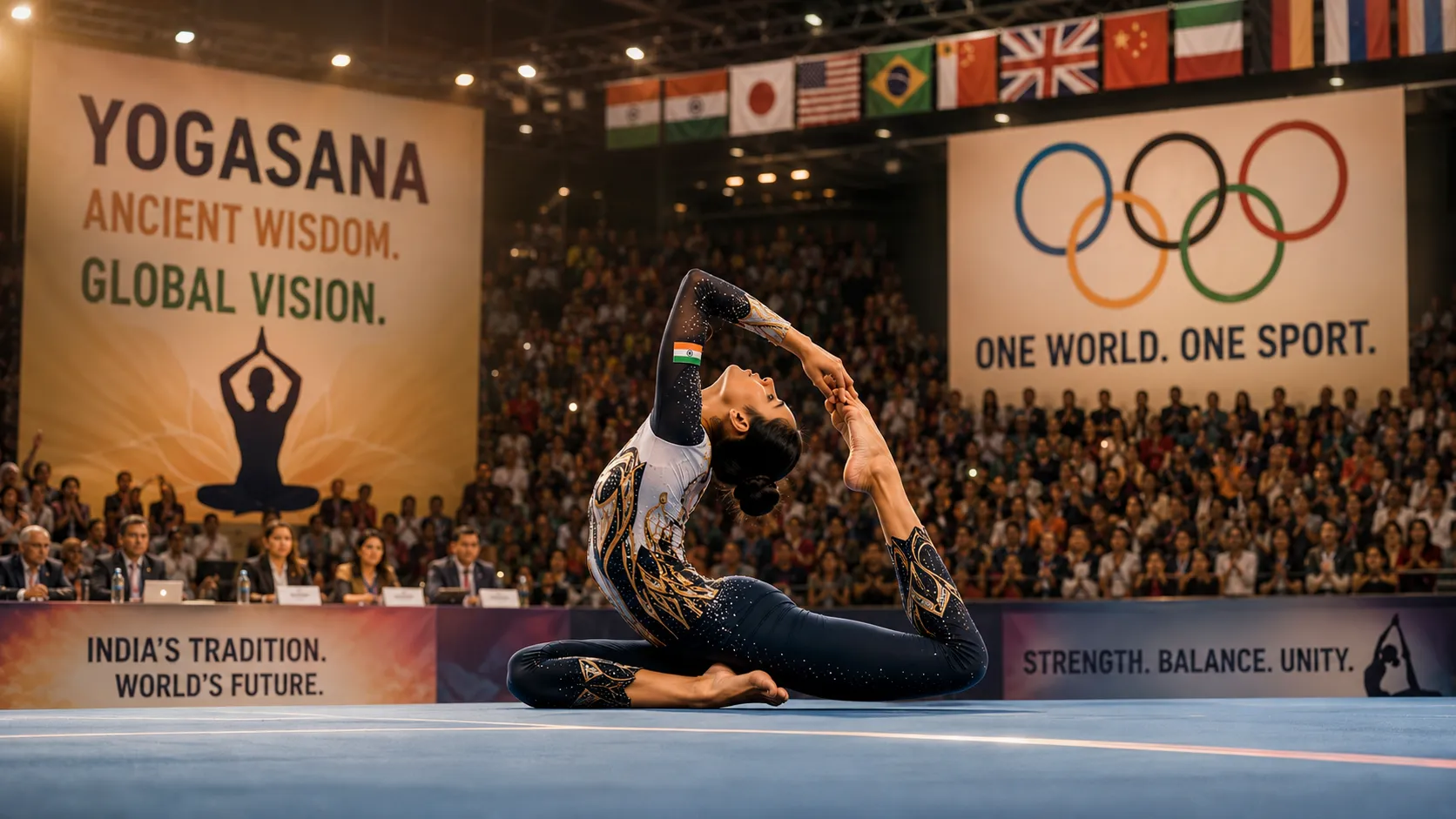
India is increasingly pushing for Yogasana — the athletic and performance-based discipline derived from yoga postures — to gain recognition on larger international sporting platforms, including eventual Olympic consideration. What initially sounded like an unusual idea is gradually becoming part of serious conversations involving sports governance, cultural diplomacy and global representation because Yogasana is increasingly being presented not only as wellness practice, but also as structured athletic competition.
Viewed independently, India promoting Yogasana internationally may initially resemble another soft-power initiative tied to cultural heritage. Viewed through a broader impact lens, however, another question quietly begins surfacing beneath the discussion: what happens when an ancient practice rooted in inner discipline enters a modern ecosystem built around competition and performance? Because traditions frequently change once they move from cultural spaces into global institutions.
Historically, Olympic sports largely evolved around measurable physical competition because events traditionally depended on scoring systems, athletic comparison and standardized performance structures. Yoga, by contrast, developed through philosophies emphasizing awareness, discipline and internal balance because the practice itself frequently centered around personal growth rather than outperforming others. That distinction explains why conversations surrounding Yogasana frequently generate both excitement and debate simultaneously.
Supporters increasingly argue that Yogasana already functions like many globally recognized judged sports because athletes train extensively, demonstrate flexibility, precision, balance and endurance and compete through structured routines evaluated by scoring criteria. Competitive Yogasana events already exist across multiple countries because organized federations and championships have gradually expanded visibility around the discipline. For advocates, Olympic inclusion therefore appears like the next logical step in yoga’s global journey.
Critics, however, frequently raise another concern. Many practitioners believe transforming yoga into a medal-driven activity risks distancing it from its philosophical roots because competition itself may fundamentally alter how people understand the practice. Yoga historically emphasized inward awareness and non-attachment because spiritual traditions often operated differently from modern sports environments. Once scoring, rankings and performance pressure enter the picture, some fear the practice itself could gradually shift toward spectacle rather than substance.
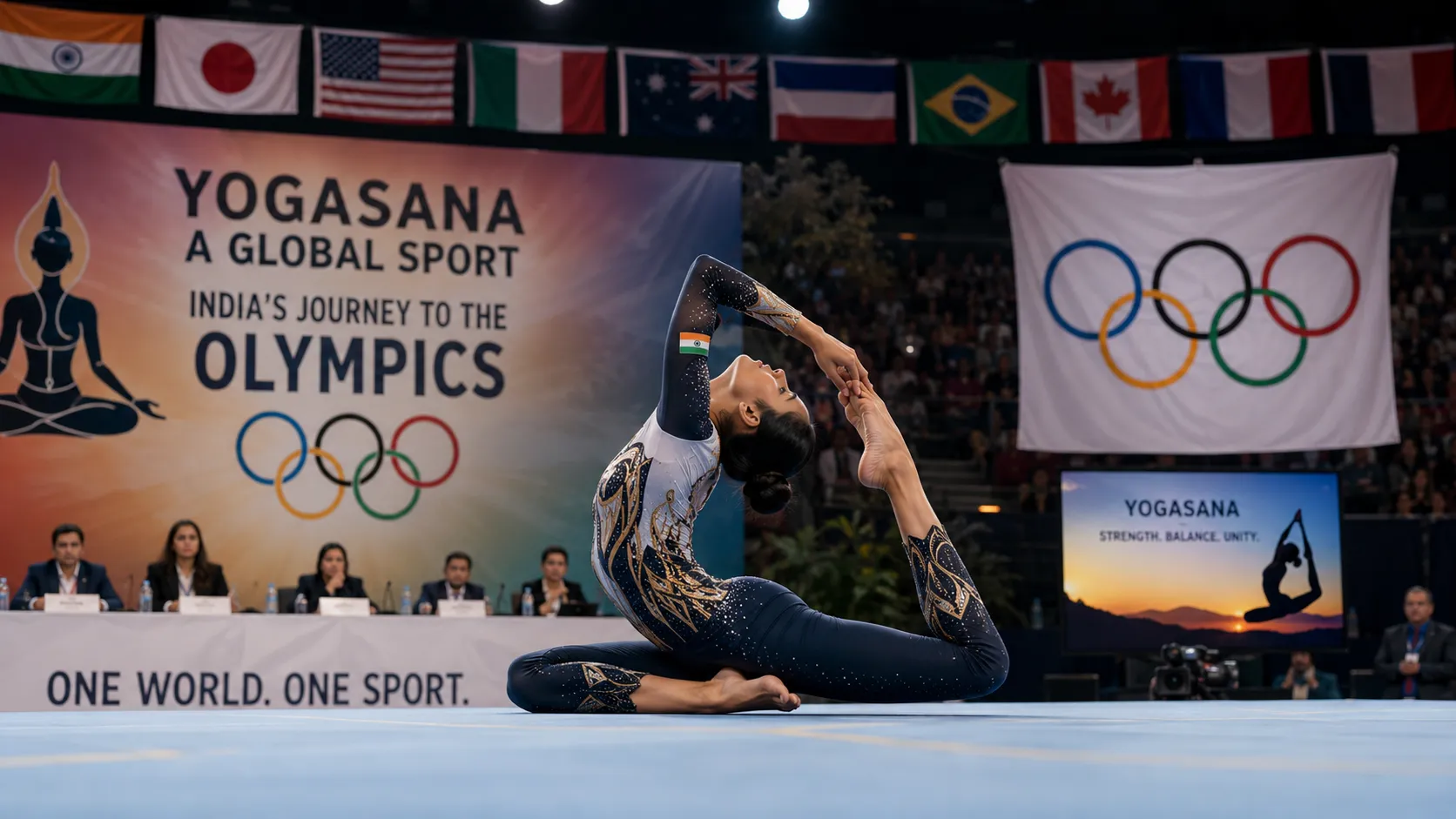
That tension quietly sits at the center of this entire conversation.
Because this story is not only about sports.
It is also about ownership, interpretation and how traditions evolve once they become global.
Another important layer beneath India’s push involves cultural identity itself. Over the last decade, yoga has increasingly become one of India’s most recognizable forms of international soft power because International Yoga Day, wellness tourism and global yoga communities expanded awareness significantly. Millions now practice yoga worldwide because the discipline successfully crossed borders and entered mainstream global culture. Yogasana therefore increasingly appears connected not simply to athletics, but also to how India positions cultural heritage internationally.
There is also a broader sports story quietly emerging underneath this movement. Global sporting ecosystems increasingly reward disciplines capable of attracting younger audiences, digital engagement and international participation because modern sports organizations frequently think beyond traditional formats. Activities involving flexibility, aesthetics and visual performance often perform strongly across social platforms because modern visibility itself increasingly shapes sporting relevance.
That distinction matters because Yogasana naturally carries visual appeal. Structured poses, synchronization, athletic flexibility and performance routines frequently translate effectively across digital environments because audiences increasingly consume sports through short-form content and highlight-driven engagement. Visibility therefore becomes part of the strategy because modern sports growth frequently depends as much on audience attention as institutional approval.
Perhaps that explains why this conversation increasingly feels larger than whether Yogasana eventually reaches the Olympics. Because beneath discussions involving sports recognition ultimately exists another reality involving how cultures adapt in modern global systems. Traditions rarely remain completely unchanged once they travel internationally because visibility frequently creates reinterpretation.
The larger impact story therefore may not simply involve India wanting Yogasana inside the Olympics.
It may involve asking whether ancient practices can enter modern competitive systems without losing the philosophies that made them meaningful in the first place.