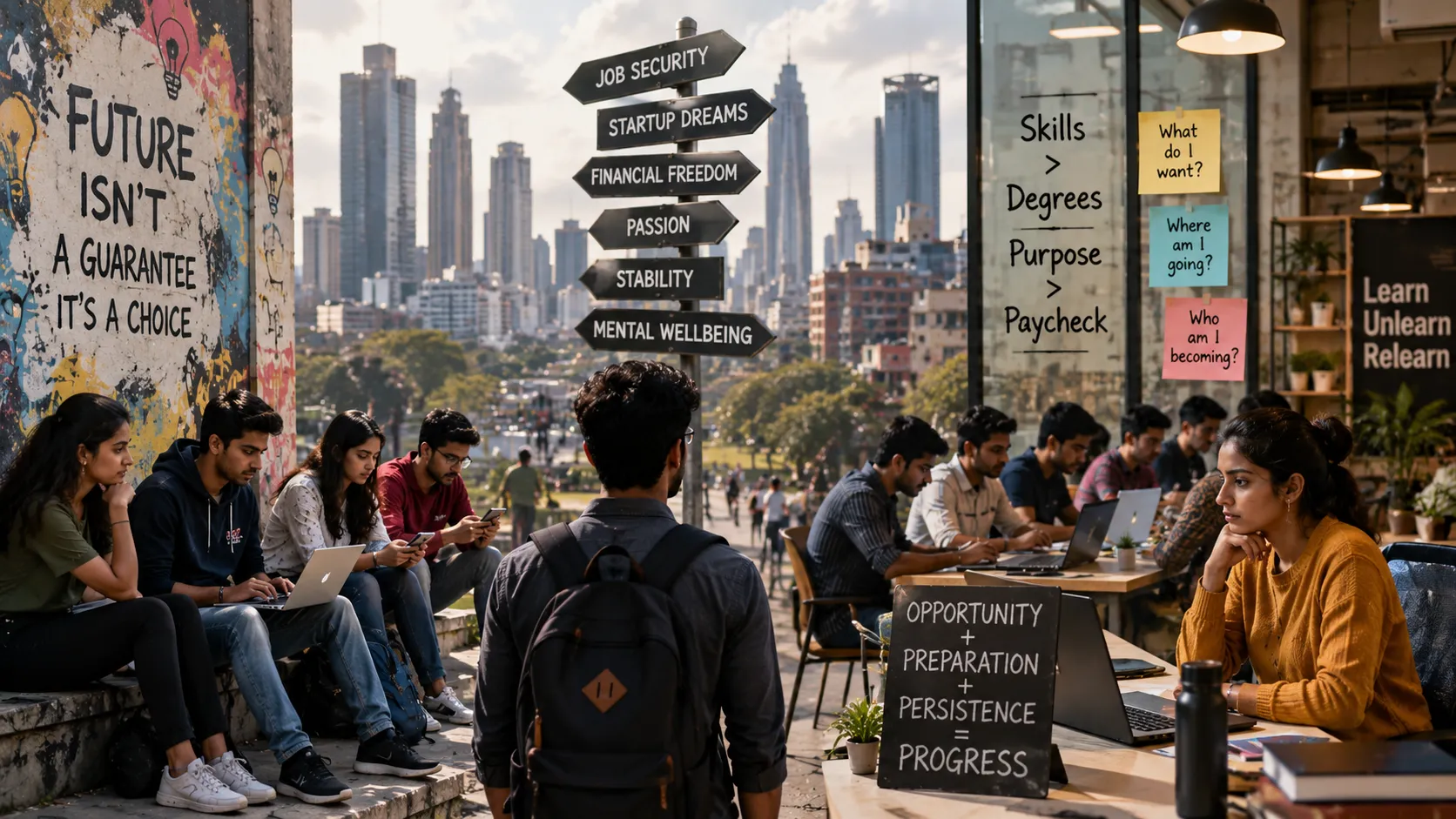
A National Conversation Around Young India Is Beginning To Move Beyond Traditional Job Statistics
For years, conversations surrounding India’s youth population frequently revolved around one dominant theme: employment. Public policy discussions, economic reports and political debates often focused heavily on questions involving job creation, labor participation and unemployment rates because India’s demographic profile consistently placed younger populations at the center of the country’s future growth story. With one of the world’s largest youth populations, India frequently appeared positioned around what economists often described as a demographic opportunity capable of influencing long-term economic trajectories.
Employment statistics naturally became central to those discussions. Numbers frequently offered visible indicators through which governments, institutions and observers attempted to understand economic realities. Rising employment frequently suggested optimism. Weak labor indicators frequently triggered concern. Yet over recent years, a broader and more layered conversation increasingly appears emerging beneath these familiar metrics.
Young Indians today increasingly seem navigating realities extending far beyond whether jobs exist alone. Questions surrounding job quality, financial security, aspirations, digital influence, mental wellbeing, skill relevance and changing definitions of success increasingly appear entering public conversations. Across urban and semi-urban environments particularly, younger populations frequently describe experiences shaped not simply by employment availability but also by uncertainty surrounding identity, expectations and long-term opportunity itself.
Viewed independently, employment statistics continue remaining critically important. Viewed through a broader social lens, however, they increasingly appear insufficient for fully understanding how younger generations experience economic and social life today.
Employment Increasingly Appears To Be Only One Part Of A Larger Question Around Opportunity
Historically, labor conversations frequently focused on a relatively direct relationship involving education and employment. Young individuals completed education, entered workplaces and gradually moved toward stable career pathways. While economic realities often varied across sectors and communities, broader expectations surrounding career progression frequently appeared comparatively straightforward.
Increasingly, however, those assumptions appear changing.
Work itself increasingly looks different from previous generations. Digital platforms expanded freelance environments. Creator economies introduced new aspirations. Startup ecosystems altered perceptions surrounding entrepreneurship. Simultaneously, automation discussions and technological transitions increasingly created uncertainty around future work environments.
As a result, employment itself increasingly seems discussed through more complicated frameworks involving flexibility, purpose and long-term sustainability.Many younger individuals today frequently appear asking different questions.Does employment create stability?Does work align with identity?Does opportunity extend beyond salary itself?
This shift increasingly matters because younger populations frequently evaluate work through broader social and emotional considerations alongside economic realities.
Digital Culture Increasingly Appears To Be Reshaping Expectations Around Success

Part of the significance surrounding contemporary youth discussions increasingly involves how digital environments influence aspiration itself.
Historically, ideas surrounding success often developed through relatively visible pathways involving professions, educational achievement and conventional career structures. Increasingly, however, social platforms frequently expose younger populations to broader possibilities and highly visible narratives surrounding entrepreneurship, influence and unconventional careers.
Importantly, this visibility frequently creates opportunity and pressure simultaneously.Digital platforms increasingly expose people to accelerated success stories, creator cultures and highly curated versions of achievement that often operate through very different timelines from traditional career structures.For some individuals, these environments create optimism and ambition.For others, they occasionally create uncertainty and comparison.
The broader significance increasingly suggests that younger populations today frequently navigate expectations shaped not only by families and institutions but also by digital ecosystems operating continuously around them.
Mental Wellbeing Increasingly Appears To Be Entering Youth Conversations Alongside Economics
Another important dimension increasingly emerging beneath employment discussions involves emotional wellbeing itself.
Historically, economic conversations frequently treated employment primarily through financial frameworks involving wages, labor participation and economic productivity. Increasingly, however, younger populations frequently discuss work through broader experiences involving burnout, pressure and uncertainty surrounding long-term direction.
Across multiple studies and public conversations globally, younger communities increasingly describe concerns involving stress, emotional fatigue and anxiety associated with education pathways, career expectations and social comparison environments.
Importantly, these experiences frequently extend beyond unemployment itself.
People may possess opportunities while still experiencing uncertainty.People may possess employment while continuing to question direction.People may achieve visible success while privately experiencing emotional strain.The broader conversation increasingly suggests that understanding younger generations may increasingly require recognizing wellbeing as part of economic discussion itself rather than treating it as a separate category entirely.
The Larger Story Increasingly Extends Beyond Employment Alone
The broader significance surrounding India’s youth conversation may ultimately involve what it reveals regarding how societies understand progress itself.
Historically, development discussions frequently emphasized measurable indicators because numbers frequently created visible ways to evaluate change. Employment figures continue remaining enormously important and will likely continue shaping public discussion.
Viewed through a broader lens, however, younger populations increasingly appear navigating environments where economic realities, digital cultures and emotional experiences intersect simultaneously.The larger debate therefore may not simply involve whether jobs exist.Increasingly, it may involve understanding what younger people increasingly expect from work, identity and everyday life itself.
Because demographic opportunity often depends not only on participation in economies.Increasingly, it may also depend on whether societies understand the changing realities shaping the people expected to build those futures.