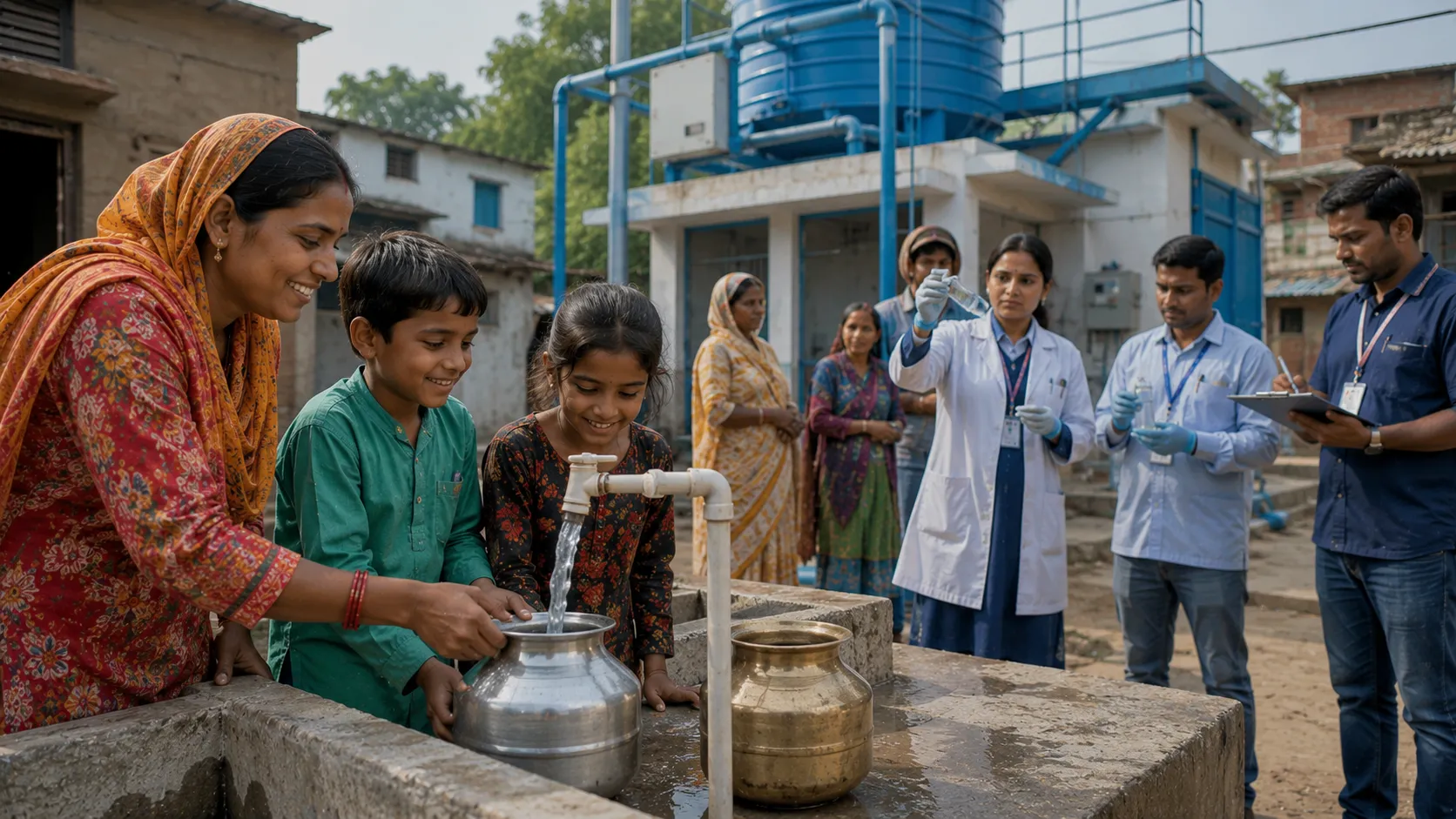
A National Conversation Around Water Is Gradually Beginning To Change
For decades, India’s water challenges frequently entered public conversations through one central question: who has access? Policy discussions, development initiatives and infrastructure programs often focused heavily on extending drinking water connections to households that historically remained underserved. In both rural and urban regions, expanding access frequently represented one of the country’s largest public infrastructure priorities because millions of families continued depending on distant sources, seasonal supply systems or inconsistent delivery networks for everyday needs.
Over recent years, that conversation increasingly appears to be evolving. Access itself remains critically important, but public-health discussions increasingly suggest that another concern is gradually moving closer to the center of national attention: safety. Across several parts of India, conversations involving water quality, contamination monitoring and public-health risks increasingly appear shaping larger discussions surrounding drinking water systems. The issue itself is becoming more visible because healthcare outcomes and infrastructure conversations increasingly appear intersecting in ways that were historically discussed separately.
Government initiatives over the last several years significantly expanded household-level access through programs such as the Jal Jeevan Mission, which aimed to provide functional tap-water connections across rural India. The program transformed infrastructure access across large parts of the country and brought millions of households into formal water systems. Yet as infrastructure networks expanded, public-health experts and policymakers increasingly recognized a broader reality: providing water and providing safe water frequently represent different challenges altogether. Reports surrounding drinking-water monitoring increasingly continue highlighting concerns involving contamination risks, groundwater quality and region-specific issues involving fluoride, arsenic and other pollutants across parts of India.
Viewed independently, water infrastructure expansion may initially appear like a development success story. Viewed through a broader public-health lens, however, it increasingly appears connected to changing assumptions surrounding what meaningful access actually means.
Public Health Increasingly Appears To Be Expanding The Definition Of Water Access
Historically, access frequently represented the dominant benchmark surrounding water development discussions. If households received connections and communities gained regular supply systems, infrastructure goals frequently appeared successful. While these efforts remain enormously significant, broader healthcare conversations increasingly suggest that infrastructure alone may not fully determine long-term outcomes.
Water quality increasingly appears central because contaminated drinking systems frequently create consequences extending well beyond immediate illness itself. Unsafe water environments often influence nutrition, childhood health, disease exposure and broader community wellbeing simultaneously. Public-health researchers have long emphasized links involving water quality and health outcomes because repeated exposure frequently influences vulnerable populations disproportionately.
This distinction increasingly matters because water systems frequently function as invisible infrastructure. People often interact with them daily without consciously considering quality itself unless problems become visible. Yet water safety frequently determines outcomes that extend into healthcare systems, educational participation and household wellbeing.
Recent years increasingly saw stronger emphasis involving testing mechanisms, monitoring systems and digital reporting environments capable of strengthening visibility surrounding drinking-water quality. Increasingly, policymakers appear recognizing that access metrics alone may not fully capture broader realities involving public-health outcomes.
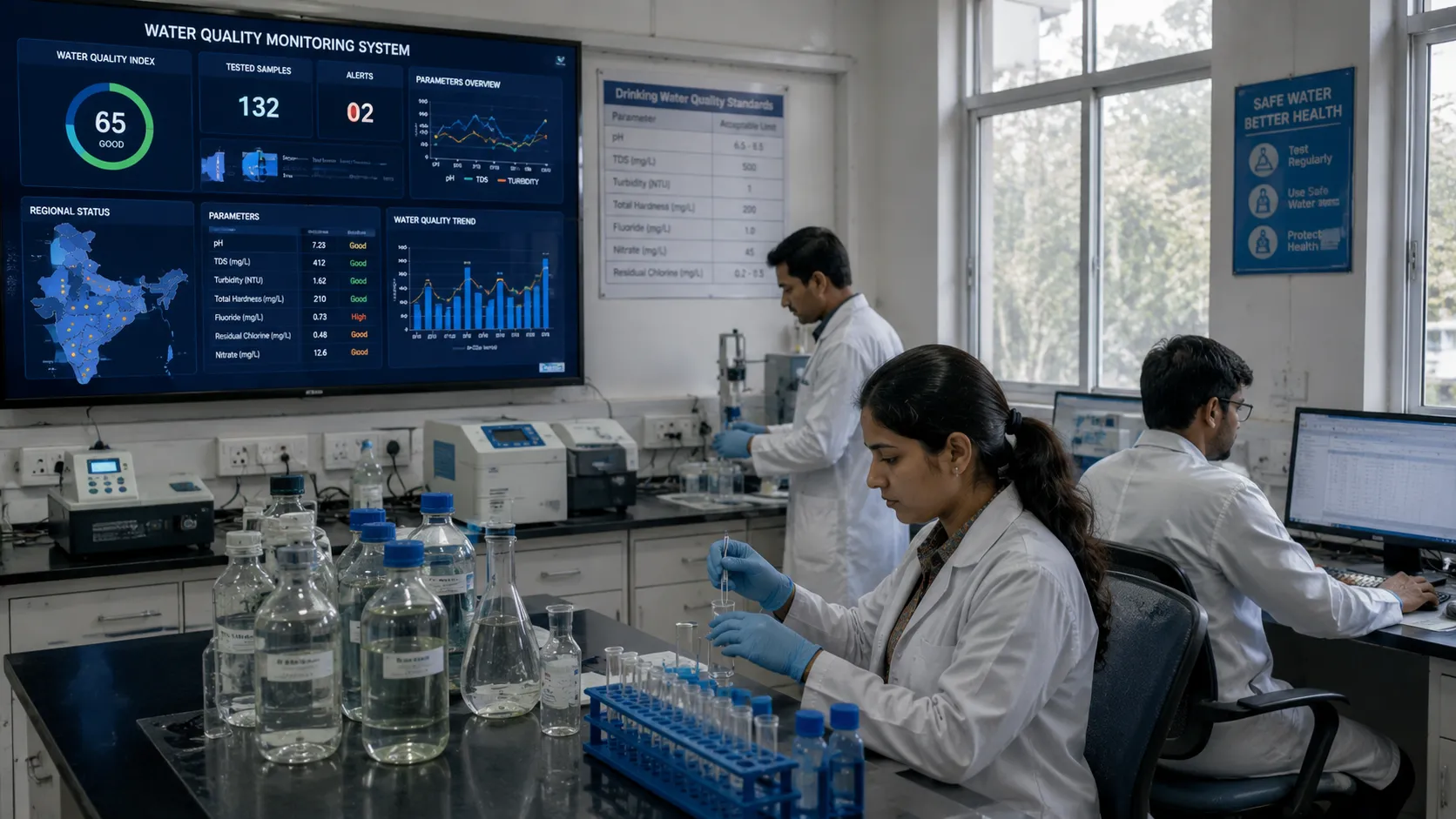
Groundwater Quality Is Quietly Becoming A Larger Public-Health Conversation
Part of the broader significance surrounding India’s evolving water story increasingly involves groundwater itself.
Large sections of India continue depending heavily on groundwater systems for drinking water, agricultural use and local supply infrastructure. Over decades, groundwater frequently supported communities where surface-water systems remained limited or inconsistent. Yet alongside this dependence, broader concerns surrounding contamination and water quality increasingly entered public-health discussions.
Reports across multiple states periodically highlighted issues involving fluoride exposure, arsenic contamination and localized water-quality challenges affecting communities differently depending upon geography. States including parts of West Bengal, Assam, Rajasthan and Bihar historically experienced concerns involving naturally occurring contaminants capable of influencing long-term health outcomes. The implications often extended beyond immediate illness and occasionally involved broader developmental and healthcare consequences.
Importantly, these issues increasingly reveal how infrastructure and healthcare frequently intersect. Water quality conversations increasingly appear not solely as environmental discussions but also as preventive healthcare discussions because exposure patterns frequently influence broader wellbeing over extended periods.
The broader lesson increasingly appears connected to visibility itself. Access challenges often become visible immediately. Safety challenges sometimes emerge more gradually and frequently require monitoring systems capable of identifying risks before larger health consequences become apparent.
Technology And Monitoring Systems Increasingly Appear Central To Future Water Strategies
Another important shift increasingly involves how technology itself enters water discussions.
Historically, water systems frequently depended on physical infrastructure involving pipelines, storage systems and distribution environments. Increasingly, however, conversations surrounding water management also involve digital monitoring tools, testing environments and data systems capable of strengthening visibility around quality and safety.
Across several regions, initiatives increasingly explore sensor-based monitoring systems and digital reporting frameworks capable of identifying quality concerns more efficiently. Public-health environments increasingly appear interested in creating systems where risks become visible earlier and where interventions can occur before larger consequences emerge.
This transition increasingly matters because infrastructure frequently becomes stronger not only through expansion but through intelligence.
Access systems create reach.
Monitoring systems create visibility.
And visibility frequently creates stronger public-health outcomes.
The broader movement increasingly suggests that future water systems may involve not only larger networks but also smarter networks capable of understanding quality alongside distribution.
The Larger Story Increasingly Extends Beyond Water Infrastructure Alone
The broader significance surrounding India’s changing water conversation may ultimately involve what it reveals regarding the evolution of development priorities themselves.
Historically, development discussions frequently focused on scale because expanding infrastructure frequently represented the most visible challenge. Over time, however, systems often evolve. Once access expands, conversations frequently shift toward quality, reliability and long-term sustainability.
Viewed through that broader lens, India’s water story increasingly appears connected to larger public-health questions extending beyond supply systems alone. Healthcare outcomes, environmental conditions and infrastructure quality increasingly seem intertwined in ways that public systems increasingly recognize.
The larger impact story therefore may not simply involve delivering water connections to more households. Increasingly, it may involve redefining what access itself means. Because future public-health conversations may increasingly depend not only on whether water reaches communities but whether the systems delivering it also ensure safety, trust and long-term wellbeing.