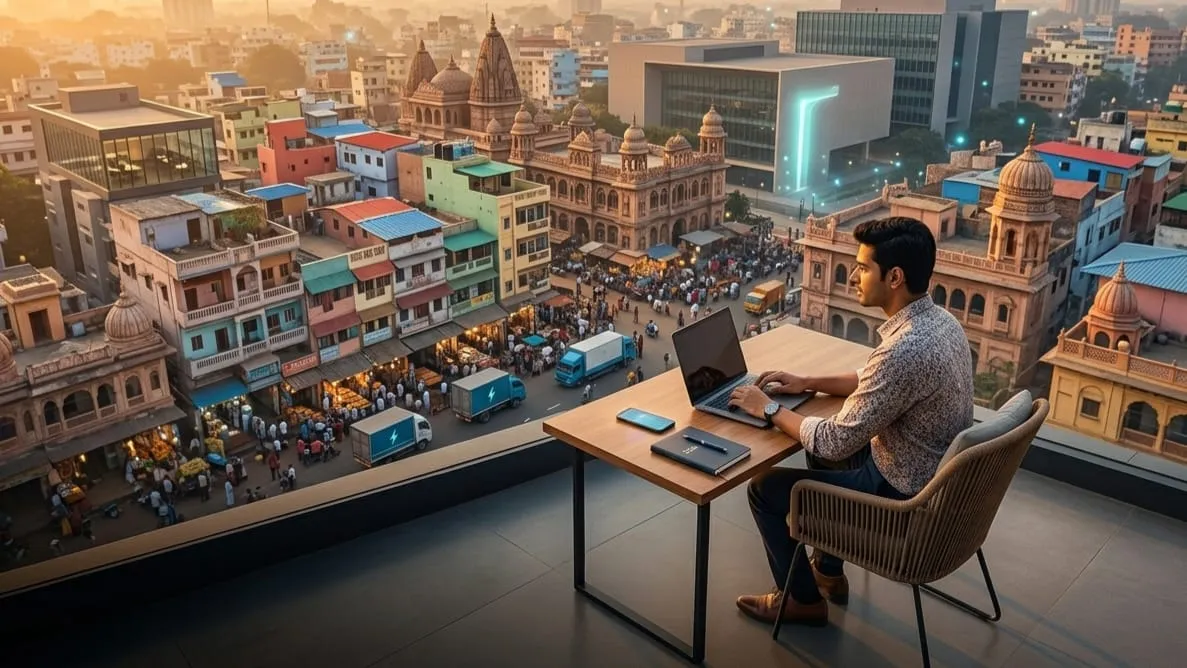
The Startup Revolution India Didn't See Coming — From the Cities It Never Expected
When Startup India launched on January 16, 2016, the ecosystem it was nurturing was concentrated in a handful of cities. Bengaluru was the tech capital. Mumbai was the money. Delhi-NCR was the market. Hyderabad was the emerging challenger. Everyone else was watching from the sidelines.
A decade later, everything has changed. And the data from June 2026 tells a story that should make every founder in every small town in India sit up straight.
India now has over 207,000 DPIIT-recognised startups. The startup economy is valued at more than $350 billion. There are at least 112 unicorns — companies valued at over $1 billion — built right here on Indian soil. And in the single most significant shift the ecosystem has seen since its founding, roughly 50% of all recognised startups are now emerging from Tier 2 and Tier 3 cities.
Not 10%. Not 20%. Half.
The Numbers That Rewrite the Map
Let's put India's startup numbers in global context first. India is the third-largest startup ecosystem in the world — behind only the United States and China. In 2026, $8.09 billion has already been raised across 806 equity funding rounds — even in a year where global funding has become more selective and disciplined.
Five new unicorns have joined the billion-dollar club this year alone: Netradyne, Drools, Porter, Fireflies AI, and Jumbotail — companies spanning automotive AI, pet food, logistics, meeting intelligence, and B2B commerce. None of them fit the classic "consumer app" mould that dominated the first generation of Indian unicorns. All of them are solving real, deep, structural problems — which is exactly what the mature startup ecosystem looks like.
The total number of companies founded by women has crossed 23,472. Over 34,000 companies have received formal funding. And the ecosystem has seen over 6,100 IPOs — meaning India is not just creating startups, it's creating publicly listed companies at scale.
Why Tier 2 and Tier 3 Cities Are the Real Story
The 50% statistic isn't just interesting. It's transformational — and it's happening for reasons that go far deeper than government policy or infrastructure improvement.
Cities like Jaipur, Indore, Kochi, and Chandigarh are seeing 45% year-over-year growth in startup registrations. That's not a blip — that's a structural shift driven by a combination of forces that have been quietly building for years.
The first force is cost. Building a startup in Bengaluru means paying Bengaluru rents, Bengaluru salaries, and competing for Bengaluru talent against every other funded startup in the country. Building in Indore or Jaipur means dramatically lower operating costs — which extends runway, preserves equity, and forces the kind of capital discipline that builds sustainable businesses.
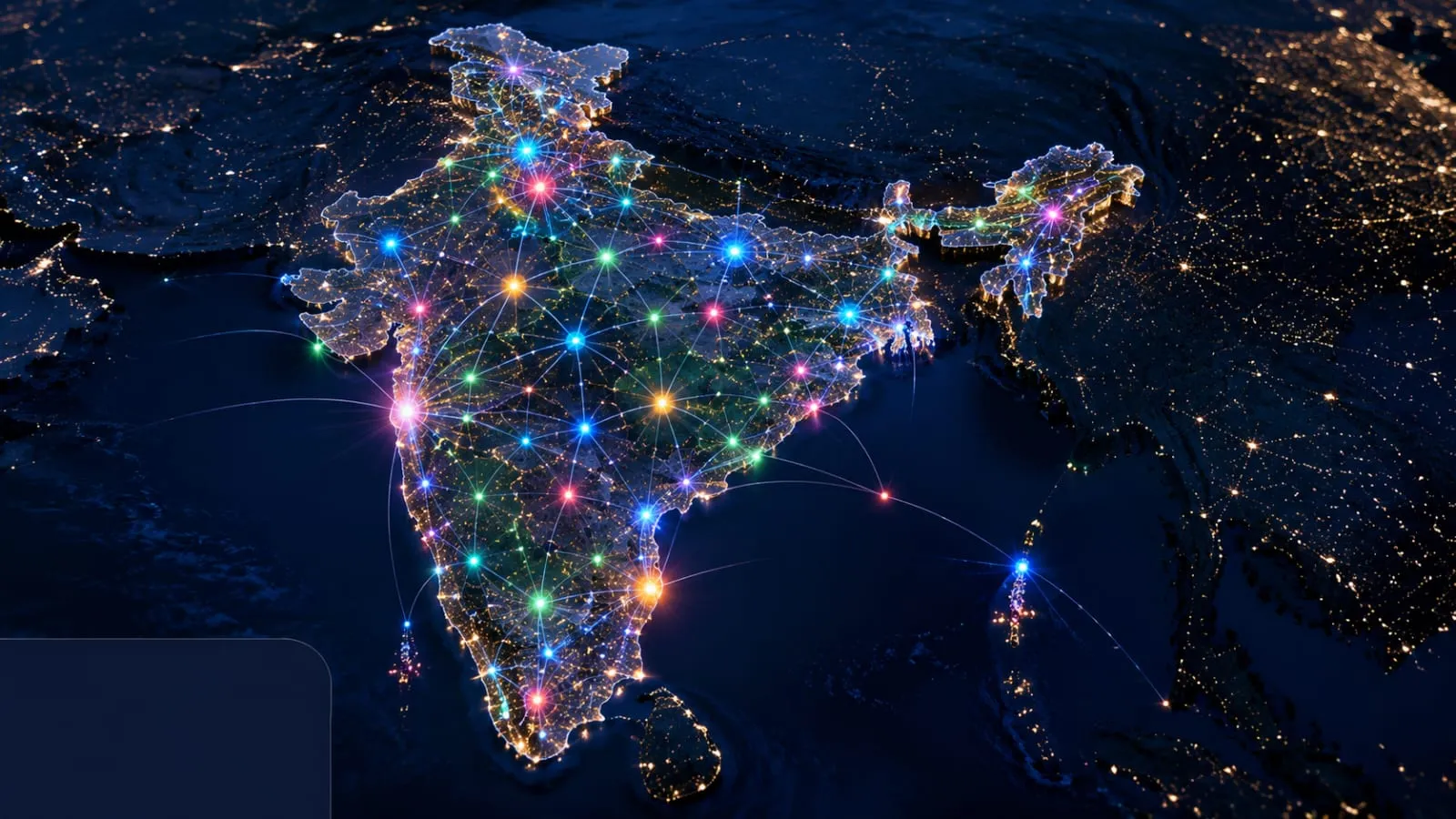
The second force is proximity to real problems. A founder in Agra understands the leather supply chain in a way no Bengaluru-based entrepreneur ever will. A founder in Amritsar understands Punjab's agricultural challenges from the ground up. A founder in Kochi understands Kerala's unique healthcare, tourism, and fisheries economy. Tier 2 and Tier 3 cities aren't markets to be served from afar — they're ecosystems to be built from within.
The third force is digital infrastructure. UPI is processing over 14 billion transactions a month. Internet penetration has crossed 900 million users. The digital rails that allow a startup to reach customers, process payments, and manage supply chains from anywhere in India are now genuinely universal — meaning a founder in Varanasi can build for India as effectively as one in Mumbai.
The Sectors Leading the Next Wave
Where is this Tier 2 and Tier 3 startup energy flowing? The data points to six sectors with particular momentum.
Deeptech — AI, robotics, biotech, and quantum computing — now accounts for about 12% of India's startup base, with more than 3,600 companies and funding that has held up better than almost any other category through market volatility. Healthtech is seeing women founders leading the charge, particularly in diagnostics, telemedicine, and preventive care platforms designed for non-metro populations. Agritech is exploding in agricultural heartlands — with startups tackling everything from precision farming to cold chain logistics to farmer credit access. Fintech continues to be the backbone — with India's UPI infrastructure enabling financial products that simply couldn't have existed five years ago. Skilltech and SME tools are growing rapidly as India's workforce and small business community demand better digital infrastructure. And climate tech — clean energy, waste management, sustainable agriculture — is attracting serious capital as India's net zero commitments drive policy and procurement decisions.
The Funding Is Following the Founders
For years, capital stayed in the metros because that's where founders were. Now that founders are everywhere, capital is starting to follow. Tier 2 city startups are no longer automatically at a disadvantage when they walk into a virtual pitch meeting — and the track record of companies that have built in lower-cost environments, maintained discipline, and scaled nationally is convincing more investors to look beyond the obvious geographies.
The government has played a meaningful role here too. The Startup India Seed Fund Scheme provides up to ₹20 lakh for idea-stage startups — accessible anywhere in the country. The DPIIT recognition process has been streamlined and digitalised. PM MITRA textile parks, PLI schemes, and sector-specific incentive programmes are creating manufacturing and technology clusters in cities that previously had no startup infrastructure at all.
A Decade of Building — And This Is Just the Beginning
India's startup ecosystem in June 2026 is defined by something the first generation of Indian unicorns rarely had: sustainable, profitable, disciplined growth. The era of growth-at-all-costs funding — burning cash to buy market share in the hope of monopoly — is definitively over. The 2026 Indian startup is defined by strong unit economics, a credible path to profitability, and the ability to scale without destroying value.
That maturity, combined with the geographic democratisation of entrepreneurship, means India's next decade of startup growth may be even more significant than its first. Not because the numbers will necessarily be bigger — though they likely will be — but because the distribution will be wider, the problems being solved will be deeper, and the founders building the solutions will represent the full breadth of India's extraordinary diversity.
Half the startups now come from beyond the metros. In ten years, that number might be 70%. And the companies built in those cities — grounded in real problems, disciplined by real constraints, and driven by founders who have everything to prove — may well be the ones that define India's next generation of iconic businesses.
The revolution didn't stay in Bengaluru. It never does.