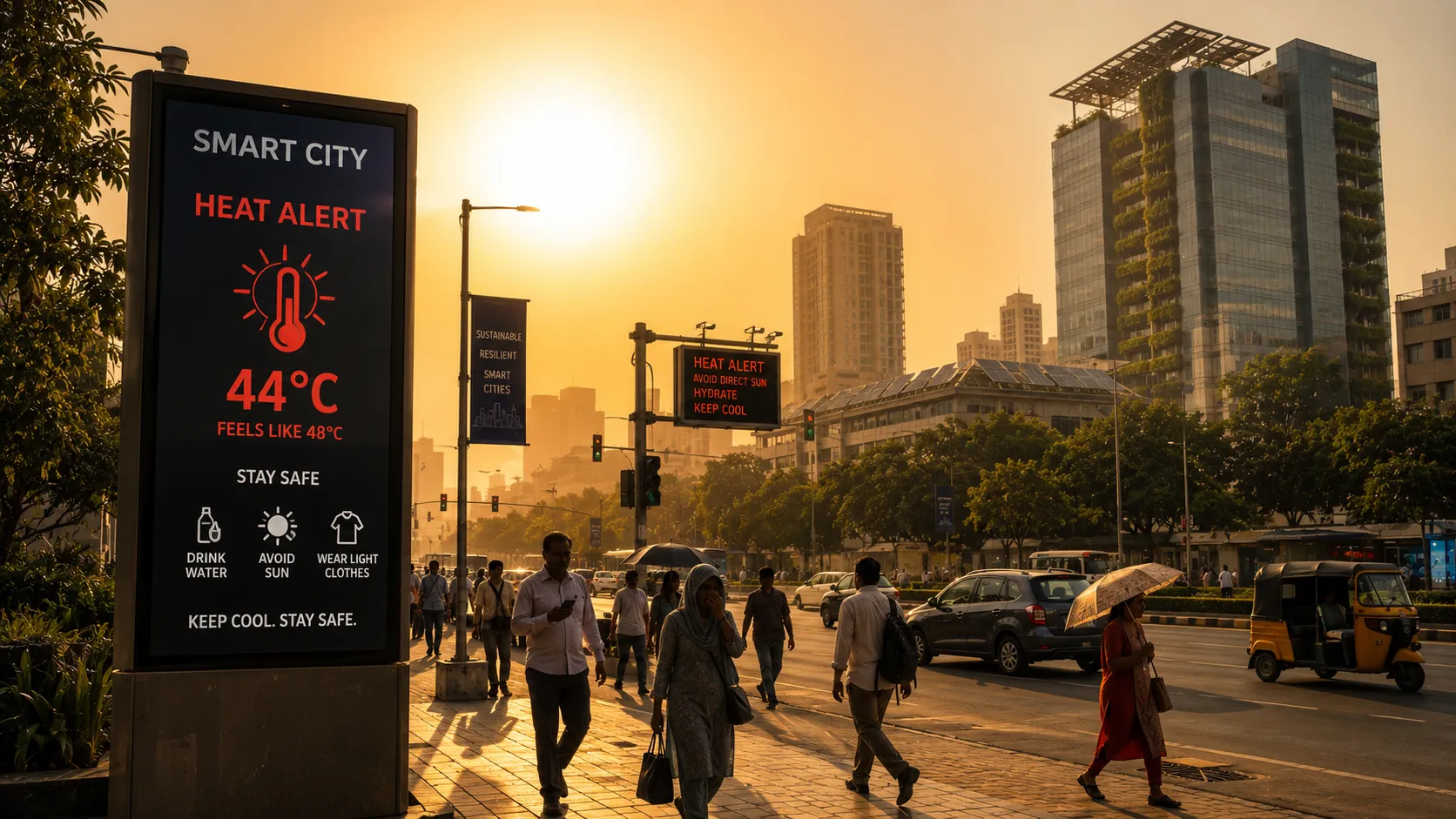
India’s Urban Growth Story Is Beginning To Confront A Different Reality
For years, India’s smart city conversation revolved around a relatively clear challenge: managing growth. Policymakers, urban planners and technology leaders focused on how rapidly expanding cities could support larger populations through digital infrastructure, integrated transportation systems and smarter public services. The Smart Cities Mission itself was built around ideas of efficiency and connectivity. Traffic management systems, surveillance networks, command centers and technology-enabled public infrastructure gradually became central themes in discussions around urban transformation. For a long time, the assumption remained that the future of cities would primarily depend on how intelligently they could organize and manage growth.
Today, a different concern is increasingly entering that conversation, and unlike transportation bottlenecks or public infrastructure gaps, it cannot be solved through conventional planning alone. India’s cities are increasingly confronting recurring and severe heat events that are beginning to challenge long-standing assumptions about urban resilience itself. Temperatures across multiple regions repeatedly crossed dangerous thresholds over recent years, with several states and cities experiencing extended heatwave periods and unusually intense summer conditions. Cities including Delhi, Ahmedabad, Jaipur and Nagpur frequently recorded temperatures exceeding 45°C, while weather agencies repeatedly warned that climate conditions are becoming more extreme and less predictable. What was once viewed as seasonal discomfort is increasingly being treated as a structural challenge capable of affecting health systems, productivity, infrastructure and the broader functioning of cities themselves.
The larger concern may not simply involve rising temperatures. Increasingly, it involves whether India’s future cities are being designed around climate realities that no longer resemble those of previous decades. Urban planning systems historically evolved around assumptions involving relatively stable environmental patterns. Those assumptions increasingly appear under pressure.
Smart Cities Were Designed Around Efficiency, But Climate Is Changing The Conversation
When India launched the Smart Cities Mission, the focus largely involved creating environments capable of responding to rapid urbanization. The objective was to improve how cities functioned through technology-driven solutions. Integrated command centers, smart traffic systems, digital governance platforms and connected infrastructure became symbols of modern urban development. These initiatives represented important steps because India continues experiencing one of the largest urban transitions anywhere in the world.
However, climate resilience often occupied a smaller role in earlier discussions. Cities were designed to become faster, more connected and more efficient. Increasingly, planners are beginning to recognize that cities may also need to become more adaptive.
Extreme heat introduces challenges extending far beyond weather conditions alone. Heat influences energy systems, public transportation networks, water availability, labor productivity and healthcare environments simultaneously. Unlike isolated infrastructure failures, heat affects multiple systems at once. A severe heatwave can increase electricity demand through cooling requirements, create pressure on public health systems and reduce outdoor productivity across industries ranging from construction to transportation.
Urban environments frequently amplify these effects further because cities themselves often create additional warming conditions. Dense infrastructure involving concrete, asphalt and steel absorbs and retains heat, producing what researchers commonly describe as the urban heat island effect. Temperatures within cities can become significantly higher than surrounding regions because built environments retain warmth and reduce natural cooling patterns.
As cities continue expanding, these effects may become increasingly important because urban growth itself can unintentionally intensify climate exposure.
Heat Is Becoming A Public Health Issue Rather Than A Weather Event
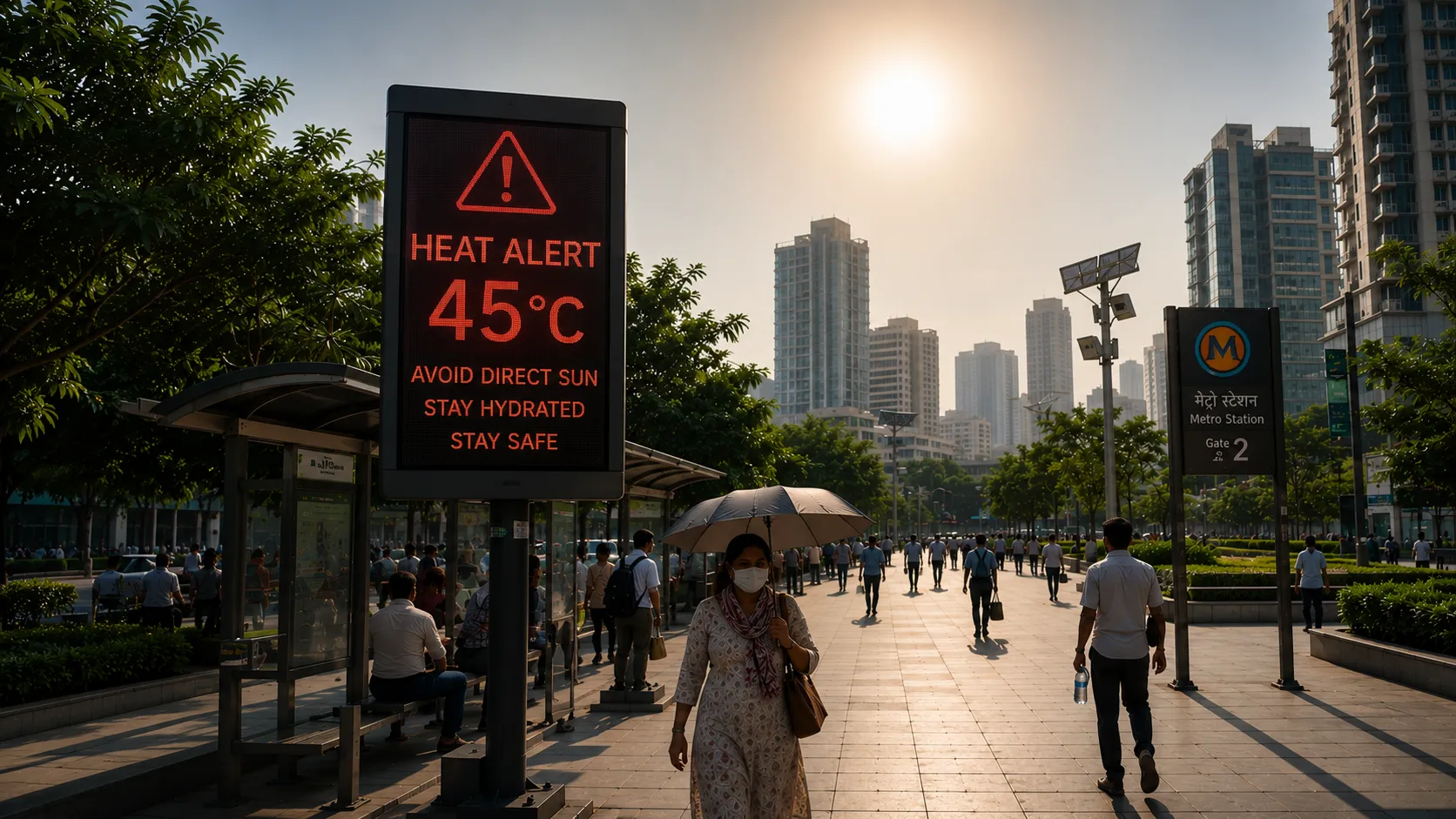
One of the most important changes taking place globally involves how heat itself is being understood. Historically, heatwaves often remained categorized primarily as weather events. Today, researchers and healthcare experts increasingly frame extreme heat as a broader public health challenge capable of affecting populations at scale.
Prolonged exposure to extreme temperatures influences multiple dimensions of health. Risks involving dehydration, heatstroke, cardiovascular stress and respiratory complications often increase during severe heat periods. Vulnerability also remains unevenly distributed. Elderly individuals, children, outdoor workers and populations living within dense urban environments frequently experience greater exposure.
This becomes especially important in countries such as India where large portions of the workforce continue operating outdoors. Construction workers, delivery personnel, street vendors and transportation workers often remain exposed to prolonged heat conditions. Extreme weather therefore increasingly influences economic productivity alongside public health.
Urban infrastructure can further shape these outcomes. Areas with limited green cover, poor ventilation and dense built environments frequently experience stronger heat retention. Informal settlements may face additional challenges because cooling access often remains limited.
Heat therefore increasingly functions not merely as a climate issue but as an issue involving urban design, inequality and public infrastructure simultaneously.
Infrastructure Designed For Growth May Need To Adapt For Survival
Much of the infrastructure supporting modern cities evolved according to historical climate assumptions. Roads, buildings and utility systems were frequently designed around weather conditions that now increasingly appear less predictable. As heat intensity rises, these systems are beginning to encounter pressures they were not originally built to manage.
Electricity systems provide one example. During severe heat periods, cooling demand frequently rises sharply as households and businesses depend more heavily on fans and air conditioning systems. Utilities often experience increased pressure during peak conditions. Transportation systems can also face challenges because prolonged heat exposure may affect road materials and operational reliability.
Water systems similarly confront growing stress. Heat events frequently increase demand while simultaneously intensifying broader concerns around scarcity and urban resource management.
These challenges become especially important because India’s urban expansion story is far from complete. The country is expected to add hundreds of millions of urban residents over coming decades, making it one of the largest urbanization transitions globally. Future infrastructure decisions therefore may shape not only how cities grow but also how they respond to changing climate environments.
The question increasingly appears larger than growth management alone.Can cities designed around previous environmental conditions continue functioning effectively within future ones?
Indian Cities Are Beginning To Explore New Approaches To Heat Resilience
Several cities across India have already begun experimenting with strategies intended specifically around heat adaptation. Ahmedabad emerged as one of South Asia’s earliest examples through its Heat Action Plan, which was introduced following severe heat events and designed around preparedness, public awareness and coordinated response systems. The initiative later influenced discussions in multiple cities and demonstrated how climate planning itself could become integrated into urban governance structures.
Additional approaches increasingly involve physical infrastructure changes. Urban planners continue discussing reflective roofing materials, expanded tree cover and redesigned public spaces capable of reducing heat absorption. Green spaces and water systems increasingly appear important because environmental infrastructure itself can influence local temperatures.
Technology may also contribute. Sensor systems, predictive analytics and digital monitoring tools increasingly help identify high-risk zones and temperature patterns across cities. Smart systems may eventually help planners understand heat exposure more precisely and support targeted interventions.However, technology alone may not provide complete solutions. Resilience increasingly appears connected not only to software systems but also to physical environments themselves.
The Definition Of A Smart City May Be Beginning To Change
For years, the concept of a smart city largely focused on intelligence through technology. Connectivity, automation and digital coordination frequently dominated discussions. Increasingly, those definitions appear broader.
A city may possess advanced digital systems and still remain vulnerable to environmental pressures.This reality is beginning to reshape urban conversations worldwide. Cities increasingly need systems capable not only of managing movement and services but also of adapting to changing conditions around them.
Because future urban intelligence may involve more than connectivity. It may increasingly involve resilience.