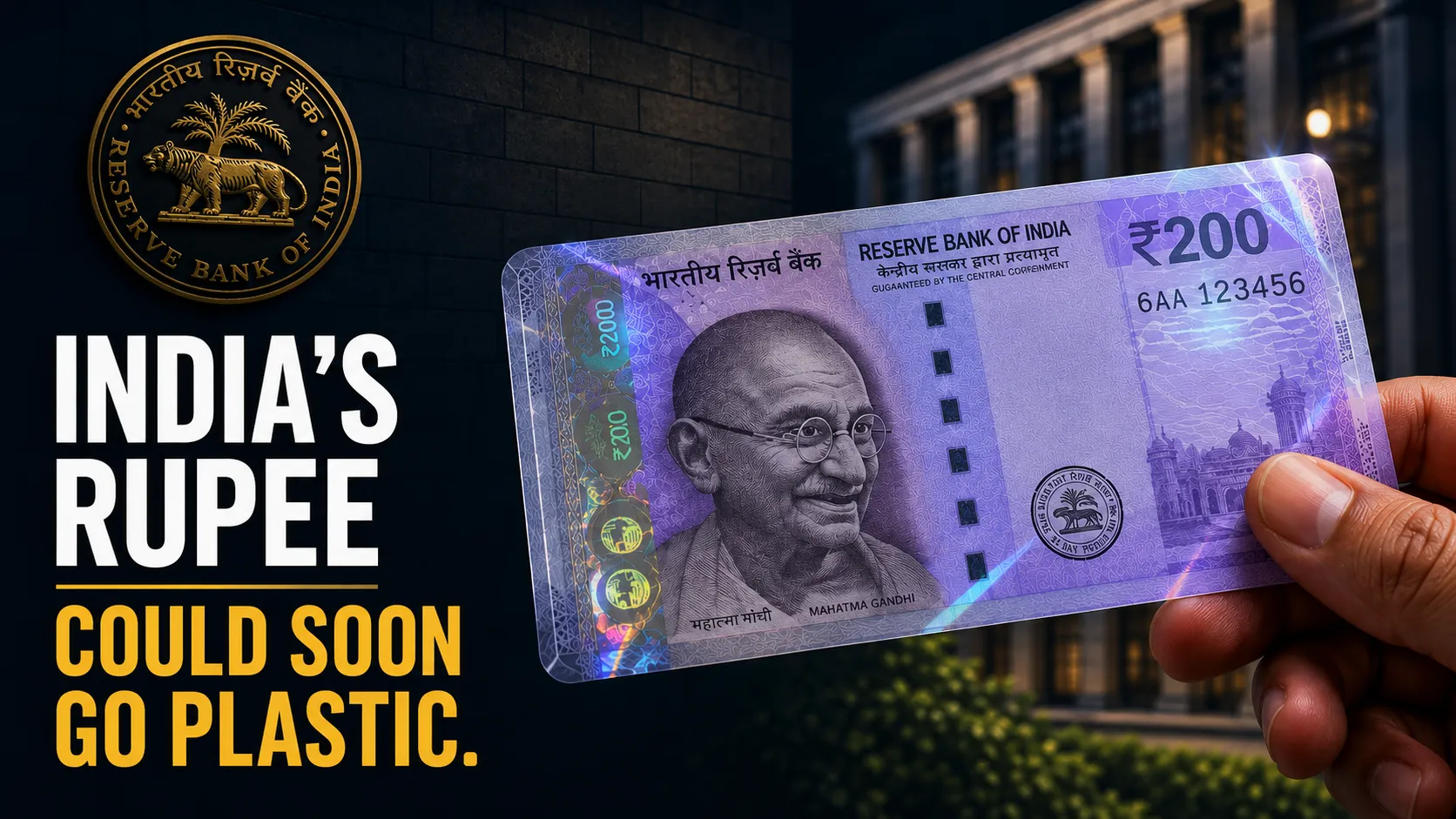
As The RBI Explores Polymer Banknotes, The Move Is Less About Replacing Paper And More About Making Physical Money Last Longer, Cost Less And Fight Counterfeiting More Effectively
For years, India's financial story has been dominated by digital payments.
UPI has transformed how people pay for everything from groceries to train tickets. QR codes have spread from metropolitan cities to remote villages. Fintech startups have reshaped banking habits, and policymakers frequently discuss a future powered by digital transactions. Yet amid all this technological change, one fact continues to surprise economists: Indians still use an enormous amount of cash.
In fact, the total value of currency in circulation has continued to grow despite the digital payments revolution.
That reality explains why the Reserve Bank of India is once again examining a proposal that could fundamentally change the look and feel of the rupee. The central bank is reportedly considering the introduction of polymer banknotes—commonly referred to as plastic currency—as part of a broader effort to improve durability, reduce replacement costs and strengthen security features. While the idea has been discussed before, recent reports suggest the proposal is gaining fresh attention as policymakers look for ways to modernize India's physical currency infrastructure.
At first glance, replacing paper notes with plastic ones may not sound particularly revolutionary.
After all, a ₹10 note remains a ₹10 note regardless of the material used to print it. But central banks around the world increasingly view polymer notes as a significant technological upgrade because traditional paper currency faces several challenges. It wears out quickly, becomes damaged through constant handling and requires regular replacement. In a country as large and populous as India, those replacement costs can become substantial over time.
That is where polymer currency offers a compelling alternative.
Unlike conventional cotton-based paper notes, polymer banknotes are manufactured using a durable plastic substrate. The material is significantly more resistant to tearing, dirt, moisture and everyday wear. Countries that have adopted polymer notes often report that they last several times longer than traditional paper currency. Australia, which pioneered polymer banknotes in the late 1980s, found that notes remained in circulation for much longer periods before requiring replacement. Similar experiences have been reported in countries including Canada, the United Kingdom, New Zealand and Singapore.
For India, durability is not a minor consideration.
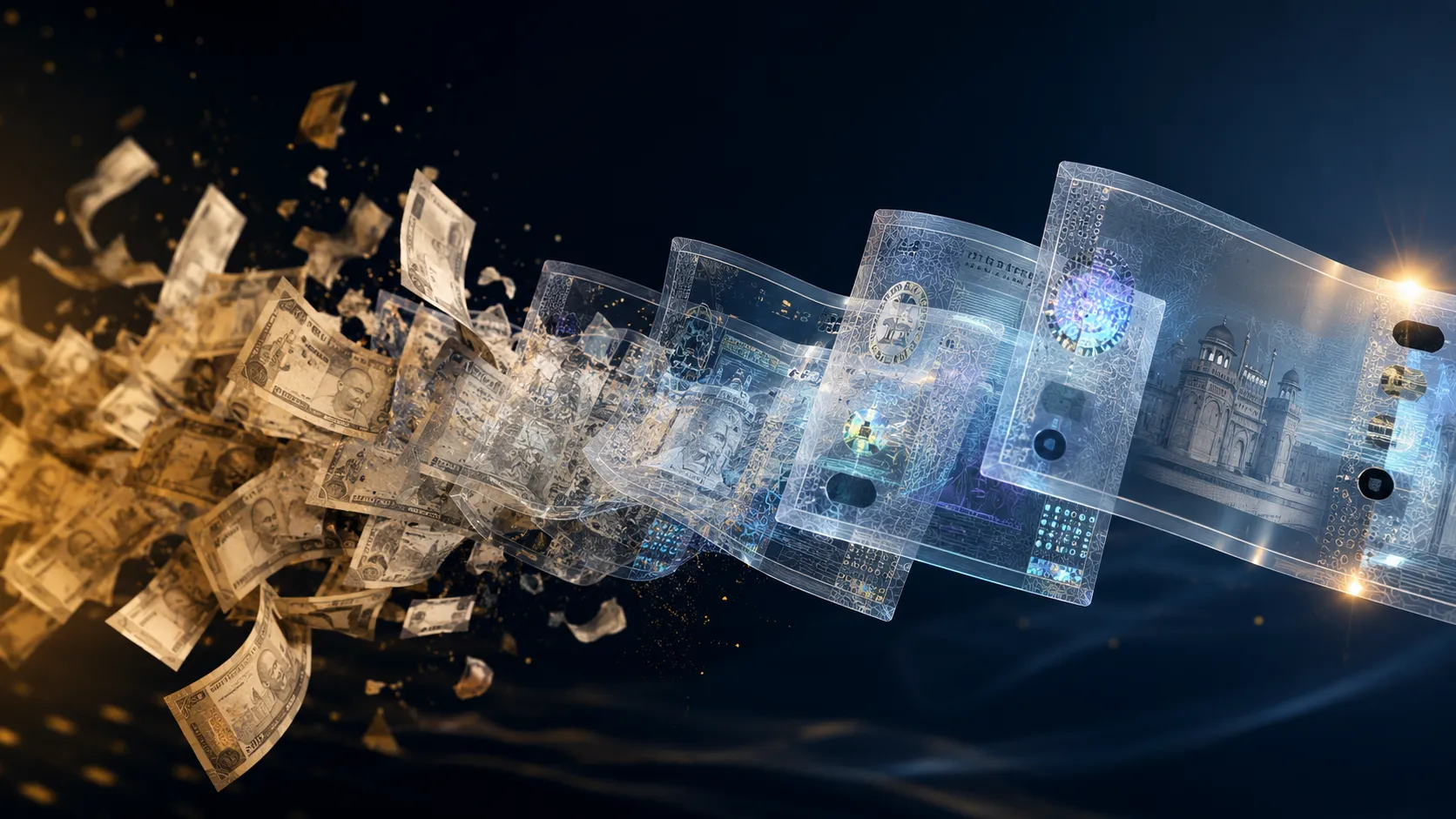
Lower denomination notes often pass through hundreds or even thousands of hands during their lifetime. They are folded repeatedly, exposed to dust, moisture and extreme weather conditions and frequently become damaged. As a result, the RBI spends significant resources printing replacement notes every year. If polymer notes remain usable for longer periods, the long-term savings could be substantial even if the initial production costs are higher.
Counterfeiting is another important factor.
Modern polymer notes can incorporate advanced security features that are difficult to replicate. Transparent windows, specialized holograms, complex visual elements and embedded security technologies provide additional protection against counterfeiters. As financial crimes become increasingly sophisticated, central banks worldwide are investing heavily in currency security because public confidence ultimately depends on trust in the authenticity of money itself.
The environmental argument is more complicated than it initially appears.
Critics often point out that polymer notes are made from plastic, which may sound contradictory at a time when governments are trying to reduce plastic consumption. However, supporters argue that because polymer notes last much longer, fewer replacements are required over time. This reduces the overall volume of currency production and transportation. Some central banks also recycle old polymer notes into industrial products after they are withdrawn from circulation. The result is a lifecycle that can sometimes be more sustainable than repeatedly producing paper notes.
The potential shift also highlights an interesting contradiction in India's economic transformation.
Digital payments have expanded dramatically, yet cash remains deeply embedded in everyday life. Small businesses, local markets, transportation networks and millions of consumers continue relying on physical currency for a variety of reasons. Rather than disappearing, cash has adapted alongside digital systems. This means policymakers must improve both digital and physical payment infrastructure simultaneously rather than treating them as competing alternatives.
That reality is shaping central-bank thinking around the world.
Many countries that lead in digital payments continue investing heavily in cash because financial inclusion requires multiple options. Technology failures, internet outages and varying levels of digital access mean physical currency remains an essential component of economic resilience. Even as digital transactions grow, governments recognize that cash still performs critical functions within society.
For ordinary Indians, the transition could initially feel unfamiliar.
Polymer notes have a different texture, greater flexibility and a distinctive appearance compared to traditional paper currency. People encountering them for the first time often describe them as smoother and more durable. Over time, however, experiences from other countries suggest consumers adapt quickly because the practical benefits become obvious through everyday use.
The larger significance of the proposal extends beyond banknotes themselves.
It reflects how central banks are rethinking the future of money in an era where technology is changing nearly every aspect of finance. While headlines often focus on digital currencies and fintech innovation, improvements to physical cash remain equally important. Modern economies require secure, efficient and trusted payment systems in all forms.That is why India's polymer currency discussion matters.
The story is not really about plastic notes.It is about how one of the world's largest economies is preparing its financial infrastructure for the future while acknowledging that cash remains an essential part of the present.And if the RBI moves forward with the plan, Indians may soon discover that the next evolution of the rupee is not digital at all.It fits inside a wallet.