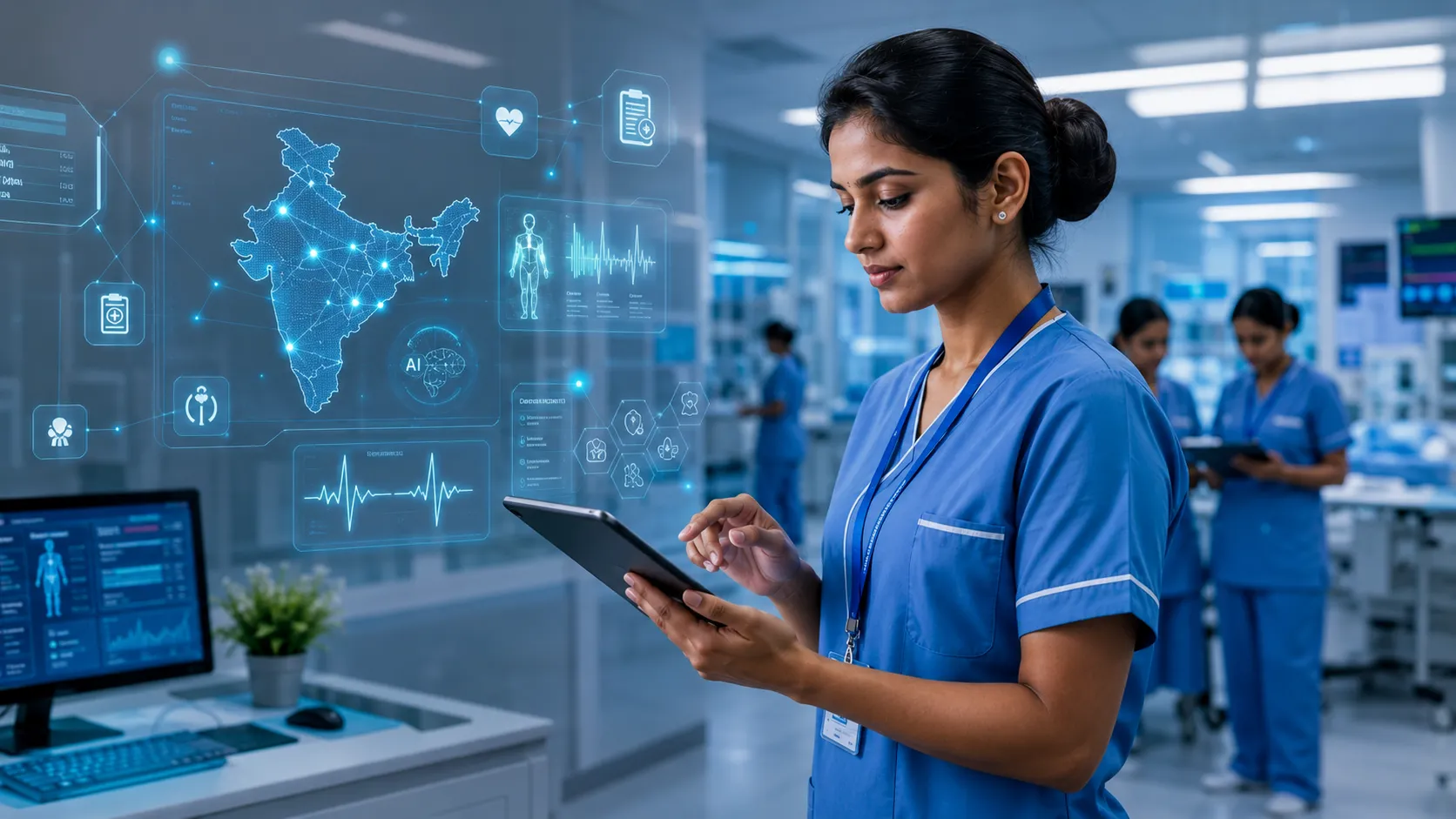
India’s healthcare sector is entering a period of profound transformation. Conversations around the future of medicine increasingly revolve around artificial intelligence, digital health ecosystems, connected hospitals and data-driven care systems. Yet beneath discussions surrounding technological advancement lies a question that may prove equally important: who will ultimately carry these systems into everyday healthcare environments? While innovation often captures public attention, large-scale healthcare transitions frequently depend less on technology itself and more on the people expected to use it.
That reality is becoming increasingly visible through a major nationwide initiative designed to strengthen digital readiness among one of healthcare’s largest frontline communities. More than three lakh nurses across India are now expected to gain access to digital health training through the Digital Health Foundation Course for Nurses, which has been integrated into the iGOT Karmayogi Bharat platform. Developed through collaboration involving the National Health Authority, Maharashtra University of Health Sciences and The Trained Nurses Association of India, the initiative reflects a broader understanding beginning to emerge across healthcare systems: modern healthcare increasingly requires workforce transformation alongside technological progress.
Healthcare Modernisation Is No Longer Only About Infrastructure
For years, healthcare advancement was often discussed through physical expansion. Conversations frequently centered around building hospitals, increasing medical capacity and improving access to treatment infrastructure. More recently, the conversation broadened to include digital systems, telemedicine platforms and artificial intelligence applications capable of reshaping patient care. These technologies gradually became symbols of future healthcare environments.
Yet healthcare systems globally are beginning to recognize a more complex reality. Introducing sophisticated technologies into hospitals and public health systems does not automatically create transformation. Systems become effective when the people interacting with them understand how to integrate them meaningfully into care delivery.Healthcare institutions increasingly appear to be confronting a critical realization: digital systems cannot operate independently of human capability.
This shift is gradually changing how workforce readiness itself is being viewed.
Why Nurses Sit at the Centre of Healthcare’s Digital Transition
Few healthcare professionals occupy a position as central to everyday care environments as nurses. Across hospitals, clinics and public health networks, nurses frequently become the connective layer supporting patient interactions, monitoring care pathways, coordinating communication and maintaining continuity within increasingly complex healthcare systems.
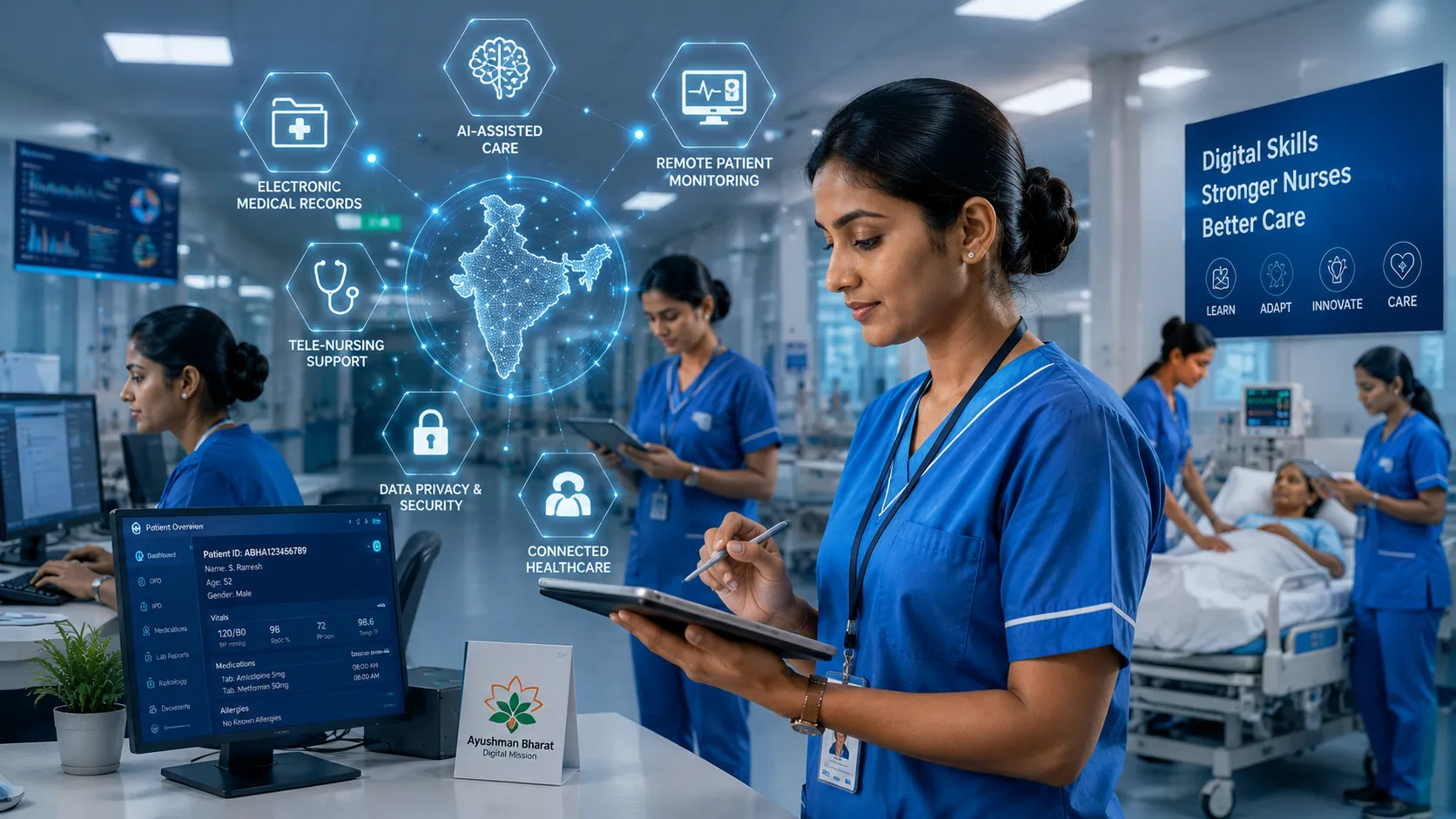
As hospitals continue integrating digital systems into operations, nursing responsibilities are also beginning to evolve. Clinical environments increasingly involve electronic medical records, digitally connected monitoring systems, telehealth infrastructure and data-supported workflows. Nurses are no longer interacting solely with patients and care teams. Increasingly, they are navigating environments where technology itself becomes part of everyday healthcare delivery.
The implications of this transition extend well beyond software familiarity.The broader change increasingly involves preparing healthcare workers for entirely different operational environments.Healthcare itself is becoming more connected, more data-driven and more digitally integrated.
The Scale of the Initiative Reflects a Larger Workforce Shift
The significance of the programme extends beyond participation numbers alone. Training efforts designed around more than three lakh healthcare professionals increasingly represent one of the larger workforce-focused digital readiness initiatives currently taking shape within India's healthcare ecosystem.Reports indicate that the training curriculum includes exposure to areas involving Electronic Medical Records, tele-nursing systems, healthcare analytics, Artificial Intelligence frameworks, digital documentation processes, patient-data practices and components connected to the Ayushman Bharat Digital Mission.
Importantly, the programme does not appear designed solely around teaching technical tools.Its broader emphasis increasingly appears focused on helping nurses understand how healthcare systems themselves are changing.That distinction matters because digital transformation increasingly involves ecosystems rather than isolated technologies.
Healthcare professionals entering modern institutions frequently encounter multiple systems operating simultaneously. Artificial intelligence-supported monitoring platforms, digital patient records, remote-care tools and connected healthcare infrastructure increasingly function together rather than independently.
Preparing healthcare workers for these environments therefore requires more than software training.Increasingly, it requires digital confidence itself.
India’s Hospitals Are Entering a Different Operational Era
The broader healthcare landscape across India is already beginning to reflect these changes.
Hospitals and healthcare institutions continue introducing electronic records, AI-supported systems, telemedicine platforms and digitally connected workflows designed to improve operational efficiency and patient care coordination. Simultaneously, healthcare systems continue managing rising patient volumes, workforce pressures and increasing complexity surrounding care delivery.
Several large healthcare institutions increasingly describe digital systems as mechanisms capable of reducing repetitive workloads and improving clinical efficiency.Artificial intelligence itself is gradually becoming part of this operational shift.
Recent healthcare discussions involving large hospital networks highlighted growing interest around AI tools capable of assisting with documentation, workflow coordination and administrative support systems designed to reduce burden on medical staff.The larger objective increasingly appears less focused on replacing healthcare professionals and more focused on creating environments where professionals can spend greater time concentrating on care itself.
Digital Public Infrastructure Is Expanding Beyond Finance
The initiative also aligns with a broader transition occurring across India’s digital public infrastructure ecosystem.
Over the last several years, systems such as Ayushman Bharat Digital Mission increasingly attempted to create connected healthcare frameworks linking institutions, providers and patients through interoperable digital systems. The larger ambition involves creating healthcare environments where information moves more seamlessly and healthcare delivery becomes more integrated.
Yet infrastructure itself often represents only one part of transformation.Technology systems can scale rapidly.Human adaptation frequently evolves more gradually.Healthcare systems increasingly appear to recognize that digital environments become effective only when workforce readiness develops alongside infrastructure expansion.Several observers increasingly argue that healthcare capability itself may now require treatment similar to infrastructure investment.Because systems alone rarely create outcomes.People often do.
Why This Story Ultimately Extends Beyond Nursing
The larger significance of this development may ultimately extend beyond one programme, one platform or one workforce category.
Historically, healthcare transformation narratives frequently centered around technological breakthroughs and innovation announcements. Yet large transitions often unfold differently. Progress frequently becomes visible through smaller structural changes involving education, workforce preparation and system readiness.
For India, where healthcare simultaneously navigates population scale, infrastructure expansion and digital transformation, those foundations may prove increasingly important.Because healthcare innovation often begins with technology.But meaningful transformation frequently depends on people prepared to use it.