The Song That Moved a Generation. The Festival That Proved It Never Stopped.
In 1951, Raj Kapoor released Awaara — a film about a vagabond, a judge, a question of fate and class, and the belief that a person's character is not determined by the circumstances of their birth. The film was a sensation in India. But it was in China, and across the Soviet Union and the Middle East, that it became something more: a cultural touchstone, a shared emotional vocabulary between people who spoke no common language.
The title song — Awaara Hoon — became one of the most recognised Indian melodies in Chinese popular culture. Generations of Chinese audiences have sung it, quoted it, and felt something in it that survives every translation. Not because they understood the words, but because they understood what it was about.
Seventy-five years later, that relationship between Indian cinema and Chinese audiences is still producing moments of genuine cultural resonance. And at the 28th Shanghai International Film Festival (SIFF), held this June, it produced a number that made headlines in both countries simultaneously.
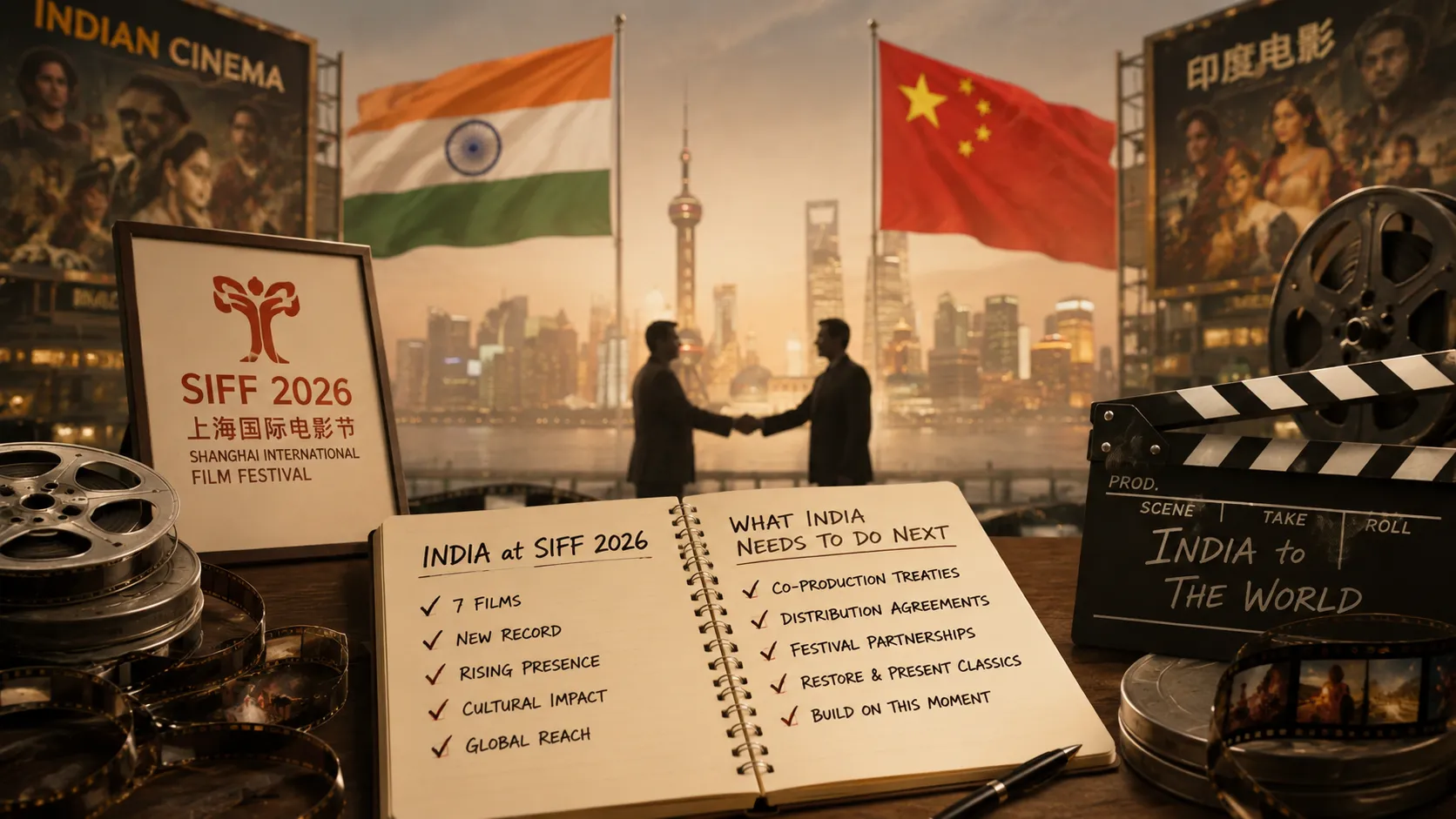
Seven Indian films. A record. In a single edition of China's most prestigious international film festival.
What Happened at SIFF 2026 — the Numbers and the Names
The 28th edition of the Shanghai International Film Festival, one of Asia's oldest and most prestigious film festivals and the only FIAPF A-list festival in mainland China, selected a record seven Indian films across its categories.
The films are: Hunter's Moon, In Which Annie Gives It Those Ones, Umrao Jaan, Chandu Champion, Kaalidas 2, Songs of Forgotten Trees, and Full Plate.
Hunter's Moon — the most internationally prominent of the selection — is in contention for the Golden Goblet award, SIFF's highest honour, awarded across the same competitive framework that has recognised Indian films at multiple prior editions of the festival.
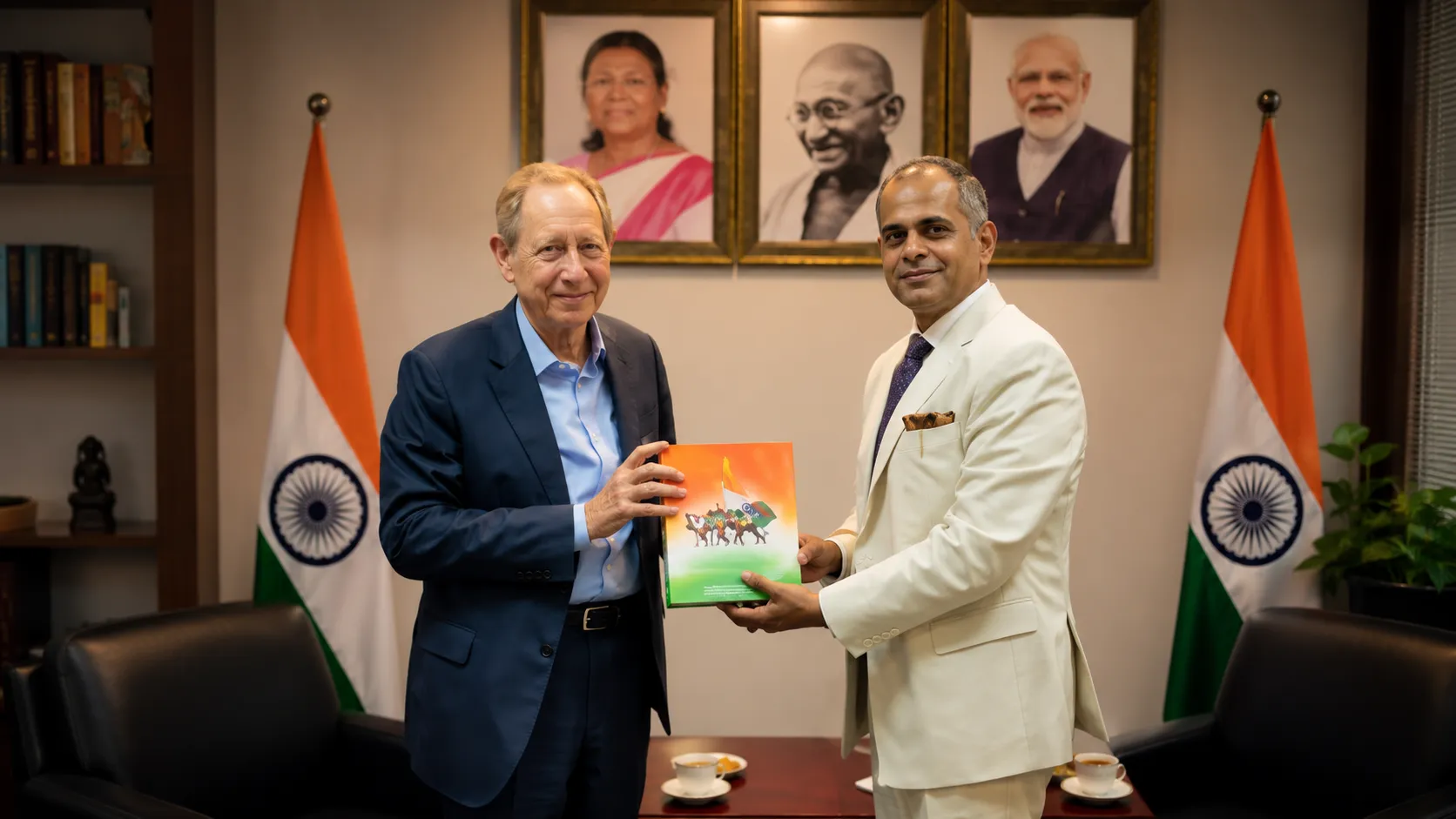
Indian Consul General in Shanghai, Pratik Mathur, who participated in the festival at the invitation of ASEAN partners for the launch of the ASEAN Film Retrospective, was publicly enthusiastic about the selection.
The word "unprecedented" is his own. Seven films is not simply more than the previous record — it is a statement about the trajectory of Indian cinema's international presence.
The 2026 selection builds on a strong showing at the 27th edition in 2025, which featured six Indian films — including a digitally restored version of Awaara, the Raj Kapoor classic whose presence at SIFF generated particular attention because of the song's enduring place in Chinese cultural memory. That the restored version of a 1951 Indian film found its place at a 2025 international film festival in Shanghai, and that it meant something to audiences when it did, is a testament to the depth of the cultural connection that no current diplomatic initiative created — and that none could easily replicate.
Why Shanghai Matters — and Why SIFF Is Not Cannes
Before explaining what India's record presence at SIFF means, it is worth explaining what SIFF actually is — because it is structurally very different from the European festivals that dominate international film coverage.
The Shanghai International Film Festival is the only mainland Chinese film festival accredited by the International Federation of Film Producers as an A-list competitive event. It was founded in 1993 and has become one of the most attended film festivals in the world by audience count, typically drawing several hundred thousand visitors across its run.
What makes SIFF distinctive — and what makes Indian cinema's strong presence there specifically significant — is its selection profile. SIFF's competition lineup is, by design and by political context, largely separate from the circuits of European and American film festivals. It does not typically include US or South Korean titles. Its competitive selection tilts heavily toward Asian, Iranian, and Eastern European cinema. It is, in other words, a festival where presence is earned by resonance with an Asian and Chinese-speaking audience, not by the global film festival circuit's usual prestige mechanisms.
For Indian cinema to place seven films at SIFF — including one in Golden Goblet contention — is a signal that these films are resonating in a specific cultural context that has its own internal logic. It is not a reflection of Cannes buzz or Oscar positioning. It is a reflection of what Chinese festival audiences and programmers find valuable, meaningful, and worth their attention.
And that matters more for soft power than any diplomatic briefing could convey.

The Soft Power Argument — Why Cinema Is India's Most Effective Diplomatic Tool in China
Mathur's description of Indian cinema as one of India's "most effective soft power assets" was not rhetorical. It is historically accurate in a way that makes it worth unpacking carefully.
Soft power — the ability to influence other countries through attraction rather than coercion, through culture and values rather than military or economic pressure — works through the accumulation of emotional familiarity and positive association over time. It cannot be manufactured quickly. It cannot be imposed. It grows through repeated, genuine contact between people and the ideas, stories, and emotions that a culture generates.
Indian cinema has been building exactly that kind of contact with Chinese audiences since before most of the diplomatic infrastructure between the two countries existed. The Awaara phenomenon of the 1950s was not a government-sponsored cultural exchange programme. It was a film that moved people in a country they had nothing to do with, and it generated a warmth and familiarity with India that no number of trade delegations could have produced.
That foundation — built by Raj Kapoor and continued by every Indian film that has found an audience in China since — is what gives India's current SIFF presence its particular diplomatic weight. Seven films at SIFF 2026 are not just seven films. They are seven points of contact between Indian storytelling and Chinese audience emotion, happening at a moment when India-China relations are navigating a complex and sensitive period following the border tensions of 2020 and the gradual, cautious diplomatic re-engagement that has followed.
Film, in this context, operates on a different register than government statements or trade agreements. It does not resolve geopolitical disputes. But it maintains the thread of human connection that makes resolution, when it comes, feel more natural — and that prevents the complete cultural estrangement that makes resolution harder.
The Range of the Selection — What These Seven Films Tell You
The seven Indian films selected for SIFF 2026 span a range that says something deliberate about what Indian cinema is bringing to the international conversation in 2026.
Chandu Champion, directed by Kabir Khan and starring Kartik Aaryan, is based on the true story of Murlikant Petkar — India's first Paralympic gold medallist. It is a biographical sports drama with obvious universal emotional hooks: perseverance, disability, nationalism, and the relationship between an athlete's body and their sense of identity. This is the kind of film that travels across language barriers because its emotional logic is immediately legible to any audience.
Umrao Jaan, the 1981 Muzaffar Ali classic starring Rekha, represents the restoration and re-presentation of Indian cinema's heritage — the same impulse that brought a digitally restored Awaara to SIFF 2025. The presence of these classic titles alongside contemporary productions shows that Indian cinema's SIFF presence is not just about new releases. It is about the full archive of a filmmaking tradition that Chinese audiences have reasons to care about.
Kaalidas 2, a Tamil thriller that builds on its predecessor's genre success; Songs of Forgotten Trees, which in its very title suggests a contemplative, poetic sensibility that positions it for the festival circuit's more artistically inclined audiences; and Full Plate, a food-adjacent drama that taps into one of the most universally accessible emotional registers any film can access.
The range is not accidental. It reflects a breadth of Indian cinematic output — language, genre, commercial register, artistic ambition — that goes well beyond the Bollywood-only international perception of Indian cinema and presents a more accurate and more compelling picture of what the country's film industry actually produces.
What India Needs to Do Next
India's record at SIFF 2026 is a genuine achievement worth celebrating. It is also a signal of potential that has not yet been fully realised.
Indian films have historically been far more present in Chinese cultural life than the formal institutional structures between the two countries' film industries would suggest. There is no co-production treaty between India and China comparable to those India has with the United Kingdom, Italy, Germany, or France. There is no formal joint distribution agreement. The connection between Indian cinema and Chinese audiences has grown largely organically — through the cultural gravity of the content itself, not through bureaucratic frameworks designed to promote it.
Building those frameworks — co-production treaties, distribution agreements, festival partnership programmes — would allow the organic connection that already exists to be channelled into more durable commercial and diplomatic outcomes. The ASEAN Film Retrospective that Mathur attended at SIFF's invitation is one example of a multilateral framework through which India can expand its cinematic presence in the Asian regional context. Bilateral initiatives with China specifically remain less developed than the cultural relationship would warrant.
The restoration programme that brought a new Awaara to SIFF 2025 is another model worth expanding. India has an enormous archive of classic cinema — from the 1950s through the 1980s — that has existing emotional resonance in China and across Southeast Asia, and that could be presented to new audiences through digitally restored versions at international festivals. This is soft power from an existing stockpile, requiring investment in preservation and presentation rather than production from scratch.
And the seven films at SIFF 2026 are a benchmark to build on, not a ceiling to rest at. The Golden Goblet contention for Hunter's Moon, if it results in an award, would be the most visible formal recognition of Indian cinema at SIFF in years — and would generate the kind of international coverage that invites the next seven films, and the seven after that.
The Song Still Plays
Somewhere in Shanghai, a generation of Chinese audiences who learned Awaara Hoon from their parents is watching a new generation of Indian films at a festival that has given India its largest-ever selection.
The song still plays. The connection still holds. And the seven films at SIFF 2026 are evidence that what Raj Kapoor built in 1951 was not a moment of cultural diplomacy. It was the beginning of a relationship — between Indian storytelling and Chinese audiences — that has outlasted every political complication the two countries have generated in the seventy-five years since.
That is soft power. Not the kind that governments design and deploy. The kind that audiences sustain because the films were good enough to deserve it.