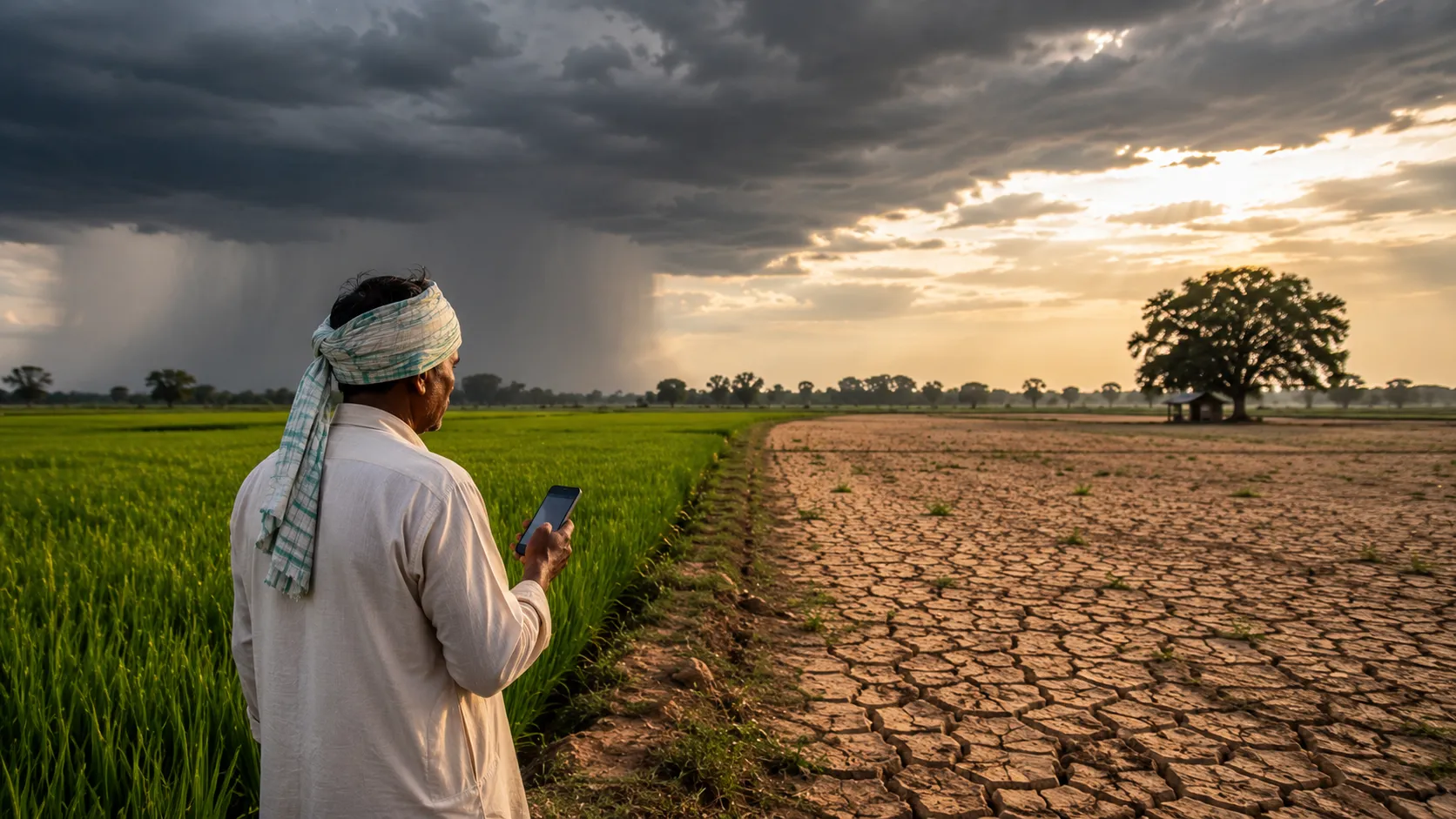
A Changing Climate Story Is Gradually Reshaping How Agriculture Thinks About Risk
For generations, farming in India frequently operated within rhythms shaped by seasons, rainfall cycles and weather patterns that communities understood through experience accumulated over decades. Monsoons influenced planting decisions. Seasonal temperatures affected harvest cycles. Weather uncertainty certainly existed, but many farming communities historically learned to navigate fluctuations through local knowledge, crop traditions and adaptation practices developed over time. Weather often represented an unavoidable challenge, but it was frequently treated as part of the agricultural cycle itself rather than a variable requiring entirely new business thinking.
Over recent years, however, that relationship increasingly appears to be changing. Across multiple parts of India, farmers increasingly find themselves confronting weather events that seem less predictable and often more disruptive than earlier patterns. Delayed monsoons, sudden heat waves, unseasonal rainfall, prolonged dry periods and extreme weather events increasingly entered agricultural conversations with greater frequency. While climate variability itself is not entirely new, the intensity and unpredictability surrounding recent weather patterns increasingly appear to be creating different realities for farming communities across the country.
Recent observations and climate assessments continue highlighting growing concern around agriculture’s exposure to climate-related pressures. India witnessed recurring episodes involving heat stress, erratic rainfall and changing weather behavior affecting agricultural output across several states. These developments increasingly suggest that extreme weather is no longer being viewed simply as a seasonal inconvenience or a temporary disruption. Increasingly, it appears to be entering conversations as an economic and operational risk capable of influencing investment decisions, crop planning and long-term financial stability.
Viewed independently, weather disruptions may initially appear like isolated agricultural challenges. Viewed through a broader economic and social lens, however, they increasingly seem connected to changing assumptions regarding how farming itself may operate in the future.
Farmers Increasingly Appear To Be Thinking Beyond Harvest Outcomes Alone
Historically, agricultural risk discussions frequently centered around crop yields and immediate harvest outcomes. Weather disruptions undoubtedly influenced productivity, but conversations often focused primarily on what happened during a particular season or agricultural cycle. Increasingly, however, farmers appear evaluating weather through broader financial considerations extending beyond crop performance alone.
Agriculture today frequently intersects with loans, supply contracts, equipment investments and market commitments that create larger financial structures around farming activity itself. A failed season therefore increasingly influences multiple layers simultaneously. Weather disruptions can affect household income, repayment cycles, purchasing decisions and future planting strategies. As a result, many farmers increasingly seem to be approaching weather not simply as a natural occurrence but as a variable capable of influencing broader economic decisions.
This shift matters because business risks operate differently from seasonal risks.
Seasonal disruptions frequently involve temporary adaptation. Business risks often require planning, mitigation and longer-term strategy.
Across several regions, farmers increasingly appear exploring approaches involving crop diversification, weather-linked insurance products and data-supported agricultural systems designed around reducing exposure to unpredictable conditions. The broader transition increasingly suggests that weather itself is becoming integrated into larger economic calculations surrounding agricultural planning.
Climate Variability Increasingly Appears To Be Influencing Everyday Farming Decisions
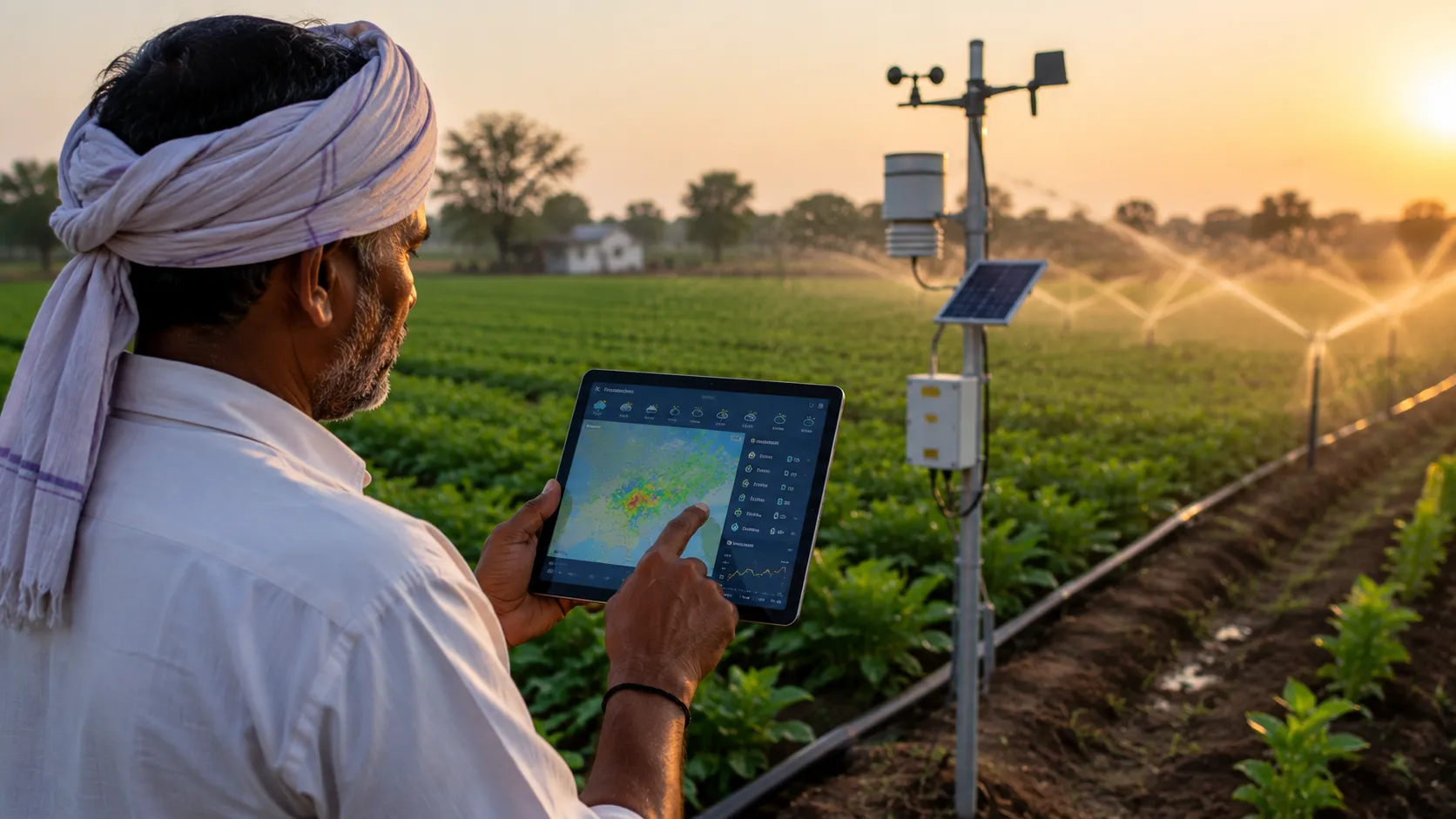
Part of the significance surrounding this transition involves how deeply weather uncertainty increasingly enters everyday agricultural choices.
Historically, planting decisions frequently relied heavily on familiar seasonal expectations and long-established agricultural calendars. Farmers often used local environmental knowledge accumulated across generations to determine sowing periods and crop timing. Increasingly, however, those assumptions occasionally appear less reliable when weather patterns become harder to predict.
Across several farming regions, reports and agricultural observations increasingly suggest that shifts involving rainfall timing and heat intensity are influencing decisions surrounding crop selection and agricultural practices. Some farmers increasingly explore drought-resistant crops while others adjust planting schedules or diversify agricultural activity to reduce exposure to concentrated risks.
Importantly, these changes frequently emerge not through large structural transformations occurring overnight but through gradual adjustments inside everyday decision-making.
Small shifts involving sowing choices.
Changes involving irrigation behavior.
Greater attention toward weather forecasting tools.
Incremental adaptation increasingly appears becoming part of agricultural planning itself.
The broader lesson increasingly suggests that climate discussions no longer operate solely within environmental frameworks. They increasingly influence business behavior at the farm level.
Technology And Data Increasingly Appear To Be Entering Agricultural Risk Conversations
Another important development increasingly involves the growing role of technology within agricultural decision-making environments.
Historically, agricultural infrastructure often centered heavily around land, labor and physical inputs. Increasingly, however, digital tools and predictive systems appear entering farming conversations through weather forecasting platforms, crop intelligence systems and risk-management technologies.
Across India, agricultural technology ecosystems increasingly continue exploring platforms involving weather analytics, satellite-supported monitoring and advisory systems capable of helping farmers make more informed decisions. Agri-tech startups increasingly position themselves around environments where data visibility may help reduce uncertainty and improve resilience.
This shift increasingly matters because uncertainty frequently becomes more manageable when information becomes more visible.
Forecasting systems cannot eliminate extreme weather.
Data cannot completely remove climate exposure.
However, greater visibility frequently helps communities respond more effectively when risks become less predictable.
The broader movement increasingly suggests that farming systems may gradually become more proactive rather than reactive in how they engage with environmental uncertainty.
The Larger Story Increasingly Extends Beyond Agriculture Alone
The broader significance surrounding India’s changing agricultural relationship with weather may ultimately involve what it reveals about larger economic transitions taking place beneath the surface.
Historically, climate discussions frequently operated through environmental narratives involving sustainability and conservation. Increasingly, however, climate variability appears entering conversations involving productivity, financial stability and long-term economic resilience.
Viewed through that broader lens, farming increasingly appears positioned at the intersection of multiple systems simultaneously. Agriculture influences employment, food security and local economies across vast sections of India. As a result, changing agricultural risk environments increasingly influence broader social and economic outcomes extending far beyond farming communities themselves.
The larger story therefore may not simply involve changing weather patterns or isolated crop disruptions. Increasingly, it may involve understanding that climate uncertainty itself is gradually becoming embedded within economic systems and business planning decisions. Agriculture may therefore be entering a phase where adaptation increasingly depends not simply on responding to seasons but on developing entirely new ways of understanding and managing risk itself.