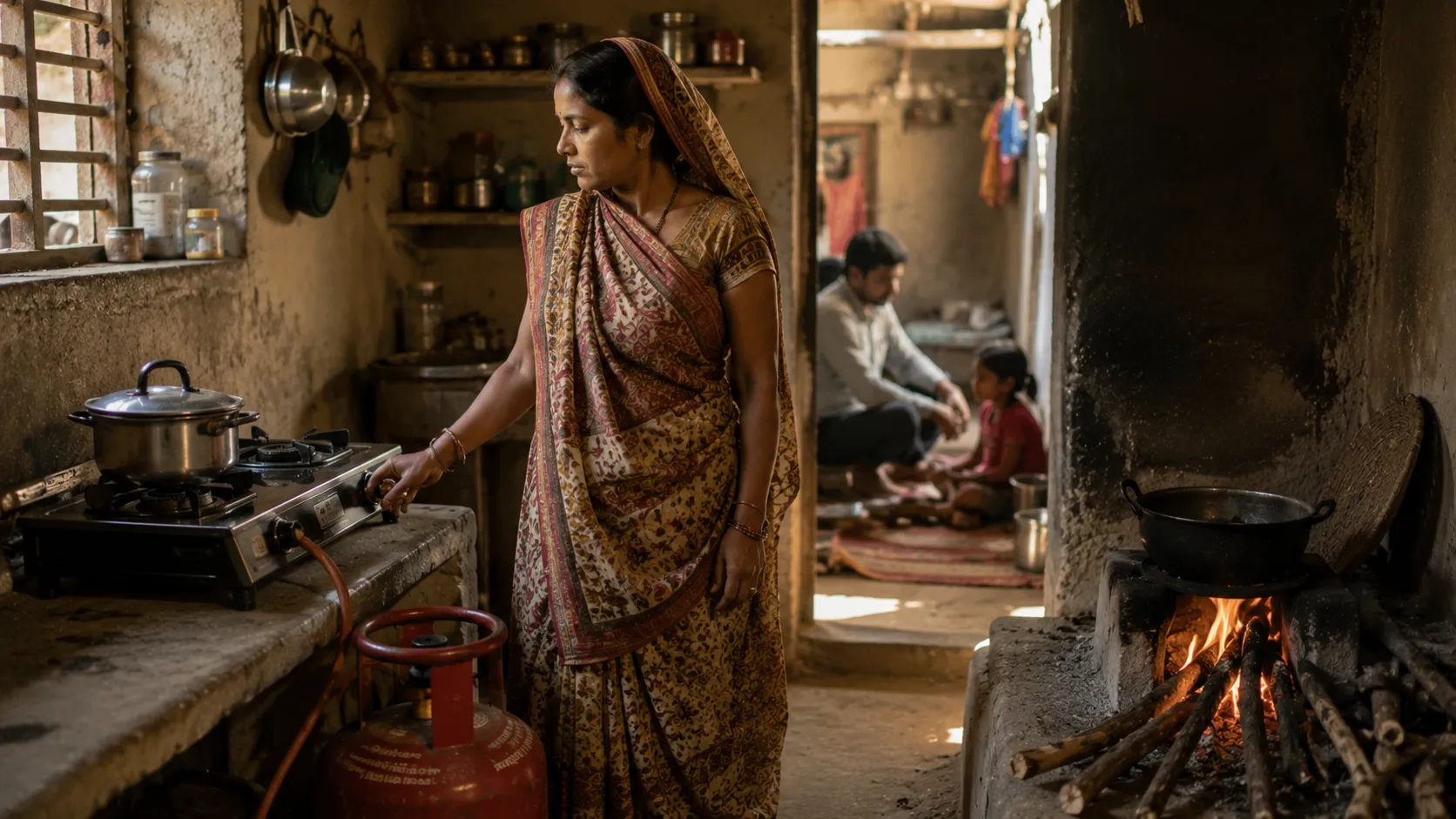
A Public-Health And Development Success Story Is Beginning To Encounter A More Complicated Reality
For much of the last decade, India’s clean-cooking transition frequently appeared among the country’s most visible public-health and household development efforts. Programs designed around expanding access to cleaner cooking fuels increasingly became associated with broader goals involving health, women’s welfare and quality of life. Millions of households that historically depended on firewood, crop residue and traditional biomass fuels gradually entered cleaner energy systems through initiatives intended to reduce indoor air pollution and improve everyday living conditions.
The significance surrounding this transition always extended far beyond kitchens themselves. Traditional cooking environments often created invisible health burdens affecting millions of households, particularly women and children who frequently spent substantial amounts of time near indoor cooking spaces. Public-health research repeatedly linked prolonged exposure to smoke from biomass fuels with respiratory illness, cardiovascular complications and broader health risks. Beyond healthcare consequences, traditional fuel dependence often required substantial time investments involving firewood collection and fuel preparation, responsibilities that frequently fell disproportionately on women and girls.
Against that backdrop, initiatives such as Pradhan Mantri Ujjwala Yojana (PMUY) represented an important shift. The program expanded LPG access across millions of lower-income households and became one of India’s most significant clean-energy and public-health interventions. Over time, household LPG connections increased dramatically, and clean cooking increasingly entered broader development conversations involving health outcomes, environmental concerns and women’s empowerment. Viewed through infrastructure and access metrics, the transition frequently appeared substantial.
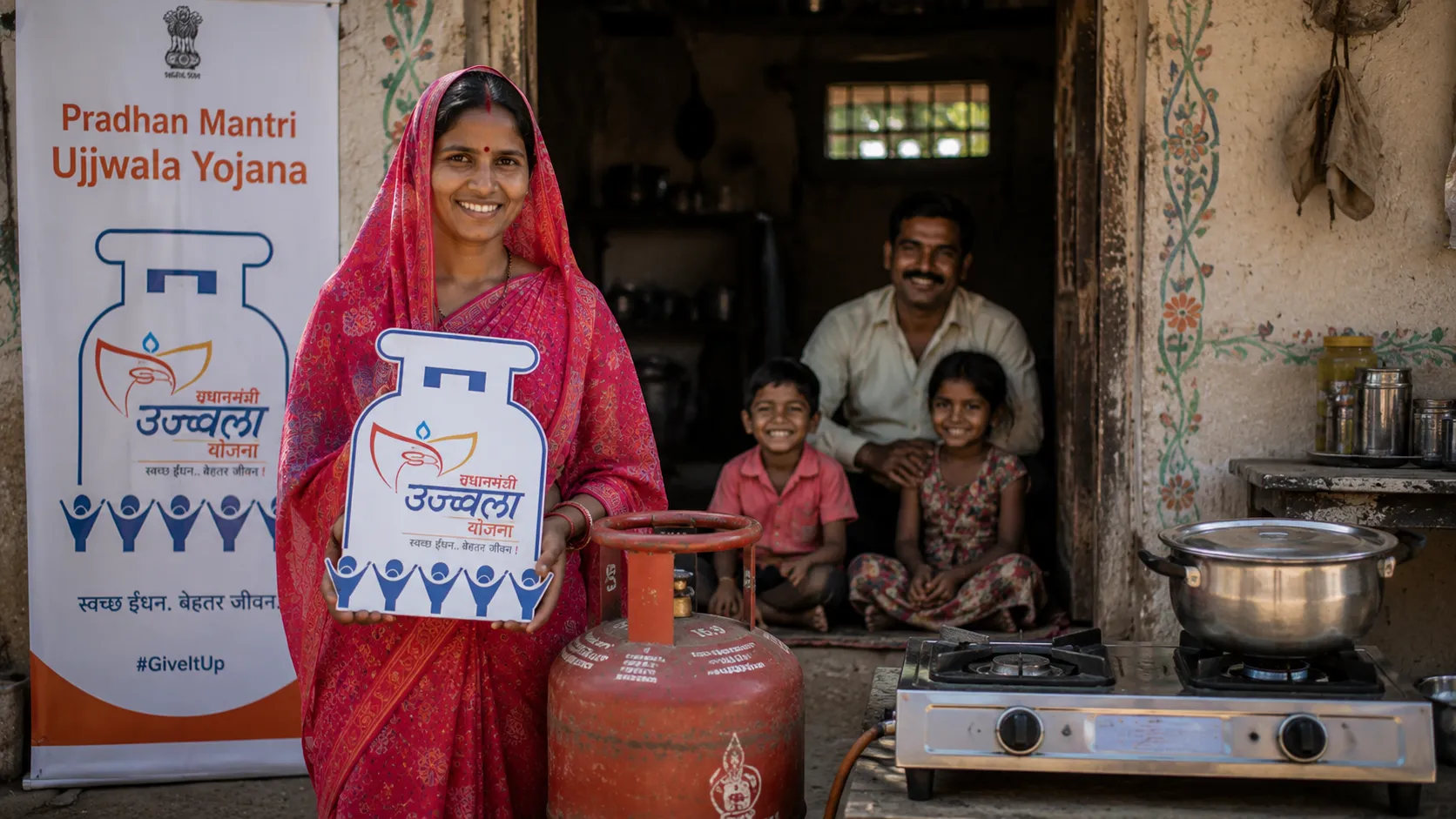
Yet recent developments increasingly suggest a more layered reality. While access expanded significantly, affordability increasingly appears to be emerging as a new challenge. Reports and field observations across several regions suggest rising cooking fuel costs periodically created pressures affecting refill behavior among lower-income households. Public-health researchers and rural development observers increasingly note concerns that some families may continue using LPG while simultaneously returning to traditional fuels such as firewood or biomass during periods of economic strain. The issue increasingly suggests that access alone may not always guarantee sustained adoption.
Clean Cooking Increasingly Appears To Be About Continued Usage Rather Than Initial Access Alone
Historically, development conversations surrounding energy access frequently focused heavily on connections and infrastructure delivery. Expanding access itself often represented the most immediate challenge because millions of households historically remained outside formal energy systems altogether. Once connections expanded, broader assumptions often suggested adoption would naturally follow.
The reality increasingly appears more complex.
Household behavior frequently reflects multiple considerations extending beyond access itself. Affordability, local fuel availability and everyday economic conditions often influence long-term decisions in ways infrastructure metrics alone sometimes struggle to capture. For lower-income households especially, energy choices frequently involve balancing multiple competing priorities involving food costs, education expenses and broader household needs.
As a result, clean cooking conversations increasingly appear shifting toward sustained usage rather than access numbers alone. Development researchers increasingly emphasize that long-term success frequently depends not only on whether households receive connections but also whether they continue using cleaner systems consistently over time.
This distinction increasingly matters because infrastructure systems frequently create initial opportunity while affordability often determines long-term behavior.
Firewood Frequently Represents More Than A Fuel Choice Alone
Part of the broader complexity surrounding this issue involves understanding that traditional fuels frequently operate inside broader social and economic realities.
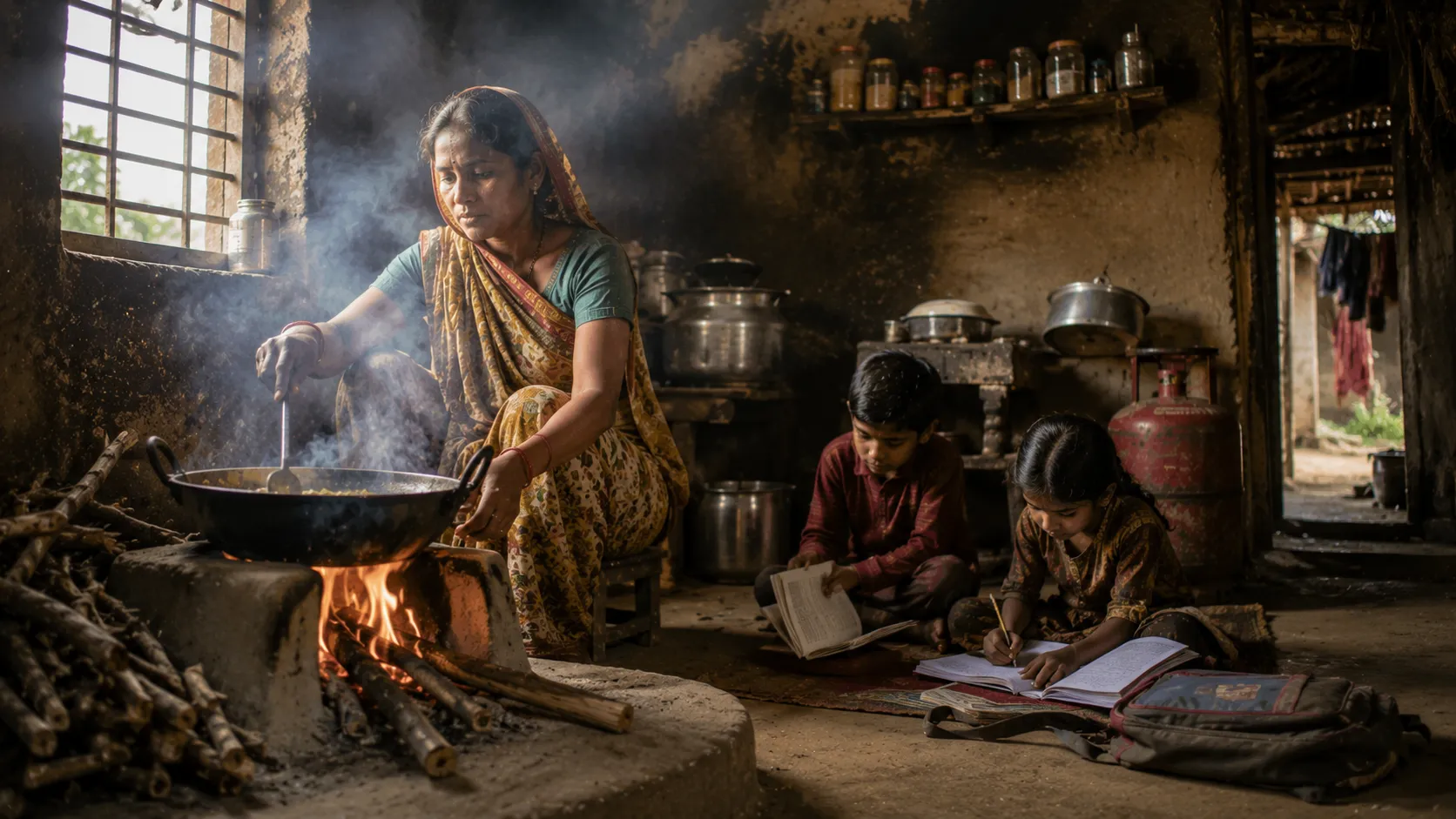
Across several communities, firewood and biomass fuels historically functioned not only as energy sources but also as deeply embedded parts of everyday life. Local availability, community practices and household routines frequently shaped cooking behavior over generations. For families facing financial pressure, freely available or locally accessible biomass fuels may occasionally appear economically practical despite broader health implications.
This reality increasingly reveals why transitions involving behavior often evolve differently from transitions involving infrastructure.
Fuel decisions frequently emerge through everyday calculations involving cost, access and necessity rather than broader policy goals alone.
Several reports and development analyses increasingly suggest households in some regions continue practicing what researchers often describe as fuel stacking, where families use multiple fuel sources simultaneously rather than replacing older systems entirely. LPG may continue serving certain purposes while firewood remains important for others. This creates more nuanced patterns surrounding household energy use than earlier assumptions occasionally suggested.
The broader lesson increasingly appears connected to understanding that transitions frequently operate gradually rather than linearly.
Public Health Increasingly Appears Connected To Energy Decisions Inside Homes
The significance surrounding clean cooking increasingly extends beyond energy policy itself because household fuel choices frequently create larger public-health consequences.
Indoor air pollution continues representing a significant concern globally and within India. Exposure to smoke generated through traditional biomass cooking environments frequently creates long-term health implications involving respiratory conditions and broader health burdens. Public-health organizations repeatedly highlighted the importance of cleaner cooking environments because impacts often extend across generations and affect vulnerable populations disproportionately.
Importantly, these consequences frequently remain invisible.
Unlike visible infrastructure challenges, indoor air quality often operates quietly inside everyday environments. Households may continue functioning normally while health effects accumulate gradually over long periods.
This broader connection increasingly explains why cooking systems frequently appear within healthcare discussions alongside environmental and energy policy conversations. Clean cooking increasingly represents not simply an energy transition but also a preventive-health conversation involving everyday environments where millions of people spend significant portions of time.
The Larger Story Increasingly Extends Beyond Fuel Prices Alone
The broader significance surrounding India’s evolving clean-cooking story may ultimately involve what it reveals regarding development itself.
Historically, many large-scale development efforts frequently focused on expanding access because access often represented the most visible challenge. Yet over time, systems frequently evolve. Initial inclusion often creates new questions involving sustainability, affordability and long-term usage patterns.
Viewed through that broader lens, India’s clean-cooking transition increasingly appears connected to larger questions involving how public systems support long-term behavioral change. Infrastructure creates possibility. Access creates opportunity. Yet sustained adoption frequently depends upon broader conditions surrounding affordability and everyday practicality.
The larger impact story therefore may not simply involve whether households receive cleaner cooking options. Increasingly, it may involve understanding how economic realities influence long-term health and development outcomes inside homes themselves. Because transitions frequently succeed not only when systems become available, but when people can realistically continue depending upon them over time.