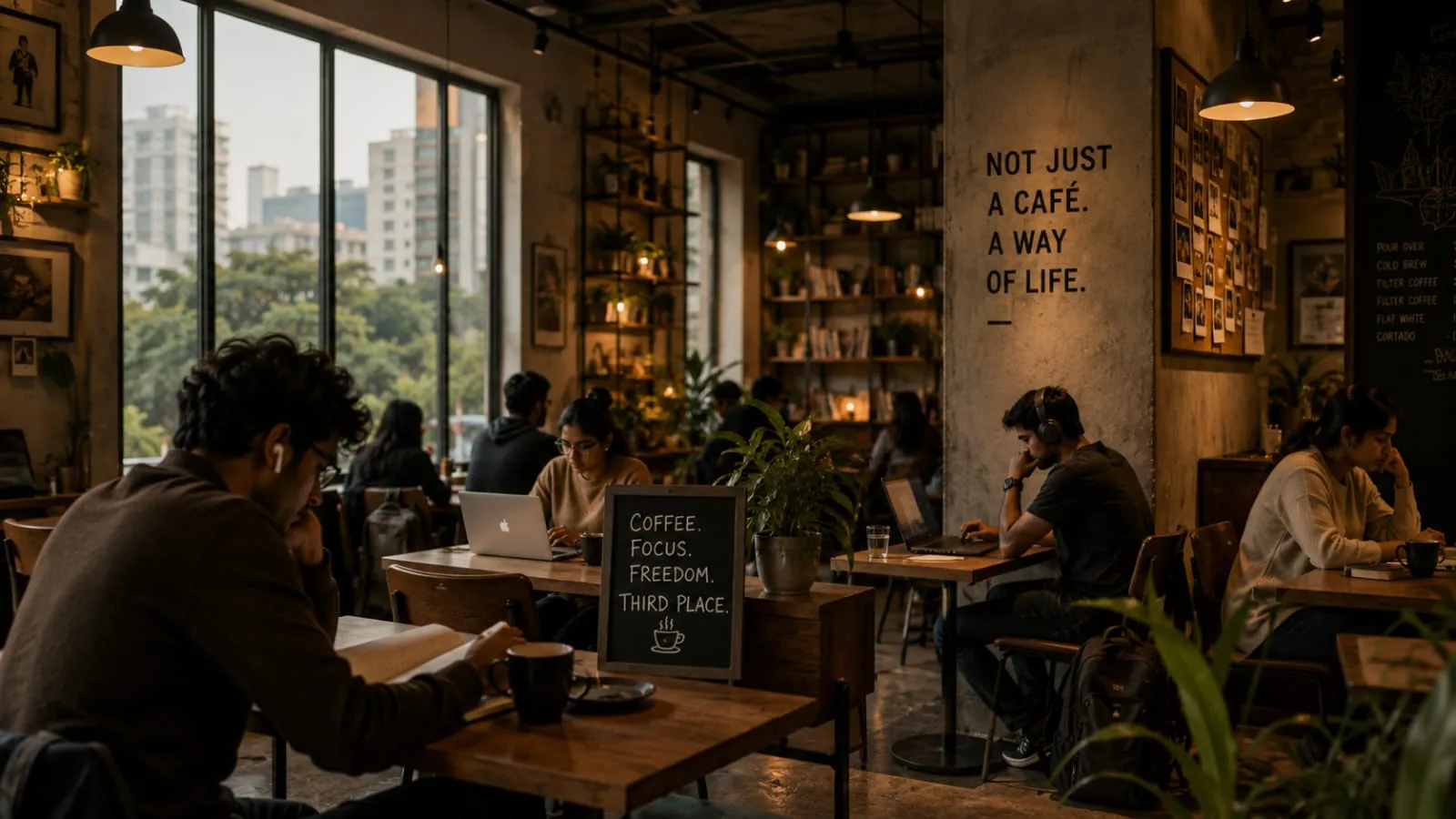
What Once Looked Like A Lifestyle Trend Is Quietly Turning Into A Reflection Of How Young India Now Lives, Works And Spends Time Alone
For years, cafés in India largely occupied a simple role inside urban life. They were places people visited occasionally between meetings, after shopping trips or during weekend catchups because café culture itself was often treated as an extension of leisure. Coffee chains expanded across malls, business districts and affluent neighborhoods because rising disposable incomes and global lifestyle aspirations were reshaping consumption patterns. The experience felt familiar because cafés mostly symbolized convenience, socializing and a certain kind of modern city identity.
Something deeper now appears to be unfolding.
Across cities like Bengaluru, Mumbai, Hyderabad, Delhi and Pune, cafés are increasingly becoming emotional infrastructure for urban life because people are beginning to use these spaces for far more than coffee. Young professionals now spend entire workdays inside cafés, freelancers treat them as temporary offices, creators use them as editing studios and many customers quietly sit alone for hours with laptops, headphones or books because modern urban routines increasingly blur the lines between work, solitude and social connection. What initially looked like another consumer trend is slowly turning into a larger story about loneliness, flexible work culture and how Indian cities are changing psychologically.
The shift became especially visible after remote and hybrid work expanded across white-collar industries. Millions of professionals suddenly discovered that working entirely from home created its own kind of exhaustion because apartments became offices, routines became repetitive and social interaction shrank dramatically. Cafés quietly stepped into that vacuum. Unlike offices, they offered flexibility. Unlike homes, they offered movement, background noise and the feeling of being around people without requiring interaction. For many urban professionals, cafés became somewhere between a workplace, a social space and a mental escape.
This partly explains why India’s organized café market is expanding aggressively despite broader economic caution in several consumer sectors. International chains continue scaling operations while homegrown specialty coffee brands are rapidly growing across metropolitan cities because demand is no longer limited to occasional dining behavior. Consumers increasingly return multiple times a week and often stay longer than traditional hospitality models expected. A coffee purchase is frequently becoming payment for time, atmosphere and emotional comfort rather than just a beverage itself.
The rise of independent cafés also reflects another major urban shift: people increasingly want “third places.” Sociologists have long used the term to describe environments outside home and office where people spend time casually because healthy urban cultures generally rely on such spaces for social interaction and psychological balance. In many Indian cities, however, public spaces remain limited, crowded or commercially restrictive. Parks close early, community spaces remain fragmented and modern apartment living can often feel isolating despite density. Cafés quietly filled that gap because they offered air conditioning, Wi-Fi, relative safety and permission to linger.
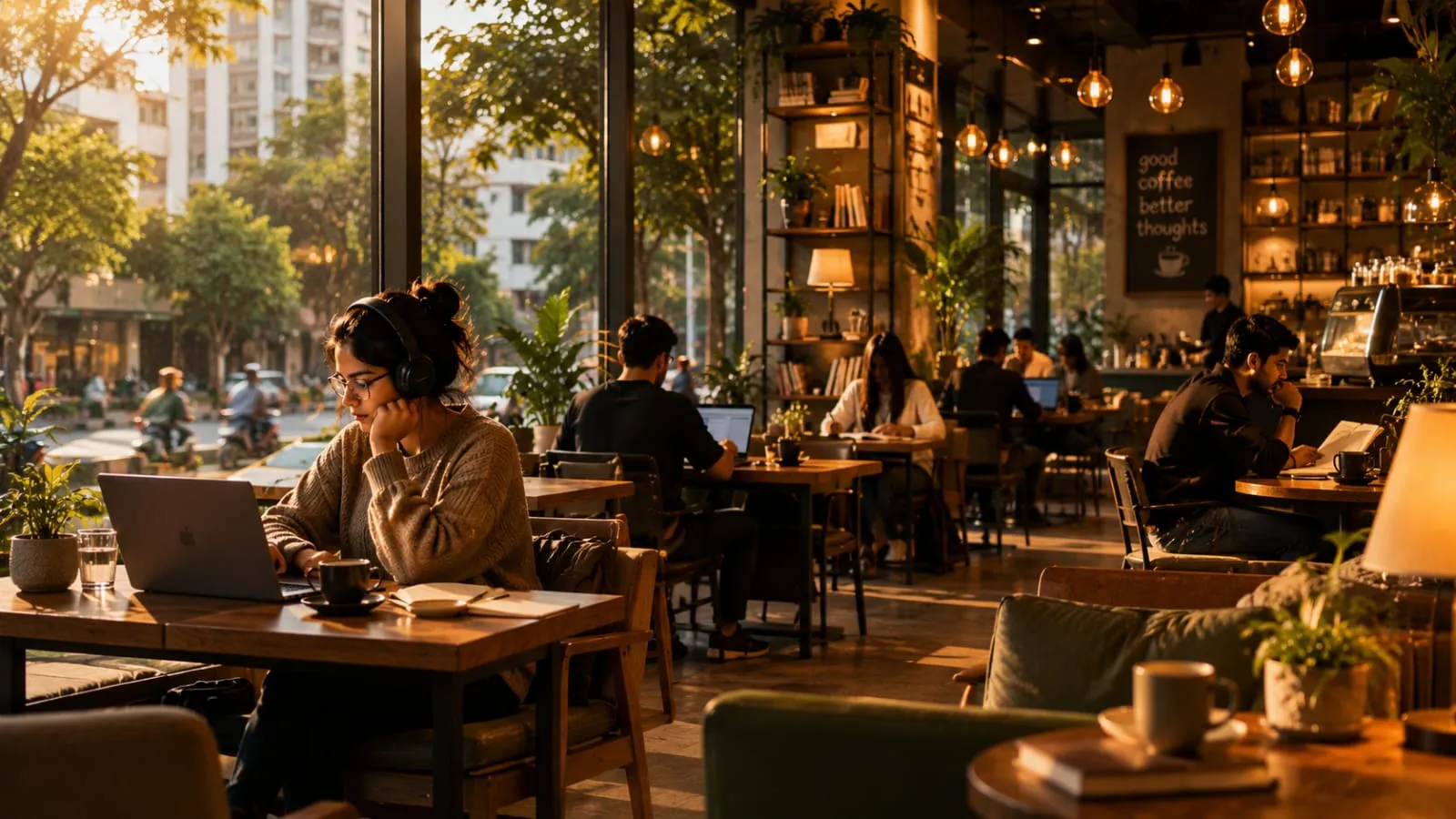
At the same time, the emotional relationship people now have with cafés reveals something more complicated about urban loneliness.
India’s major cities are attracting enormous numbers of migrants, young professionals and first-generation corporate workers because economic opportunities increasingly concentrate inside urban clusters. Many people move away from hometowns, extended families and familiar social structures in pursuit of careers. While cities create ambition and independence, they can also create emotional fragmentation because support systems frequently disappear faster than new ones form. Cafés increasingly function as soft social environments where people can feel surrounded by life even while being alone.
This is one reason solo café visits no longer feel unusual. A decade ago, cafés in India were heavily associated with groups, dates or meetings because public solitude itself carried social discomfort. Today single-person tables filled with laptops, journals or headphones have become completely normalized across urban café ecosystems. The cultural meaning of being alone in public has quietly changed because younger urban audiences increasingly value autonomy, flexibility and emotionally neutral spaces.
Social media accelerated this transformation further.
Platforms like Instagram and Pinterest helped cafés evolve into visual identity markers because consumers increasingly associate certain cafés with productivity, aesthetics, aspiration or even emotional moods. Interiors, lighting, playlists and design language became part of the product itself because younger audiences now consume spaces as much as food and beverages. A café visit today frequently becomes content, routine, workspace and emotional ritual simultaneously. The industry therefore no longer operates only through hospitality logic because experience itself increasingly drives customer loyalty.
But the story also reflects changing work culture.
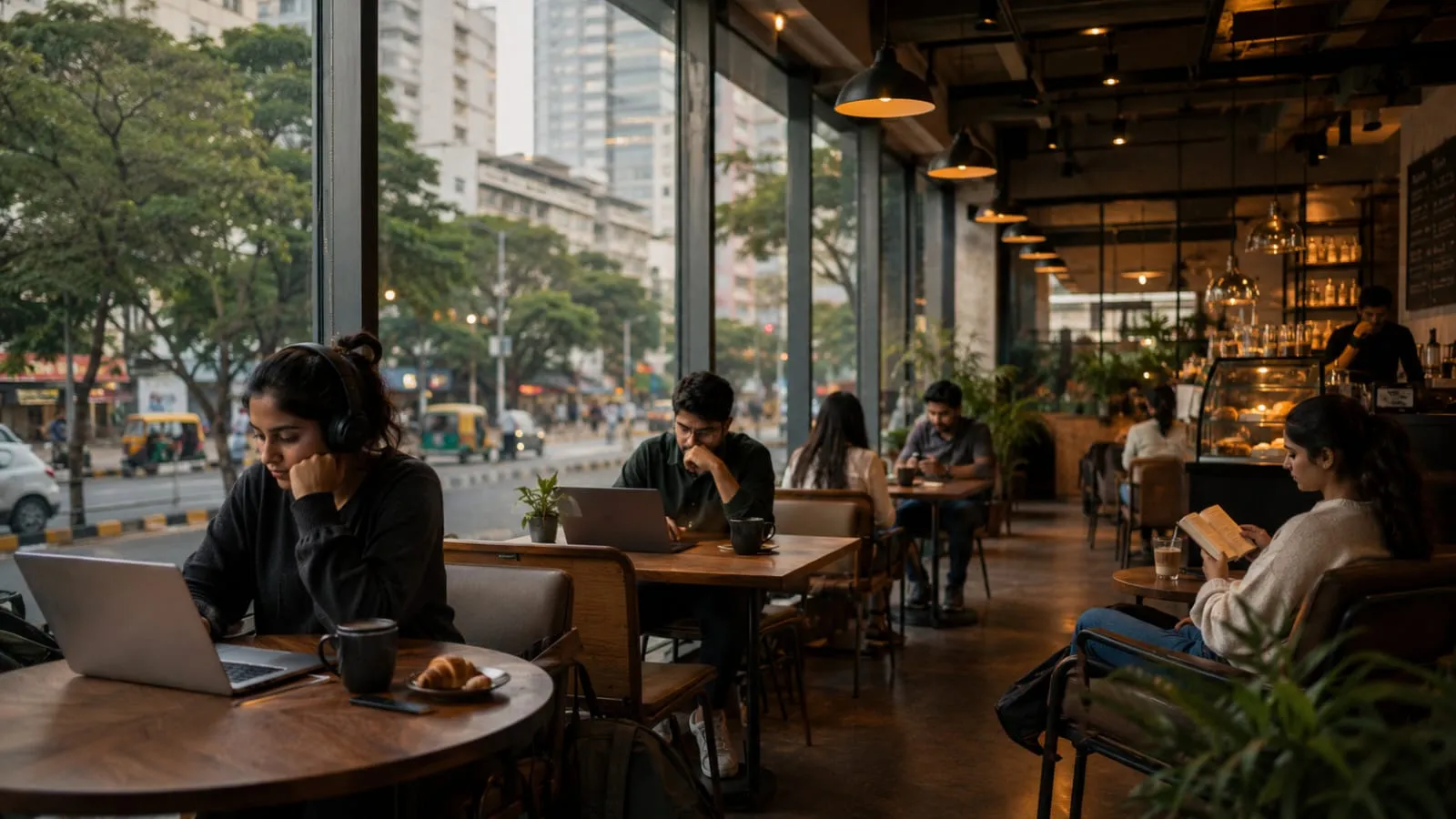
India’s startup ecosystem, creator economy and freelance workforce have expanded dramatically over the last decade because employment itself is becoming less centralized around traditional corporate structures. Many professionals no longer work fixed schedules inside permanent offices. Meetings happen remotely, creators edit videos independently and founders often operate from laptops rather than formal headquarters during early stages. Cafés naturally became extensions of this flexible economy because they provide structure without rigidity. In several urban neighborhoods, cafés during weekday afternoons now resemble co-working spaces more than traditional food outlets.
Yet beneath the aesthetics and productivity culture lies a more revealing urban reality: people increasingly crave spaces where they can simply exist without pressure.
Modern cities constantly demand movement, performance and productivity because urban life itself often revolves around deadlines, traffic, rent, competition and overstimulation. Cafés offer controlled calm. They create predictable environments where individuals can pause temporarily without needing a destination or purpose beyond presence itself. That emotional utility may explain why café culture continues growing even when discretionary spending slows elsewhere.
The future of India’s café economy therefore may not depend only on coffee consumption. It may increasingly depend on how cities evolve socially and emotionally.
As urban India becomes denser, faster and more digitally connected, people may continue searching for physical spaces that still feel human, flexible and emotionally breathable. Cafés are quietly positioning themselves at the center of that search because they now represent far more than lifestyle branding. They increasingly reflect how a generation navigates work, loneliness, ambition, independence and modern city life all at once.
What began as a coffee trend is slowly becoming an urban sociology story.
And India’s cafés may ultimately tell us as much about emotional survival in modern cities as they do about caffeine consumption.