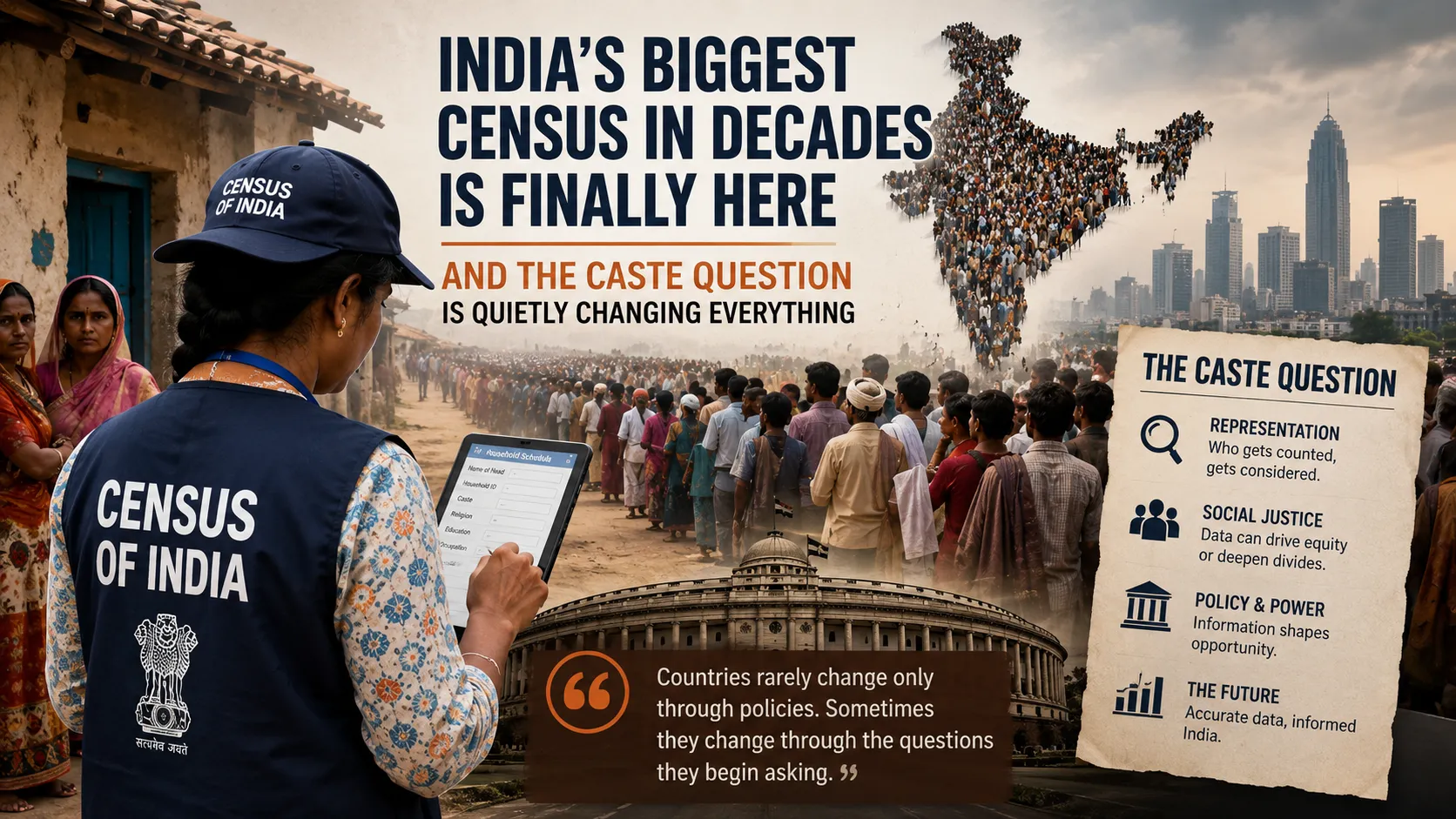
What Was Expected To Be A Massive Population Exercise Is Gradually Becoming A Larger Conversation About Identity, Data And How India Understands Itself
For decades, India’s census process largely operated as one of the country’s biggest administrative exercises because counting people frequently meant understanding households, migration patterns, literacy, employment and demographic realities at an enormous scale. Census data often shaped decisions involving infrastructure, welfare and long-term planning because governments frequently relied on population information to understand how societies were changing. For many people, however, the census usually remained something distant because questionnaires and statistics rarely felt connected with everyday life.
This time feels different.
India is preparing for one of its largest census exercises in decades, but conversations surrounding it increasingly appear extending far beyond population numbers and household records. The possibility of caste enumeration has moved toward the center of public attention because discussions now increasingly involve representation, social policy and political implications alongside traditional demographic questions. What initially looked like a routine data exercise is gradually becoming something much larger because the debate itself increasingly touches questions involving identity and power.
Viewed independently, census updates may initially resemble another government process involving information collection and administrative planning. Viewed through a broader impact lens, however, another question quietly begins surfacing beneath the headlines: what happens when data itself begins shaping conversations around opportunity and social structure? Because numbers frequently do more than describe societies. They often influence how societies understand themselves.
Historically, census exercises frequently carried significance beyond statistics because data often informed policy decisions involving welfare, resource allocation and development priorities. Yet caste itself occupied a particularly complex space because conversations surrounding social categories frequently involved political, historical and emotional dimensions simultaneously. Questions involving representation and social realities rarely remained purely administrative because identities often intersected with institutions and opportunity structures.
That distinction explains why conversations around caste enumeration frequently generate strong reactions. Supporters often argue updated data could provide clearer understanding surrounding social realities because public policy frequently becomes more effective when supported by accurate information. Better demographic visibility, according to many advocates, can strengthen conversations around inclusion and welfare because evidence often influences long-term planning decisions.
Critics and observers, however, frequently raise different concerns because questions surrounding caste often involve broader social consequences beyond information gathering itself. Some worry enumeration could intensify identity-driven politics because public debates occasionally shift toward social divisions rather than policy outcomes. Others argue the challenge may not simply involve collecting information but determining how that information eventually gets interpreted and applied.
This broader conversation matters because India itself has changed significantly over recent decades. Urban migration expanded, educational access evolved and economic patterns shifted because societies rarely remain static across long periods. Population movements and changing aspirations frequently reshape communities because demographic realities continuously evolve underneath public life. Updated information therefore increasingly appears important because older assumptions occasionally struggle reflecting present realities accurately.
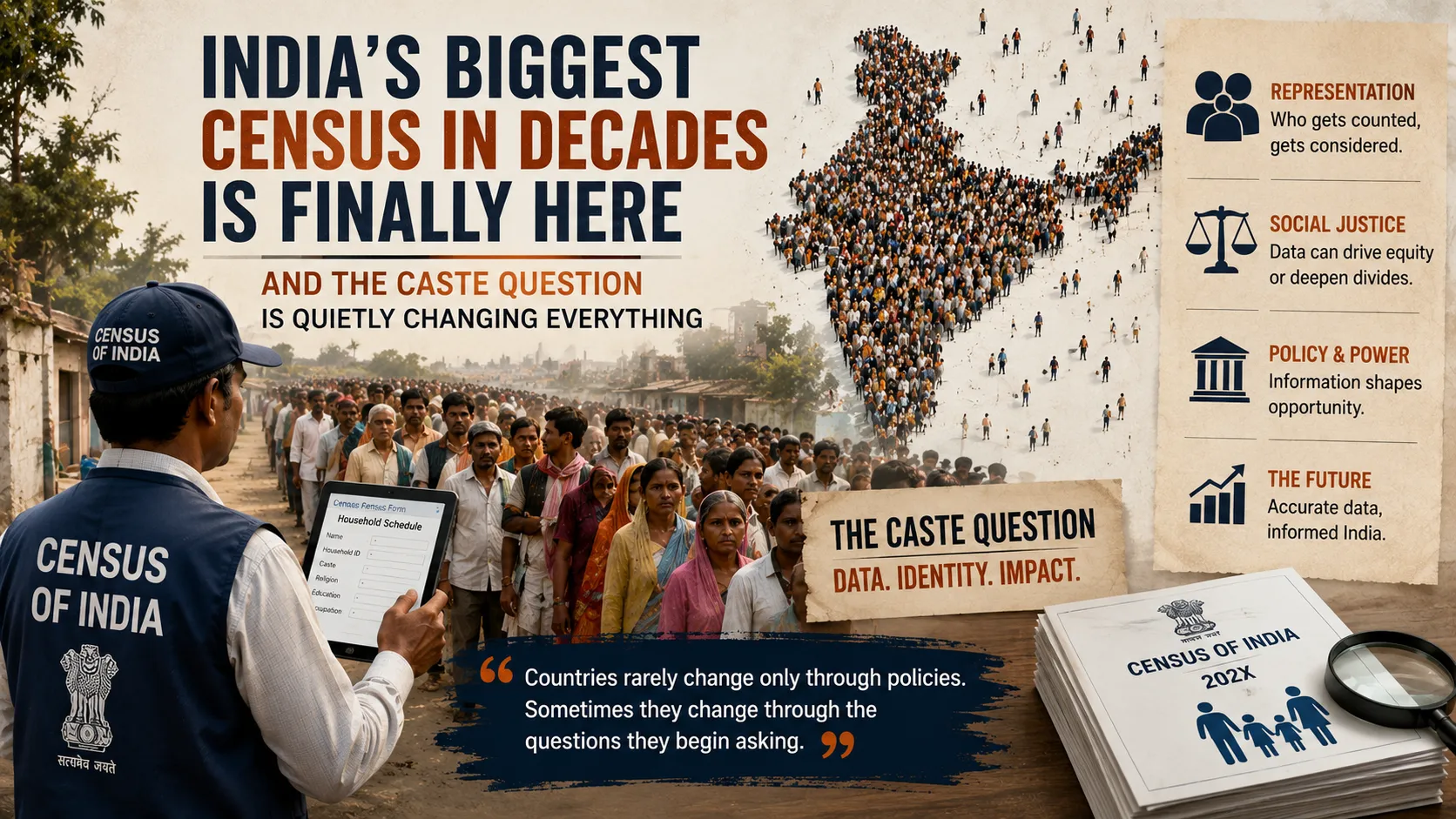
Another important layer beneath this discussion involves younger generations themselves. Millions of Indians today grew up inside environments shaped by digital platforms, expanding educational opportunities and changing social expectations because contemporary experiences often differ significantly from earlier periods. Questions involving representation and opportunity increasingly appear central because younger citizens frequently engage more directly with public conversations surrounding fairness and inclusion.
The scale itself also adds another dimension. India’s census remains one of the world’s largest exercises involving data collection because reaching hundreds of millions of households requires enormous administrative coordination. Questions surrounding migration, employment, education and demographics increasingly influence development planning because information itself often becomes infrastructure for decision-making. Once societies operate at such scale, data frequently carries consequences extending far beyond spreadsheets.
Perhaps that explains why this conversation increasingly feels larger than questionnaires or government forms. Because beneath discussions involving census operations ultimately exists another reality involving how nations understand change itself. Data frequently appears technical from distance because forms and categories often feel administrative.
Yet sometimes the questions people ask reveal as much as the answers themselves.