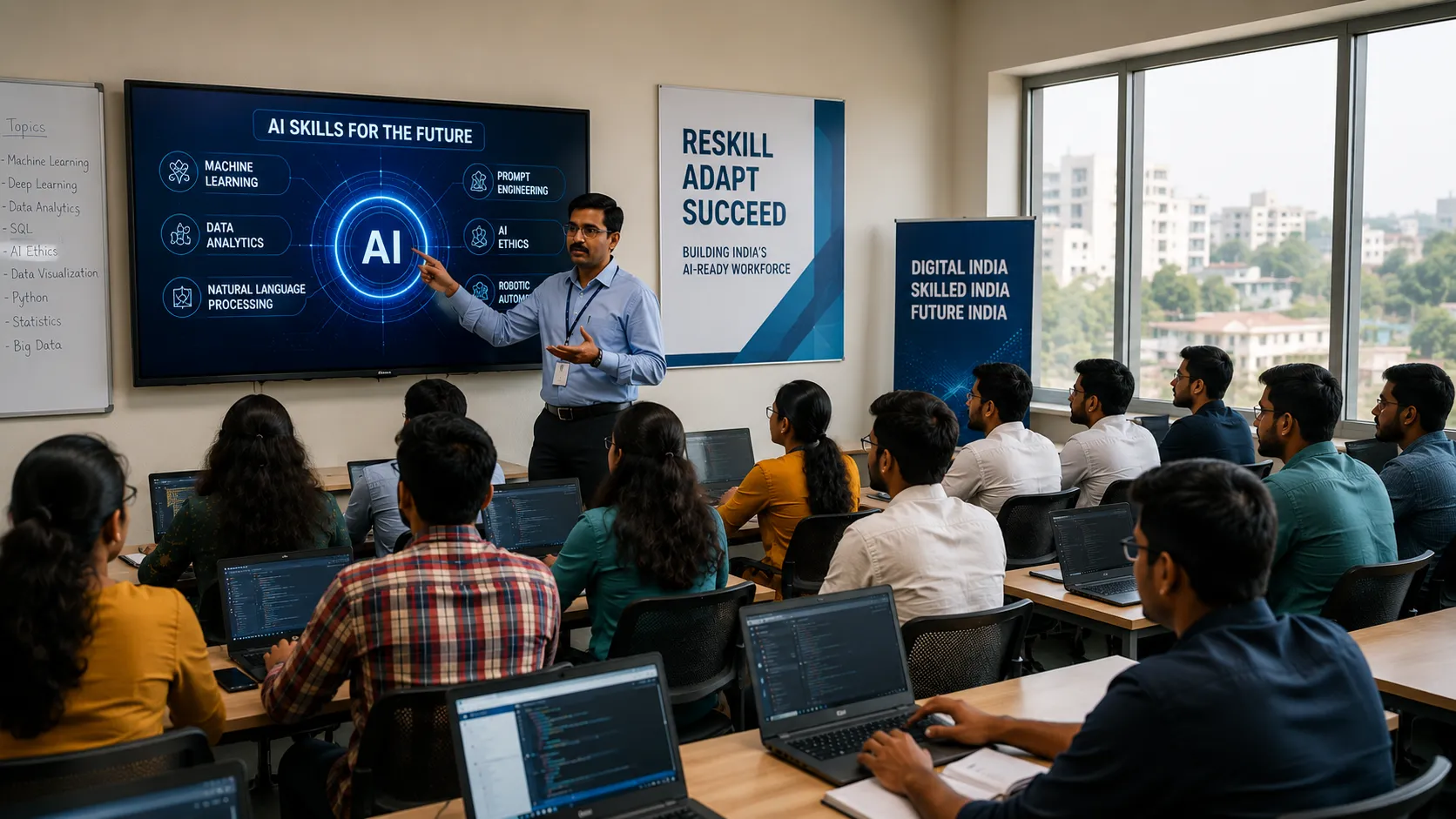
For years, India’s technology story was built around scale. A large engineering workforce, a rapidly expanding digital economy and one of the world’s youngest populations positioned the country as a global technology powerhouse. The same strengths are now expected to support India’s ambitions in artificial intelligence, a sector increasingly viewed as central to future economic growth. But as AI moves from experimentation into everyday business systems, a more difficult question is beginning to emerge: can the country prepare enough people for a transformation arriving faster than many institutions are built to handle?
The challenge increasingly appears larger than a workforce issue alone. Artificial intelligence is beginning to reshape how industries operate, how businesses hire and how work itself evolves. As companies accelerate AI adoption across sectors ranging from healthcare and finance to manufacturing and retail, demand for AI-related capabilities is rising rapidly. Industry estimates suggest demand for AI talent in India could exceed 1.25 million roles by 2027, while recent workforce data showed the country recording the fastest AI hiring growth globally, with AI-related hiring increasing nearly 59.5% year-over-year. Yet behind those numbers lies a broader concern: growth may be moving faster than readiness.
Unlike earlier technology transitions that largely affected specific industries, artificial intelligence is beginning to influence multiple sectors simultaneously. Banks are deploying AI systems across customer operations. Healthcare institutions are experimenting with AI-supported workflows and diagnostics. Manufacturing companies are integrating automation systems while Global Capability Centres continue expanding AI-driven functions. As AI increasingly becomes embedded into everyday systems, the challenge extends beyond creating jobs. Increasingly, it involves determining whether people possess the skills required to participate in those changes.
The implications may become particularly significant for workers already navigating rapidly changing professional environments. Previous technology waves often created time for industries and institutions to adapt gradually. Artificial intelligence appears to be moving differently. Capabilities are evolving quickly, tools are changing frequently and businesses are adjusting expectations at unprecedented speed. For many professionals, the issue may not simply involve learning a new technology. It increasingly involves understanding how entire job categories could evolve around them.
That concern is becoming visible across hiring patterns themselves. Companies are no longer searching only for highly specialized AI researchers or machine-learning engineers. Increasingly, businesses require professionals capable of combining technical knowledge with practical implementation skills involving automation tools, generative AI systems, workflow integration and business understanding. The challenge is that educational systems and workforce structures often evolve more slowly than technological shifts themselves.
Industry reports suggest shortages are already emerging across India’s rapidly growing Global Capability Centre ecosystem, where businesses increasingly report difficulty finding specialized AI and advanced data talent. Estimates suggest gaps in specialized capability may reach 38–42%, creating pressure around hiring and expansion plans. Yet the issue may ultimately involve more than employer demand. It raises broader questions around who gains access to future opportunities and who risks being left behind.
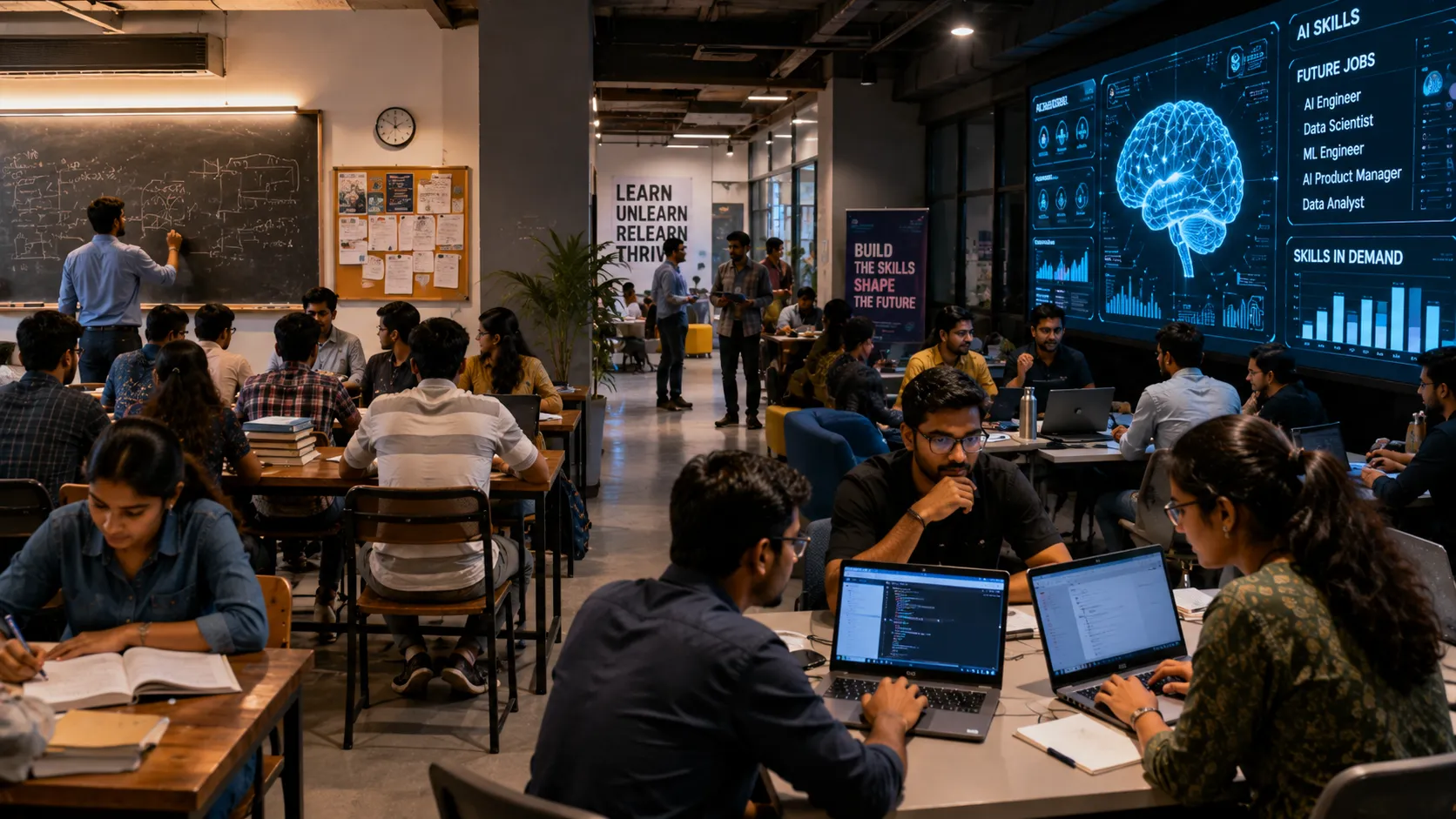
The challenge also introduces questions around inequality and access. Large metropolitan technology centers such as Bengaluru, Hyderabad and Gurgaon continue attracting investment, infrastructure and AI-related employment opportunities. Yet AI transformation will increasingly affect people far beyond major technology clusters. Millions of professionals in smaller cities and emerging regions may also need access to training and reskilling pathways. Without broader access systems, technology transitions risk creating wider gaps between those prepared for AI-enabled work and those attempting to catch up.
Educational institutions themselves face increasing pressure. Universities, training systems and professional programmes are now confronting a technology cycle evolving faster than traditional curriculum structures were designed to accommodate. Industry leaders increasingly argue that AI education may require a more continuous approach rather than a one-time qualification model. Learning may increasingly become an ongoing process rather than a stage completed before entering the workforce.
The economic consequences could also extend far beyond technology sectors. Recent estimates suggest artificial intelligence could contribute more than $500 billion to India’s economy by 2030, reinforcing why AI increasingly sits at the center of policy and business discussions. But projections at that scale often depend on a critical condition: whether sufficient human capability exists to support deployment at a national level. Infrastructure, investment and innovation matter. But economic transitions often depend just as heavily on people.
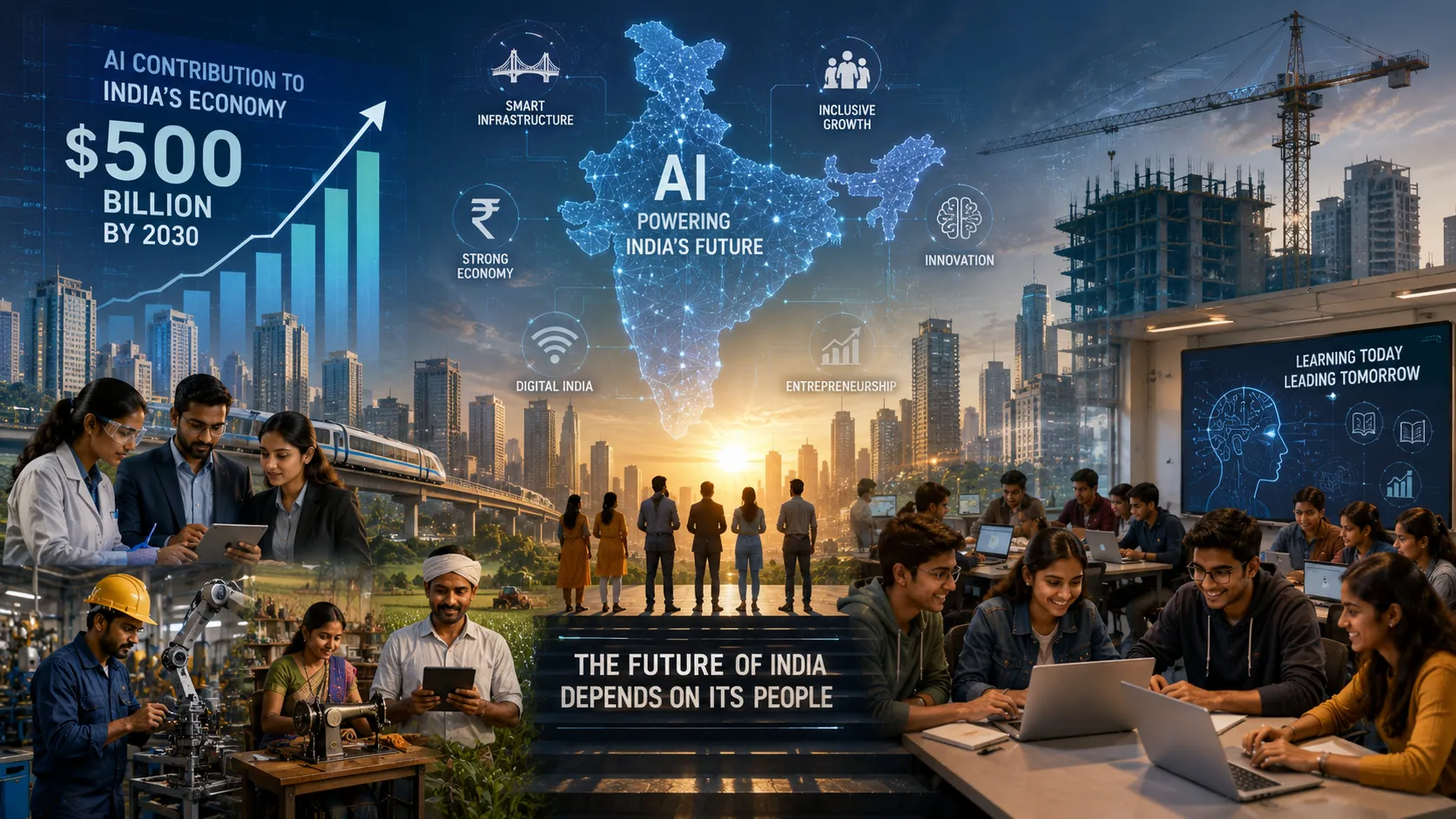
Historically, conversations around technology revolutions focused on products and breakthroughs. Artificial intelligence may create a different story. Increasingly, the defining challenge may not involve building stronger models or attracting more capital. It may involve ensuring people can participate meaningfully in the systems being created around them.
Because the future AI economy may not simply be shaped by countries developing the most advanced technologies.It may increasingly be shaped by countries preparing the most people.
Another emerging concern involves how artificial intelligence could reshape opportunity itself across different sections of the workforce. Historically, digital revolutions often created new categories of employment even as older roles evolved. Artificial intelligence may follow a more uneven path. While highly skilled professionals with access to technology ecosystems and continuous learning opportunities could benefit significantly, workers in roles vulnerable to automation may face a more uncertain transition. Industry researchers increasingly suggest the challenge may not simply involve job displacement, but job transformation occurring at a pace many workers may struggle to adapt to. The larger issue therefore extends beyond employment numbers and increasingly touches questions around preparedness and mobility.
The impact may become particularly visible among early-career professionals and students entering the workforce during this transition period. Previous generations often built careers around skills expected to remain relevant for years. Today's workforce environment appears increasingly different. Artificial intelligence systems continue evolving rapidly, changing expectations around productivity, technical capability and workplace requirements. Students graduating over the next decade may enter industries where job descriptions themselves continue changing in real time. For educational institutions, preparing students for specific roles may become increasingly difficult if the nature of those roles continues evolving alongside technology.
The challenge also raises broader questions around regional inclusion. India's technology economy has historically remained concentrated around major urban centers such as Bengaluru, Hyderabad, Pune and Gurgaon. Yet AI transformation is unlikely to remain confined to technology corridors alone. Small businesses, regional industries, public systems and local enterprises will increasingly encounter AI-enabled tools as adoption expands. Ensuring access to training and workforce development outside traditional technology hubs may therefore become essential. Without broader participation pathways, existing divides around geography and access could widen further.
Industry leaders increasingly argue that workforce readiness may need to be approached more like public infrastructure than corporate training. Roads, digital networks and financial systems historically received long-term national investment because they supported economic participation at scale. Several observers now suggest AI literacy and workforce capability may increasingly require similar thinking. The conversation is gradually shifting from isolated upskilling programmes toward larger questions around ecosystem development and national preparedness.
There is also growing recognition that AI capability may eventually influence global competitiveness in ways extending beyond technology sectors. Countries are no longer competing solely around software exports or engineering scale. Increasingly, competition appears linked to who can create systems capable of preparing workers continuously as technologies evolve. Businesses may build platforms and governments may support policy frameworks, but workforce readiness ultimately determines whether innovation translates into broader economic impact.
Artificial intelligence is often described as one of the most transformative technologies of this generation. Yet for India, the larger challenge may not involve creating AI systems alone. It may involve ensuring that millions of people across different regions, industries and economic backgrounds have an opportunity to participate in the future being built around them.
Because technology revolutions often create value through innovation. But their long-term impact is frequently determined by inclusion.