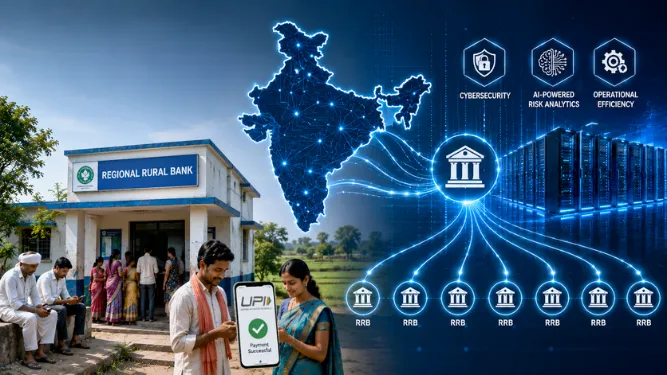
India is exploring a significant restructuring of the technology architecture supporting its rural banking ecosystem as policymakers increasingly examine how artificial intelligence and emerging digital risks could reshape financial systems. According to recent reports, the government is considering a centralized back-office infrastructure model for Regional Rural Banks (RRBs), a move intended to strengthen technology systems, improve operational efficiency and enhance resilience against rapidly evolving cyber threats. The proposal arrives during a period when banking systems globally are confronting a new reality: artificial intelligence is no longer operating only as a technological opportunity. Increasingly, it is becoming a structural factor capable of influencing how financial institutions operate, scale and manage risk.
For many observers, the proposal reflects a broader shift taking place across India’s financial ecosystem. Over the last decade, the country’s digital banking transformation largely focused on expanding access. Initiatives linked to Jan Dhan financial inclusion programmes, Aadhaar-enabled services, Direct Benefit Transfers and UPI infrastructure helped bring millions of people into formal banking systems. That phase of transformation centered around participation. The next phase increasingly appears focused on strengthening the systems supporting those users. As financial services become more digitally integrated and dependent on intelligent technologies, infrastructure itself is emerging as a larger policy conversation.
Why Regional Rural Banks Matter More Than Their Size Suggests
While discussions surrounding banking technology frequently focus on large private institutions and major public-sector lenders, Regional Rural Banks occupy a different position within India’s financial system. Built to extend banking access into rural and semi-urban areas, these institutions often serve communities where formal financial infrastructure historically remained limited. Millions of customers including farmers, agricultural workers, self-employed individuals and small enterprises rely on these banks as primary financial touchpoints.
Their role extends beyond deposits and lending. Rural banks increasingly support agricultural credit systems, government-linked financial programmes and local economic activity across regions where banking access directly influences livelihoods. Because of this, technological weaknesses affecting smaller banking institutions increasingly carry broader implications extending into financial inclusion and rural economic participation.
Despite their importance, many smaller institutions continue facing uneven technology capabilities. Larger financial institutions have invested aggressively in cybersecurity systems, AI-enabled operations and digital infrastructure modernization. Rural institutions often operate under very different resource constraints. The proposed centralized architecture appears designed to reduce those disparities by creating shared technology capabilities rather than requiring individual institutions to independently build expensive systems.
The AI Risk Conversation Is Becoming Harder for Policymakers to Ignore
The timing of the proposal is particularly notable because artificial intelligence itself is rapidly becoming embedded across banking infrastructure globally. Financial institutions increasingly deploy AI systems across fraud monitoring, customer support operations, risk assessments, credit evaluation frameworks and workflow automation systems. While these technologies create measurable efficiency improvements, regulators worldwide are simultaneously becoming more cautious about the risks emerging alongside them.
Recent comments from policymakers and central banking officials increasingly highlighted concerns surrounding AI-linked vulnerabilities involving cybersecurity, algorithmic concentration and system dependence. Artificial intelligence systems often rely on large-scale datasets and interconnected digital architectures. While these capabilities strengthen operational efficiency, they may also introduce vulnerabilities difficult for institutions to identify immediately.
Concerns around AI-driven financial risks are not limited to India. Regulators globally have increasingly warned that concentration around technology systems and shared AI infrastructure could create new forms of systemic exposure. Financial systems historically evolved around decentralization and institutional independence. Increasingly, technology dependence creates different patterns of interconnectedness capable of transmitting risks more rapidly across institutions.
A Centralized Back Office Could Change How Rural Banking Operates
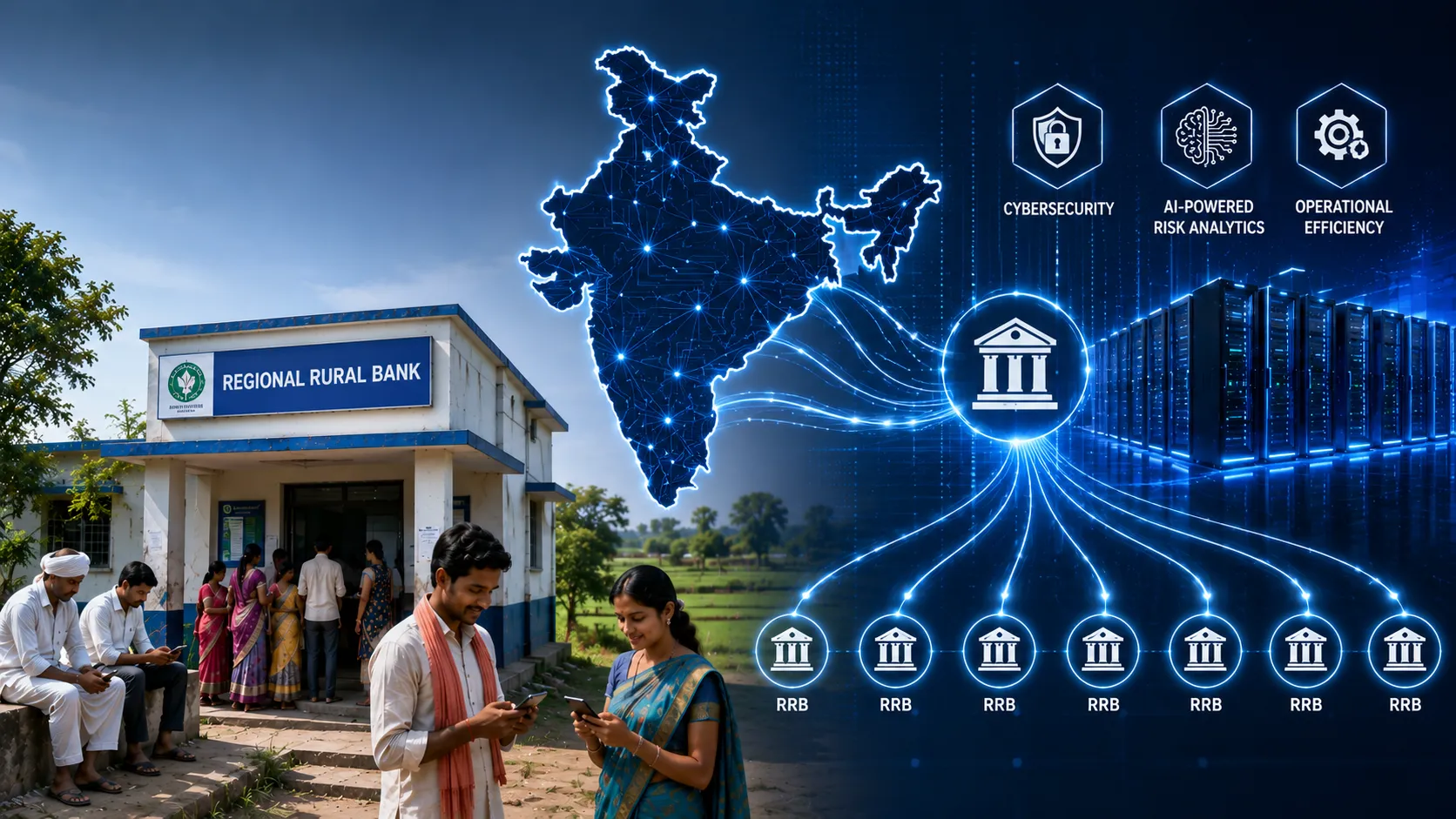
Reports suggest the proposed centralized framework may function as a shared operational backbone supporting multiple Regional Rural Banks simultaneously. Rather than each institution individually managing technology systems, cybersecurity layers and backend operations, a common infrastructure could potentially support several banks through standardized processes.
The model may create multiple advantages beyond cost efficiencies alone. Shared infrastructure could strengthen fraud detection systems, improve data standardization, enable stronger security protocols and allow faster technology deployment across institutions operating with smaller technology teams.
Industry observers suggest one of the strongest arguments supporting centralization involves resilience. Smaller institutions often face greater difficulty responding to rapidly evolving digital threats because technological complexity increasingly exceeds traditional operating structures. Cybersecurity systems, AI-enabled monitoring tools and data management infrastructure require specialized expertise that smaller institutions may struggle to build independently.
The proposal therefore increasingly appears connected not simply to modernization but also to risk management.
India’s Digital Public Infrastructure Model May Influence the Strategy
The broader effort also aligns with a larger philosophy increasingly visible across India’s technology ecosystem: building digital public infrastructure at scale.
Over the last decade, systems such as UPI, Aadhaar and public digital identity frameworks demonstrated how centralized digital infrastructure can create large-scale participation models. Rather than individual organizations independently creating fragmented systems, common platforms increasingly allowed broader ecosystems to emerge around shared architecture.Several policymakers increasingly appear interested in applying similar thinking across additional sectors. Financial systems, healthcare platforms and public-service delivery networks increasingly rely on centralized digital foundations capable of supporting large user populations.
In that context, a centralized infrastructure model for Regional Rural Banks may represent more than an operational banking initiative. It may reflect a broader policy approach focused on creating shared systems capable of balancing efficiency, inclusion and resilience.
The Challenge of Centralization Itself
Despite potential benefits, centralization also introduces new questions.
Technology experts have long cautioned that concentrated systems may create risks involving overdependence and single points of failure if safeguards remain inadequate. Building highly connected architectures often improves efficiency but simultaneously increases pressure around system security and governance.For financial systems serving millions of users, resilience increasingly becomes just as important as innovation.
The challenge therefore may not simply involve creating centralized infrastructure.It may involve creating systems capable of scaling safely.
Why This Could Shape the Next Phase of Financial Inclusion
For years, India's financial inclusion journey focused on expanding participation by bringing millions into formal banking systems. The challenge ahead increasingly appears different.As artificial intelligence and digital systems become deeply integrated into financial infrastructure, inclusion may increasingly depend not only on access itself but also on whether systems remain secure, intelligent and resilient enough to support users over time.
Because the next chapter of digital banking may not be defined only by who enters the system. Increasingly, it may be defined by how well the system protects them after they arrive.