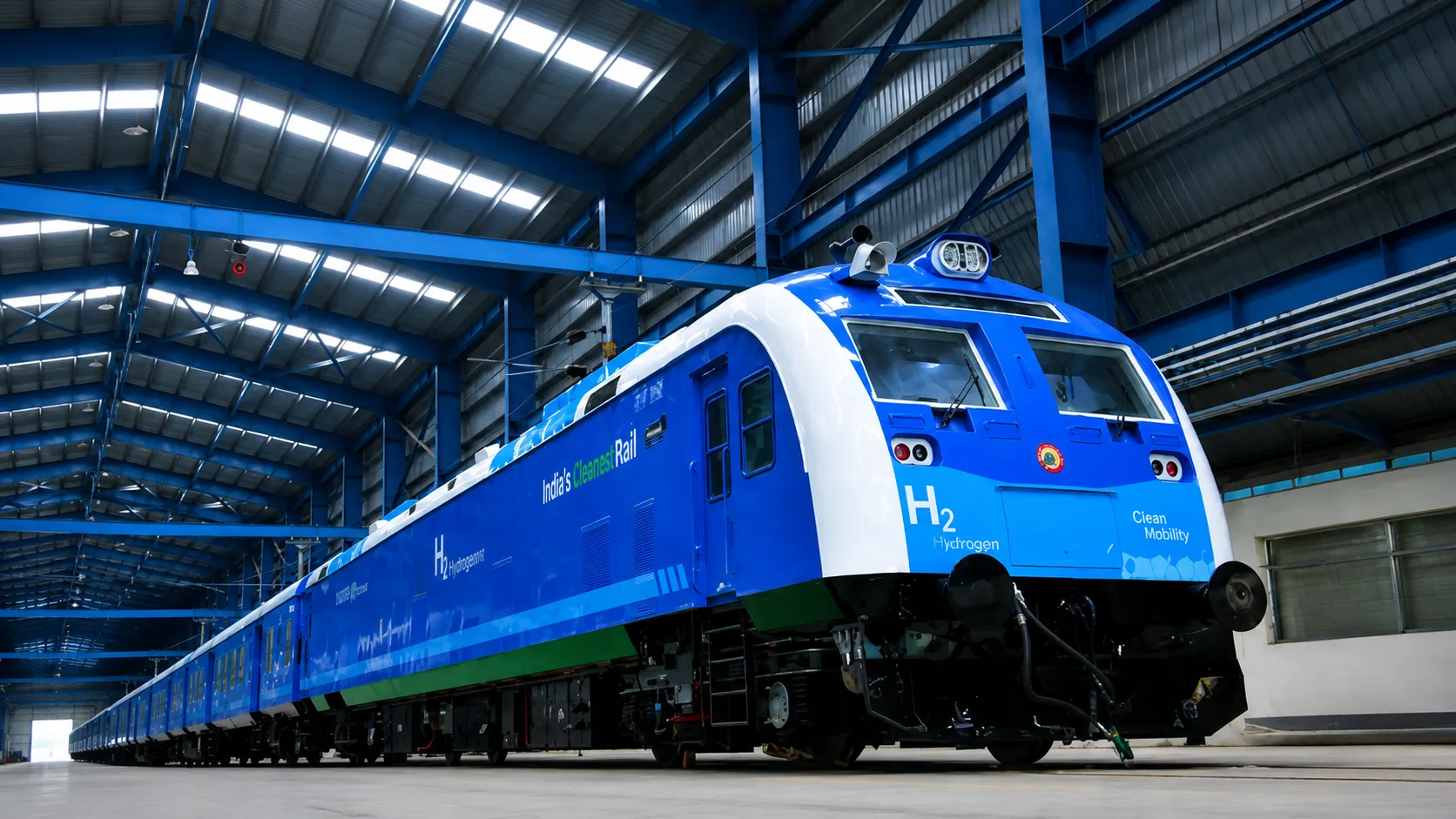
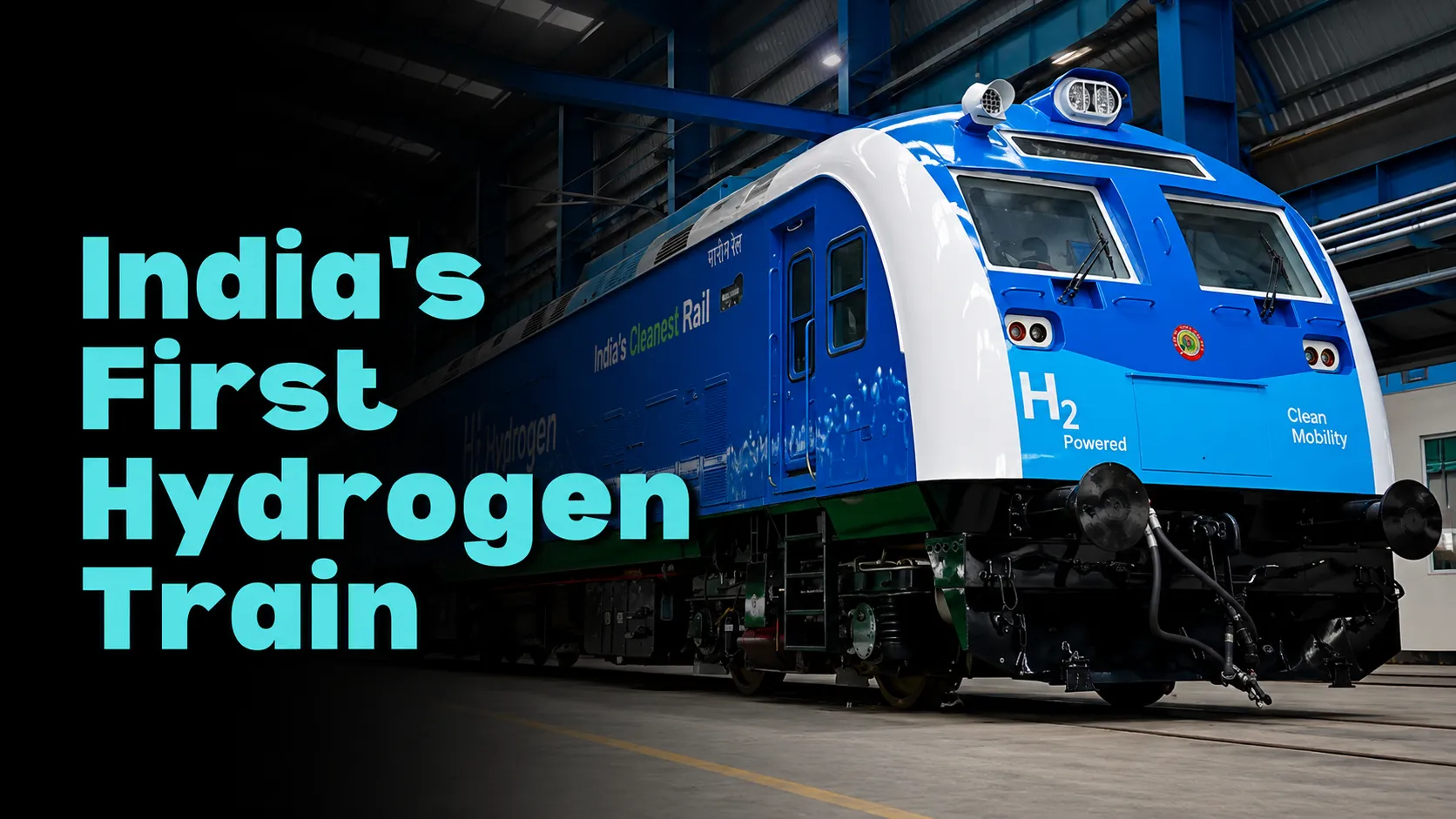
India is set to reach a symbolic milestone in its clean energy and transportation transition with the launch of the country's first hydrogen-powered train, running on the Jind–Sonipat route in the state of Haryana. While details of the exact commissioning timeline continue to be finalized by Indian Railways, the project represents one of the most closely watched green mobility initiatives in the country — a test case for whether hydrogen fuel-cell technology can play a meaningful role in decarbonizing one of the world's largest railway networks.
Why Hydrogen, and Why Now
Indian Railways operates one of the largest rail networks on the planet. Over the past decade and a half, it has pursued an aggressive electrification program, converting large portions of its broad-gauge network from diesel to electric traction. However, full electrification of every route — particularly low-traffic branch lines and lines where overhead electrification is technically challenging or economically unjustifiable — remains incomplete and, in some cases, may never be cost-effective.
This is precisely the gap hydrogen fuel-cell trains are designed to fill. Unlike battery-electric trains, which face range and charging-infrastructure limitations, or diesel trains, which carry local air pollution and carbon emissions, hydrogen fuel-cell trains generate electricity onboard through a chemical reaction between hydrogen and oxygen, emitting only water vapor as a byproduct.
The choice of the Jind–Sonipat route in Haryana is notable. Haryana sits within India's broader National Capital Region economic zone and has been a focal point of both industrial development and environmental policy attention given its proximity to Delhi and its role in the annual air quality crisis that grips the region, particularly in winter months. A hydrogen train pilot here carries symbolic as well as practical weight.
The Technology and Engineering Challenge
Hydrogen fuel-cell trains place India in a small, exclusive club of countries experimenting with hydrogen rail propulsion, alongside pioneers like Germany (which operates the Coradia iLint, the world's first hydrogen passenger train), as well as pilot projects in the UK, France, and China.
The core technical components involve a hydrogen fuel-cell stack that converts stored hydrogen into electricity, a battery buffer system for regenerative braking energy, onboard hydrogen storage tanks engineered to rigorous safety standards, and a traction system broadly similar to electric multiple unit (EMU) trains. The challenge is compounded by India's specific conditions — extreme summer heat, dust, and variable track quality — and the need for a robust hydrogen refueling and storage infrastructure that doesn't yet exist at scale anywhere in the country.
Fitting Into India's Broader Green Hydrogen Ambitions
The hydrogen train initiative sits within India's much larger National Green Hydrogen Mission, aimed at positioning India as a global hub for green hydrogen production. Transportation applications — buses, trucks, and now trains — create early, guaranteed demand for domestically produced green hydrogen while serving as visible demonstrations of the technology's viability. Major Indian conglomerates, including Reliance Industries and Adani Group, have separately announced large-scale green hydrogen production ambitions.
Economic and Employment Implications
Beyond the environmental narrative, the project carries significance for India's domestic manufacturing ambitions. A successful hydrogen train program could catalyze a domestic supply chain — fuel cell stack manufacturing, hydrogen storage tank fabrication, specialized traction equipment — creating skilled manufacturing jobs while reducing reliance on imported rail technology, consistent with broader "Make in India" and Atmanirbhar Bharat policy frameworks.
Caution Amid the Optimism
Hydrogen rail technology remains commercially unproven at true scale anywhere in the world. Critics point to the relatively high cost of green hydrogen production today, energy inefficiency in the "electricity to hydrogen to electricity again" conversion pathway, and the significant capital investment required for refueling infrastructure. Proponents counter that for India's low-traffic branch lines that may never justify full electrification, hydrogen offers a genuinely useful complementary decarbonization tool.
What to Watch For
Key signposts include the actual commissioning and commercial launch timeline, reliability and uptime performance under real-world conditions, cost per kilometer compared to diesel and electric alternatives, and whether Indian Railways signals plans to expand hydrogen rail to additional routes based on the pilot's performance. For a country embarking on one of the world's most ambitious rail modernization programs, this single train carries outsized symbolic weight.