ImpactSustainability10 MIN READ

Electric Vehicles Hit Record 12% Of India's Total Vehicle Sales As June Registrations Cross 3 Lakh Units
Electric vehicles accounted for 12% of India's total vehicle sales in June 2026, with registrations hitting a record 3.06 lakh units.

By Shaym Kumar · Author20 July 2026New
Electric Vehicles Hit Record 12% Of India's Total Vehicle Sales As June Registrations Cross 3 Lakh Units

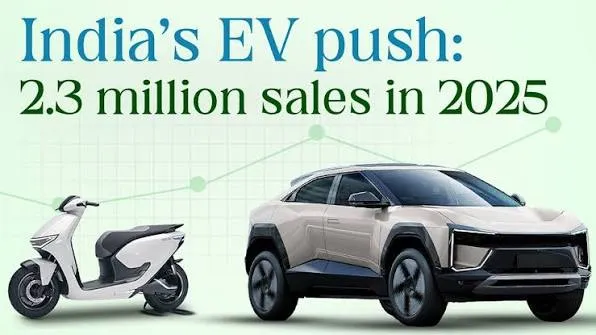
India's electric vehicle transition crossed a significant milestone in June 2026, with EVs accounting for 12 per cent of the country's total vehicle sales for the month, as overall electric vehicle registrations reached a record 3.06 lakh units. The figure represents one of the strongest single-month performances yet for India's electric mobility sector, underscoring how quickly the segment has evolved from a niche, heavily subsidy-dependent category into a genuinely meaningful and rapidly scaling share of the country's overall vehicle market — spanning passenger cars, two-wheelers and three-wheelers alike.

The breadth of this growth across vehicle segments is central to understanding its significance. Rather than being concentrated in any single category, June's record EV registration figures reflect adoption gains spread across passenger vehicles, two-wheelers and three-wheelers, each of which has followed a somewhat different adoption trajectory shaped by distinct economics, use cases and policy support structures. Three-wheelers have emerged as one of the fastest-growing segments for electric adoption specifically, driven by favourable unit economics for commercial operators who benefit from lower running costs on short-distance, high-utilisation urban routes — precisely the kind of duty cycle where electric powertrains deliver their clearest cost advantage over internal combustion alternatives, given the relatively lower daily mileage requirements and predictable charging opportunities that characterise most commercial three-wheeler operations in Indian cities.

Two-wheelers, which represent the largest single vehicle category in India by volume, have likewise seen accelerating electric adoption, supported by an expanding range of electric scooter and motorcycle models from both established two-wheeler manufacturers pivoting toward electrification and newer, EV-focused entrants competing aggressively on price, range and after-sales service network expansion. The economics of electric two-wheelers have become increasingly competitive with their petrol counterparts on a total cost of ownership basis, even as upfront purchase prices for many electric models remain modestly higher — a gap that continues to narrow as battery costs decline and domestic manufacturing scale increases across the sector's supply chain.
Electric Vehicles Hit Record 12% Of India's Total Vehicle Sales As June Registrations Cross 3 Lakh Units

image.png

Passenger vehicle electrification, while representing a smaller absolute volume than the two-wheeler and three-wheeler segments, has nonetheless continued its steady expansion, with an increasingly diverse range of electric car models now available across price points that were, until relatively recently, served almost exclusively by internal combustion vehicles. This broadening model availability has been critical to sustaining EV momentum in the passenger vehicle segment, since early electric car adoption in India was heavily concentrated in the premium segment, limiting the overall addressable market. As mainstream and even entry-level electric car options have become more widely available, adoption has begun extending into a considerably broader swath of India's car-buying population.

This EV growth story is unfolding alongside, rather than at the expense of, what has already been reported as India's best-ever first quarter for overall automobile sales, with passenger vehicles up 25.9 per cent year-on-year, commercial vehicles up 18.3 per cent, two-wheelers up 20.3 per cent, and three-wheelers up 29.7 per cent for Q1 FY27 as a whole. That broader context matters significantly for interpreting June's EV milestone: rather than electric vehicles cannibalising demand from a stagnant or shrinking overall auto market, India's electric mobility transition is instead occurring within the context of genuinely robust overall vehicle demand growth across every segment, suggesting that EV adoption is capturing incremental market share within an expanding pie rather than merely redistributing sales within a static or contracting one.

The policy backdrop supporting this EV growth trajectory has evolved considerably over recent years, shifting gradually from a model heavily reliant on direct purchase subsidies toward one increasingly built around supportive infrastructure investment, manufacturing incentives, and regulatory measures favouring electric vehicles across various use cases, including commercial fleet electrification mandates in several states and cities. Charging infrastructure expansion, in particular, has been identified by industry analysts as a critical enabler of sustained EV adoption growth, with both public and private investment in charging networks continuing to scale up across major metropolitan areas and, increasingly, along key intercity highway corridors that address the range-anxiety concerns that have historically constrained electric vehicle adoption for longer-distance travel.

Battery technology and cost trends continue to play a central role in shaping the pace of India's EV transition as well. Global battery cell costs have continued their multi-year decline, even as India has simultaneously worked to build out domestic battery manufacturing capacity aimed at reducing reliance on imported cells and, over time, improving the cost competitiveness of India-manufactured electric vehicles relative to imported alternatives. This domestic battery manufacturing push aligns closely with the broader Atmanirbhar Bharat, or self-reliant India, policy framework that has shaped much of the government's approach to strategic manufacturing sectors, positioning battery and EV component manufacturing as a priority area alongside semiconductors and electronics more broadly.

Looking ahead, industry analysts expect India's EV adoption curve to continue its upward trajectory through the remainder of financial year 2026-27, supported by the combination of expanding model availability, improving charging infrastructure, declining battery costs, and the broader tailwind of overall automobile demand growth that this quarter's record sales figures have already demonstrated. Whether June's 12 per cent EV penetration figure represents a durable new baseline or an unusually strong single-month reading will become clearer as subsequent months' data is released, but the scale and breadth of this milestone — spanning passenger vehicles, two-wheelers and three-wheelers simultaneously — offers one of the clearest signals yet that India's electric mobility transition has moved decisively past its early, policy-dependent phase and into a period of genuinely broad-based, market-driven growth.

State-level policy variation continues to play a meaningful role in shaping the geography of India's EV adoption, with several states offering additional purchase incentives, road tax exemptions, and registration fee waivers on top of central government support, creating a patchwork of regional adoption rates that broadly track the generosity and consistency of local policy support. States that have maintained stable, predictable EV incentive regimes over multiple years have generally seen more sustained adoption growth than those where policy support has fluctuated or been withdrawn, a pattern that industry executives frequently cite when advocating for greater long-term policy consistency at the state level to complement the more stable central government framework.

Electric vehicles accounted for 12 per cent of India's total vehicle sales in June, with overall EV registrations reaching a record 3.06 lakh units — a milestone that underscores just how quickly electric mobility has moved from a niche, subsidised segment to a meaningful share of India's overall vehicle market.
The Impactful Global Indian Business Desk

The commercial fleet segment, encompassing ride-hailing services, food and grocery delivery platforms, and last-mile logistics operators, has emerged as a particularly important driver of India's EV transition, often adopting electric vehicles ahead of individual retail consumers given the more favourable economics that high-utilisation commercial use cases offer for electric powertrains. Several major ride-hailing and delivery platforms have announced explicit electrification targets for their vehicle fleets over the coming years, creating a reliable, large-scale demand base that has helped justify continued investment by vehicle manufacturers and charging infrastructure providers even as individual retail consumer adoption continues its more gradual, if still meaningfully accelerating, expansion across the broader vehicle market.

Manufacturing localisation within India's EV supply chain has also progressed steadily alongside this demand-side growth, with an increasing share of electric vehicle components, including battery packs, motors and power electronics, now being assembled or manufactured domestically rather than imported as complete units. This localisation trend, closely tied to broader government incentive programmes aimed at building domestic advanced manufacturing capability, has helped gradually improve the cost competitiveness of India-manufactured electric vehicles while simultaneously building the kind of deep, technically sophisticated domestic supply chain that industry analysts view as essential to sustaining India's EV growth trajectory over the longer term, rather than leaving the country perpetually dependent on imported battery cells and other critical components sourced from established manufacturing hubs elsewhere in Asia.

Consumer financing options for electric vehicles have also expanded considerably over the past several years, with a growing number of banks and non-banking financial companies now offering dedicated EV loan products, often at interest rates comparable to or only modestly higher than conventional vehicle financing. This improving access to affordable financing has removed one of the more significant practical barriers that had previously constrained EV adoption among price-sensitive Indian consumers, particularly in the two-wheeler segment, where financing availability has historically played an outsized role in determining overall purchase volumes given the large share of Indian two-wheeler buyers who rely on some form of vehicle loan to complete their purchase.

The resale and secondary market for electric vehicles, an area that had previously lagged behind the considerably more established used-vehicle ecosystem for internal combustion vehicles, has also begun to develop more meaningfully as India's overall EV fleet has grown large enough to generate a genuine pool of used electric vehicles reaching the resale market. A more mature secondary market, complete with reliable battery health assessment standards and established resale value benchmarks, is widely viewed by industry analysts as an important, if sometimes underappreciated, prerequisite for sustained mainstream EV adoption, since concerns about long-term resale value and battery degradation have historically ranked among the more commonly cited hesitations among prospective first-time electric vehicle buyers in India.

Taken together, June's record 3.06 lakh unit EV registration figure and 12 per cent overall market share represent far more than a single encouraging monthly data point — they reflect the cumulative effect of years of steady progress across manufacturing localisation, charging infrastructure, consumer financing, and model availability finally converging to produce genuinely mainstream-scale electric vehicle adoption across India's roads.

For policymakers tracking India's broader climate and energy transition commitments, this EV milestone offers a tangible, measurable sign of progress toward the country's stated goals of reducing transport-sector emissions and lowering its dependence on imported crude oil, given that transportation remains one of the largest contributors to both domestic air pollution and the country's overall energy import bill. Every incremental percentage point of EV penetration translates directly into reduced petrol and diesel consumption, offering a modest but genuine contribution toward easing the kind of import-driven trade deficit pressure that has featured prominently in recent economic data, even as the scale of that contribution remains, for now, relatively small against the backdrop of India's overall vehicle fleet, the vast majority of which continues to run on conventional internal combustion engines. As adoption continues to compound month over month, however, industry analysts increasingly view India's EV transition as one of the more durable, structurally embedded growth stories within the broader Indian economy, rather than a policy-dependent phenomenon likely to reverse once initial subsidy support eventually tapers.

image.png

Original equipment manufacturers themselves have responded to this accelerating demand signal by substantially expanding their own electric vehicle production capacity and model pipelines over the past year, with several major two-wheeler and passenger vehicle makers announcing dedicated electric-only manufacturing lines and, in a number of cases, entirely new factories built specifically for EV production rather than retrofitted from existing internal combustion vehicle assembly lines. This capital commitment from manufacturers themselves offers a further signal of industry-wide confidence that June's record figures represent genuine, sustainable demand growth rather than a temporary spike, since manufacturers generally commit capital to new dedicated production capacity only when they have reasonable confidence in sustained multi-year demand rather than a single strong month.

Export potential represents another dimension of this EV growth story that has begun attracting increasing attention from both industry participants and policymakers. As India's domestic electric two-wheeler and three-wheeler manufacturing base has matured and scaled, several manufacturers have begun exploring export opportunities to other emerging markets facing similar urban mobility and fuel-cost pressures, particularly across South Asia, Southeast Asia and parts of Africa, where the same favourable economics driving domestic three-wheeler electrification apply with similar force. Should this export dimension develop meaningfully over the coming years, India's EV manufacturing sector could evolve from a primarily domestically-focused industry into a genuine export growth engine, adding a further dimension to the country's broader ambitions around electronics and advanced manufacturing self-reliance.

For now, June's milestone stands as a clear marker of how far India's electric mobility transition has travelled in a relatively short span of years, and as a strong early signal for what the rest of financial year 2026-27 may hold for a sector that shows every sign of continuing to accelerate rather than plateau in the months and quarters immediately ahead, cementing electric mobility as a defining feature of India's automotive future rather than a passing policy-driven trend.

TagsEVIndiaElectricVehiclesEVSalesIndiaGreenMobilitySustainableIndiaEVAdoptionIndianAutoIndustryCleanEnergyIndiaEVMarketIndiaFutureOfMobility

Reader reviews

Sign in to rate and review this article.
Loading reviews…