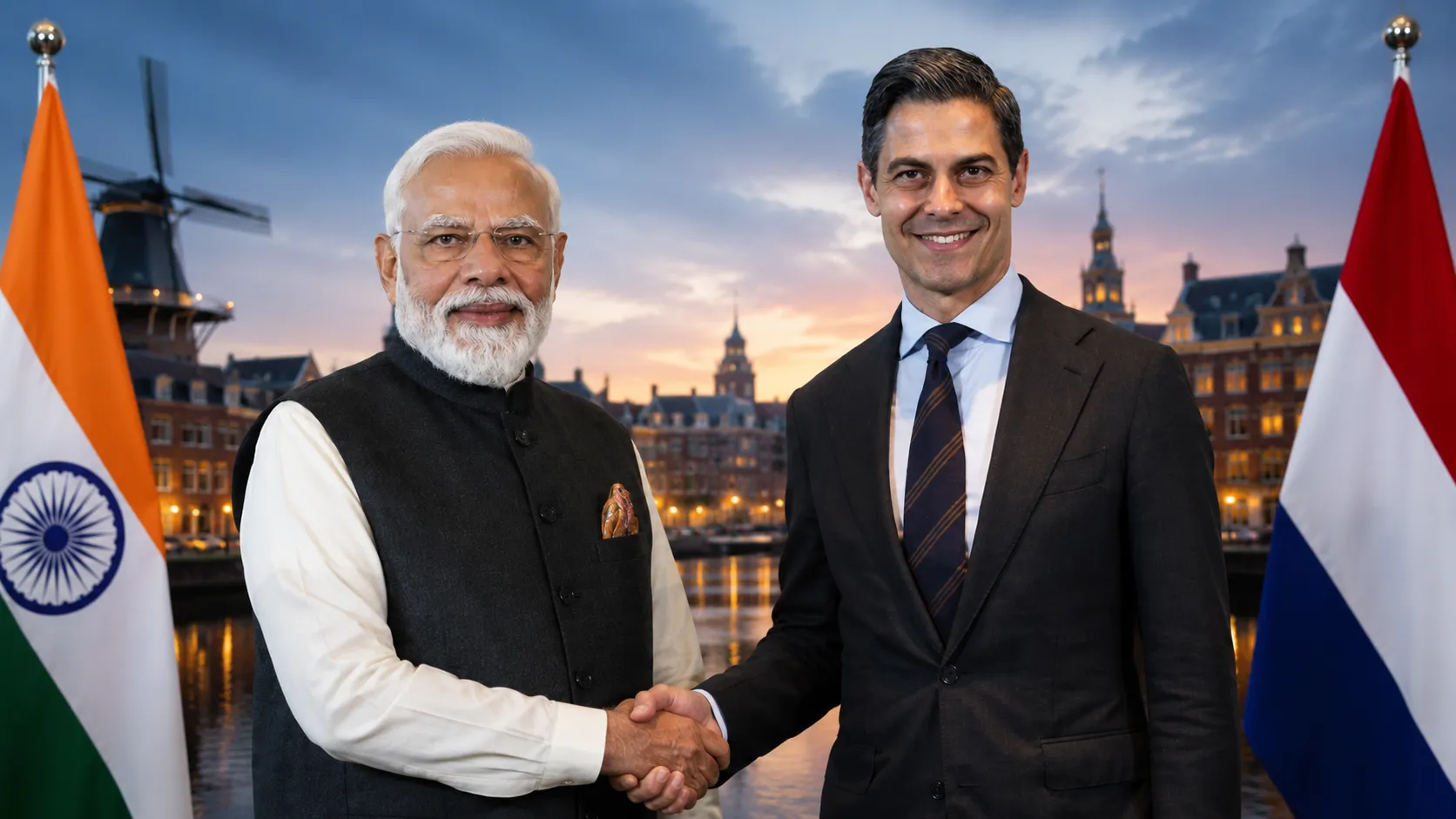
Prime Minister Narendra Modi’s official visit to the Netherlands from May 15 to May 17, 2026 may ultimately be remembered less as a routine diplomatic engagement and more as a signal of where global partnerships are heading next. At a time when countries are increasingly rethinking supply chains, technology access and industrial resilience, India and the Netherlands used the visit to redefine the nature of their relationship in a far more strategic direction. What emerged from the bilateral discussions between Prime Minister Modi and Dutch Prime Minister Rob Jetten was not merely another diplomatic statement or trade announcement. It became a reflection of how international partnerships are increasingly being shaped by technology, innovation ecosystems and long-term economic strategy.
The decision to elevate India-Netherlands ties to a full Strategic Partnership reflects a broader shift taking place across global diplomacy itself. Governments today are no longer focusing only on traditional trade exchanges or symbolic cooperation agreements. Increasingly, countries are searching for trusted partnerships capable of supporting technological advancement, supply chain diversification and future industrial competitiveness. In that context, the Netherlands represents far more than a European partner for India. It is one of Europe’s strongest innovation economies with deep expertise in semiconductors, advanced manufacturing, logistics and engineering. For India, which is rapidly expanding its ambitions across manufacturing and digital infrastructure, the timing of this partnership carries substantial strategic importance.
A Semiconductor Partnership With Global Implications
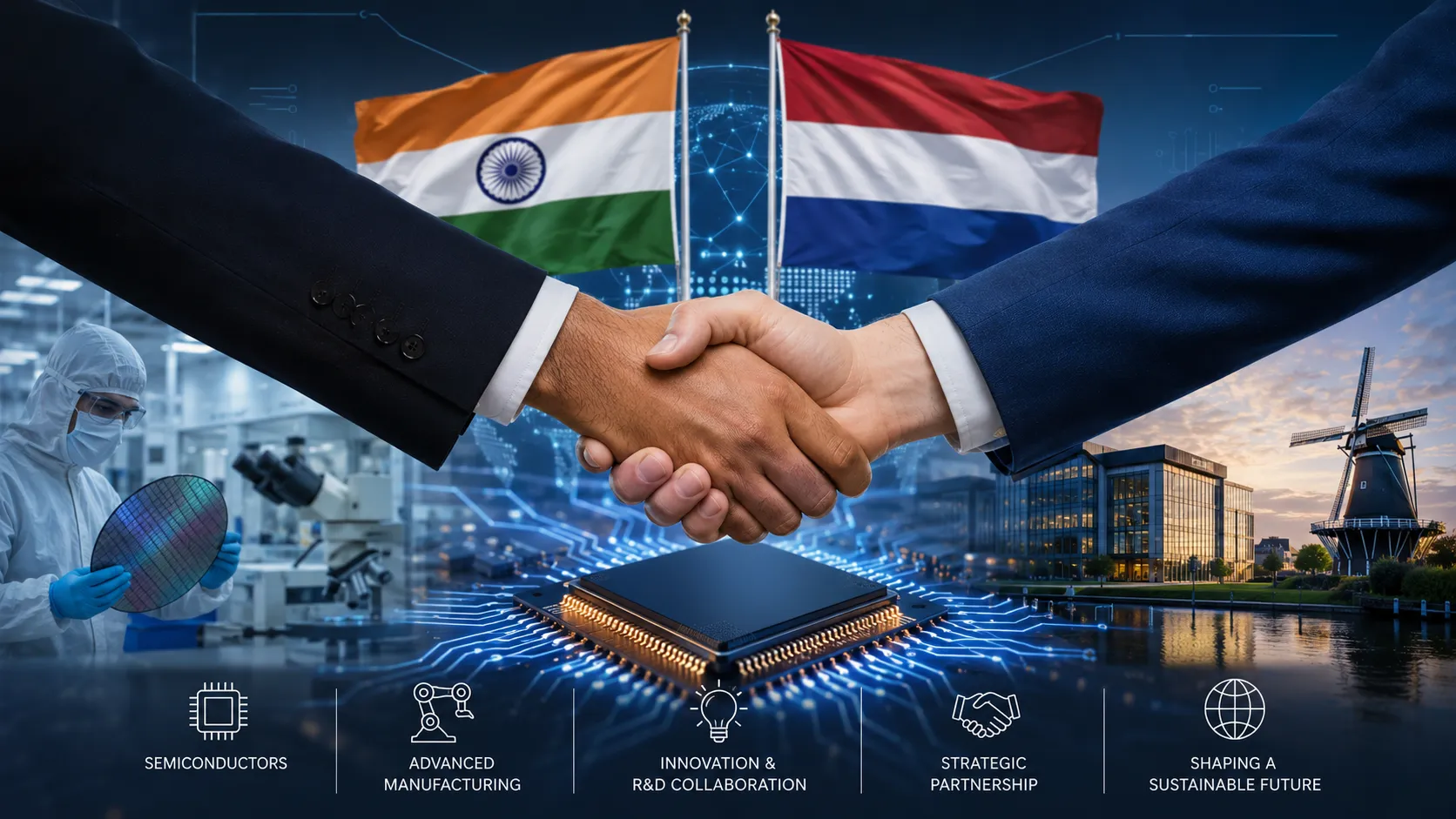
One of the most closely watched developments during the visit came through the semiconductor sector, where Tata Electronics signed a major Memorandum of Understanding with Dutch semiconductor technology leader ASML. The agreement is expected to support India’s upcoming semiconductor fabrication plant in Dholera, Gujarat — a project increasingly viewed as central to India’s broader semiconductor ambitions. The announcement attracted immediate international attention because ASML occupies a uniquely powerful position within the global semiconductor ecosystem. The Dutch company supplies some of the world’s most advanced chipmaking equipment and remains essential to the production capabilities of major semiconductor manufacturers globally.
For India, however, the significance of the agreement extends far beyond a single industrial collaboration. It reflects a larger national effort to move beyond being primarily a technology market and become an increasingly influential participant in the global technology manufacturing ecosystem itself. Over the last several years, semiconductors have emerged as one of the world’s most strategically important industries because they now power everything from artificial intelligence systems and defense technologies to smartphones, automobiles and critical digital infrastructure. As geopolitical tensions and supply chain disruptions exposed vulnerabilities in global chip production networks, countries across the world began aggressively investing in domestic semiconductor capabilities. India’s partnership with ASML therefore represents not only economic ambition, but also a strategic attempt to secure long-term technological relevance in an increasingly competitive global environment.
Why the Netherlands Matters in India’s Global Strategy
While semiconductor cooperation dominated headlines, the broader significance of the visit extended across several strategic sectors where both countries increasingly see long-term opportunities for collaboration. Over the years, the Netherlands has steadily emerged as one of India’s most important European economic partners, particularly in areas such as clean energy, logistics, water management, agriculture, urban innovation and advanced engineering. The country’s expertise in sustainable infrastructure and high-precision industrial systems aligns closely with India’s ongoing modernization and industrial expansion efforts. As a result, the relationship between the two nations has gradually evolved from a traditional trade partnership into a more multidimensional strategic engagement.
The visit also highlighted how middle powers like India and the Netherlands are increasingly attempting to build stable and future-focused alliances in a rapidly changing geopolitical environment. Global economic uncertainty, shifting supply chains and rising competition around technology have pushed many countries to diversify partnerships and reduce overdependence on limited regions or markets. What makes the India-Netherlands partnership particularly significant is that both nations increasingly view innovation itself as a form of strategic strength. Discussions during the visit reportedly explored expanding cooperation across digital technologies, resilient manufacturing ecosystems, green energy transitions and next-generation industrial development. For India, these partnerships are becoming increasingly important because future economic influence may depend not only on market size, but also on access to trusted technological and industrial networks.
A Bigger Shift Beyond Diplomacy
Historically, high-level state visits often focused heavily on ceremonial engagements, political symbolism and broad declarations of friendship between nations. Increasingly, however, global diplomacy appears to be entering a very different phase. Today, strategic conversations between countries are increasingly centered around semiconductors, artificial intelligence, clean energy systems, digital infrastructure, critical minerals and industrial resilience. Economic security and technological capability are now becoming deeply interconnected with geopolitical influence itself. The India-Netherlands Strategic Partnership reflects this broader global transition where diplomacy is no longer separated from industrial strategy and technological collaboration.
In many ways, the semiconductor agreement announced during the visit symbolizes this evolving model of international engagement. Countries are no longer competing solely through military or political influence. Increasingly, influence is also being determined by who controls critical technologies, trusted supply chains and advanced manufacturing capabilities. India appears determined to position itself within that emerging landscape by building stronger relationships with technologically advanced nations capable of supporting long-term industrial transformation. The larger story behind the visit may therefore extend far beyond bilateral diplomacy itself. It may represent India’s broader effort to secure a stronger place within the industries and technological systems that are expected to shape the global economy over the next several decades. And in that future, semiconductor ecosystems may become as strategically important as energy networks or trade routes once were.