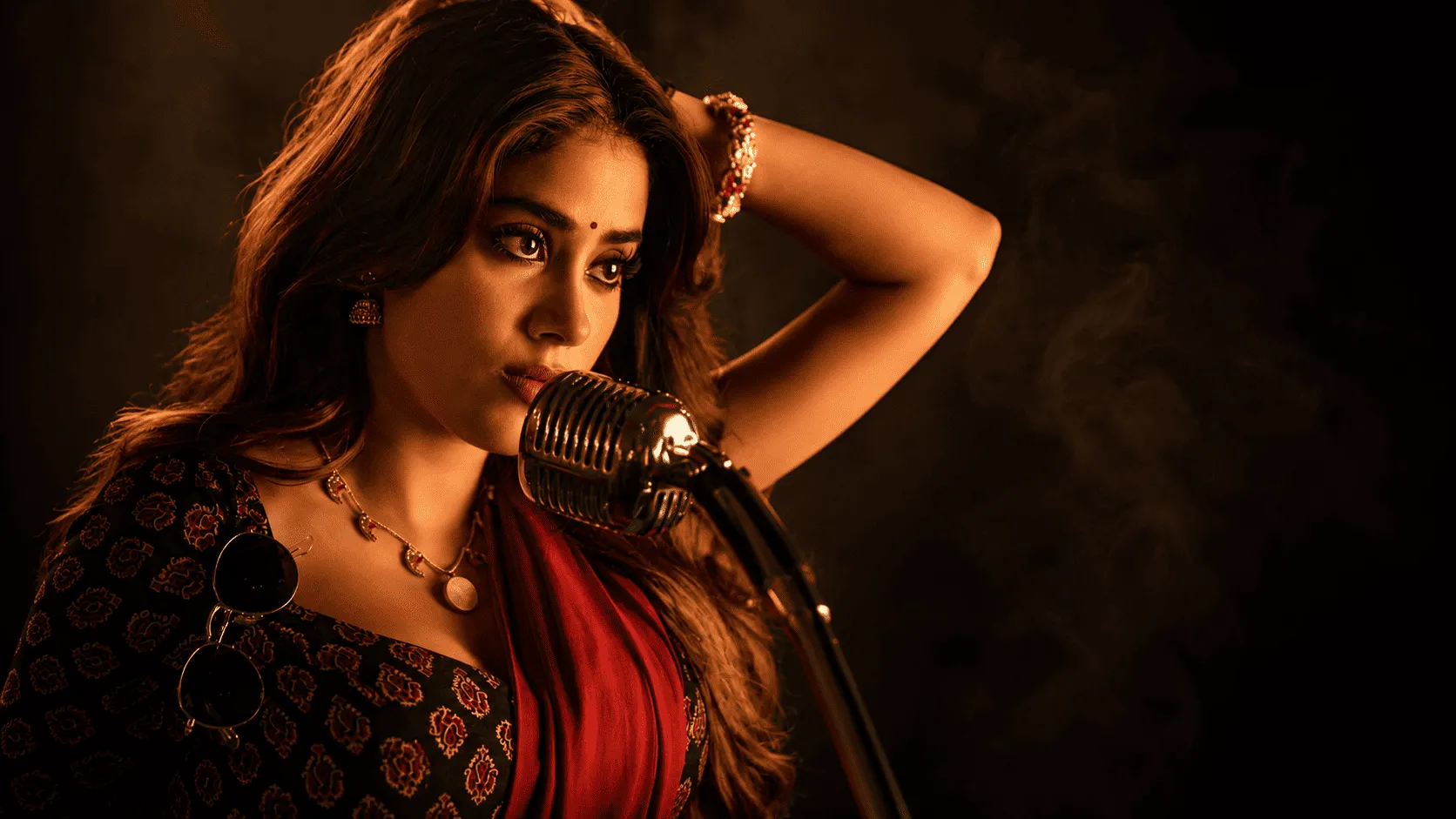
The Debate Around Peddi Is Not About Screen Time. It Is About Why One Of India's Most Visible Young Actresses Appears To Exist More As A Visual Element Than As A Fully Realized Human Being.
Big-budget Indian cinema has become extraordinarily ambitious.
Studios are spending hundreds of crores on production design, visual effects, action sequences and marketing campaigns capable of competing with global entertainment brands. Telugu cinema in particular has emerged as one of the driving forces behind India's pan-Indian blockbuster era, producing films that regularly command budgets exceeding ₹300 crore. Peddi belongs firmly within that category. The Ram Charan starrer was conceived as a large-scale cinematic event, combining star power, rural storytelling, sports drama and premium production values into a project designed to attract audiences across multiple languages and regions.Yet for all its scale, much of the conversation surrounding the film has centered on something surprisingly basic.
Not the action. Not the box office. Not the music.
The discussion has increasingly focused on Janhvi Kapoor's character and what many viewers believe is a persistent problem within mainstream commercial cinema: the inability or unwillingness to write meaningful female characters even when some of the industry's biggest actresses are cast in major productions.The criticism is not that Janhvi Kapoor lacks screen presence.The criticism is that the film appears uncertain about who her character actually is.
The Difference Between A Character And A Presence
One of the most common defenses offered whenever audiences question the writing of female characters is that the actress receives adequate screen time.
Screen time, however, is not the same as characterization. A character can appear throughout a film and still feel emotionally absent if the audience never understands her motivations, ambitions, fears, contradictions or role within the narrative. Great characters influence the story around them. They make decisions. They create consequences. They possess identities that exist independently of the protagonist.Much of the criticism surrounding Peddi stems from the perception that Janhvi Kapoor's character exists primarily in relation to Ram Charan's.
The audience learns far more about how the hero sees her than about how she sees herself. Her emotional interior remains largely unexplored. Her goals appear secondary to the central narrative. The result is a character who occupies significant visual space within the film but comparatively little narrative space. Viewers are left remembering how she looks rather than understanding who she is.
That distinction matters because audiences today consume far more sophisticated storytelling than previous generations.Whether through streaming platforms, international cinema or contemporary television, viewers increasingly expect supporting characters to possess agency and individuality. The standards have changed. Many commercial films have not.
The Authenticity Problem
The conversation surrounding Janhvi Kapoor's portrayal has also highlighted a broader issue involving authenticity.
Peddi presents itself as a rooted rural drama set within a specific cultural and social environment. Audiences generally expect the characters inhabiting such worlds to feel believable within that context. When visual presentation appears designed primarily around glamour rather than authenticity, viewers often notice the disconnect. The issue is not whether women in villages can dress stylishly or attract attention. The issue is whether a character feels like a natural extension of the world being portrayed.
Many viewers felt that Janhvi Kapoor's character appeared designed through commercial expectations rather than narrative logic.
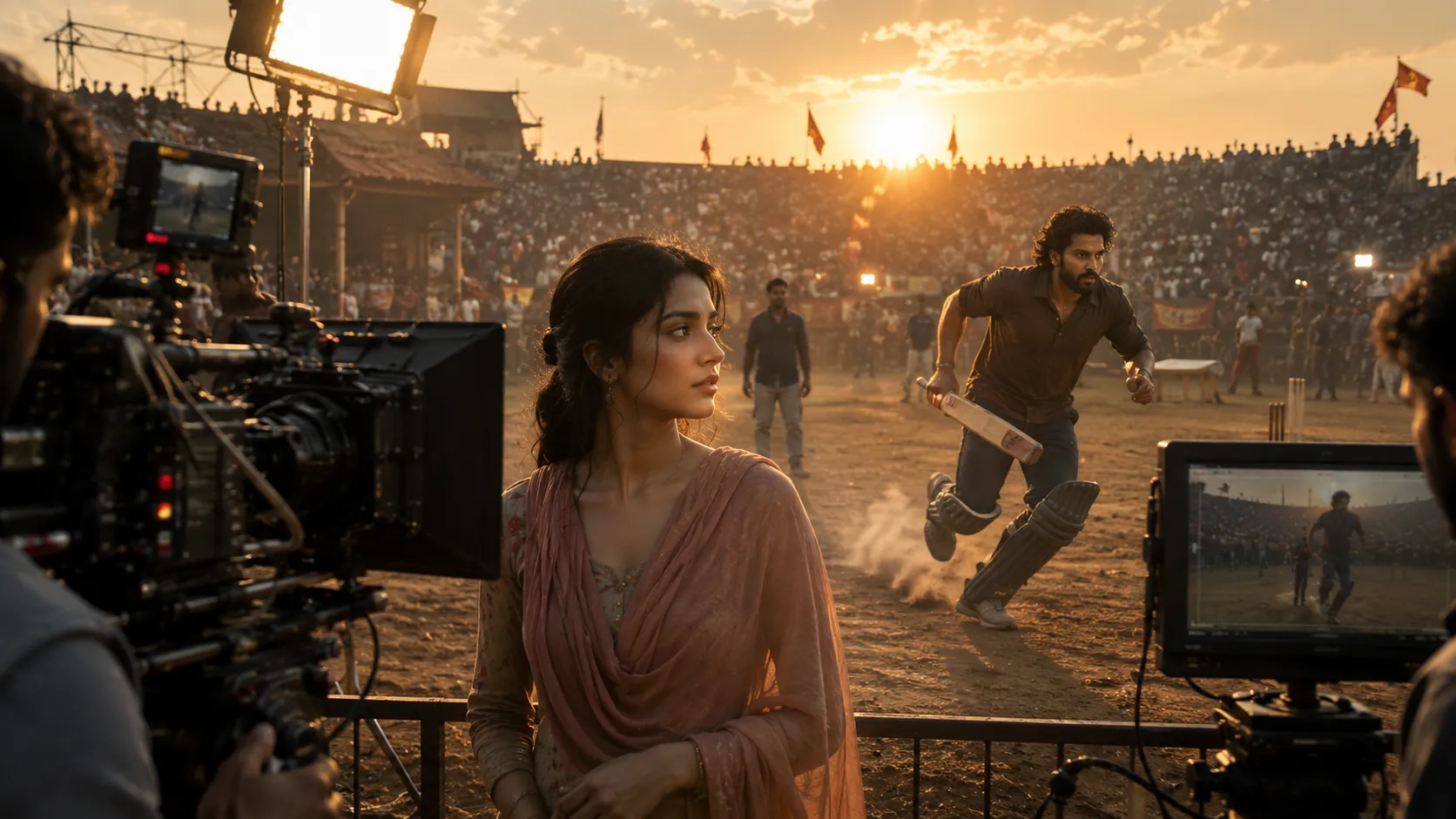
Instead of asking how a woman from that environment might realistically behave, speak, dress or navigate her surroundings, the film often appears more interested in presenting her as a conventional commercial heroine. This creates tension between the realism the story seeks and the stylization imposed upon the character. Audiences increasingly recognize these contradictions because contemporary viewers are highly sensitive to authenticity.Ironically, this approach often hurts both the character and the actress.A performer can only build emotional connection when the audience believes the person on screen actually belongs within the story being told.
The Business Cost Of Weak Female Writing
For decades, filmmakers could dismiss these concerns as secondary issues.
That is becoming increasingly difficult.
Modern audiences do not simply watch films. They discuss them, dissect them and amplify opinions across social media platforms. Character writing has become part of the commercial conversation surrounding a release. A poorly written supporting role no longer disappears into the background. It becomes a topic of debate capable of shaping public perception long after opening weekend.This creates a genuine business challenge.
Studios spend enormous amounts of money casting recognizable actresses because those stars bring audience awareness, media attention and marketing value. Janhvi Kapoor possesses millions of followers, substantial brand partnerships and nationwide visibility. Yet when audiences leave a film discussing how underwritten her role feels, the production fails to maximize one of its most valuable assets.
A ₹350-crore production cannot afford to treat major performers as decorative additions.The economics no longer support it.Every major cast member represents an opportunity to deepen audience engagement, expand demographic appeal and generate emotional investment. Strong female characters are not merely artistic achievements. They are commercial assets.
The Industry Is Facing An Audience That Has Changed
Perhaps the most important aspect of the Peddi debate is what it reveals about audience expectations.
A decade ago, many viewers might have accepted the character without significant discussion. Today's audience is different. They have watched films where female leads drive narratives. They have seen streaming series built around complex women. They have consumed international stories that treat supporting characters with the same seriousness as protagonists. As a result, they increasingly recognize when a character feels underdeveloped.
This shift is particularly important because female audiences represent one of the most influential segments in contemporary entertainment.Women are not passive consumers of cinema. They shape online discourse, influence viewing decisions and contribute significantly to box-office outcomes. Ignoring their expectations carries risks that many studios still underestimate. Audiences are no longer asking whether a female character appears in a film. They are asking whether she matters.That question is becoming harder to avoid.
Peddi Reflects A Larger Industry Challenge
Ultimately, the debate is bigger than Janhvi Kapoor and bigger than Peddi.
The film has become a case study in a contradiction that continues to define parts of Indian commercial cinema. Studios are investing unprecedented sums into technology, production design and spectacle while sometimes relying on character templates that feel decades old. The industry has become global in scale but can occasionally remain surprisingly traditional in how it approaches female roles.
The irony is that stronger female characters would likely strengthen these films rather than weaken them.Audiences are not demanding less heroism. They are demanding better storytelling. They are asking for women who feel like people rather than plot devices, individuals rather than symbols and characters rather than visual presences.
For a ₹350-crore blockbuster, that should not be an unreasonable expectation.And the growing reaction to Peddi suggests that audiences increasingly believe the same.