The Director Who Never Meant to Make Love Stories
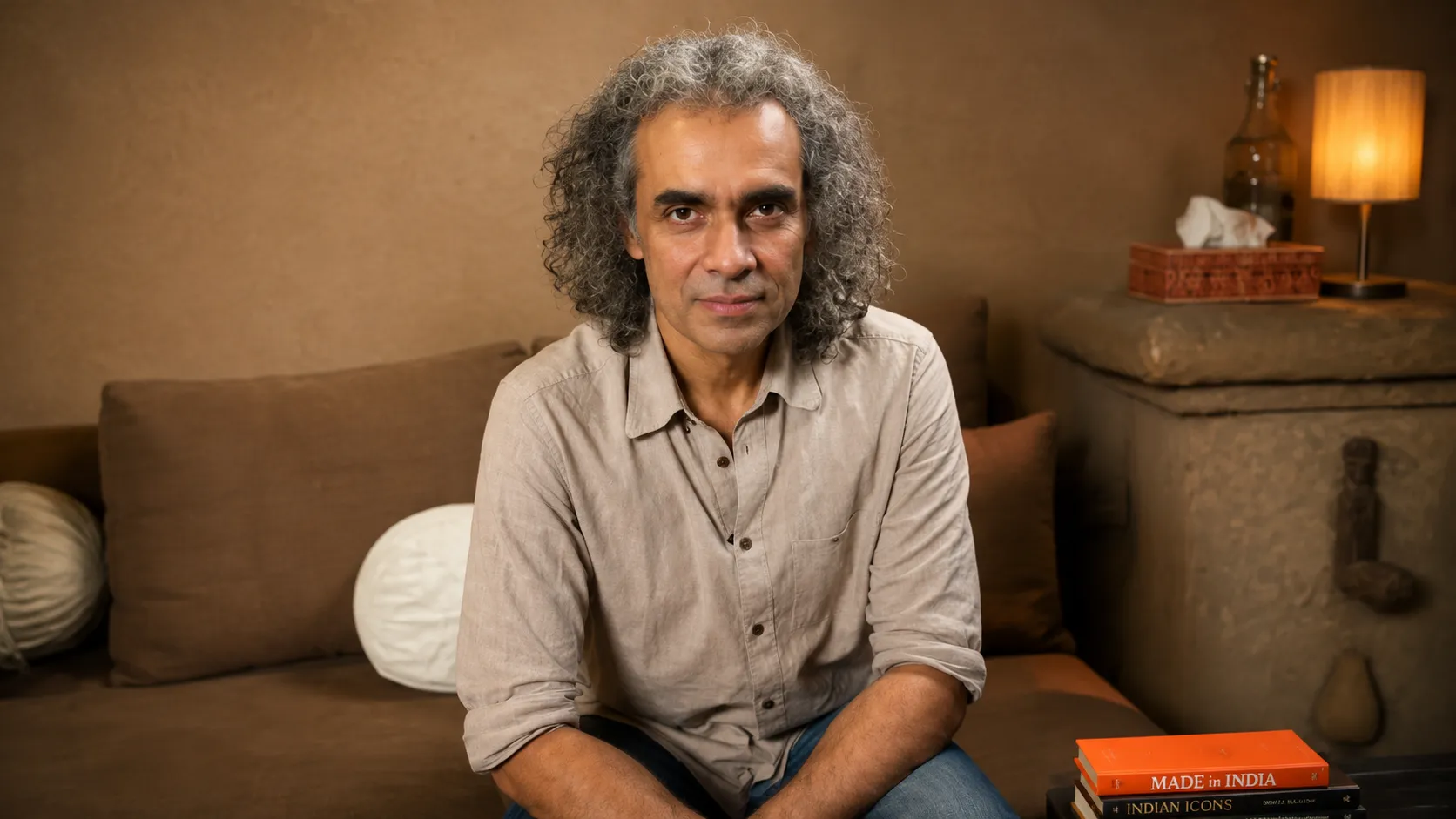
Imtiaz Ali has built a career on films that the world calls love stories. Jab We Met. Rockstar. Tamasha. Love Aaj Kal. Each one explores romance, longing, and self-discovery with a depth that has made him one of Hindi cinema's most celebrated directors.
Yet in a recent interview with ABP Live, Ali made a surprising admission: he has never consciously set out to make a love story .
"I don't want to add romance to everything but it just happens naturally, so I don't stop that," he said . "I never made any of my films like a love story. When Love Aaj Kal was being named, I thought Aaj Kal would be a better name. I thought if this is even a love story?" .
He added that he definitely did not make Jab We Met as a love story either. "But this comes up in my films again and again," he admitted .
When the conversation turned to what he wants to make next, Ali's answer was unexpected—and deeply revealing about the direction he wants his career to take.
The Mythological Dream: Radha and Krishna
"There are many stories of Indian mythology that have inspired me a lot. I feel I should be capable enough to make those stories," Ali told ABP Live .
When pressed to name one, he didn't hesitate. "I have said this before as well. I want to make Radha-Krishna's story," he said .
The interviewer pointed out that this too would essentially be a love story. Ali laughed and pushed back. "It's not only a love story. There are many layers to their story. It has a deeper philosophy," he explained .
For Ali, the Radha-Krishna narrative is not just about romance. It is about the personal and the epic existing together—a theme that has defined his filmmaking career. "I don't think in the Indian mythology that something like Radha Krishna exists which is so personal and so epic," he told Bollywood Hungama . "There are so many things that are heart wrenching and so beautiful at the same time and the scale is so epic and we are talking about Krishna and Radha as humans, as people with feelings" .
The Project That Has Been Years in the Making
Ali's interest in Radha-Krishna is not new. He has long cherished this project, which has been in various stages of development for years. According to earlier reports, the film will be written and directed by Ali and produced by his Window Seat Films LLP along with Reliance Entertainment .
"It has been my dream to step into the world of Radha Krishna," Ali said in a statement when the project was first announced .
Shibasish Sarkar of Reliance Entertainment described the project as one of the most fascinating love stories of all time, adding that its "reach and appeal transcends boundaries of culture and language" .
Despite the announcement, Ali has been clear that this is not his next project. The research and pre-production required for a film of this scale means it will take time before cameras start rolling .
The Controversy and the Conviction
Ali announced the Radha-Krishna project at a moment when debates about religious identity in Indian cinema are particularly charged. The film was trending on Twitter, with users questioning why a Muslim filmmaker should make a film on Hindu deities .
The question was pointed: if a cartoon of Prophet Mohammad meets fierce resistance, why should a Muslim be allowed to make a film about Radha and Krishna?
Ali's response was characteristically philosophical. "I feel there's no impurity in my thought. There's only positivity in the way I feel about Radha and Krishna. That's all I can say," he told Bollywood Hungama . "Agar main ye sochoonga ki log kya sochenge to phir log kya sochenge" (If I think about what people will think, then what will people think?) .
He invoked the poet Bulleh Shah to make his point: "Mainu apni tod nibhane" (Let me do what I can do fully) . He acknowledged the risks, citing the backlash against Sanjay Leela Bhansali's Padmaavat and the conjectures around Aamir Khan's Mahabharata project .
But his desire to make the film overrides those fears. "My desire to surrender to this story of Radha and Krishna is far greater than my fear or apprehension for any kind of reaction," he said . "Fact of the matter is that if I have something strongly in my heart and if I don't try it then what justification do I have" .
A Career Defined by the Search for Love
The Radha-Krishna project fits naturally into the themes that have defined Ali's cinema. His films have always treated love not simply as a relationship between two people, but as a force that can disturb, transform, and reveal the self .
Ali himself admitted that love remains a mystery he is still trying to understand. "I am still trying to understand love and I make every film trying to answer that question. I am more confused than before," he said with a laugh .
He explained that love takes many forms. "I don't think you can make a story without love. That love could be towards your nation, or for someone who has passed away, and someone is seeking revenge for them, but the story is always about love. You can show it differently," he said .
Whether it is the restless yearning of Rockstar, the broken selfhood of Tamasha, the breezy warmth of Jab We Met, or the spiritual weight he sees in Radha-Krishna, Ali remains drawn to stories where love is never just romance . It is confusion, memory, philosophy, loss, and the search for meaning .
The Bottom Line
Imtiaz Ali's Radha-Krishna project represents the intersection of his two great passions: the exploration of love as a philosophical question, and the stories of Indian mythology that have inspired him since childhood.
"I want to make Radha-Krishna's story," he has said, and the conviction behind those words is unmistakable . The film could become one of the most ambitious mythological adaptations in Indian cinema—a deeply personal take on the most profound love story in Indian folklore, told by a director who has spent his career trying to understand what love actually means.
The controversy has arrived, and more may follow. But Ali's stance is clear: the desire to tell this story is greater than any fear of reaction. And for a filmmaker who has built his career on following his artistic instincts, that conviction may be the most important part of the journey.