What Once Revolved Around Faith Alone Is Quietly Becoming A Much Larger Story About Travel, Infrastructure And Local Economies
For decades, temple visits in India followed a relatively familiar rhythm. Families planned pilgrimages around festivals, personal beliefs and long-standing traditions because spiritual travel frequently represented an important part of cultural life. Journeys to religious sites often remained deeply personal because temples traditionally functioned as spaces connected to devotion, ritual and community. Pilgrimages frequently existed outside larger economic conversations because faith itself remained the central focus rather than commerce or industry.
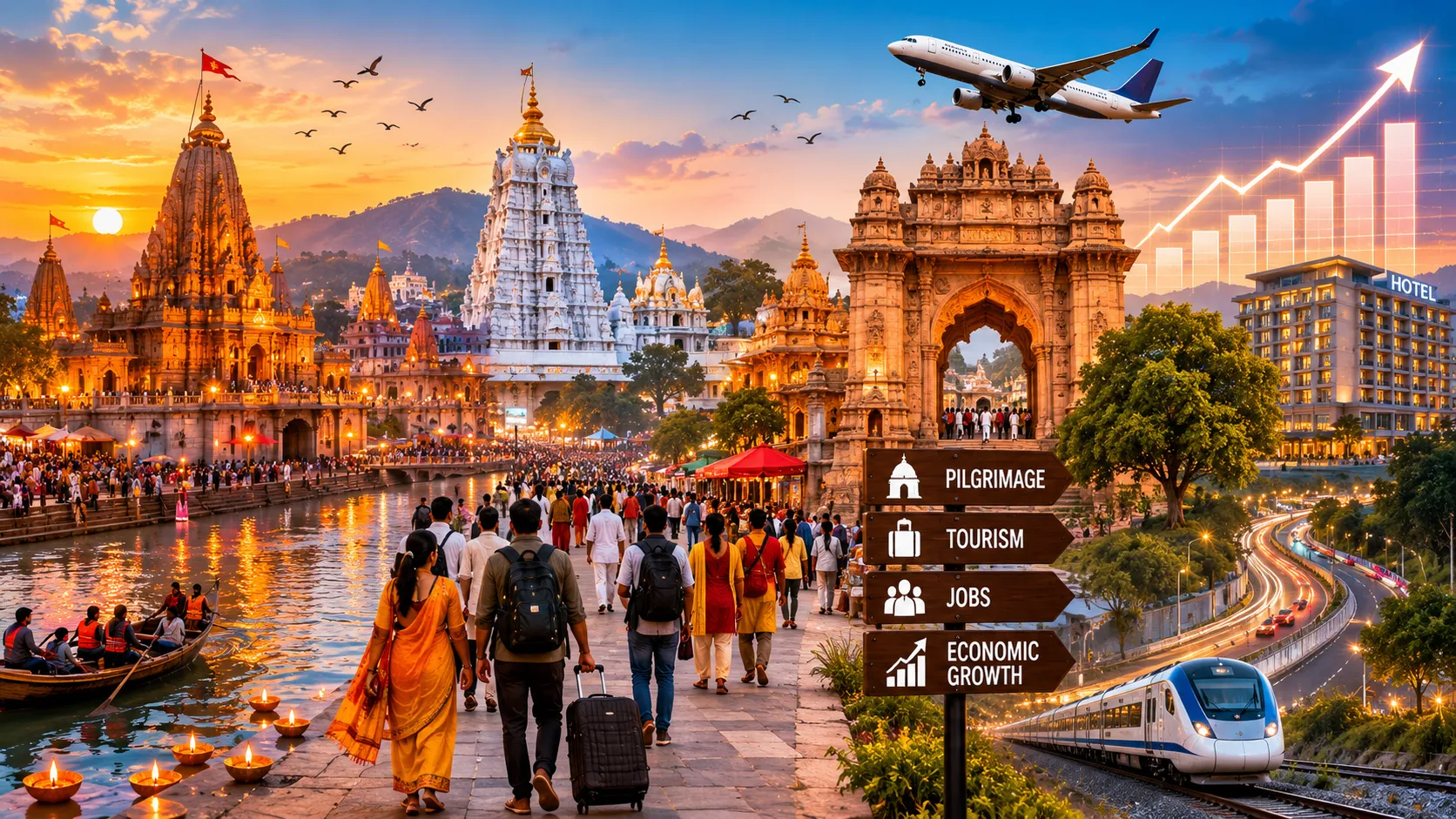
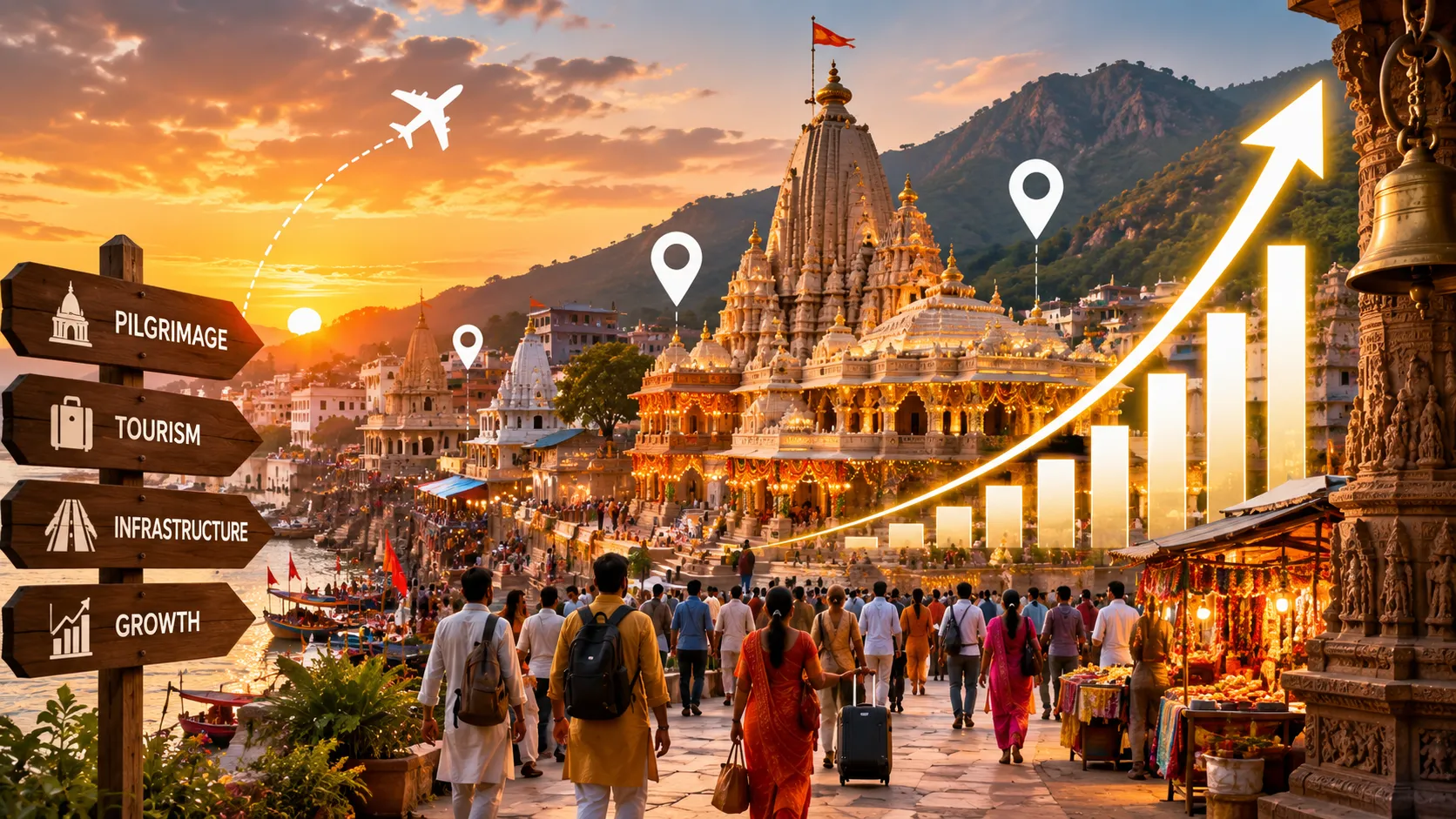
Something different now appears to be unfolding beneath that traditional ecosystem. Across several parts of India, temple destinations are witnessing larger visitor numbers, stronger infrastructure development and increased economic activity because travel behavior itself is changing. New roads, airports, hospitality projects and urban development initiatives are appearing around religious destinations because pilgrimage circuits are gradually becoming larger economic zones. What initially looked like growth in religious travel is beginning to resemble a much wider transformation involving tourism, employment and regional development.
Viewed independently, rising footfall at temples may initially resemble another travel trend influenced by seasonal demand and cultural interest. Viewed through a broader impact lens, however, another question begins surfacing beneath the headlines: what happens when spaces historically associated with faith begin creating economic ecosystems around them? Because travel industries rarely influence visitors alone. They frequently reshape entire communities operating around them.
Historically, tourism conversations often centered around beaches, heritage sites and leisure destinations because mainstream travel frequently emphasized recreation and hospitality. Religious travel certainly existed at scale, but it rarely occupied the center of broader economic discussions because pilgrimage often remained categorized separately from traditional tourism sectors. Yet large visitor movements frequently create economic activity regardless of why people travel.
Recent developments surrounding destinations such as Ayodhya, Varanasi, Ujjain, Kedarnath and Tirupati have brought stronger attention toward temple-centered travel because visitor numbers and supporting infrastructure have expanded significantly. Hotels, restaurants, transport services and local businesses frequently experience direct effects because tourism ecosystems naturally create interconnected economic activity. Growth surrounding these destinations increasingly appears extending beyond temples themselves and entering broader urban environments.