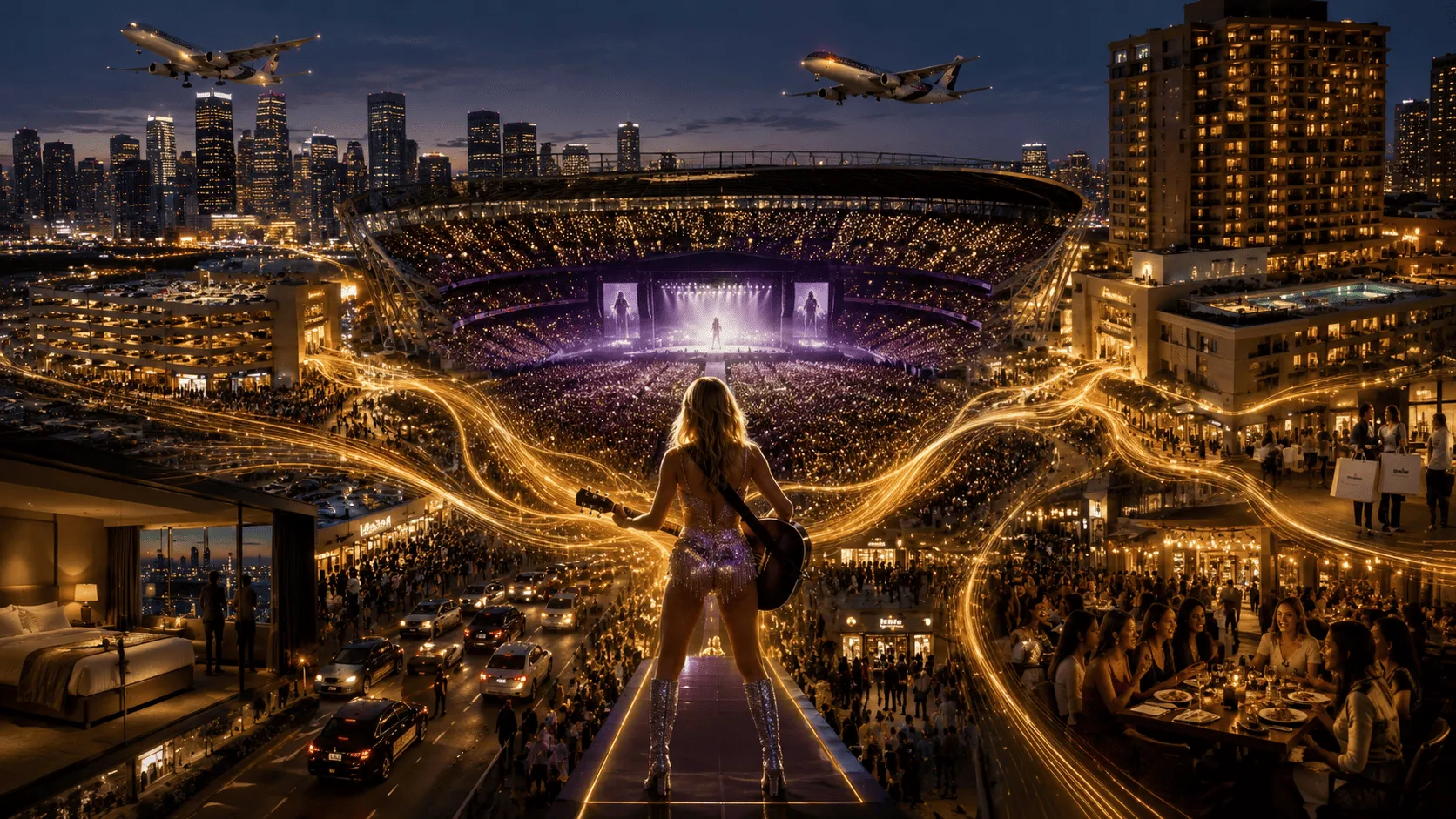
The Eras Tour Was Supposed To Be A Concert Tour. It Ended Up Reshaping Ticketing, Tourism, Stadium Economics And The Business Of Live Events.
When Taylor Swift announced The Eras Tour, expectations were already enormous. She was one of the world's biggest recording artists, coming off a period of remarkable commercial success that included chart-topping albums, record-breaking streaming numbers and a fan base that had steadily expanded across multiple generations. Industry executives expected sold-out stadiums and impressive ticket sales. What they did not anticipate was that the tour would evolve into one of the most significant business stories in modern entertainment. Long before the final concert concluded, economists, tourism officials, venue operators and investors were studying its impact because it had become clear that something much larger than a successful music tour was taking place.
The numbers alone attracted attention, but the broader implications proved even more remarkable. Cities began reporting surges in visitor spending linked directly to tour dates. Airlines added flights. Hotels experienced unusually high occupancy rates. Restaurants, retailers and local businesses benefited from an influx of visitors willing to spend heavily before and after concerts. In many cases, fans traveled hundreds or even thousands of miles to attend performances, turning a single evening event into a multi-day economic activity. The result was a level of spending that extended far beyond the music industry itself and into sectors that traditionally had little connection to concert tours.
What emerged was a powerful example of how modern entertainment has evolved. The Eras Tour demonstrated that major cultural events are no longer simply products consumed by audiences. They have become economic ecosystems capable of influencing multiple industries simultaneously. While Taylor Swift remained the face of the phenomenon, the larger story involved a changing entertainment landscape where fan engagement, social media, tourism and live experiences combine to create value on a scale rarely seen before.
The Tour Became Bigger Than The Music Industry
Historically, concert tours generated revenue through relatively straightforward channels. Artists sold tickets, venues earned concessions and merchandise contributed additional income. While successful tours could produce impressive financial results, their impact generally remained concentrated within the music business. The Eras Tour expanded that model dramatically by demonstrating how entertainment could stimulate economic activity across entire cities rather than simply inside stadiums.
Fans were not merely purchasing tickets. They were booking flights, reserving hotel rooms, organizing group trips and extending their stays to explore host cities. Local businesses quickly realized that tour weekends resembled major tourism events. Restaurants reported increased traffic, retail stores created themed promotions and hospitality operators adjusted staffing levels to accommodate higher demand. The economic activity generated by a single concert often extended for days before and after the actual performance, creating ripple effects throughout local economies.
This shift reflects a broader trend within consumer behavior. Increasingly, people are spending money on experiences rather than possessions. Travel, festivals, sporting events and live entertainment have become central parts of how many consumers allocate discretionary income. The Eras Tour benefited from this trend while simultaneously accelerating it. Attendance became more than a night of entertainment. It became a cultural event worth planning, saving for and traveling to experience, helping transform concerts into powerful economic engines.
The Ticketmaster Controversy Exposed A Much Bigger Industry Problem
One of the most important moments of The Eras Tour occurred before the first performance even began. Demand for tickets overwhelmed Ticketmaster's systems, creating widespread frustration among fans attempting to secure seats. Website crashes, long wait times and concerns about pricing quickly dominated headlines. What initially appeared to be a technical issue soon evolved into a national conversation about competition, consumer access and the structure of the ticketing industry itself.
The controversy revealed how dramatically demand for premium live entertainment had changed. Millions of consumers were competing for a limited number of seats because major entertainment experiences increasingly function as cultural moments rather than ordinary events. Fans were not simply purchasing access to a concert. They were attempting to participate in an experience carrying emotional, social and cultural significance. The intensity of that demand exposed weaknesses in ticketing systems that had operated largely outside public scrutiny for years.
More importantly, the situation highlighted a larger business reality. The most valuable entertainment properties now command levels of consumer demand that traditional distribution systems often struggle to manage. As major artists continue building global audiences, ticketing companies, regulators and venue operators may face increasing pressure to rethink how access is allocated. The Eras Tour became a case study in what happens when consumer enthusiasm exceeds the capacity of existing infrastructure.
Stadiums Began Viewing Concerts Differently
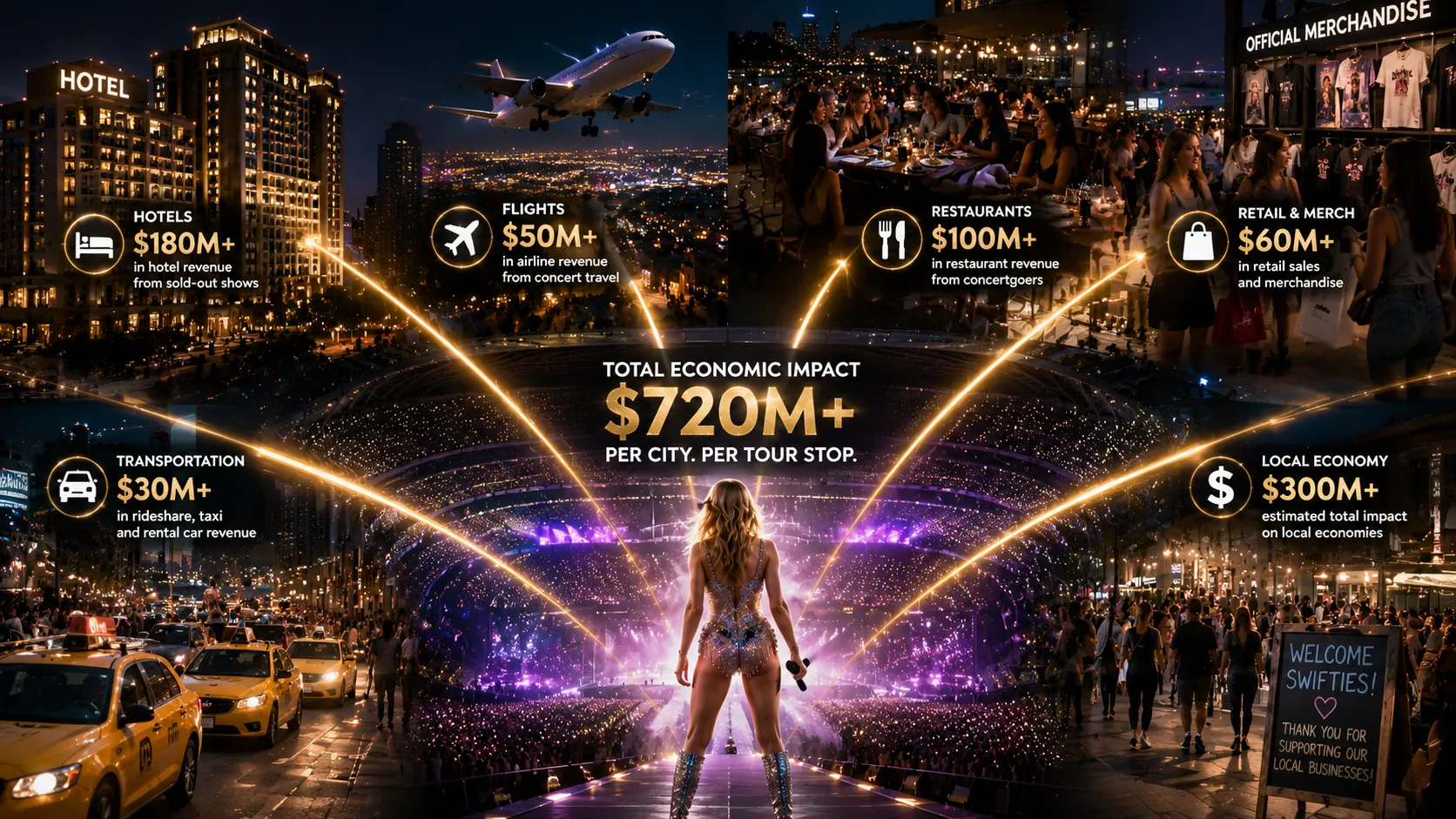
The success of The Eras Tour also changed how venue operators think about live entertainment. For decades, stadium economics revolved primarily around sports. Football, baseball and soccer teams served as anchor tenants while concerts were viewed as valuable but secondary events. The extraordinary demand generated by Taylor Swift challenged that assumption by demonstrating that major music tours could rival the economic significance of many sporting competitions.
Venue operators quickly recognized the opportunity. Premium seating sold at exceptional rates. Corporate hospitality packages became increasingly valuable. Merchandise sales reached extraordinary levels and sponsors gained access to highly engaged audiences. In many cases, concerts generated levels of spending comparable to or greater than traditional sporting events. The distinction between sports venues and entertainment venues began to blur as operators recognized the growing commercial power of live music.
This realization carries important implications for the future. As artists continue developing larger global brands, venues may increasingly compete for major entertainment properties in the same way cities compete for sporting championships. Concert tours are no longer simply bookings on an event calendar. They are strategic assets capable of driving revenue, attracting visitors and strengthening relationships with sponsors. The Eras Tour accelerated that evolution by demonstrating what is possible when fan engagement reaches unprecedented levels.
The Rise Of The Experience Economy
One reason The Eras Tour became such a powerful commercial force is that it arrived during a period when experiences have become increasingly valuable. Younger consumers often prioritize travel, events and memorable activities over traditional luxury purchases. Social media has amplified this trend by turning experiences into highly visible forms of personal expression. Attending major events is no longer solely about enjoyment. It is also about participation, identity and community.
The Eras Tour fit perfectly within this environment. Fans spent months planning outfits, creating friendship bracelets, organizing travel itineraries and sharing experiences online. The concert itself became only one part of a much larger journey. Entire communities formed around preparations, discussions and post-event content. The experience extended far beyond the hours spent inside the stadium, creating engagement that lasted for weeks or even months.
From a business perspective, this shift is enormously important. Companies capable of creating memorable experiences often generate stronger customer loyalty and greater pricing power than those selling products alone. The Eras Tour illustrated how entertainment businesses can benefit when audiences become emotionally invested in participation itself. Fans were not simply consuming a performance. They were becoming part of a larger cultural phenomenon.
Taylor Swift Built A Community Before She Built A Tour
The extraordinary success of The Eras Tour was not created overnight. It was the result of years spent cultivating one of the most engaged fan communities in modern entertainment. Throughout her career, Taylor Swift consistently developed direct relationships with audiences through storytelling, social media engagement and an unusually personal approach to fan interaction. Over time, these relationships created levels of loyalty rarely seen at comparable scale.
That loyalty became one of the tour's most valuable economic assets. Fans viewed attendance as more than a transaction. Many considered it participation in a shared experience connected to memories, personal milestones and cultural identity. This emotional investment helped drive demand far beyond what traditional marketing campaigns alone could achieve. The community itself became a growth engine, generating anticipation, conversation and visibility across digital platforms.
Modern entertainment increasingly rewards creators capable of building these relationships. Streaming platforms make content widely available, but audience attention remains scarce. Artists who cultivate genuine engagement often enjoy advantages that extend beyond music sales or ticket revenue. They create ecosystems where every new project benefits from existing trust and enthusiasm. The Eras Tour demonstrated the commercial power of that model on a global scale.
The Future Of Live Entertainment May Never Look The Same
The broader significance of The Eras Tour extends far beyond Taylor Swift's career. The tour revealed how entertainment properties can generate value across multiple industries simultaneously, influencing tourism, hospitality, retail, transportation and media. It demonstrated that live events are becoming increasingly important economic drivers in a world where consumers place growing value on experiences and community participation.
Industry leaders are already studying these lessons closely. Cities are exploring ways to attract major entertainment events. Venue operators are investing in enhanced fan experiences. Brands are seeking deeper partnerships with artists capable of mobilizing large audiences. Investors increasingly view live entertainment as a category with substantial long-term growth potential because it offers something digital products often cannot replicate: shared physical experiences that bring people together.
The Eras Tour will ultimately be remembered for its music, but its business impact may prove equally significant. It showed that a concert tour can influence entire economies, reshape conversations about ticketing and redefine expectations for what live entertainment can achieve. In doing so, it provided a glimpse into the future of an industry where experiences, communities and cultural relevance have become some of the most valuable assets of all.