
Most Founders Raise Capital Through Investor Meetings And Press Releases. Phoebe Gates Turned A $35.5 Million Funding Round Into A Masterclass In Modern Attention Economics.
For decades, startup fundraising followed a relatively predictable formula.
A company announced a funding round, investors issued statements about market opportunities and founders discussed product roadmaps and growth plans. Coverage typically appeared in business publications, venture-capital newsletters and technology media outlets before gradually disappearing from public attention. The audience for these announcements was usually limited to investors, entrepreneurs and industry insiders. Raising money was an important business milestone, but it was rarely treated as a cultural moment.
That model is changing.
In an era where attention has become one of the world's most valuable commodities, founders increasingly understand that visibility can be as important as capital itself. A funding announcement is no longer simply a financial event. It is a marketing opportunity capable of introducing a company to millions of potential customers. The most successful entrepreneurs recognize that fundraising can simultaneously attract investors, generate media coverage, build brand awareness and create consumer interest. Increasingly, the announcement itself becomes part of the growth strategy.
Few recent examples illustrate this shift better than Phoebe Gates.
The daughter of Bill Gates recently helped secure $35.5 million in funding for Phia, a shopping-focused technology startup. On the surface, the story appears straightforward: a young founder raises capital from prominent investors. Yet the real significance lies in how the funding round was presented. Rather than treating the announcement as a conventional venture-capital milestone, Gates and her team transformed it into a broader cultural conversation involving celebrities, influencers, media personalities and founder networks. In doing so, they demonstrated how startup marketing is evolving in the creator-economy era.
The Company Is Selling More Than A Product
At its core, Phia operates within a highly competitive consumer market.
Shopping technology is hardly a new category. Consumers already have access to countless apps helping them discover products, compare prices and make purchasing decisions. Breaking through the noise requires more than strong technology because modern consumers are constantly bombarded with alternatives. The challenge facing most startups is not simply building a product. It is convincing people to care about it.
This reality has changed how founders think about growth.
Traditional startups often focused heavily on product development before turning their attention to branding and audience building. Today's consumer companies frequently pursue both objectives simultaneously. They understand that awareness itself can become a competitive advantage. If consumers recognize a brand, follow its founders and discuss its products online, customer acquisition becomes significantly easier. Visibility is no longer a secondary objective. It is part of the business model.
Phia appears to understand this dynamic well.The company is operating in a world where consumers increasingly discover products through personalities, communities and social-media ecosystems rather than traditional advertising channels. Building attention therefore becomes just as important as building technology.
The Founder Is Part Of The Product
One of the most interesting aspects of modern entrepreneurship is how closely founders and companies have become connected.
Historically, many successful businesses operated independently of their creators' public identities. Consumers purchased products without knowing much about the people behind them. Social media changed that relationship dramatically. Today, founders frequently function as public faces, brand ambassadors and content creators simultaneously.
Phoebe Gates enters this environment with unique advantages.
Her family name naturally attracts attention, but that attention alone does not guarantee business success. In fact, it often creates additional scrutiny. The challenge becomes transforming visibility into credibility. Rather than avoiding public attention, Gates appears to be embracing it as part of Phia's growth strategy. The funding announcement helped position her not merely as the daughter of one of the world's most famous entrepreneurs but as a founder building a company within a highly competitive consumer market.
This distinction matters because audiences increasingly connect with stories as much as products.
People follow founders, listen to podcasts, consume interviews and engage with entrepreneurial narratives. A compelling founder story can generate awareness that traditional marketing budgets struggle to replicate. In the attention economy, personal brands often become powerful business assets.
Celebrity Networks Are Becoming Startup Infrastructure
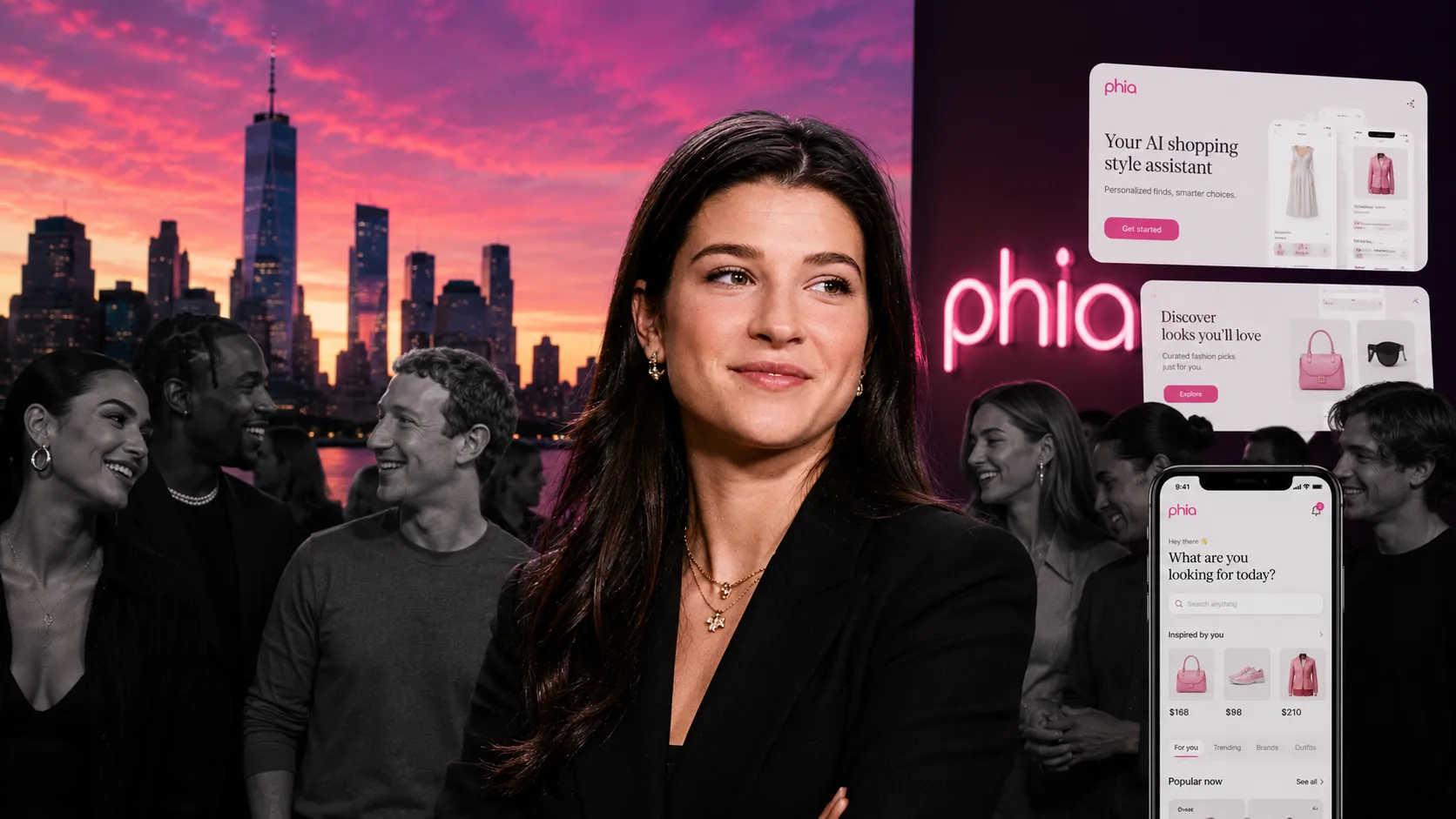
One reason the announcement generated significant visibility is that it extended beyond traditional venture-capital circles.
Modern startups increasingly rely on networks of creators, influencers, celebrities and media personalities to amplify their message. These relationships function almost like a new form of distribution infrastructure. Instead of relying exclusively on advertising campaigns, companies can reach audiences through trusted voices already commanding attention across digital platforms.
This represents a broader shift in marketing economics.
For decades, brands purchased access to audiences through television, print and digital advertising. Today, audiences often gather around individuals rather than institutions. Influencers, podcasters, YouTubers and creators command communities that can rival traditional media organizations in both reach and engagement. Startups that successfully tap into these networks gain access to distribution channels that feel more authentic and organic than conventional advertising.
The Phia announcement reflected this reality.
The funding round became a conversation because it traveled through multiple social and cultural networks simultaneously. It was discussed not only within technology circles but also across creator, influencer and lifestyle communities. That broader reach helped transform a business story into something approaching a pop-culture moment.
Venture Capital Is Increasingly Funding Distribution
Traditionally, investors evaluated startups primarily through products, technology and market opportunities.
While those factors remain important, many venture capital firms now place growing emphasis on distribution. The ability to attract users efficiently has become one of the most valuable competitive advantages in modern business. Products can often be replicated. Audiences are much harder to copy.
This helps explain why founder visibility has become increasingly important.
Entrepreneurs capable of generating attention can often reduce customer-acquisition costs while accelerating awareness. Investors understand that strong distribution advantages can significantly influence long-term outcomes. A startup with access to large, engaged audiences may possess advantages that extend far beyond the underlying product itself.
The growing overlap between venture capital and creator culture reflects this trend.Investors increasingly recognize that influence, community and attention can function as business assets. Funding rounds therefore become opportunities not only to raise capital but also to strengthen public visibility. The announcement itself becomes part of the company's growth engine.
The Rise Of Founder-Led Consumer Brands
The Phia story also reflects a larger transformation occurring across consumer technology.
Many of today's most successful brands are closely associated with their founders. Consumers often feel they know the people behind companies through interviews, podcasts, social media and public appearances. This creates relationships that extend beyond traditional brand marketing because audiences connect with individuals rather than corporate identities.
Founder-led brands benefit from this dynamic.
When entrepreneurs become recognizable public figures, every media appearance, funding announcement or partnership can generate additional awareness for the company. The relationship creates a feedback loop in which personal visibility strengthens the business while business success increases personal visibility. Companies operating within consumer markets often benefit particularly strongly because emotional connection plays an important role in purchasing decisions.
Phoebe Gates is building her company within exactly this environment.The funding round demonstrated how modern founders can leverage attention, storytelling and public visibility alongside traditional business fundamentals. The result is a model that looks increasingly different from the startup playbook of previous generations.
The Bigger Story Is About Attention
Viewed narrowly, the announcement is about a startup raising $35.5 million.
Viewed more broadly, it is about how entrepreneurship itself is changing. The most successful founders increasingly understand that products compete not only for market share but also for attention. Capital remains important, but visibility can be equally valuable. A company that captures public interest gains advantages that extend across marketing, recruitment, partnerships and customer acquisition.
That is why the Phia funding round matters.
The story is not simply that Phoebe Gates raised money. Many founders do that every day. The story is that she transformed a financial milestone into a cultural event capable of reaching audiences far beyond the venture-capital ecosystem. In doing so, she highlighted a reality that more startups are beginning to embrace.In the modern economy, attention is not a byproduct of success.It is often one of the tools used to create it.


