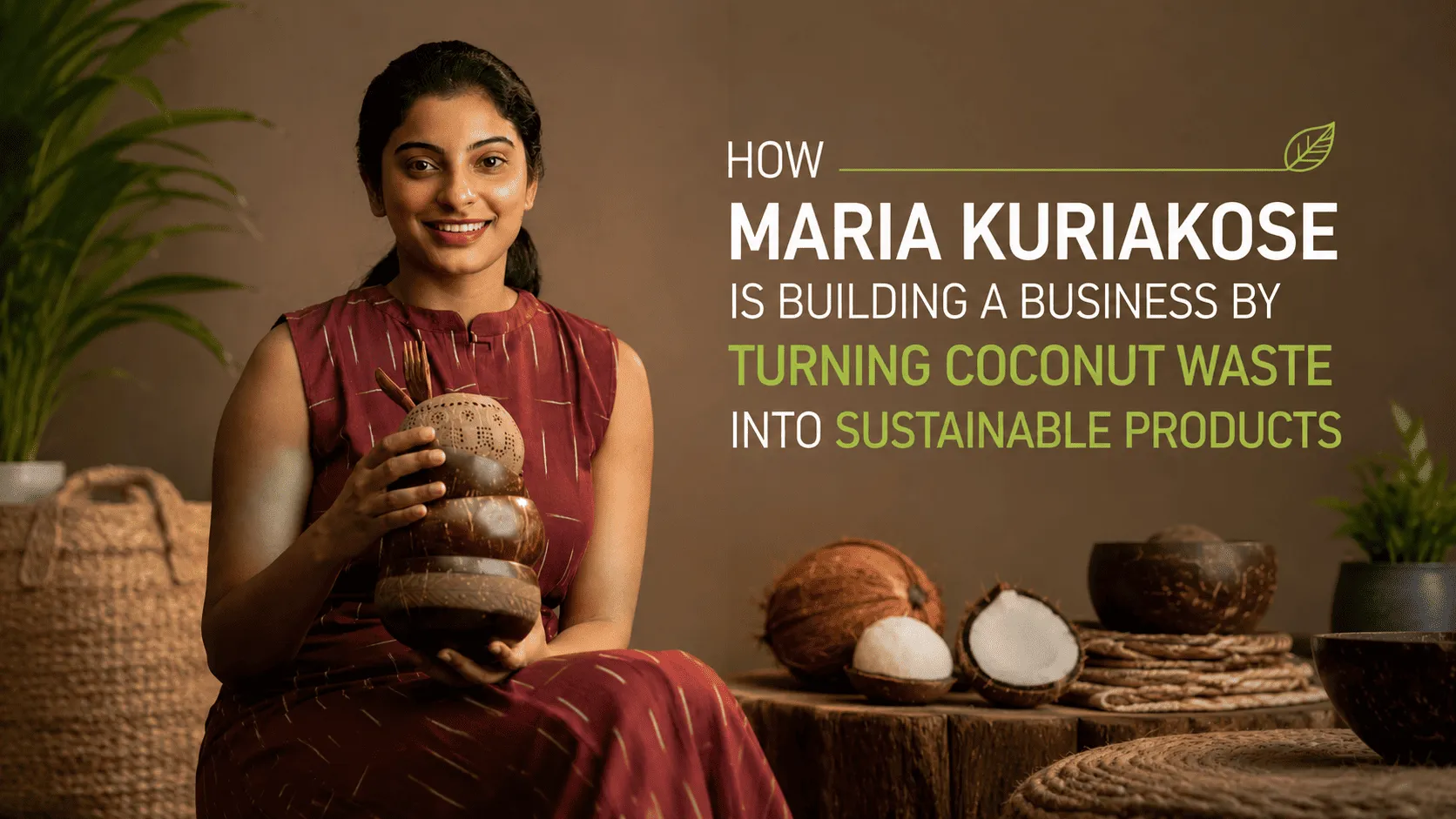
Most Entrepreneurs Look For Valuable Raw Materials. Maria Kuriakose Built A Growing Business Around Something Most People Throw Away.
Across India, millions of coconuts are consumed every day.
They are used in homes, restaurants, temples, religious ceremonies and food businesses across the country. Once the water is consumed or the flesh is removed, the shell is usually discarded without much thought. For most people, it is simply agricultural waste. For Maria Kuriakose, however, those discarded shells represented an opportunity hiding in plain sight. What many viewed as waste, she saw as the foundation of a sustainable business capable of generating both environmental and economic impact.
That vision eventually became Thenga Coco.
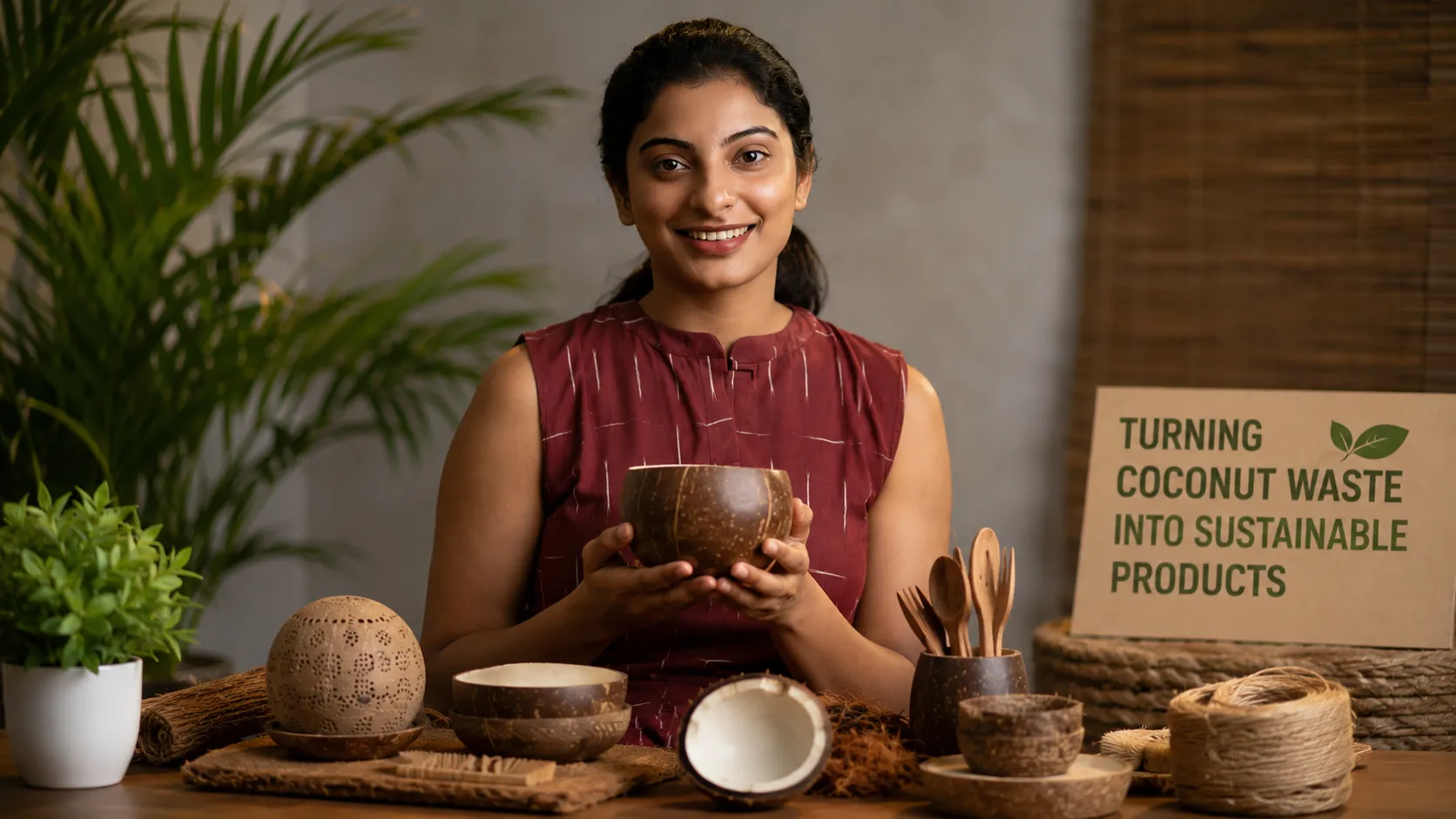
The Kerala-based venture specializes in transforming discarded coconut shells into products such as bowls, cutlery, candles, home décor items and gift products. The concept appears simple on the surface, but the business reflects a much larger shift occurring within consumer markets. Increasingly, buyers are looking for products that combine functionality, sustainability and craftsmanship. Rather than purchasing mass-produced alternatives, many consumers are showing greater interest in products with stories rooted in environmental responsibility and local communities. Thenga Coco has positioned itself at the intersection of those trends.
The Business Opportunity Hidden Inside Waste
One of the most interesting aspects of the company's journey is how it challenges traditional assumptions about value creation.
Entrepreneurs are often encouraged to identify new technologies, develop proprietary products or create entirely new markets. Yet some of the most successful businesses emerge from reimagining resources that already exist. Coconut shells are abundant across southern India, particularly in Kerala, where coconuts are deeply integrated into daily life. Their availability creates a consistent raw material supply that would otherwise have little economic value after primary consumption.
By converting these discarded shells into finished products, Thenga Coco effectively extends the lifecycle of an existing resource.
The model demonstrates how sustainability can become a business strategy rather than merely a social initiative. Every shell that becomes a bowl, candle holder or serving product represents waste diverted from disposal while simultaneously generating revenue. This circular approach allows the company to create value from materials that previously contributed little to the economy after their initial use.
The broader significance lies in scalability.
India generates enormous amounts of agricultural waste annually. If entrepreneurs can identify commercially viable ways to repurpose even a fraction of these materials, the economic and environmental implications could be substantial.
Sustainability Alone Is Not Enough
Many environmentally focused businesses struggle because consumers may support sustainability in theory but still prioritize quality, design and practicality when making purchasing decisions.
Successful eco-friendly brands therefore face a challenge. They must compete not only as sustainable businesses but also as product businesses. Consumers may appreciate the environmental mission, but they ultimately buy products that fit their lifestyles, homes and preferences.
Thenga Coco appears to understand this reality.
Its products are positioned not simply as recycled goods but as attractive lifestyle items. Coconut-shell bowls, handcrafted cutlery and decorative pieces appeal to consumers seeking unique products with natural aesthetics. The sustainability story strengthens the brand, but the products themselves provide the primary reason for purchase. This distinction is important because it helps explain why some purpose-driven businesses scale while others remain niche.
The company's reported sales of thousands of products every month suggest that demand extends beyond environmental awareness alone.
Customers are increasingly viewing sustainable products as desirable consumer goods rather than charitable purchases.
Creating Livelihoods Alongside Revenue
One of the most meaningful aspects of the business model is its connection to local artisans.
Handcrafted products require skills, craftsmanship and labor that cannot always be replicated through mass production. By working with local artisans and production networks, the company creates income opportunities while preserving traditional craftsmanship. This creates a multiplier effect in which economic benefits extend beyond the founder and the business itself.
Such models are becoming increasingly relevant across India.
Consumers are showing greater appreciation for products connected to local communities, handmade processes and regional traditions. Businesses that successfully combine modern branding with local craftsmanship often create stronger emotional connections with customers. In the process, they help support employment opportunities that might otherwise struggle to compete against large-scale manufacturing.The result is a business model where sustainability and livelihood generation reinforce one another.Environmental impact becomes linked to economic participation rather than existing as a separate objective.
The Rise Of Purpose-Driven Entrepreneurship
Maria Kuriakose's journey reflects a broader shift in entrepreneurship.
For many years, startup success was largely associated with technology, software and venture capital. While those sectors continue attracting attention, a growing number of entrepreneurs are building businesses around sustainability, ethical production and circular economy principles. These founders are identifying opportunities in areas where environmental challenges intersect with consumer demand.This trend is particularly significant because younger consumers increasingly evaluate brands through a broader lens.
Price and convenience remain important, but purchasing decisions are also influenced by sustainability, authenticity and social impact. Businesses capable of addressing these priorities while maintaining commercial viability often gain advantages in crowded markets. The success of companies operating within eco-friendly categories suggests that purpose-driven entrepreneurship is evolving from a niche movement into a mainstream business strategy.Thenga Coco sits squarely within this transformation.Its growth demonstrates that sustainability-focused businesses can generate meaningful revenue while addressing real-world environmental challenges.
A Small Business With A Bigger Message
At one level, Thenga Coco is a story about coconut shells.
At another level, it is a story about how entrepreneurs create value by changing perspectives. What most people viewed as waste became a raw material. What appeared to be an environmental problem became a commercial opportunity. What might have remained a small local initiative evolved into a growing brand serving customers seeking sustainable alternatives.That shift in perspective is often where entrepreneurship begins.
The most successful founders frequently see possibilities where others see limitations. They identify overlooked resources, underserved markets or unmet needs and build businesses around them. Maria Kuriakose's journey reflects exactly that mindset.As conversations around sustainability continue growing, businesses like Thenga Coco may become increasingly important examples of how environmental responsibility and commercial success can coexist.
Because sometimes the next business opportunity is not hidden inside a new technology.Sometimes it is hidden inside something everyone else throws away.