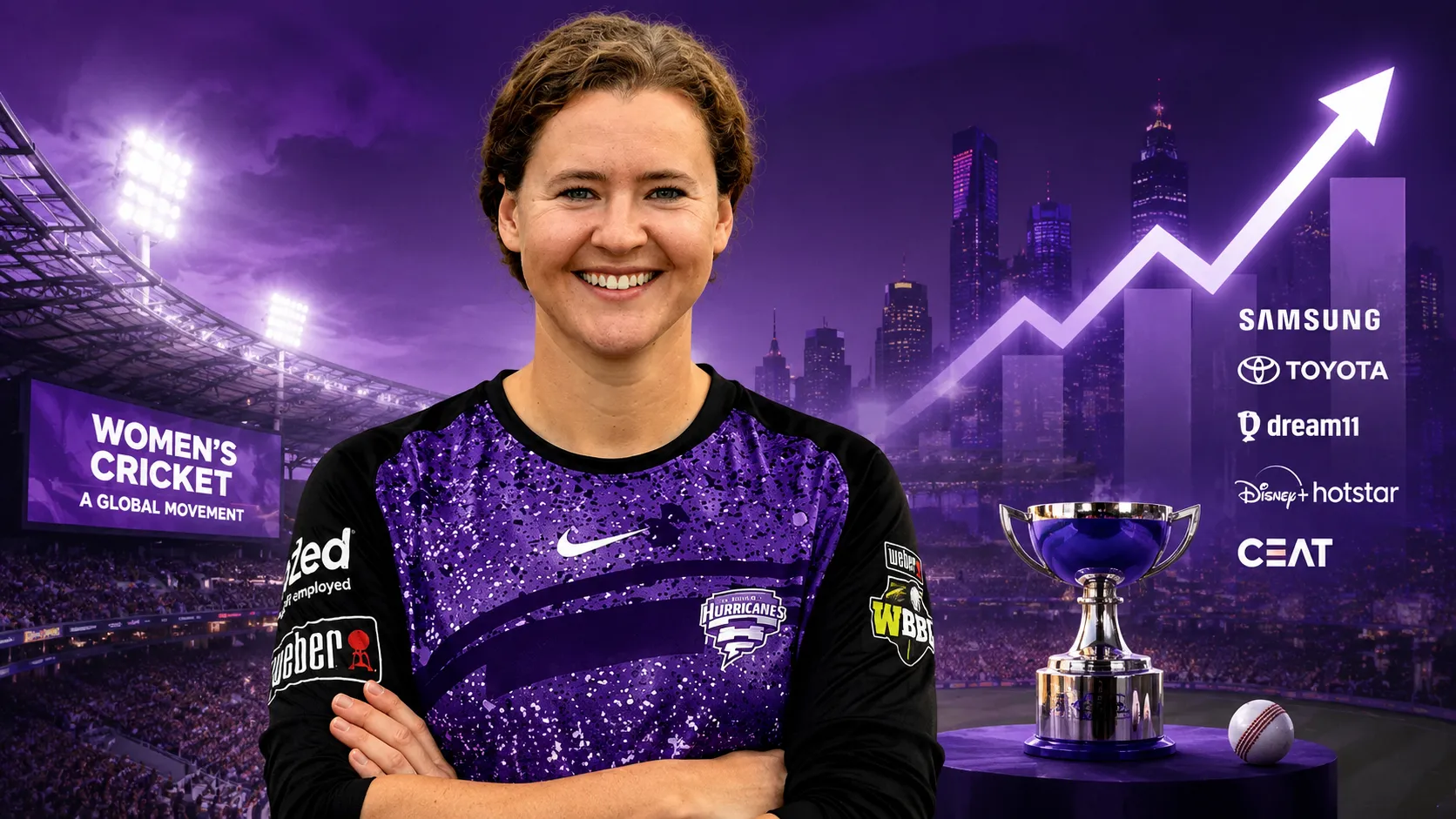
Women's Cricket Was Once Treated As A Side Story. Today It Is Attracting Sponsors, Broadcasters And Investors Around The World. Kathryn Bryce's Rise Reflects How Fast The Economics Of The Sport Are Changing.
For decades, women's cricket existed in the shadow of the men's game.
The talent was always there. The competition was often compelling. Yet commercial attention rarely followed. Sponsorship budgets flowed primarily toward men's tournaments, television rights remained limited and media coverage frequently treated women's cricket as a niche product rather than a major sporting property. Players often balanced professional ambitions with jobs, studies and financial uncertainty because the ecosystem around them simply lacked the resources necessary to support full-time careers.
That reality is changing at remarkable speed.
Women's cricket is undergoing one of the most significant commercial transformations in modern sports. New leagues are attracting investment, broadcasters are paying increasing attention to media rights and brands are discovering audiences they previously overlooked. The emergence of tournaments such as the Women's Premier League in India and growing international visibility have accelerated interest from sponsors eager to associate themselves with a sport experiencing rapid growth. What was once viewed as a developmental category is increasingly being viewed as a serious business opportunity.
Few players embody that transformation more clearly than Kathryn Bryce.
The Scottish all-rounder has become one of the most respected performers in women's cricket, earning admiration for her consistency, leadership and ability to influence matches across formats. While Bryce's achievements on the field have been impressive, her significance extends beyond individual statistics. She represents a generation of players benefiting from a changing sports economy where women's cricket is no longer fighting solely for recognition. It is beginning to attract genuine commercial attention.
Her rise mirrors a broader shift occurring throughout global sport.
Athletes who might once have remained relatively unknown outside dedicated cricket audiences are increasingly becoming valuable assets for sponsors, leagues and broadcasters seeking to participate in the growth of women's sports.
Women's Cricket Is No Longer A Niche Product
One of the biggest misconceptions about women's cricket is that its growth happened suddenly.
In reality, the transformation has been building for years. International tournaments gradually attracted larger audiences, governing bodies increased investment and players consistently demonstrated the quality of competition available within the sport. What changed recently was not the talent level but the willingness of commercial stakeholders to recognize its value.
Television networks played a crucial role in this evolution.
As broadcasters searched for premium sports content capable of attracting engaged audiences, women's cricket became increasingly attractive. International tournaments generated strong viewership numbers while digital platforms helped introduce new fans to the sport. Once audience growth became measurable, sponsors began following. The commercial ecosystem started reinforcing itself, creating a cycle where greater investment produced greater visibility, which in turn attracted additional investment.
Players like Kathryn Bryce have benefited from this environment.
Their performances now reach larger audiences than would have been possible even a decade ago. Increased visibility creates opportunities not only for individual athletes but also for the broader growth of the sport.
The result is a cricket economy that looks very different from the one previous generations experienced.
The Rise Of The Athlete As A Brand
Modern sports economics extend far beyond competition itself.
Today's athletes are increasingly viewed as brands capable of influencing consumer behavior, attracting sponsorships and building communities around their personal stories. Social media has accelerated this trend by allowing players to connect directly with fans rather than relying exclusively on traditional media coverage.
This shift has been particularly important for women's sports.
Historically, female athletes often received less exposure than their male counterparts, limiting commercial opportunities. Digital platforms have helped reduce some of those barriers by enabling athletes to build audiences independently. Sponsors increasingly evaluate engagement, authenticity and storytelling alongside performance when selecting partnerships.
Kathryn Bryce represents the type of athlete brands increasingly value.
Her reputation is built not only on cricketing ability but also on professionalism, leadership and consistency. These qualities resonate with sponsors seeking ambassadors capable of representing values such as perseverance, excellence and resilience.
As women's cricket continues growing, players with strong personal brands may find themselves at the center of a rapidly expanding commercial ecosystem.
Scotland's Success Story Has Global Appeal
Another reason Bryce's rise is significant is that it demonstrates how women's cricket is expanding beyond traditional powerhouses.
For many years, the sport's commercial narrative was concentrated around a relatively small group of countries. Australia, England and India dominated much of the conversation because they possessed the largest audiences, strongest infrastructure and greatest financial resources.
The emergence of players from nations such as Scotland changes that dynamic.
Bryce's success illustrates how talent can emerge from markets that historically received less attention. As the sport becomes more global, governing bodies, sponsors and broadcasters gain access to new stories and audiences. This diversification strengthens the overall ecosystem by reducing dependence on a handful of established markets.
The trend is particularly attractive from a business perspective.
Global sports properties often become more valuable as they expand into new regions and demographics. Women's cricket appears to be following that pattern, creating opportunities for athletes, leagues and commercial partners alike.
That broader international appeal is helping drive the sport's growing momentum.
Investors Are Finally Seeing The Opportunity
Perhaps the most important development in women's cricket is the growing involvement of serious capital.
For years, investment in women's sports was often framed as a social responsibility initiative rather than a business opportunity. While many organizations genuinely wanted to support growth, commercial expectations remained relatively modest. Today, that perspective is changing rapidly.
Investors increasingly believe women's sports represent an undervalued asset class.
Audience growth, media-rights expansion and increasing sponsor interest suggest significant upside remains available. The Women's Premier League demonstrated how quickly value can be created when leagues receive sufficient investment and visibility. Similar opportunities are emerging across multiple sports and geographies.
Women's cricket has become one of the clearest examples of this shift.
What was once viewed primarily as a developmental project is increasingly attracting sophisticated commercial interest. Investors are no longer asking whether women's cricket can generate value. They are asking how large the opportunity might become.
Players like Kathryn Bryce therefore occupy a unique moment in sporting history.
Their careers are unfolding during a period when the economics of their sport are being fundamentally rewritten.
The Bigger Story Is About Recognition
Viewed narrowly, Kathryn Bryce's story is about an exceptional cricketer achieving success at the highest level.
Viewed more broadly, it is about what happens when markets finally recognize value that has existed for years. Women's cricket did not suddenly become entertaining. Female athletes did not suddenly become talented. What changed was the willingness of broadcasters, sponsors and investors to acknowledge the opportunity sitting in front of them.
That shift is creating profound consequences throughout the sport.
More investment leads to better infrastructure. Better infrastructure creates stronger competitions. Stronger competitions attract larger audiences. Larger audiences generate additional revenue. The cycle reinforces itself, benefiting everyone involved from players and coaches to broadcasters and sponsors.Kathryn Bryce has become one of the most visible beneficiaries of this transformation.But the bigger story is not about one athlete.It is about an entire sport discovering what becomes possible when talent finally receives the commercial platform it deserves.


