From Four Planes and One Route to India's Biggest Airline
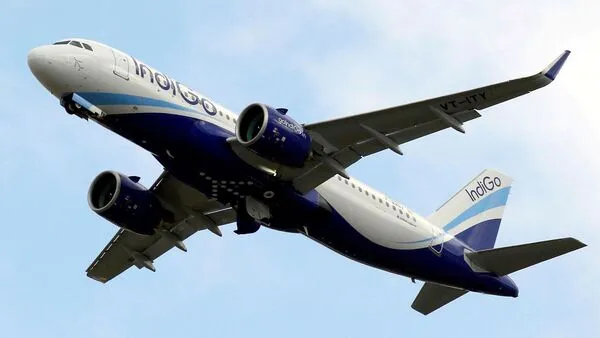
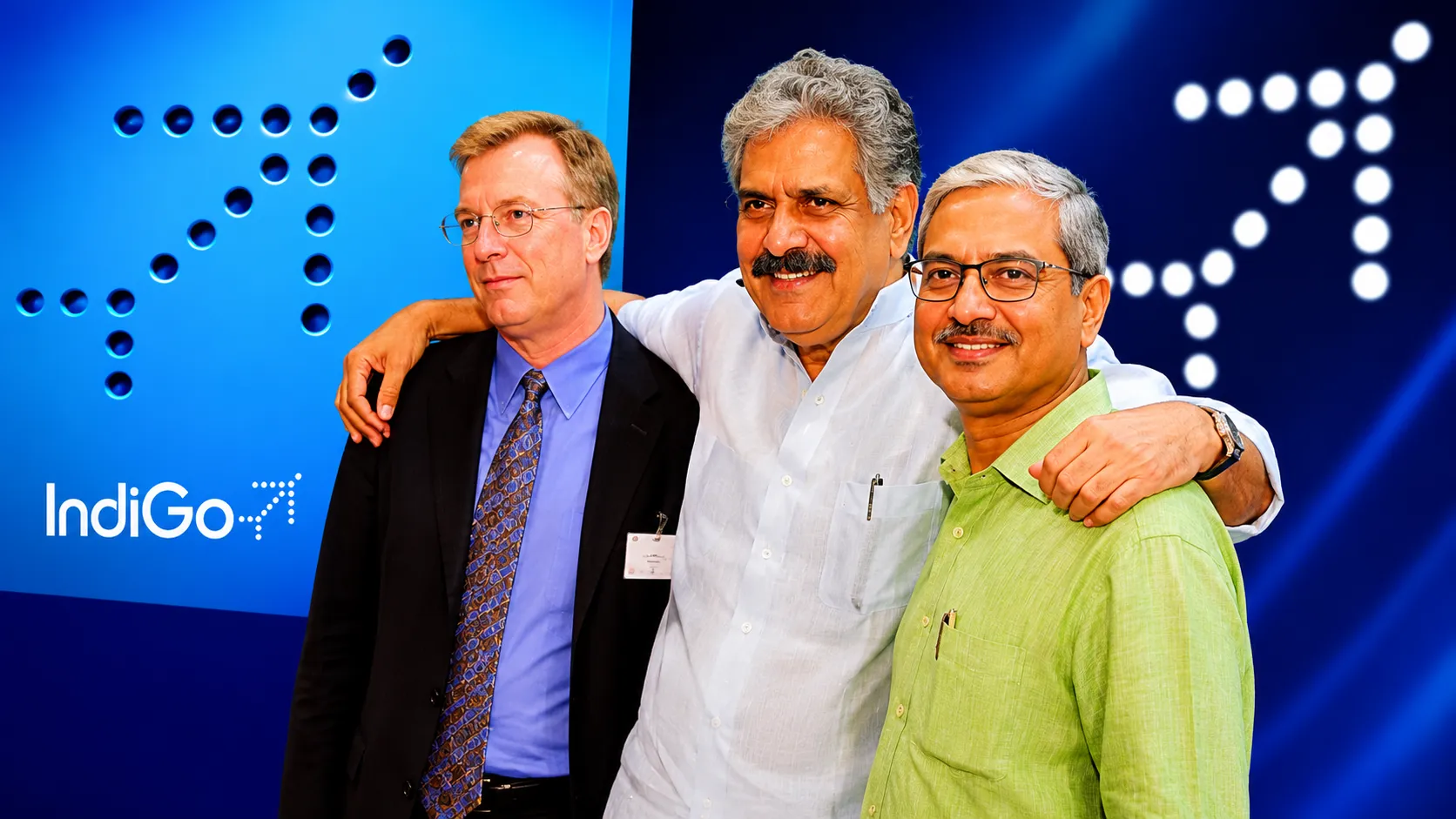
In 2006, IndiGo took off with a fleet of just four aircraft and a single route — a modest start in an Indian aviation market that, at the time, was littered with the wreckage of failed full-service carriers. Co-founders Rahul Bhatia and Rakesh Gangwal had a simple thesis: Indians wanted to fly, but most airlines were too expensive, too unreliable, or both. Solve cost and punctuality at the same time, and you'd have a winner.
Two decades on, that thesis looks less like a bet and more like a blueprint. IndiGo is now India's largest airline by a wide margin — commanding a domestic market share north of 60% — and one of the only Indian carriers to post sustained profitability in an industry famous for bankrupting even well-funded players. Jet Airways collapsed. Kingfisher collapsed. Go First collapsed. IndiGo just kept flying, and kept growing.
The Machine Underneath: How IndiGo Actually Makes Money
IndiGo's profitability isn't an accident of scale — it's the product of a tightly engineered low-cost-carrier (LCC) model, with a handful of interlocking decisions that compound into a real cost advantage over rivals.
One aircraft family, everywhere
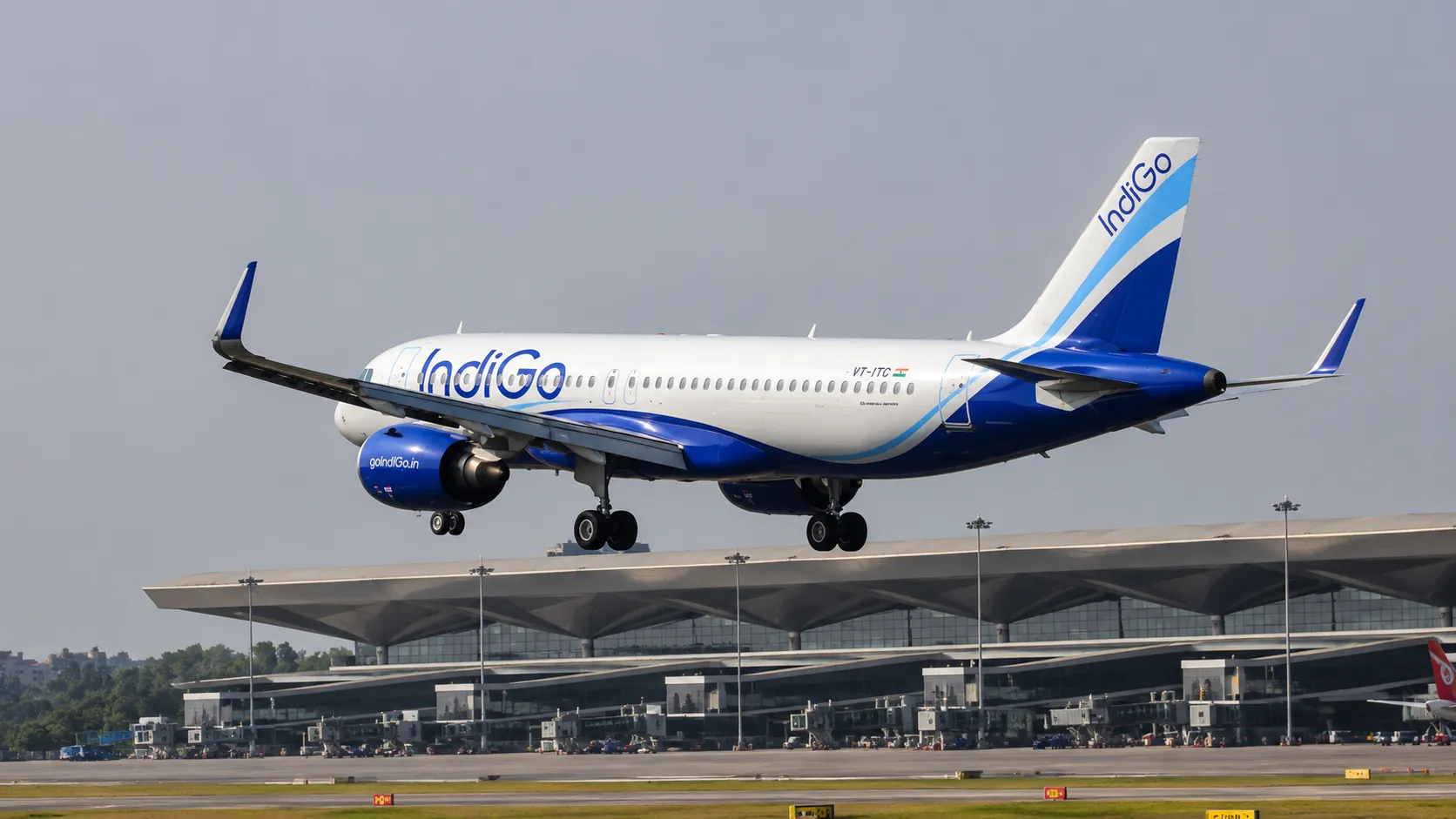
IndiGo flies an almost entirely homogenous fleet built around the Airbus A320 family (A320s, A321s, and the newer A321neo/XLR variants). A single aircraft type means a single set of spare parts, a single training pipeline for pilots and engineers, and dramatically simplified maintenance scheduling. For an airline running over 2,300 flights a day, that uniformity translates directly into lower cost per available seat kilometre (CASK) — one of the most-watched metrics in aviation economics.
The sale-and-leaseback engine
This is IndiGo's quietest but most important financial trick. Instead of buying aircraft outright and holding them on its balance sheet, IndiGo orders planes in enormous bulk — including a landmark order for 300 Airbus aircraft in 2019, one of the largest single-airline orders in history — at heavily discounted prices. It then sells each newly delivered aircraft to a leasing company and immediately leases it back for operational use.
The result is a double win: IndiGo books a cash gain on each transaction (commonly cited in the range of several million dollars per aircraft), and it keeps its balance sheet asset-light, debt-light, and flexible. The leasing company absorbs the long-term risk of the aircraft aging or becoming technologically obsolete, while IndiGo gets to keep flying a young, fuel-efficient fleet — which itself lowers fuel costs, one of any airline's largest expenses.
No-frills, by design
IndiGo's in-flight experience is deliberately stripped down — no complimentary meals, no bottled water, minimal entertainment. Every one of those omissions is a cost saved and, often, a new ancillary revenue line: meals, seat selection, extra baggage, and priority boarding are all sold separately. This unbundling is standard LCC playbook globally, but IndiGo has executed it with unusual discipline, keeping the base fare genuinely competitive while ancillary revenue quietly pads the margins.
Point-to-point routes and brutal aircraft utilisation
Rather than running a traditional hub-and-spoke network with long aircraft turnaround times, IndiGo leans heavily on point-to-point routes and keeps its aircraft in the air for as many hours a day as physically possible. An aircraft sitting on the tarmac is an aircraft losing money — so IndiGo's scheduling is built around minimising ground time, which is also part of why punctuality is so central to the model: a delay doesn't just annoy one set of passengers, it cascades through the entire day's schedule.
On-time performance as a brand, not just an operational metric
For most of its history, on-time performance hasn't just been something IndiGo does well — it's been core to the brand promise. The airline has repeatedly been recognised among the best in the region, including being named Best Airline in India and South Asia at the Skytrax World Airline Awards. Punctuality, in IndiGo's model, isn't a courtesy — it's load-bearing infrastructure for the entire cost structure.
The Numbers: A Decade of Scale
By FY25 (the financial year ending March 2025), IndiGo had crossed a milestone few airlines globally ever reach — annual revenue in the $10 billion range. Here's the snapshot:
Metric | FY25 / Latest |
Annual revenue (FY25) | ~₹841,000 crore (₹8.41 trillion / ~$10 billion) — 18% YoY growth |
Passengers carried (FY25) | Over 118 million |
Fleet size | 417+ aircraft, growing toward a 600-aircraft target by 2030 |
Daily flights | 2,300+ |
Network reach | 94 domestic + 41 international destinations (Q2 FY26) |
Domestic market share | 60%+ |
Q1 FY26 net profit | ₹2,176 crore (~$260 million) |
Q2 FY26 result | Operational profit of ~₹100 crore vs. an operational loss a year earlier — but a headline net loss of ₹2,582 crore once rupee depreciation on dollar-denominated obligations is included |
That Q2 FY26 split is worth sitting with: operationally, IndiGo swung from loss to profit — proof the core machine was working. But a weaker rupee against the dollar (IndiGo's leases, fuel, and aircraft-related obligations are largely dollar-denominated) turned that operational win into a net loss on paper. It's a reminder that even the best-run airline in the country is still exposed to currency markets it can't control.
The 2030 Plan: From India's Biggest Airline to a Global One
IndiGo has stopped describing itself purely as a domestic champion. The stated ambition is to become a major global airline by 2030, and the moves over the last two years back that up:
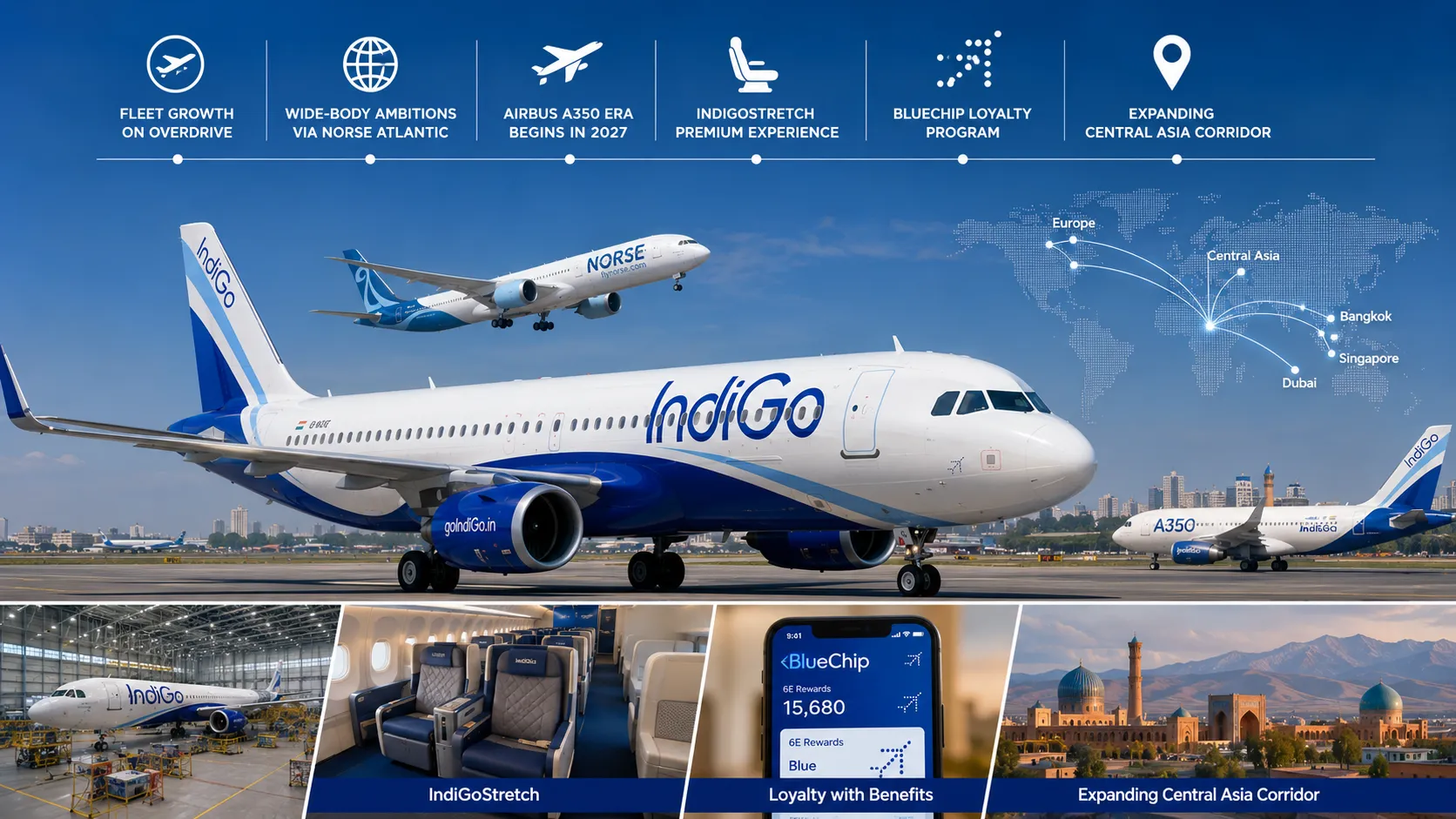
Fleet growth on overdrive. With roughly one new aircraft joining the fleet every week through FY26, IndiGo expects to surpass 600 aircraft by 2030 — nearly 50% larger than today's fleet.
Wide-body ambitions via Norse Atlantic. IndiGo signed a damp-lease agreement with Norse Atlantic Airways for six Boeing 787-9 Dreamliners, giving it wide-body, long-haul capability without waiting years for its own aircraft to arrive.
The Airbus A350 era begins in 2027. IndiGo's own wide-body fleet — Airbus A350s — is expected to start arriving in 2027, which would let the airline fly genuinely long-haul international routes (think Europe, and potentially beyond) under its own metal.
A premium product, finally. IndiGoStretch — a tailor-made business-class-style offering on selected 2-cabin A321 aircraft — has rolled out on routes between Delhi/Mumbai and international destinations like Bangkok, Singapore, Phuket, and Dubai. For a carrier that built its identity on no-frills, this is a notable evolution toward capturing higher-yield corporate and premium leisure traffic.
A loyalty program with teeth. BlueChip, IndiGo's loyalty program, is part of a broader push to build repeat, high-value customer relationships rather than competing purely on one-off fare price.
Expanding the Central Asia corridor. New and reactivated non-stop routes from Mumbai to destinations like Almaty, Tashkent, and Tbilisi reflect a deliberate push into a region with growing Indian travel demand and relatively light competition from other carriers.
Put together, this is a carrier trying to do something genuinely difficult: keep the low-cost domestic engine running at full efficiency while simultaneously building an entirely new, more premium, more international layer on top of it — without breaking the cost discipline that got it here.
The Stress Test: December 2025's Scheduling Meltdown
Then came the moment that showed just how fragile even a finely tuned machine can be when one input changes.
In 2025, India's aviation regulator, the DGCA, rolled out new Flight Duty Time Limitations (FDTL) — stricter rules on how many hours pilots and cabin crew can work and how much rest they must get, implemented in two phases, the second landing on 1 November 2025. The intent was straightforward: improve crew welfare and flight safety.
For IndiGo, the timing collided badly with reality. The new rules sharply cut how many night landings a crew member could perform per week, and IndiGo's own leadership later admitted it had underestimated how many additional pilots and cabin crew it would need to comply. The result, starting in late November and exploding into early December 2025, was an operational collapse: IndiGo was cancelling 170–200 flights a day at the peak of the crisis, eventually cancelling nearly 4,500 flights over roughly ten days and disrupting more than 10 lakh (1 million) passengers.
On 5 December 2025, IndiGo's on-time performance — a metric the airline had spent two decades building its brand on — reportedly crashed to around 8.5%. Major airports including Delhi, Mumbai, Bengaluru, and Chennai saw mass cancellations and stranded passengers queuing for hours. IndiGo's Chairman issued a public apology on 10 December, while rejecting suggestions the crisis had been deliberately engineered to pressure regulators into softening the new rules.
The regulatory response was swift: the DGCA granted IndiGo a temporary exemption from parts of the new rules (notably the night-duty and leave-for-rest norms) until 10 February 2026, subject to reviews every 15 days, capped airfares on affected routes, and ordered the airline to clear all pending passenger refunds. A subsequent government inquiry concluded that the root causes were over-optimised scheduling, inadequate regulatory preparedness, software and systems gaps, and shortcomings in IndiGo's own management and operational control. The fallout reached the top: IndiGo's chief executive resigned months later, in the aftermath of the crisis.
By the airline's own account, things stabilised through the rest of December, and the CEO later described July as the start of stabilisation followed by a strong recovery through August and September of the broader fiscal year — though that referred to the earlier currency and demand headwinds of H1 FY26, underscoring just how many fronts IndiGo was fighting on simultaneously through 2025.
The Impact: What This Means — for IndiGo, Passengers, and Indian Aviation
For IndiGo itself
The December 2025 crisis was a rare crack in IndiGo's operational armour — and a costly one, both financially (over ₹24 crore in compensation alone, before accounting for lost revenue, fare caps, and reputational damage) and politically, given the leadership change that followed. But it also stress-tested the underlying business model rather than broke it: the airline's core cost advantages — fleet uniformity, sale-and-leaseback financing, high utilisation — remained intact. The crisis was a scheduling and regulatory-compliance failure layered on top of a fundamentally sound cost structure, not a structural collapse of the model itself.
For passengers
For millions of Indian travellers, IndiGo's dominance means the airline's reliability (or lack of it, during the crisis) has an outsized effect on the entire travel ecosystem — weddings, business trips, festival travel. The December disruptions were a sharp reminder of how concentrated India's aviation market has become: when the airline holding 60%+ of domestic market share stumbles, there often isn't enough spare capacity elsewhere in the system to absorb the shock.
For the industry and regulators
The crisis put a spotlight on the tension between safety-driven regulation (better rest for pilots, a genuinely important goal) and operational readiness (an airline's ability to actually staff up for those rules in time). It's likely to shape how future regulatory changes are phased in across Indian aviation — with more emphasis on transition timelines and contingency planning, not just the end-state rules themselves.
For the 2030 global ambition
Perhaps the most interesting impact is on IndiGo's international expansion story. Scaling toward 600 aircraft, launching wide-body long-haul routes, and building a premium product all require exactly the kind of complex, multi-layered operational planning that the FDTL crisis exposed as a weak point. If IndiGo wants to be taken seriously as a global, not just domestic, carrier by 2030, the operational and crew-planning systems that buckled under a domestic regulatory change will need to be robust enough to handle the far greater complexity of long-haul, multi-timezone, multi-jurisdiction operations.
The Bottom Line
IndiGo's story is really two stories running in parallel. One is a genuine masterclass in airline economics: a homogenous fleet, a sale-and-leaseback financing model that turns aircraft purchases into cash generators, brutal aircraft utilisation, unbundled no-frills pricing, and punctuality treated as a financial necessity rather than a nice-to-have — all of which combined to make IndiGo the rare profitable airline in one of the world's toughest aviation markets, crossing $10 billion in annual revenue and carrying well over 100 million passengers a year.
The other story is what happened when one regulatory change exposed the limits of how finely tuned that machine really is — turning India's most punctual airline into, briefly, its least punctual, and costing a CEO his job in the process.
Both stories are true at once. And as IndiGo pushes toward its 600-aircraft, wide-body, 2030 global vision, the real test won't be whether the cost model still works — it clearly does. It will be whether an airline built for ruthless domestic efficiency can build the operational resilience to match its global ambitions.