What Once Felt Like A Mall Convenience Stop Is Quietly Becoming A Bigger Story About Cities, Consumer Behavior And Where People Actually Want To Spend Time
For years, food courts occupied a fairly predictable role inside India’s retail ecosystem. They sat between shopping floors and cinema halls, functioning as practical spaces where tired shoppers grabbed quick meals before continuing with their day because malls largely treated them as supporting infrastructure rather than headline attractions. Visitors frequently viewed them as places of convenience because shopping itself remained the main reason people entered large commercial spaces. Food courts therefore often operated in the background because they rarely represented the destination itself.
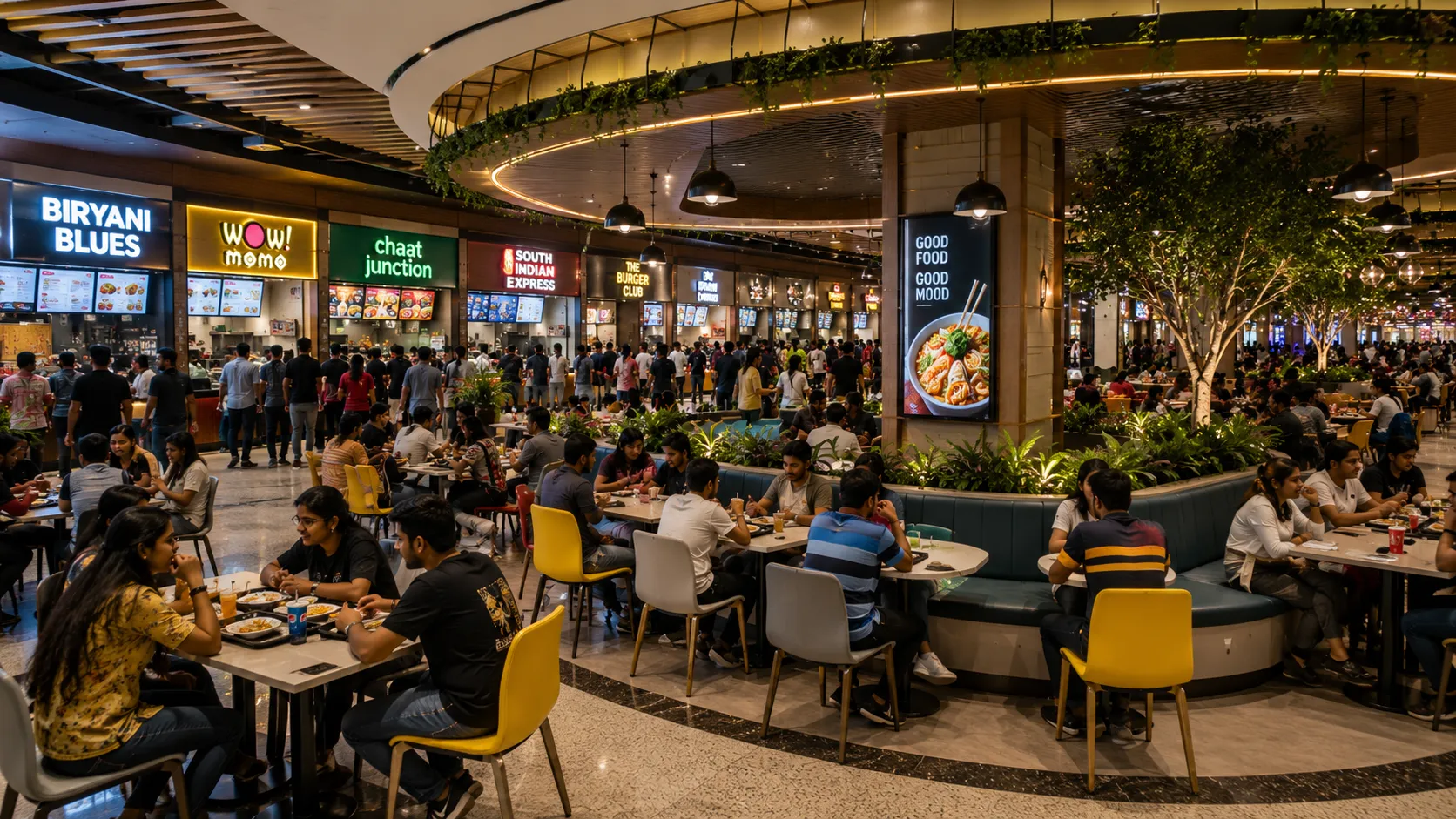
Something very different now appears to be unfolding beneath that older model. Across India’s retail landscape, food courts are gradually becoming much more than shared dining areas because developers, mall operators and commercial spaces increasingly appear treating food experiences as central pieces of business strategy. What initially looked like a space designed around seating and quick meals is slowly becoming a larger conversation involving foot traffic, leasing economics and consumer psychology because people increasingly seem gathering around experiences rather than transactions.
Viewed independently, larger food zones inside malls may initially resemble another design trend responding to changing lifestyles. Viewed through a broader impact lens, however, another question begins surfacing beneath the surface: what happens when people begin visiting commercial spaces not primarily to shop, but to spend time? Because real estate frequently changes once behavior itself starts shifting underneath. Buildings may remain the same, but the reasons people enter them occasionally transform completely.
Historically, retail spaces frequently revolved around products because shopping centers primarily depended upon stores generating commercial activity. Fashion brands, electronics outlets and anchor tenants often determined how spaces performed because footfall itself usually followed purchasing intent. Food frequently remained secondary because eating usually happened alongside shopping rather than driving it. The ecosystem itself often operated through assumptions built around transactions first and experiences later.
Consumer behavior increasingly appears operating differently today. Younger audiences frequently seek environments where shopping, entertainment and social experiences overlap because outings themselves increasingly involve multiple purposes simultaneously. People now meet friends, work remotely, attend events, watch films and spend leisure time within commercial environments because destinations increasingly compete around experience rather than utility. This shift matters because spaces frequently become more valuable once people choose to stay longer.
That distinction quietly explains why food courts are changing shape too. Earlier versions often prioritized volume and efficiency because businesses focused on moving people quickly through standardized dining formats. Newer food environments increasingly include curated brands, regional cuisines, cafés and designed seating because operators increasingly understand that dining itself influences how long visitors remain within spaces. Longer visits frequently translate into stronger spending because time itself often becomes an economic asset.
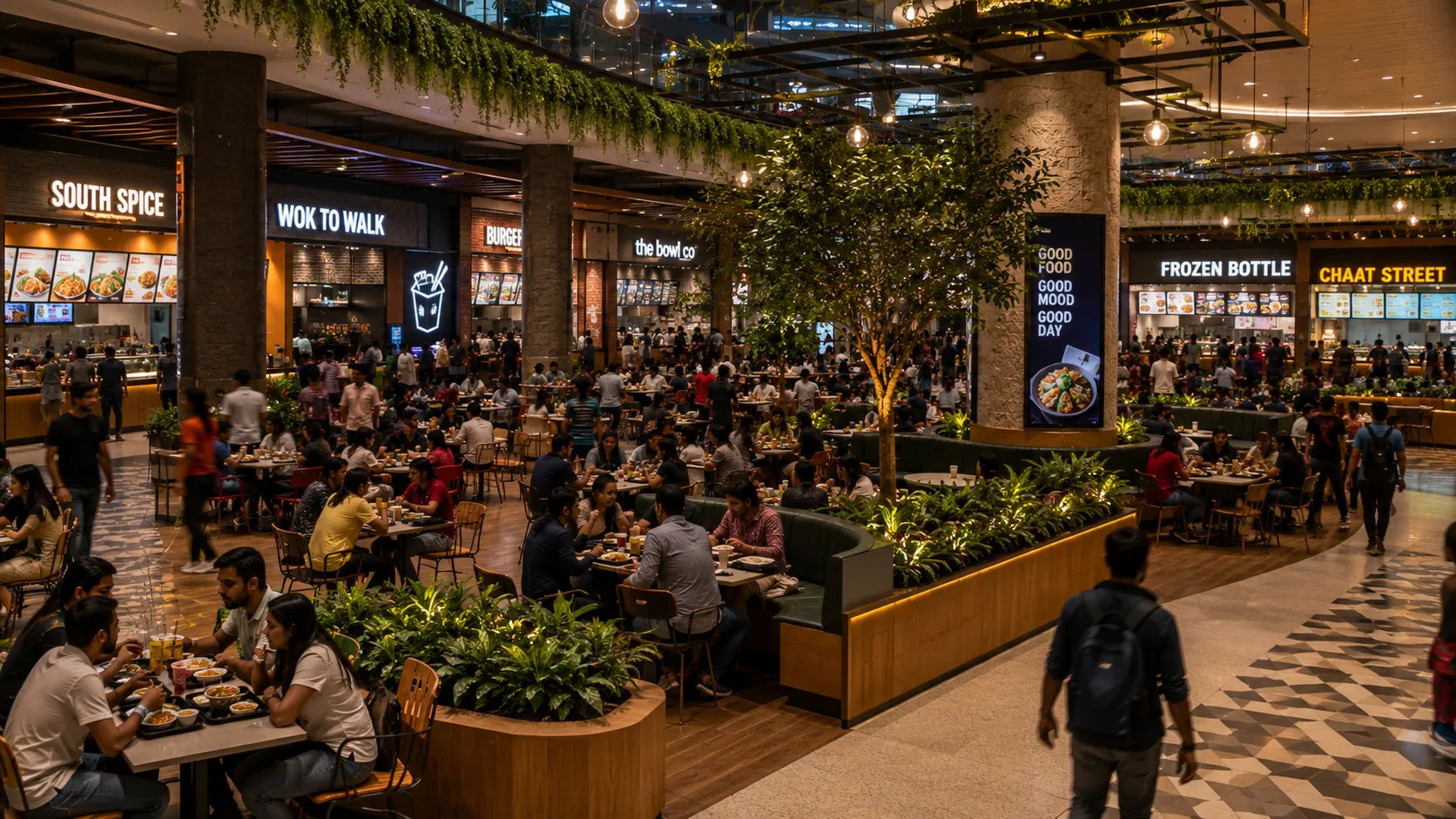
Developers have also started noticing something important beneath these patterns. Food categories increasingly generate repeat visits because shopping behavior occasionally remains occasional while eating behavior naturally happens more frequently. Consumers may purchase fashion once every few weeks, but meals frequently create recurring reasons to return because habits often operate differently from purchases. Once spaces begin attracting repeated behavior, commercial value frequently changes significantly.
Another interesting layer beneath this transition involves how cities themselves are evolving. Urban environments increasingly struggle with shrinking community spaces because large populations often create fewer informal gathering environments. Public spaces remain limited across many regions because infrastructure development frequently prioritizes functionality over social interaction. Commercial environments therefore occasionally begin filling roles traditionally occupied by community spaces because people increasingly search for places designed around gathering.
This shift becomes particularly visible among younger populations. Students, professionals and families increasingly appear using food-focused environments for meetings, celebrations and everyday interaction because dining frequently feels more flexible than highly structured entertainment. Shared eating spaces increasingly operate as social environments because food itself often creates low-pressure settings for connection. Businesses naturally pay attention once categories become tied to behavior repeated frequently.
Investors and real-estate operators are therefore beginning to approach food infrastructure differently. Leasing conversations increasingly involve dining experiences because food brands often function as anchors rather than supporting tenants. Real-estate strategies increasingly appear recognizing that successful commercial spaces no longer simply depend on products people buy. They increasingly depend on experiences people return for because attention itself increasingly behaves through emotion and habit.
Perhaps that explains why this conversation feels larger than food courts or mall layouts. Because beneath discussions involving restaurants and commercial spaces ultimately exists another reality involving cities themselves. Real estate frequently transforms once people change how they spend time because consumer behavior often reshapes physical environments faster than buildings themselves change.
The larger impact story therefore may not simply involve food courts becoming more popular. It may involve recognizing that one of India’s more unexpected real-estate shifts is being built around a surprisingly simple idea.
People increasingly go where they enjoy staying.