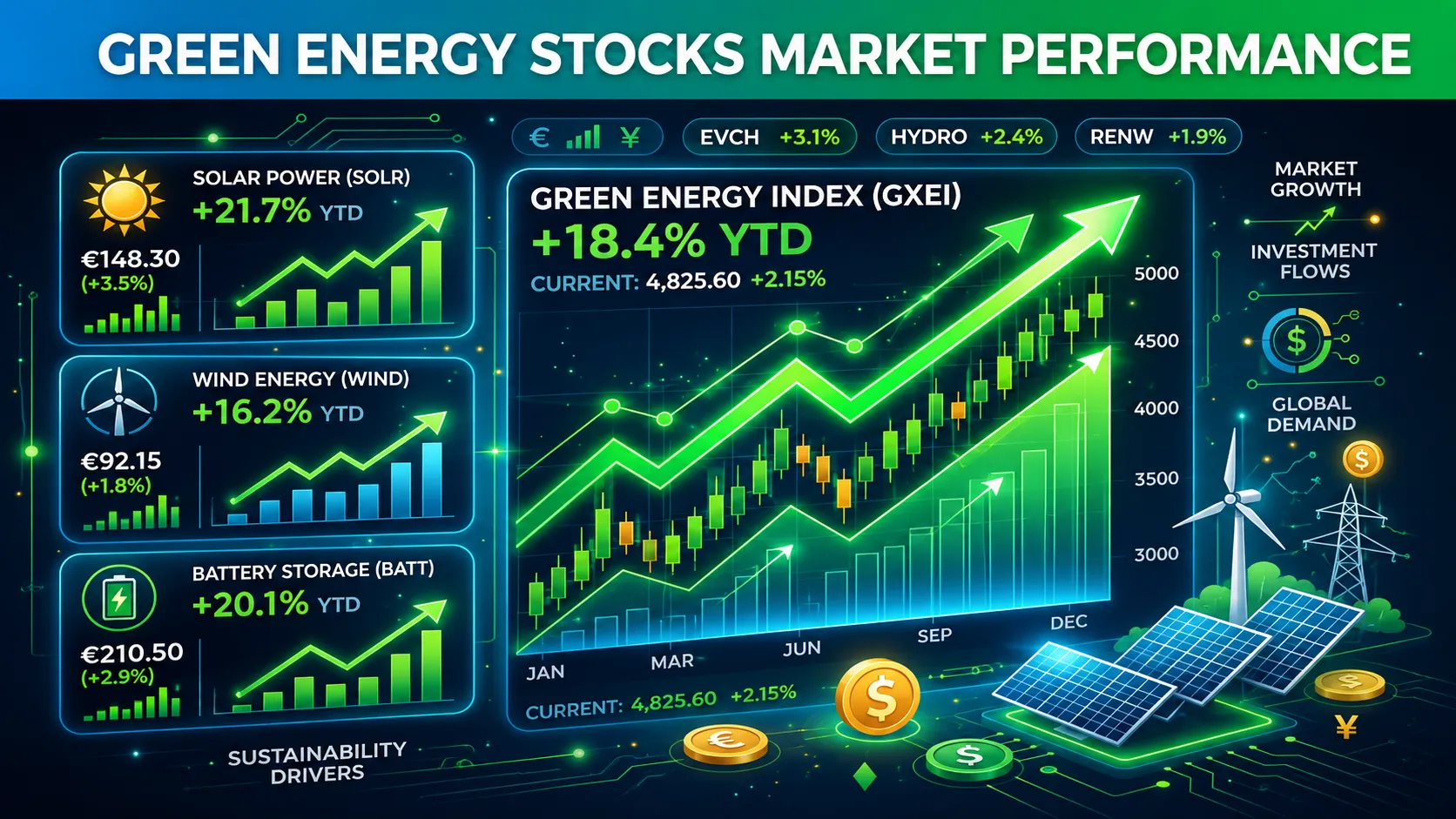
MUMBAI — Indian equity benchmark indices ended slightly higher on August 5, 2026, in a broadly stable trading session, with the S&P BSE Sensex gaining 0.19% to close at 78,581.00 points and the Nifty 50 edging up 0.04% to settle at 24,624.65 points. Against this backdrop, green energy, electric mobility and renewable energy stocks showed varied performance, with strong gains in a handful of mid-cap companies offset by declines across several power and solar-related counters.
Kabra Extrusion emerged as the session's top performer within the green energy segment, climbing 9.78% on the BSE to close at ₹453.85 and advancing 10.78% on the NSE to ₹456.90, attracting notably strong investor interest during the session. Commercial electric vehicle manufacturer Olectra Greentech also posted a solid gain, rising 4.20% on the BSE to ₹1,405.00 and 4.16% on the NSE to ₹1,403.90.
A Sector With Wide Dispersion in Daily Performance
The divergence between the session's best and weaker performers underscores the wide dispersion that continues to characterise India's green energy and clean-mobility stock universe — a sector spanning everything from established power utilities and solar equipment manufacturers to newer commercial EV players, each exposed to different demand cycles, input-cost pressures and regulatory tailwinds rather than moving in lockstep as a single thematic basket.
Broader Context: A Sector Still Attracting Significant Capital
The single-day price movements sit against a backdrop of sustained institutional and private capital flowing into India's clean energy sector more broadly. Cleantech funding in India surged 43% to $2.6 Bn in the 2024-2025 period, according to industry estimates, as global venture capitalists increasingly treat sustainability-linked investment as a core rather than peripheral thesis. India's renewable energy investment separately reached $1.235 Bn in a recent single month, according to research firm JMK Research, up 45% year-on-year, driven by major financing deals for solar and wind projects, including large debt financings from state-run lenders like the Indian Renewable Energy Development Agency (IREDA).
India's wind power sector specifically has seen a resurgence, recording annual capacity additions of 6.05 GW in FY2025-26 after a lull of several years — though even that record pace leaves the country well short of its 155 GW wind capacity target for 2035-36, with installed capacity crossing just 57 GW as of June 2026. Industry conferences held through mid-2026, including Renewable Watch's 14th edition of its "Wind Power in India" event, have flagged that annual additions will need to nearly double over the coming decade to meet that target, even as project execution continues to face persistent supply-chain and land-acquisition challenges.
What Drives Day-to-Day Volatility in This Segment
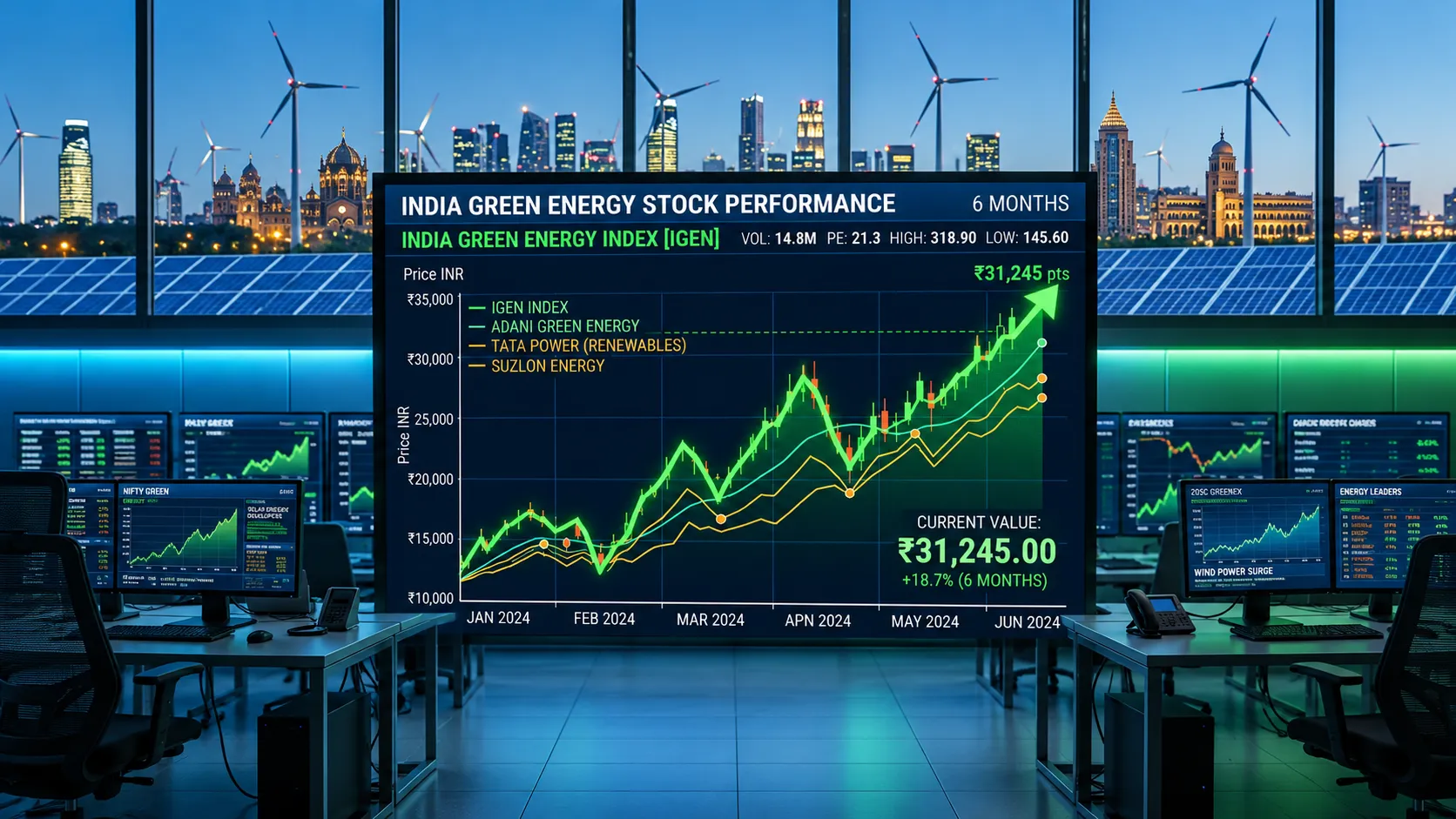
Green energy and clean-mobility stocks in India tend to show higher day-to-day volatility than broader market indices, reflecting both their smaller market capitalisations relative to large-cap benchmarks and their sensitivity to policy news, individual project announcements, and commodity input costs such as polysilicon and battery-grade lithium. A single power-purchase-agreement signing, project commissioning, or regulatory ruling can move an individual stock sharply even on a day when the broader market is largely flat, as was the case on August 5.
For retail and institutional investors tracking the sector, the day's mixed performance is a reminder that green energy exposure in Indian equities remains a stock-picker's market rather than a uniformly rising theme — even as the underlying policy and capital-flow tailwinds supporting the broader sector remain intact.
Why It Matters
Daily stock performance in India's green energy sector offers a real-time pulse on investor sentiment toward the country's clean-energy transition, even as it reflects short-term trading dynamics more than long-term fundamentals. The broader picture — rising cleantech venture funding, growing renewable energy investment, and an accelerating (if still insufficient) pace of wind and solar capacity addition — suggests continued structural tailwinds for the sector, even as individual stocks will keep showing the kind of dispersion seen on August 5.
• Sensex closed up 0.19% at 78,581.00; Nifty 50 rose 0.04% to 24,624.65 on August 5, 2026.
• Kabra Extrusion led green energy gainers, up 9.78% on the BSE to ₹453.85.
• Olectra Greentech rose 4.20% on the BSE to ₹1,405.00.
• India's renewable energy investment reached $1.235 Bn in a recent month, up 45% YoY.
• India's wind capacity stood at just over 57 GW as of June 2026, against a 155 GW target for 2035-36.