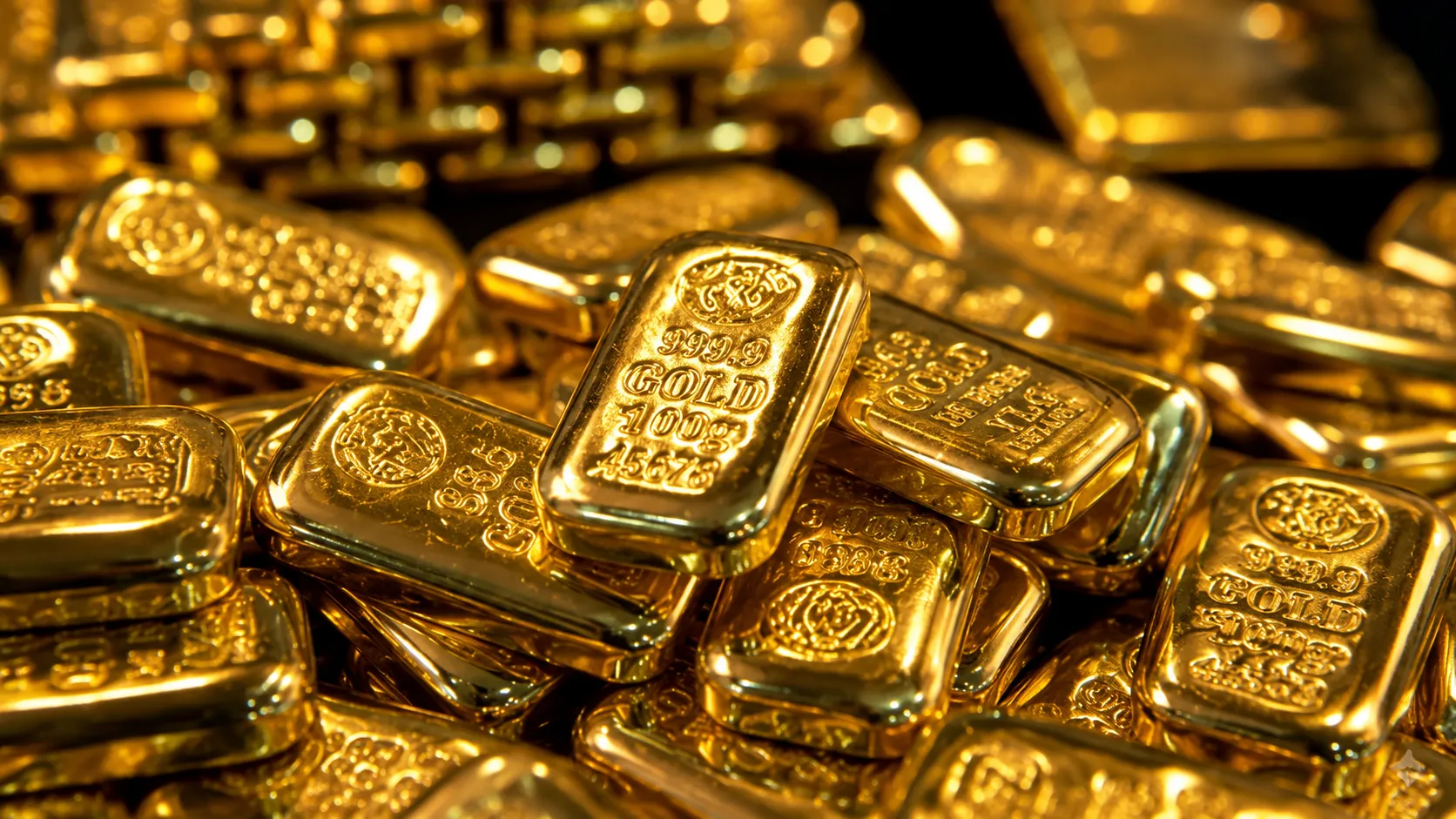
Mumbai, July 31, 2026 — Gold markets in India delivered a whipsaw week that left jewellers, investors and bullion traders alike recalibrating their near-term expectations. After two consecutive sessions of price declines that had bullion giving up much of its earlier July gains, gold rates jumped sharply on Thursday, July 30, with the national rate for 24-karat gold climbing to ₹1,44,330 per 10 grams — a jump of ₹820 over Wednesday's closing level, alongside a ₹750 increase for 22-karat gold to ₹1,32,300 and a ₹620 rise for 18-karat gold to ₹1,08,250, all measured per 10 grams.
This kind of sharp, multi-session reversal is not, in itself, unusual for gold, an asset class that has historically exhibited meaningful short-term volatility even within longer-term directional trends. What makes this particular week's price action worth examining closely is the specific combination of global macro catalysts that appear to have driven both the preceding decline and the subsequent sharp rebound — a sequence that offers a useful window into just how sensitive gold markets have become to the smallest shifts in US monetary policy expectations and broader dollar sentiment.
Tracing the week's price swings
The preceding two-day decline that set up Thursday's rebound reflected a period of relative dollar strength and reduced immediate safe-haven demand, as global markets digested a mix of economic data and policy signals that, for a brief window, reduced the perceived urgency of holding gold as a hedge against currency or growth uncertainty. Bullion had, in fact, rallied strongly during the third week of July before surrendering a meaningful portion of those gains in the sessions that followed — a pattern that left gold trading in a notably choppy, directionless range through much of the second half of the month, frustrating both short-term traders looking for clear momentum and longer-term investors seeking clarity on the metal's near-term trajectory.
Thursday's sharp reversal back to the upside coincided with several specific catalysts converging within a relatively narrow window. The US Federal Reserve's decision to hold interest rates steady came via what was reported as a notably divided vote among policymakers, introducing fresh uncertainty about the central bank's near-term policy path rather than providing the kind of clear directional signal markets often prefer. Compounding this policy uncertainty, second-quarter US GDP data came in softer than expected, raising fresh questions about the resilience of American economic growth and, by extension, reducing market conviction in a continued aggressive rate-hiking or even rate-holding stance from the Fed. Adding a further layer of complexity, reports of suspected currency intervention by Japanese authorities in the yen added additional pressure on the US dollar more broadly, creating a favourable environment for dollar-denominated gold prices to rise as the greenback weakened.
The mechanics of gold's dollar sensitivity
Understanding why this particular combination of factors moved gold prices so sharply requires appreciating the fundamental mechanical relationship between gold and the US dollar. Because gold is globally priced and traded predominantly in dollar terms, any weakening in the dollar's broader value tends to mechanically push gold prices higher in dollar terms, even absent any change in underlying physical supply and demand for the metal itself — international buyers effectively find dollar-denominated gold cheaper in their own local currencies when the dollar weakens, supporting increased buying interest that, in turn, pushes the dollar price higher.
This dollar-gold relationship explains why Thursday's specific combination of catalysts — a divided, uncertain Fed, disappointing US growth data, and suspected yen intervention all contributing to broad dollar weakness — proved so potent in driving gold's sharp single-day rebound. For Indian gold prices specifically, this global dollar-driven price movement then gets further filtered through the rupee-dollar exchange rate, since Indian gold prices are calculated by adapting international dollar-denominated prices into local rupee terms. With the rupee itself under its own pressure near 95.59 against the dollar this week, Indian gold buyers experienced a somewhat amplified version of the global price move, as both the underlying dollar gold price increase and the rupee's own relative weakness contributed to the sharp jump in domestic gold rates.
City-by-city price variations
While the national average gold price movement captures the broad directional trend, actual prices paid by consumers vary meaningfully across India's major gold-trading centres, reflecting differences in local transport costs, state association margins, and dealer-specific overheads layered on top of the common underlying bullion price. Mumbai, Delhi, Chennai, Ahmedabad and Kolkata remain India's largest gold trading centres by volume, given their historical bullion market infrastructure, though smaller city-to-city variations persist even for otherwise identical purity gold, reflecting the somewhat fragmented, locally-influenced nature of India's physical gold retail market compared to the more centralised, exchange-traded gold markets common in several other major economies.
Consumers evaluating gold purchases across different Indian cities should note that the underlying bullion price, set by international benchmarks and converted via the prevailing rupee-dollar exchange rate, represents only the base cost — actual retail jewellery prices additionally incorporate making charges, which typically run in a range that can add a meaningful percentage on top of the pure metal value, alongside the applicable Goods and Services Tax structure, which applies uniformly nationwide at 3% on the gold value itself and 5% on making charges specifically, ensuring that the GST treatment, at least, does not vary by geography even as other cost components do.
What this means for gold investors and buyers
For Indian consumers and investors navigating this volatile pricing environment, the practical implications vary considerably depending on individual objectives. Jewellery buyers making purchases tied to specific personal or cultural occasions have historically shown relatively limited price sensitivity to short-term bullion volatility of the kind seen this week, tending to proceed with planned purchases regardless of whether prices happen to be moving up or down on any given day. Investment-focused gold buyers, whether through physical bullion, gold exchange-traded funds, or other gold-linked financial instruments, face a somewhat different calculus, needing to weigh this week's sharp rebound against the preceding decline in assessing whether current price levels represent an attractive entry point or a temporary bounce within a still-uncertain broader trend.
Financial advisers generally continue to recommend that gold serve a specific, bounded role within a diversified investment portfolio — typically framed around its function as a hedge against currency depreciation, inflation and broader macroeconomic uncertainty — rather than as a primary, standalone investment vehicle whose short-term price volatility, as clearly demonstrated by this week's whipsaw trading, can prove genuinely challenging to navigate profitably through pure short-term trading strategies.
The road ahead for bullion
Looking beyond this specific week's volatility, the broader trajectory for gold prices through the remainder of 2026 will likely continue to hinge substantially on the same core drivers that produced this week's sharp swings: the path of US Federal Reserve monetary policy, the broader strength or weakness of the US dollar, and the general level of global macroeconomic and geopolitical uncertainty that continues to support gold's traditional safe-haven appeal. With the Fed's policy committee having demonstrated genuine internal division at its most recent meeting, and with global trade tensions, including India's own unresolved negotiation with the United States, continuing to simmer without clear resolution, the conditions that produced this week's volatility appear unlikely to fully dissipate in the immediate near term — suggesting Indian gold buyers and investors alike should brace for continued, potentially significant, price swings in the sessions ahead.
The festive and wedding season factor
Indian gold demand carries a distinctly seasonal character that adds a further layer of complexity to near-term price forecasting, with demand typically strengthening considerably as the country moves through its major festive occasions and the traditionally significant wedding season, both of which drive substantial jewellery purchasing activity regardless of prevailing bullion price trends. As India moves toward the latter part of the calendar year, when several of the country's most significant gold-buying festivals and the bulk of the wedding season traditionally occur, underlying physical demand tends to provide a degree of price support independent of the pure financial market dynamics — interest rates, dollar strength, safe-haven positioning — that have driven this particular week's volatility. Jewellers and bullion dealers preparing inventory for this seasonally stronger demand period will be watching current price volatility closely, weighing the benefits of stocking up at potentially more favourable prices during any near-term dips against the working capital costs of holding larger physical gold inventories through a period of continued price uncertainty.
Gold ETFs versus physical gold
For Indian investors specifically weighing how to gain gold exposure amid this volatile pricing backdrop, the choice between physical gold and paper-based alternatives like gold exchange-traded funds carries meaningfully different practical considerations. Physical gold, while carrying the emotional and cultural significance that has long made it a preferred store of value across Indian households, involves additional costs including making charges for jewellery, storage and security considerations, and generally wider bid-ask spreads when buying and selling compared to more liquid, exchange-traded alternatives. Gold ETFs and other paper-gold instruments, by contrast, offer more efficient, lower-friction exposure to pure bullion price movements without the making charges or storage considerations associated with physical gold, though they naturally lack the tangible, culturally significant character that continues to make physical gold jewellery and coins the preferred form of gold ownership for a large proportion of Indian households, particularly for purchases tied to specific cultural or religious occasions rather than pure investment objectives.
Silver's parallel story
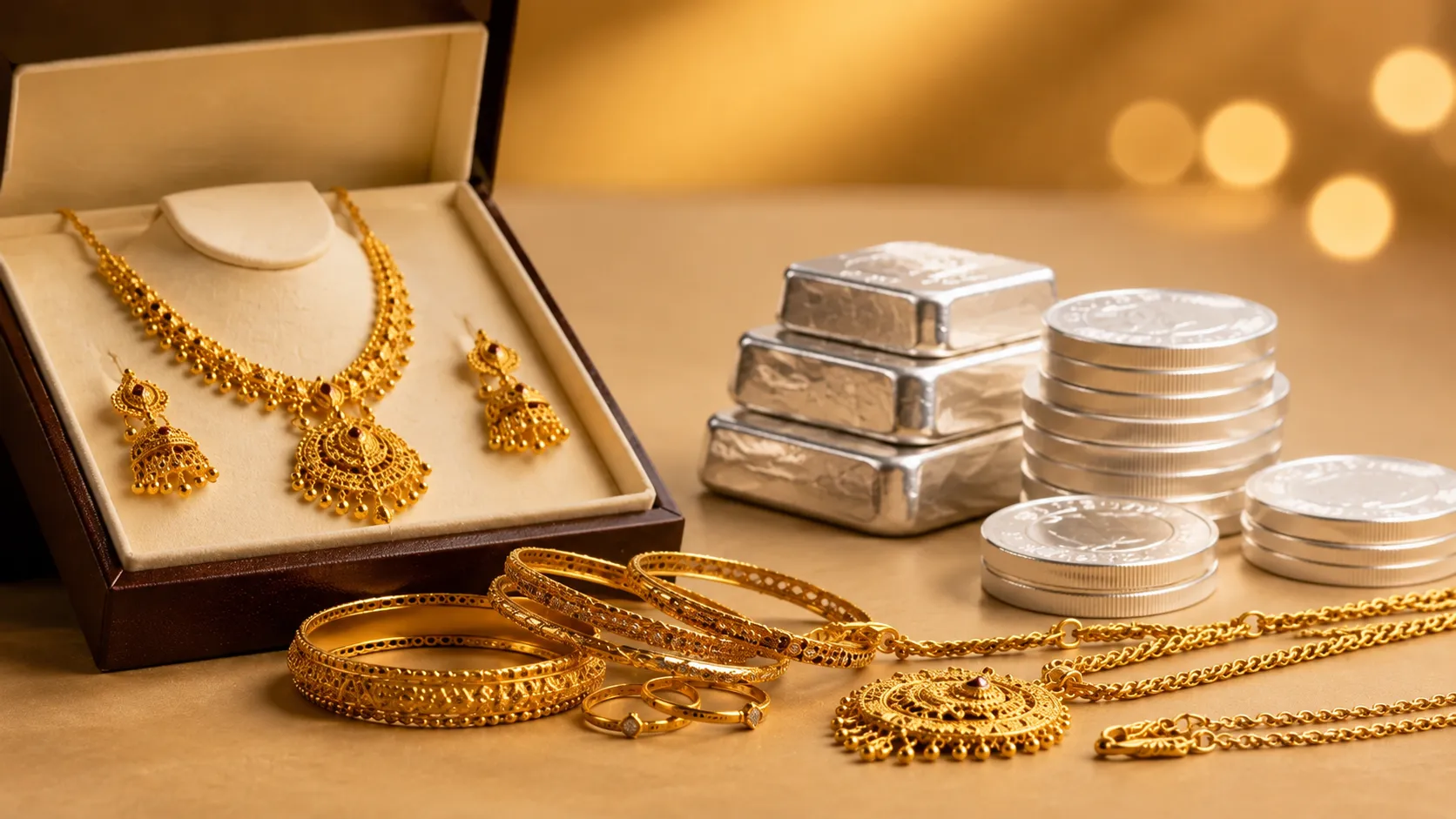
Gold has not been the only precious metal experiencing notable price volatility through this period; silver markets have similarly seen meaningful swings, often moving in broad directional sympathy with gold given the two metals' shared sensitivity to dollar strength and safe-haven demand dynamics, even as silver additionally carries meaningful industrial demand exposure — particularly from electronics and renewable energy applications, including solar panel manufacturing — that gold, as a predominantly monetary and jewellery-focused metal, does not share to the same degree. This dual monetary-and-industrial demand character has historically made silver prices somewhat more volatile than gold on a percentage basis, a pattern that has broadly held true through the current period of elevated precious metals market volatility, with silver traders navigating both the same macro-driven price swings affecting gold and the additional layer of industrial demand considerations specific to silver's broader commodity profile.

Central bank gold buying as a longer-term support
Beyond the week-to-week trading volatility driven by Fed policy uncertainty and dollar movements, gold's longer-term price trajectory has also been shaped by a sustained wave of central bank gold purchasing that has persisted across several major global economies over recent years, including India's own Reserve Bank of India, which has steadily added to its gold reserves as part of a broader strategy of diversifying away from concentrated exposure to any single reserve currency. This structural, longer-horizon central bank demand provides a form of underlying price support that operates somewhat independently of the shorter-term trading dynamics that produced this particular week's sharp swings, offering a useful reminder that gold's price trajectory reflects the interplay of both fast-moving trading sentiment and slower-moving, more structural demand forces operating simultaneously across very different time horizons.
Retail gold buyers navigating this environment are also increasingly turning to digital gold and gold-backed savings schemes offered by jewellers and financial institutions, which allow smaller, more incremental purchases over time rather than requiring a single lump-sum transaction at whatever price happens to prevail on a given day. These systematic accumulation approaches can help smooth out the impact of exactly the kind of short-term volatility seen this week, spreading purchase timing across multiple price points rather than concentrating risk on any single day's rate. For now, most bullion desks in Mumbai and Delhi describe near-term sentiment as cautiously watchful rather than decisively bullish or bearish, awaiting clearer signals from upcoming US economic data before committing to a firmer directional view.