The Moment of Decision
The mythology of entrepreneurship is full of dramatic turning points — the moment when the founder, standing at the crossroads between safety and adventure, makes the choice that changes everything. These stories often have a clean narrative arc: the conventional path is clearly visible, the unconventional path is clearly terrifying, and the founder's decision to take the unconventional path is the inciting event from which all subsequent achievement flows.
In practice, founding decisions are rarely this clean. They accumulate over months or years of growing conviction, of evidence accumulating against the current path and in favor of the alternative, of conversations with trusted people who variously encourage and caution, until the balance tips and the decision reveals itself as having already been made. The dramatic moment — the resignation letter, the registration of the company, the first hire — is often less a decision than a formalization of a state that already exists.
What makes Ghazal Alagh's and Vineeta Singh's founding stories distinctive is not that they made dramatic choices at dramatic moments. It is that the conviction behind their choices was rooted in something deeper than market analysis or competitive landscape assessment. It was rooted in direct, specific, personal experience of a problem that the market was failing to solve — and in the absolute certainty, born of that direct experience, that the solution they were building was necessary.
Ghazal Alagh: From a Mother's Worry to a Market Revolution

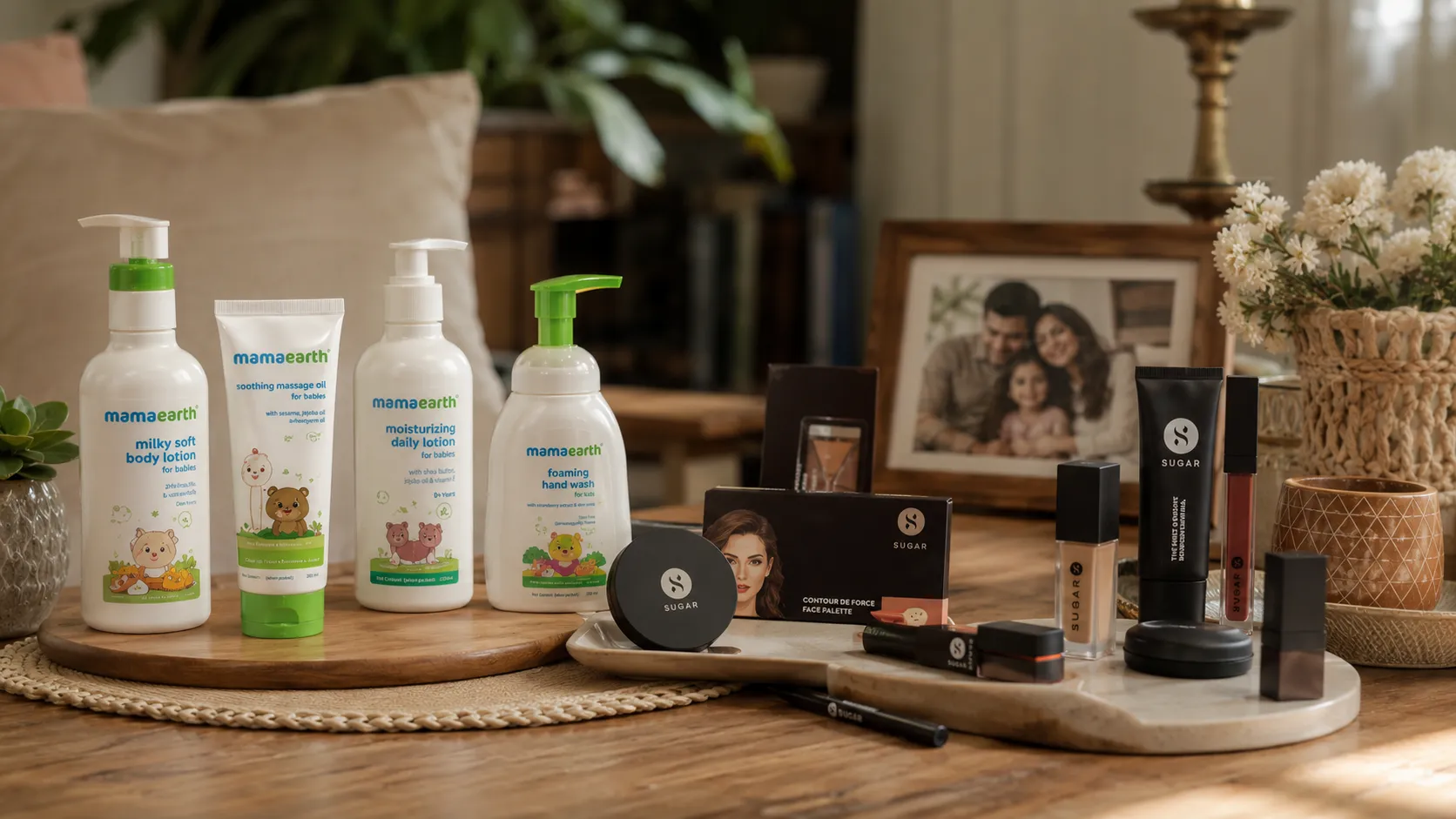
Ghazal Alagh's founding insight came not from a consulting engagement, a McKinsey report, or a market sizing exercise. It came from standing in a pharmacy aisle, reading the ingredient list on a baby skincare product, and encountering chemical names that she did not recognize and could not evaluate for safety. As a new mother, the decision to apply an unknown chemical cocktail to her infant son's skin felt instinctively wrong. As an entrepreneur, the recognition that millions of Indian parents were making the same compromised choice every day — without better options, without adequate information, without products designed with their child's safety as the primary consideration — felt like both an injustice and an opportunity.
The injustice part is easy to understand. The opportunity part required more courage than it might appear, because the toxin-free baby care market that Mamaearth set out to serve essentially did not exist in India in 2016. This is the most challenging kind of entrepreneurial bet: not improving on an existing product or service, but creating a new category that requires consumers to change their beliefs, their habits, and their willingness to pay a premium for something they previously had no framework for valuing.
Creating a new category requires evangelism as much as product development. Mamaearth's early growth was powered by the personal advocacy of parents — particularly mothers — who had discovered the brand, trusted its claims after their own evaluation, and shared their discovery with the network of other parents they were in constant contact with through online parenting communities, WhatsApp groups, and the kind of urgent, personal recommendation that characterizes the sharing of something genuinely valuable in a context where the stakes feel high.
The evolution from baby care to skincare for adults, and then to haircare and personal care across the family, followed the same logic as the founding insight: wherever the market was providing products loaded with ingredients whose long-term effects were uncertain, and wherever Indian consumers with rising awareness and rising purchasing power were ready for better options, Mamaearth could build. The platform that the founding insight created has proven remarkably extensible — because the insight was not specifically about baby care but about the fundamental right of consumers to know what they are putting on their bodies and their children's bodies.
Vineeta Singh: The One Crore She Refused
The story of Vineeta Singh and SUGAR Cosmetics is widely told in Indian startup circles, and it has become a kind of parable of founder conviction. The bare facts are these: after completing her studies at IIT Madras for her undergraduate degree and IIM Ahmedabad for her MBA — two of the most competitive educational institutions in India — she received a job offer of one crore rupees per year. This is a number that, for most Indian MBA graduates, represents the culmination of a decade of competitive academic preparation, the validation of an entire educational philosophy, and the beginning of a life of professional comfort and social recognition.
She declined it. The reason was not that she had a fully formed business plan for SUGAR Cosmetics. The reason was that she had already begun to notice the gap — the fact that the cosmetics available to Indian women were overwhelmingly designed for skin types and preferences shaped by European and East Asian aesthetic traditions, and that these products, applied to Indian skin in Indian conditions, performed poorly or not at all.
The specific insight was about the gap between available cosmetics formulations and the needs of Indian skin types — a gap that was most visible in categories like foundation (where the available shade ranges did not cover the full spectrum of Indian skin tones), lip colors (where the pigmentation levels needed to show on darker skin tones were rarely present in mainstream formulas), and long-wear products (where the humidity and heat of Indian climates created performance challenges that products developed for cooler, drier environments had not been designed to address).
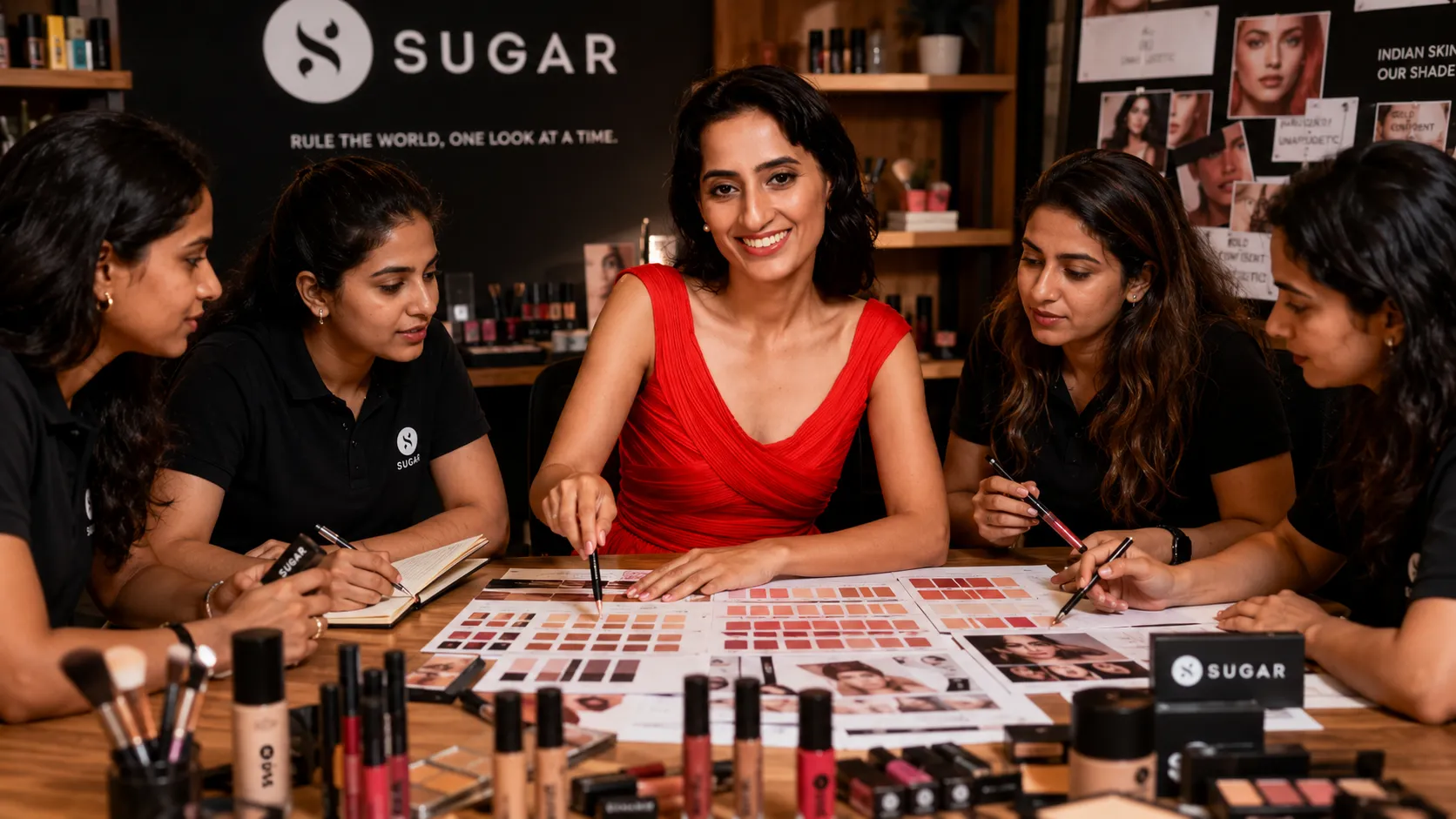
Building SUGAR Cosmetics to fill this gap required investing in reformulation — developing products from scratch for Indian skin and Indian conditions rather than adapting imported formulas. This is a more expensive and more technically demanding approach than the distribution-of-existing-products model that most entrants to the beauty market follow. It is also the approach that produces products that actually work, that earn the user reviews that build brand credibility, and that create the loyal customer relationships that sustain a beauty brand over the long term.
The Lesson That Both Stories Teach
The founders of Mamaearth and SUGAR Cosmetics made their bets from different positions and in different contexts, but the deep structure of what they were doing is remarkably similar. Both identified gaps in the market that were visible to them because of their specific personal experience — as a mother navigating baby care products, as an Indian woman navigating the cosmetics available to her. Both built companies designed to fill those gaps, with a precision of product design that could only have come from genuine insider knowledge. And both discovered that the market they had identified from the inside was, in fact, enormous — that their personal experience was representative of the experience of millions of potential customers who had been making the same compromised choices for the same frustrating reasons.
This is the pattern that The Impactful Global Indian finds most consistently in the stories of India's most successful founders, across genders and sectors: the most powerful business insights are not discovered through market research. They are lived. They emerge from being a particular kind of person in a particular context, noticing what is wrong with the world as you experience it, and caring enough — or being brave enough, or being unable to stop yourself — to try to fix it.
The Indian startup ecosystem has an extraordinary opportunity to accelerate this pattern by systematically seeking out and supporting founders who bring diverse personal experiences to the identification of market gaps. The markets that are most underserved — the ones where the most valuable insights are waiting to be discovered — are precisely the markets whose users have historically been least represented among startup founders. When more of India's consumers are also India's builders, the resulting products will be better, the companies will be more durable, and the economy that emerges will be more equitable. Ghazal Alagh and Vineeta Singh are not just successful founders. They are proof of concept for a better model of innovation.


