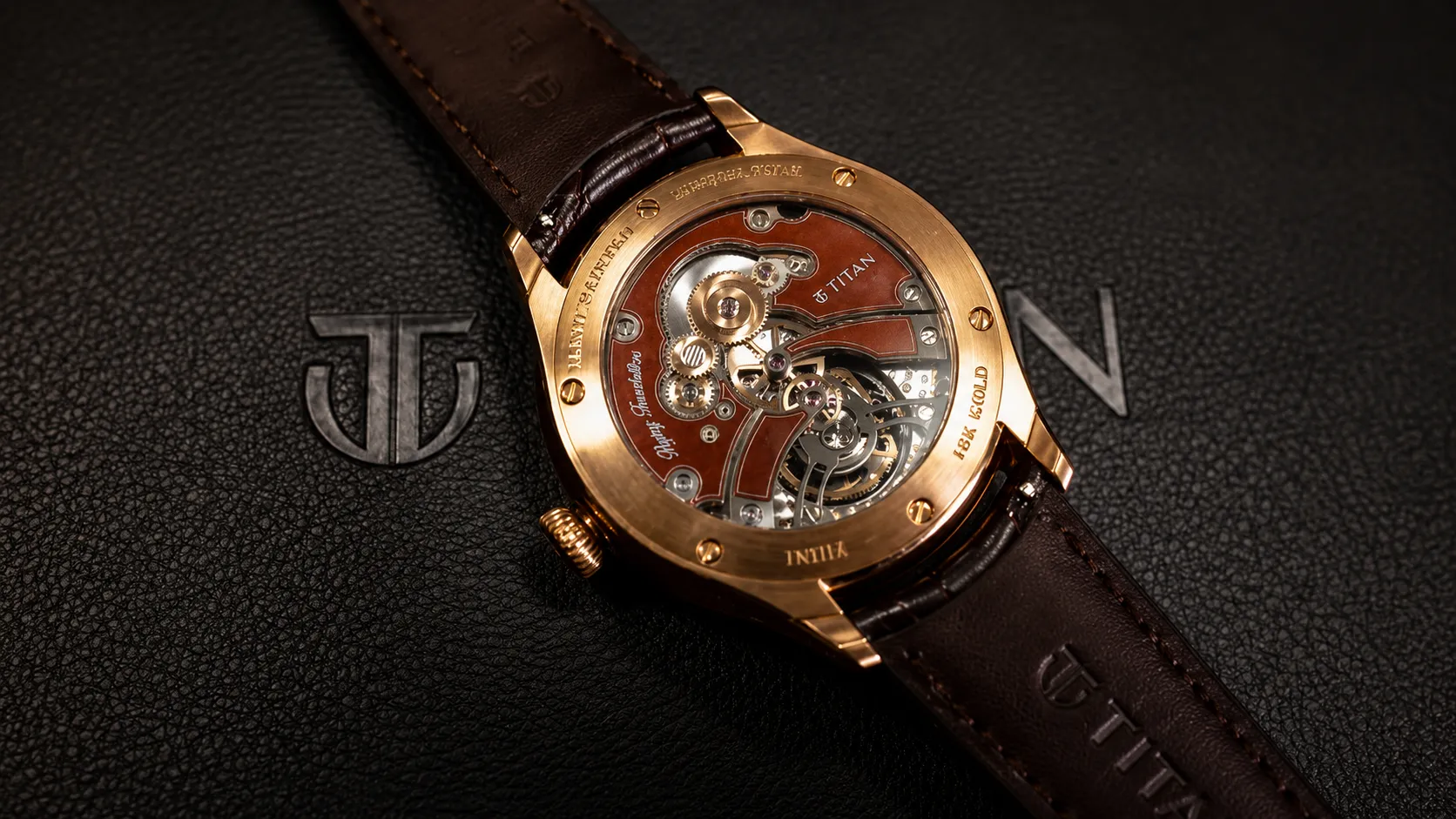
Every established Indian conglomerate has one business that quietly outgrows the story anyone originally told about it. For the Tata Group, that business is Titan — a company that started life as a modest watchmaking venture and has, over four decades, become something closer to a case study in disciplined reinvention. Business Today's newly released India's Most Sustainable Companies 2026 special issue has chosen Titan as its centrepiece, and the numbers behind that choice are worth examining in full.
The Scale Titan Has Reached
What began as a Tata watch venture has evolved into the group's second most valuable company after TCS, carrying a market capitalisation of nearly Rs 3.6 lakh crore. Titan crossed Rs 50,000 crore in revenue in FY25 and added another Rs 25,000 crore in FY26 alone — a pace of growth that would be remarkable for a young, venture-backed startup, let alone a company entering its fifth decade of operation. That growth has come not from doubling down on its original watch business, but from a sustained, deliberate expansion into an entire ecosystem of lifestyle categories: fragrances, eyewear, ethnic wear and handbags, carried by a portfolio of brands including Tanishq, Zoya, Mia and CaratLane.
Business Today's special issue frames this moment specifically against a backdrop of genuine macroeconomic pressure facing India Inc more broadly — global uncertainty, volatile commodity prices and shifting consumer behaviour — arguing that it is precisely against this turbulent backdrop that Titan's long-term strategy of building trust-led brands in underserved categories has allowed the company to outperform peers, even as broader headwinds including geopolitical tension, rising fuel costs and currency volatility weigh on corporate India generally.
How a Watch Company Became a Jewellery Powerhouse, Then a Lifestyle Conglomerate
Titan's evolution has followed a genuinely unusual sequence for an Indian conglomerate business. The company started as a watchmaker, only forayed into jewellery years after its founding, and has since layered on an entire additional tier of lifestyle categories — eyecare, fragrances, sarees — on top of both. Each expansion has followed a broadly similar playbook: enter a category where Indian consumers have historically lacked trusted, branded options, and use Titan's accumulated retail and brand-trust infrastructure to establish a credible, differentiated presence relatively quickly relative to category-specialist competitors.
Going Global: The Damas Acquisition and Beyond
Titan's international ambitions are not a recent development — the company entered Europe as far back as 1993, giving it a multi-decade international operating history that predates the current wave of Indian consumer brands only now beginning to seriously consider overseas expansion. More recently, the company's 2025 acquisition of Dubai-based jewellery chain Damas marked a significant deepening of that international strategy, giving Titan direct retail infrastructure and brand presence in one of the world's most important jewellery markets, with a large and affluent South Asian diaspora customer base that overlaps naturally with Titan's existing brand equity.
The Damas acquisition also reflects a broader pattern increasingly visible among large Indian consumer companies: rather than building international operations purely organically, storied Indian brands with strong balance sheets are increasingly using acquisitions to acquire instant retail infrastructure, local market knowledge and established customer relationships in target international markets — a faster, if more capital-intensive, path to genuine global scale than purely organic expansion typically allows.
The Leadership Philosophy Behind the Reinvention
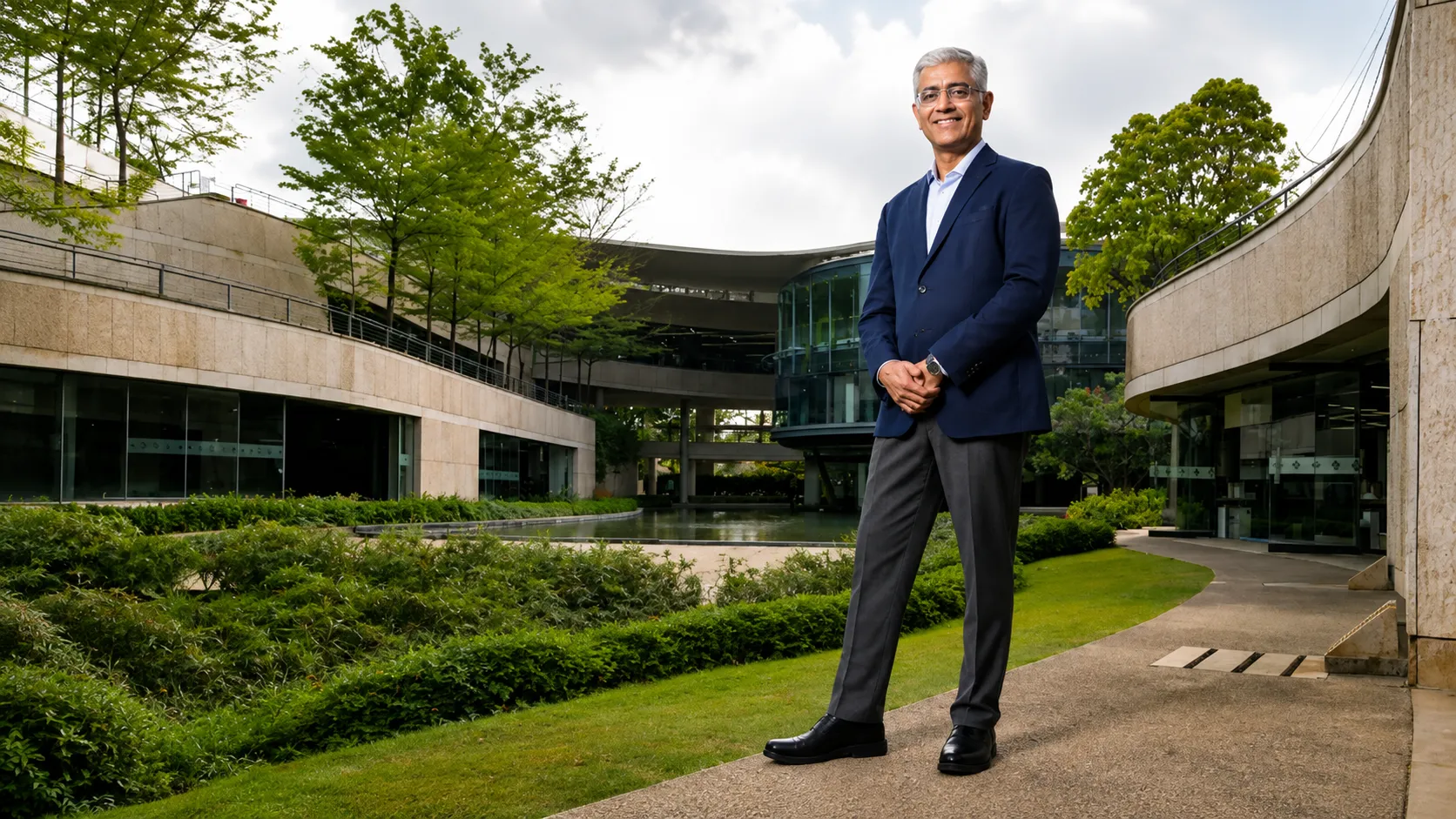
Titan Managing Director Ajoy Chawla, described as a Titan lifer, has articulated the company's approach to continuous reinvention in strikingly direct terms: he describes the company as "restless and responsible" as it enters its 43rd year — a framing that captures both the company's appetite for continuous category expansion and its simultaneous commitment to the trust-led, brand-integrity-focused approach that has underpinned its growth. According to Chawla, this restlessness translates concretely into product innovation, retail innovation, new products, new ideas and new categories — describing this pattern of continuous reinvention as, in his words, "what has created us."
Notably, Titan's leadership has also pointed to its workforce composition as a structural asset underpinning this continued reinvention: around 20 percent of the company's workforce is Gen Z, with a large additional share belonging to Gen Y (millennials) — a demographic profile that skews considerably younger than what might be assumed for a company with a four-decade operating history, and one that Titan's leadership credits with helping sustain the company's ongoing pace of category innovation and retail experimentation.
Why Sustainability and Reinvention Are Being Told as the Same Story
Business Today's decision to feature Titan specifically within a sustainability-focused special issue, rather than a purely financial or strategic feature, reflects a deliberate editorial choice worth examining. The special issue's broader framing examines the multidimensional nature of sustainability in India today — spanning coal gasification, carbon management, industrial electrification, alternative fuels, air pollution, investment flows and evolving disclosure requirements — positioning sustainability not as a narrow environmental compliance exercise, but as a genuine, increasingly central pillar of corporate strategy across Indian industry.
Within that broader framing, Titan's inclusion as the issue's centrepiece feature suggests the publication is treating long-term, trust-led brand building and diversification — rather than narrow environmental metrics alone — as a legitimate dimension of corporate sustainability in the Indian context. A company that has sustained profitable growth across more than four decades, through multiple economic cycles, by continuously reinventing its category focus while maintaining consistent brand trust, represents a different but equally valid form of business durability than the emissions-reduction-focused sustainability narratives that dominate coverage of India's heavy industrial sector.
The Competitive Backdrop Titan Is Navigating
None of Titan's growth has occurred in a vacuum. India's broader jewellery and lifestyle retail sector has become increasingly competitive, with both established regional jewellery chains and newer, digitally native D2C brands competing for a consumer base whose discretionary spending power has grown substantially over the past decade. Titan's response — building a genuinely differentiated multi-brand portfolio spanning price points and customer segments, rather than attempting to serve the entire market through a single undifferentiated brand — has proven durable enough to sustain the growth trajectory reflected in its FY25 and FY26 results, even as commodity price volatility (particularly gold, the core raw material input for its largest jewellery business) and currency fluctuations have created genuine cost-side pressure across the period.
What Comes Next
As Titan enters its 43rd year, the trajectory Business Today's special issue documents suggests a company still firmly in expansion mode rather than one settling into mature-business complacency. Continued growth in fragrances, eyewear, ethnic wear and handbags, further international expansion building on the Damas acquisition, and continued category innovation across its jewellery portfolio all appear to remain active growth vectors rather than completed initiatives. For a conglomerate business that started as a modest watch venture, Titan's ability to reinvent itself repeatedly — while maintaining the brand trust that each new category expansion depends on — offers a genuinely instructive case study in sustainable, durable corporate growth, one that Business Today's editorial team has evidently judged worthy of centrepiece treatment in a special issue ostensibly about India's sustainability leaders, but that reads, in Titan's case, just as much as a story about the sustainability of reinvention itself.
The Broader Sustainability Summit Behind the Special Issue
Titan's feature does not exist in isolation — it sits within a considerably larger editorial and event programme Business Today has built around India's corporate sustainability story. The publication's India's Most Sustainable Companies Summit and Awards brought together policymakers, industry leaders and sustainability experts to examine some of the most pressing challenges shaping India's sustainability journey, with discussions spanning everything from bridging the country's substantial climate finance gap to mobilising private capital toward genuinely sustainable industrial transition. At the accompanying awards ceremony, Union Environment Minister Bhupender Yadav personally honoured winning companies, while Mahindra & Mahindra was conferred a Special Jury Award — context that situates Titan's feature within a broader, government-engaged conversation about what sustainable Indian business actually looks like in practice, rather than treating the special issue as a purely commercial publishing exercise.

Reading the Category Diversification as Genuine Risk Management
There is also a more prosaic, financially grounded way to read Titan's multi-category expansion strategy: as a deliberate hedge against the concentration risk inherent in relying too heavily on any single product category. Jewellery, and particularly gold jewellery, exposes Titan directly to commodity price volatility largely outside the company's control, while watches and eyewear carry considerably different demand cycles and margin structures. By building genuine scale across fragrances, eyewear, ethnic wear, handbags and multiple distinct jewellery sub-brands simultaneously, Titan has constructed a revenue base that is structurally more resilient to a downturn in any single category than a more narrowly focused competitor would be — a form of diversification-driven durability that, whether or not Business Today's editors framed it explicitly in these terms, sits comfortably alongside the publication's broader definition of sustainability as encompassing genuine long-term business resilience, not environmental metrics alone.
A Framework India's Corporate Sector Is Still Building
What makes this moment particularly significant is the timing: India Inc is being asked to define what corporate sustainability means at precisely the point when the country's broader climate policy architecture, including its new Carbon Credit Trading Scheme covering hundreds of the country's largest industrial emitters, is moving from voluntary aspiration into binding, financially consequential obligation. Against that backdrop, Business Today's decision to centre a company like Titan — whose sustainability credentials rest on durable brand-building and diversified category leadership rather than emissions reduction metrics — signals an evolving, broader definition of what "sustainable" is coming to mean within Indian corporate coverage: not merely environmental compliance, but the kind of structural business durability that allows a company to keep reinventing itself, generation after generation, without losing the trust that its entire commercial model depends on, and without the kind of category concentration that has left other, less diversified Indian conglomerate businesses considerably more exposed to single-sector downturns over the same multi-decade period Titan has spent quietly building outward.
A Closing Thought on What "Reinvention" Actually Costs
None of Titan's four-decade reinvention has come without genuine risk. Each new category entry — jewellery, then eyewear, then fragrances, then international acquisitions like Damas — carried real execution risk, capital commitment and the possibility of diluting a brand that had built its value specifically on trust within a narrower original category. That Titan's leadership has consistently chosen to take on that risk, category after category, decade after decade, rather than settling into the comfortable, lower-risk position of a mature, single-category market leader, is arguably the more interesting story Business Today's special issue is actually telling: not that Titan is sustainable in the narrow environmental sense, but that it has built an organisational culture — restless, in Chawla's own word — genuinely capable of sustaining continuous reinvention across multiple business cycles, several economic downturns, and now, an entirely new era in which sustainability itself is fast becoming a defining test of Indian corporate credibility, one Titan appears, on the evidence of four decades of compounding reinvention, well positioned to keep meeting for whatever comes next — restless, responsible, and evidently nowhere near finished reinventing itself, one lifestyle category, one international market, and one generation of Gen Z hires at a time — a pace of continuous change that, four decades in, shows no sign of slowing down as Titan looks toward its next chapter of growth across Indian and international markets alike.