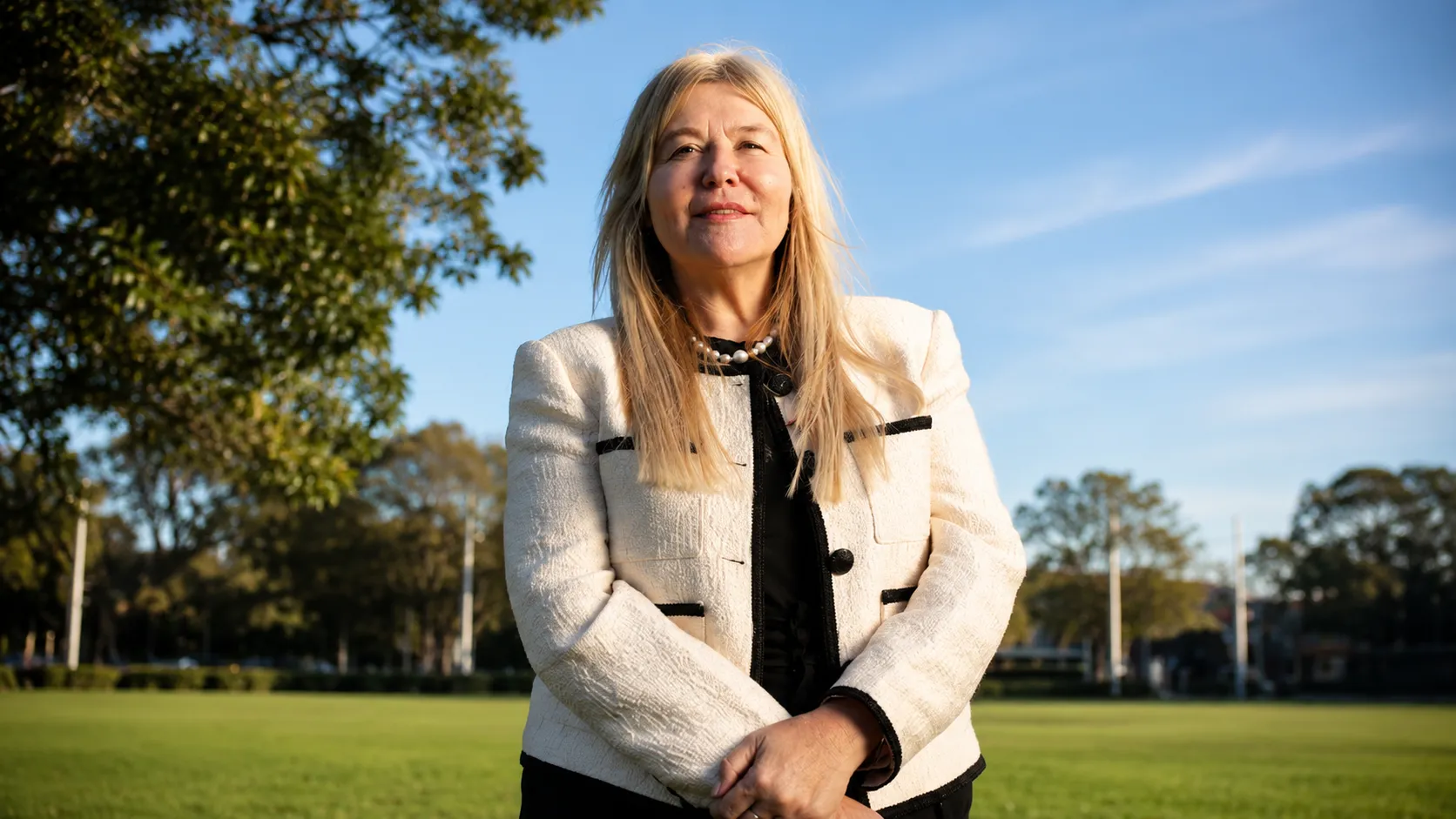
She Was Building Telecom Networks. Now She Is Building a Nation's Dream.
There are not many executive CVs that move from government relations and telecommunications sales in the Pacific to leading the most anticipated sports franchise in the Southern Hemisphere. Lorna McPherson's does.
In January 2026, the Australian Rugby League Commission appointed McPherson as the inaugural Chief Executive Officer of the PNG Chiefs — the rugby league club scheduled to become Papua New Guinea's first NRL team when it enters the competition in 2028. She is the first CEO the franchise has ever had. She is building it from scratch. And she is doing it in a country where rugby league is not just a sport but a cultural identity that runs through communities from Port Moresby to the Highlands provinces, from coastal villages to urban schools.
The appointment did not come out of nowhere. To understand why McPherson is the person leading this project, you have to understand what she was already doing in PNG — and for how long.
Sixteen Years. One Country. A Career Built at the Intersection of Commerce and Community.
McPherson has lived and worked in Papua New Guinea for over 16 years. That is not a posting. It is a commitment.
During that time she rose through the executive ranks of Digicel Pacific, the telecommunications company that has been one of the most significant commercial forces in the Pacific Islands for two decades. As Senior Vice President, she ran Government Relations, Sales, Distribution, Retail, and Marketing across PNG — a portfolio that, in any major market, would constitute three or four separate C-suite roles. In a country as complex, geographically vast, and culturally diverse as Papua New Guinea, it was a masterclass in stakeholder management, commercial strategy, and operational logistics at the same time.
But it was what she did alongside the telecommunications work that set her apart.
Over the last decade at Digicel, McPherson led the growth of the Digicel ExxonMobil Cup — PNG's premier domestic rugby league competition. She did not oversee it from a sponsorship compliance perspective or manage a marketing budget. She transformed it. The Cup became a nationally unifying competition that drove community youth development and commercial value simultaneously. She understood, in a way that very few telecommunications executives ever have to articulate, that sport in PNG is not an entertainment product. It is social infrastructure.
She also played a key role in advancing the establishment of the Santos Cup — PNG's elite women's rugby league competition. That initiative did not have an obvious commercial ROI from the outset. It had a community rationale and a long-term development logic, both of which required exactly the kind of patience and conviction that the most difficult institutional projects demand.
"I have over 16 years of leadership experience in PNG, across corporate and sporting sectors," she told Business Advantage PNG in a detailed interview earlier this year. "Those experiences taught me strategic planning, stakeholder engagement and operational management, all critical when building a professional NRL franchise from the ground up."
The Project She Was Built For
The PNG Chiefs are not simply an expansion team. They are, as McPherson herself has said, a national project.
Papua New Guinea has been trying to get a team into the NRL — Australia's premier rugby league competition — for decades. The sport has a penetration in PNG that would be difficult to explain to anyone unfamiliar with the country: it is played everywhere, watched everywhere, talked about everywhere. Rugby league is not one of the things Papua New Guineans love. For many, it is the organising passion of daily life.
The inclusion of a PNG-based team was announced on December 12, 2024, as part of the Pacific Rugby League Partnership involving the NRL, the PNG government, and the Australian government. The franchise's name — the Chiefs — was selected through national public engagement. The head coach, Willie Peters, is leaving Hull Kingston Rovers — the reigning Super League treble winners in England — to take the role. Peters told the media it was an "emotional meeting" when he broke the news to his squad, having built what he described as a family environment at Hull KR. The pull of the PNG project was strong enough to override that.
McPherson frames what she is building in terms that go well beyond the football pitch.
"Our people." Not "the fans." Not "the market." In that phrase is the entire difference between someone administering a sports franchise and someone leading a national institution.
What Building a Franchise From Zero Actually Looks Like
The PNG Chiefs are not inheriting an infrastructure. They are building one. And McPherson is the person responsible for making sure every piece of that infrastructure exists by the time the competition kicks off in 2028.
The governance structure is in place: a full board including franchise Chair Catherine Harris and General Manager Michael Chammas, with members drawn from business and rugby backgrounds. Administrative operations are underway. The team name was selected. The head coach is confirmed. Player recruitment is set to begin in late 2026 under NRL rules, which require expansion clubs to start recruiting approximately two years before competition entry.
The home ground is the National Football Stadium in Port Moresby, with a capacity of 14,800. Infrastructure development, tourism planning, international exposure strategy, and job creation projections are all active workstreams inside the franchise's current operations.
McPherson describes the impact framework in three dimensions: sporting impact — a clear pathway from village rugby league to the NRL, and retention of local talent; social impact — national unity, youth engagement, and positive role modelling; and economic impact — job creation, infrastructure development, and increased tourism and international exposure.
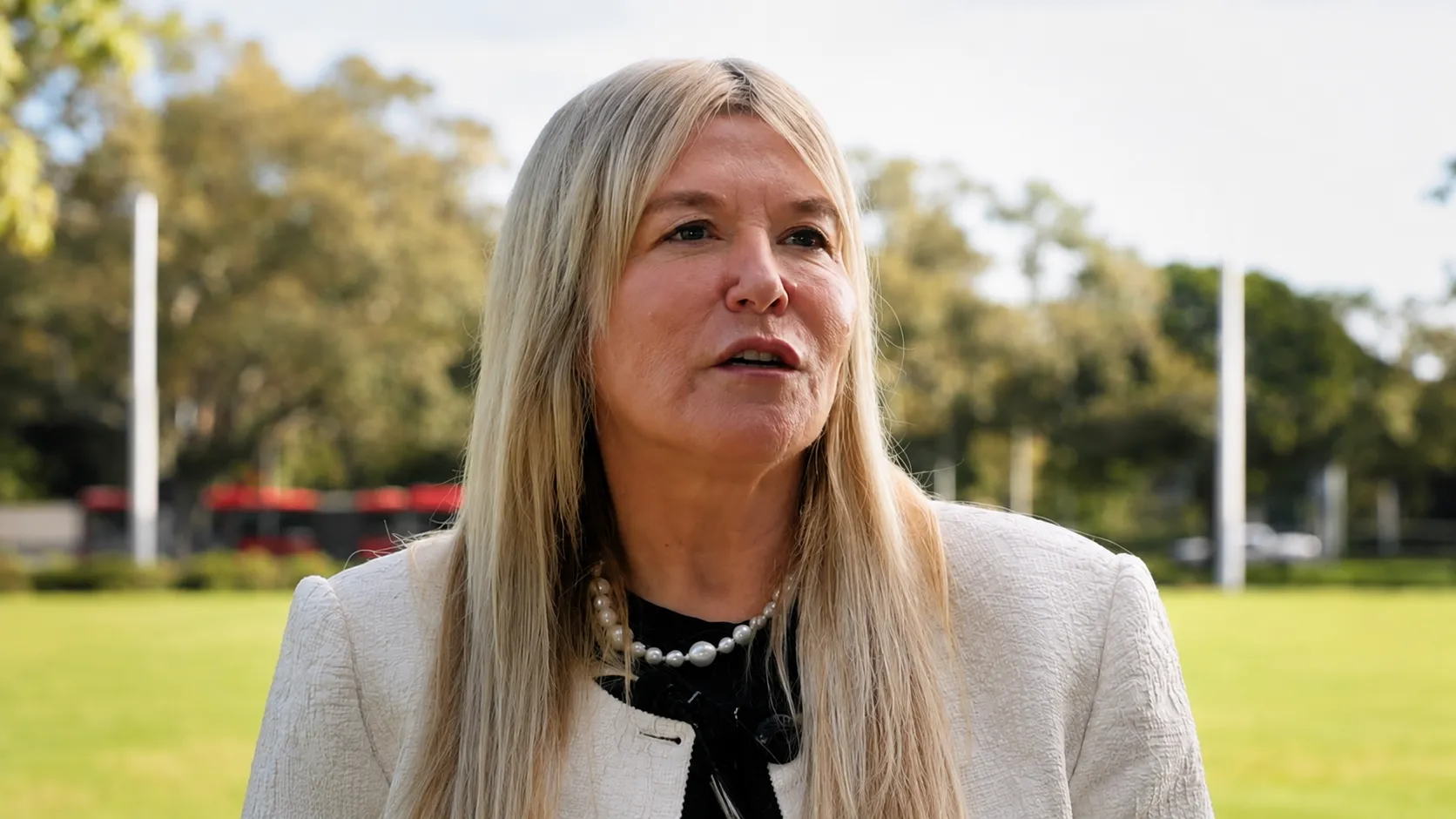
That framing is deliberate and consistent. It appears in every interview, every public statement, every address. It is not marketing language. It is the organising principle of the entire enterprise — and it reflects a deep understanding of what sport has historically done for communities in PNG and what this franchise, specifically, has the potential to do at a national scale.
The Controversies — and How She Handles Them
Building anything this complex, in a country this politically and culturally layered, in full public view, guarantees controversy. McPherson has faced some of it directly.
In May 2026, questions arose around remarks by General Manager Michael Chammas about schooling arrangements for the coaching staff's families. The suggestion that facilities might be differentiated between PNG players and international staff triggered a sharp public response, with critics including former PNG Sports Foundation chairman Ian Chow calling the approach culturally out of step. McPherson moved quickly to clarify.
"Family support systems will be consistent with what is standard across professional NRL clubs, and everyone is equal, including PNG players and their families. We are building a family and an institution for PNG." — Lorna McPherson, CEO, PNG Chiefs
When Peters' wife and son visited Port Moresby in May 2026, McPherson described it as "a significant moment for the Chiefs and country." She added: "In PNG, family is central to who we are. Their willingness to come, to see, and to experience life here speaks to the depth of this partnership. This is not only a courtesy visit but the beginning of a relationship grounded in trust, belonging and shared ambition."
These are not boilerplate statements. They are the communication of someone who understands the specific cultural register of the country she is building in — and who knows that trust, in PNG, is built relationally, not institutionally.
What Her Rise Teaches About Leadership in Overlooked Spaces
Lorna McPherson's career contains a lesson that is easy to miss in a world that tends to track leadership through the conventional route of Ivy League degrees, McKinsey apprenticeships, and careers that proceed in a recognisable straight line.
She built her credentials in a country that most global executives would treat as a remote posting rather than a career-defining commitment. She learned stakeholder management not in New York boardrooms but in community-level engagement across PNG's extraordinary geographic and cultural complexity. She built expertise in sports governance not through the traditional pathway of professional sports administration but by integrating sport into a telecommunications company's national development strategy and proving, through the Digicel ExxonMobil Cup and the Santos Cup, that the two things could be made to serve each other.
When the moment arrived — when Papua New Guinea's NRL franchise needed its first CEO — she was the most qualified person in the country. Not in spite of the unconventional path. Because of it.
Peter V'landys AM, Chairman of the Australian Rugby League Commission, said at the time of her appointment that it was "a crucial step in establishing the foundations of the new franchise."
A once-in-a-generation opportunity, led by a woman who spent sixteen years preparing for it without knowing it was coming. That is the shape of most careers that look inevitable in retrospect: the accumulation of specific, unglamorous expertise in places the mainstream is not watching, until the moment that requires exactly that expertise arrives.
The PNG Chiefs enter the NRL in 2028. What happens between now and then — the recruitment, the infrastructure, the cultural bridge-building, the commercial partnerships, the community engagement — is Lorna McPherson's to build. And if the last 16 years are any indication, she already knows exactly how to do it.