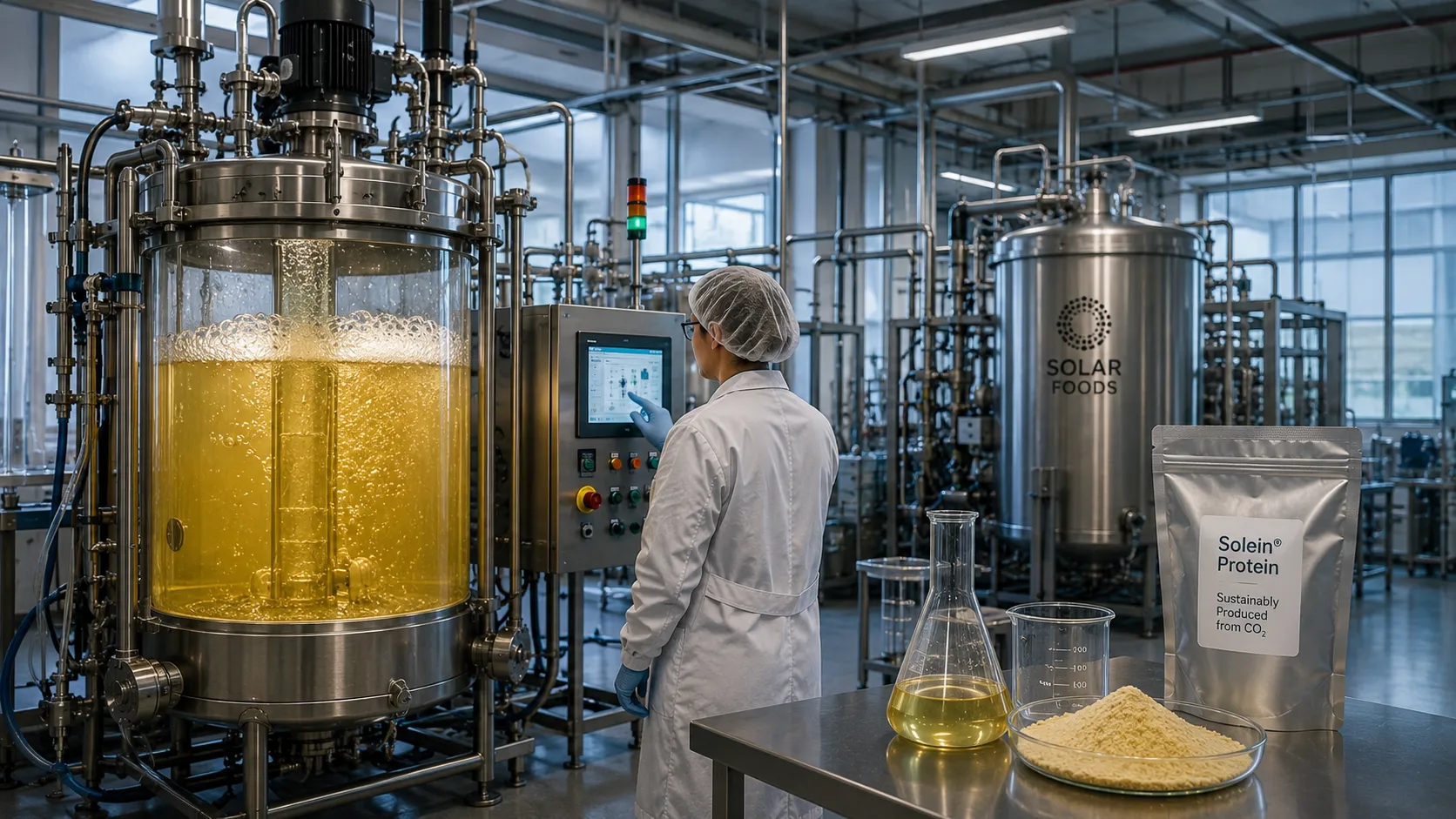
Inside a sleek, automated facility just outside Helsinki, Finland, a massive stainless-steel bioreactor hums with a low, rhythmic vibration. To a visiting investor, the setup looks exactly like a high-end microbrewery or a pharmaceutical lab. But the yellow liquid bubbling behind the glass walls isn’t beer, and it isn’t medicine. It is a dense, living culture of microscopic organisms performing a feat of biological alchemy that is turning the traditional agricultural sector upside down.
They are eating carbon dioxide.
Not the ambient, sparse carbon floating in our atmosphere, but the heavily concentrated, localized emissions captured directly from the flue gases of industrial factories.
For decades, industrial emissions have been treated strictly as a massive corporate liability a costly problem to be taxed, penalized, or buried deep underground. But a rising wave of deep-tech biotech startups is completely rewriting the rules of the game. Backed by a historic surge of venture capital, companies like Solar Foods, Air Protein, and Deep Branch are no longer treating $CO_2$ as pollution. They are treating it as a foundational commodity. By feeding this industrial byproduct to specialized single-cell microbes, they are generating a highly nutritious, premium protein powder that completely bypasses the need for fields, tractors, or livestock.
The venture capital ecosystem has responded with aggressive financial backing, turning this niche corner of synthetic biology into one of the most heavily capitalized battlegrounds in climate tech. Investors are recognizing that software apps can no longer fix the structural vulnerabilities of our physical world. Instead, the big money is betting on hardware-driven deep tech capable of reinventing the global food supply chain before climate volatility breaks it entirely.
The Science: Space-Age Biology Meets Heavy Industry
The underlying science behind this process actually dates back to the height of the space race. In the 1960s, NASA researchers scrambled to find a way to sustain astronauts on multi-year journeys into deep space where carrying tons of food was mathematically impossible. They discovered a unique class of ancient, single-cell microbes known as hydrogenotrophs. Unlike plants, which use sunlight to slowly convert carbon dioxide into energy via photosynthesis, these organisms rely on hydrogen and chemical energy to pull carbon right out of the gas around them.
Modern startups have taken these space-age microbes out of the academic archives and dropped them straight onto the factory floor.
[Industrial CO₂ + Water + Nitrogen]
│
▼
[Automated Bioreactor] ──► (Microbes consume gas & multiply exponentially)
│
▼
[Harvesting & Dehydration]
│
▼
[75% Pure Nutritional Protein Powder]
The manufacturing loop is remarkably elegant. Industrial emissions are captured before they hit the atmosphere, scrubbed of impurities, and piped directly into sealed fermentation tanks. Inside, the microbes are bathed in a precise cocktail of carbon dioxide, oxygen, hydrogen, and nitrogen. The organisms feast on the gas, multiplying at an exponential rate that makes traditional livestock look agonizingly slow.
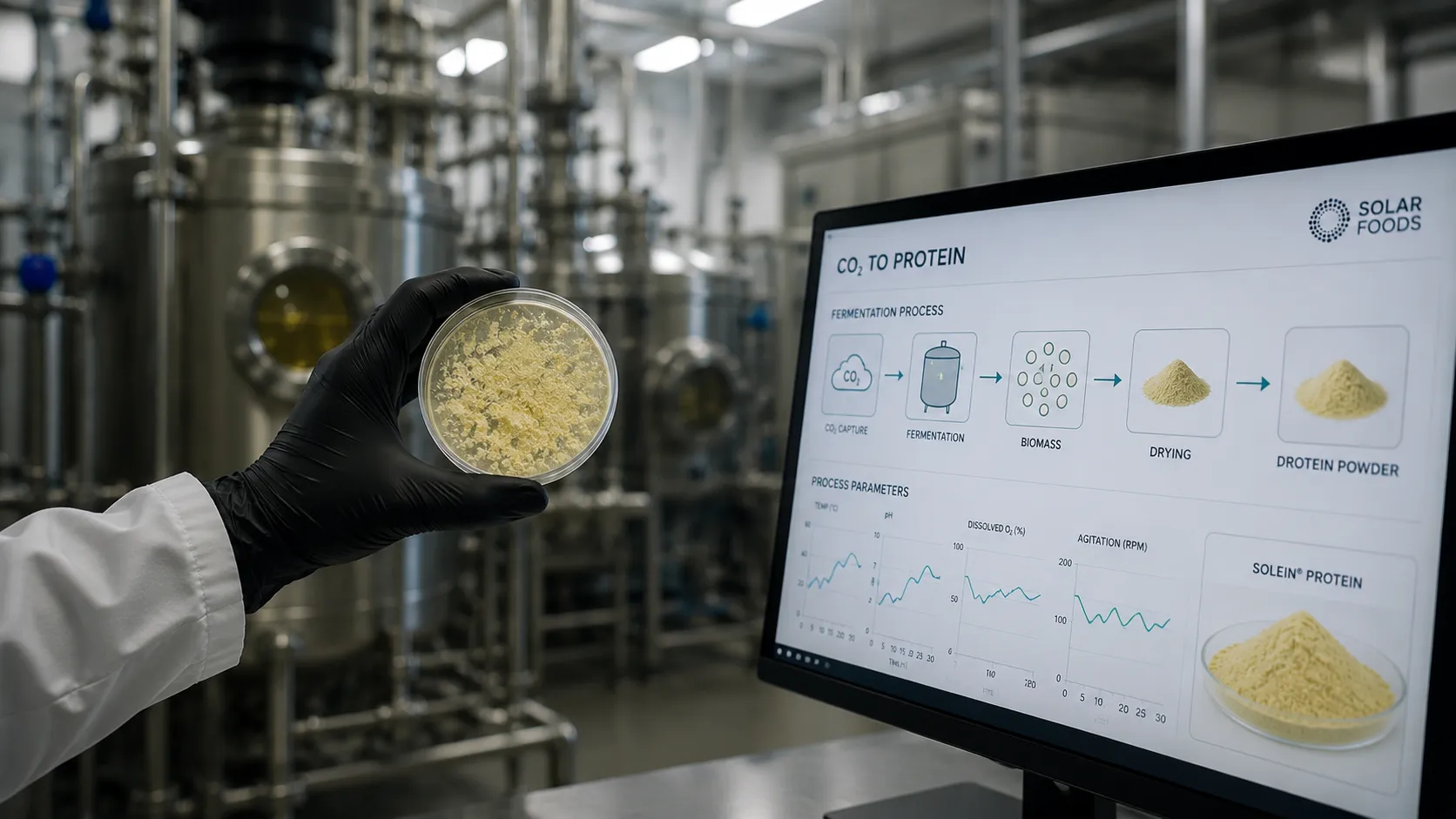
While a cow takes years to mature and a field of soy takes months to grow, a batch of gas-fermenting microbes can double its biomass in a matter of hours. Once the fermentation cycle is complete, the mixture is pasteurized and dried. The resulting product is a neutral-tasting, golden powder that boasts a protein content of up to 75%—complete with all the essential amino acids, B-vitamins, and iron required for animal and human nutrition.
The Efficiency Breakthrough: Beating Photosynthesis
To truly understand why the smart money is moving into gas fermentation, you have to look at the sheer physics of traditional farming. Photosynthesis—the biological engine behind every field of soy and corn on Earth is shockingly inefficient. Plants convert sunlight into usable biomass at an efficiency rate of roughly 1% to 5%. The rest of the energy is lost to basic plant survival, root development, and non-edible structures like stems and leaves.
Microbial conversion systems completely shatter this ceiling. Because these single-cell organisms do not need to waste energy growing roots, leaves, or bones, their conversion efficiency is roughly 20 times higher than traditional photosynthesis.
Furthermore, this process entirely eliminates the geographical and environmental friction points that have plagued agriculture for ten thousand years:
Zero Arable Soil Required: Bioreactors scale vertically, meaning a production facility can be built on a gravel lot, a desert, or an industrial park.
Radical Water Conservation: The closed-loop fermentation process uses up to 95% less water than traditional beef production and 80% less than soy farming.
No Supply Chain Volatility: Inside an automated bioreactor, there are no droughts, no unexpected frosts, no pesticide runoffs, and no geopolitical shocks to the fertilizer supply chain.
For venture capitalists, this turns food production from an unpredictable, weather-dependent gamble into a highly predictable, software-like manufacturing framework where output can be precisely calculated down to the kilogram.
Scaling From Pilot Labs to Commercial Dominance
We are no longer dealing with a theoretical proof-of-concept. The industry has officially crossed the threshold into commercial-scale deployment. Solar Foods recently brought its "Factory 01" facility to full operational capacity in Finland, producing up to 160 tons of its air-based protein (branded as Solein) annually—matching the protein output of a 300-cow dairy farm under a single roof. The company is already drawing up plans for "Factory 02," a massive industrial-scale facility designed to scale output to 6,400 tons per year.
The go-to-market strategy for these startups is highly strategic, rolling out through commercial sectors that face immediate, severe supply chain strains.
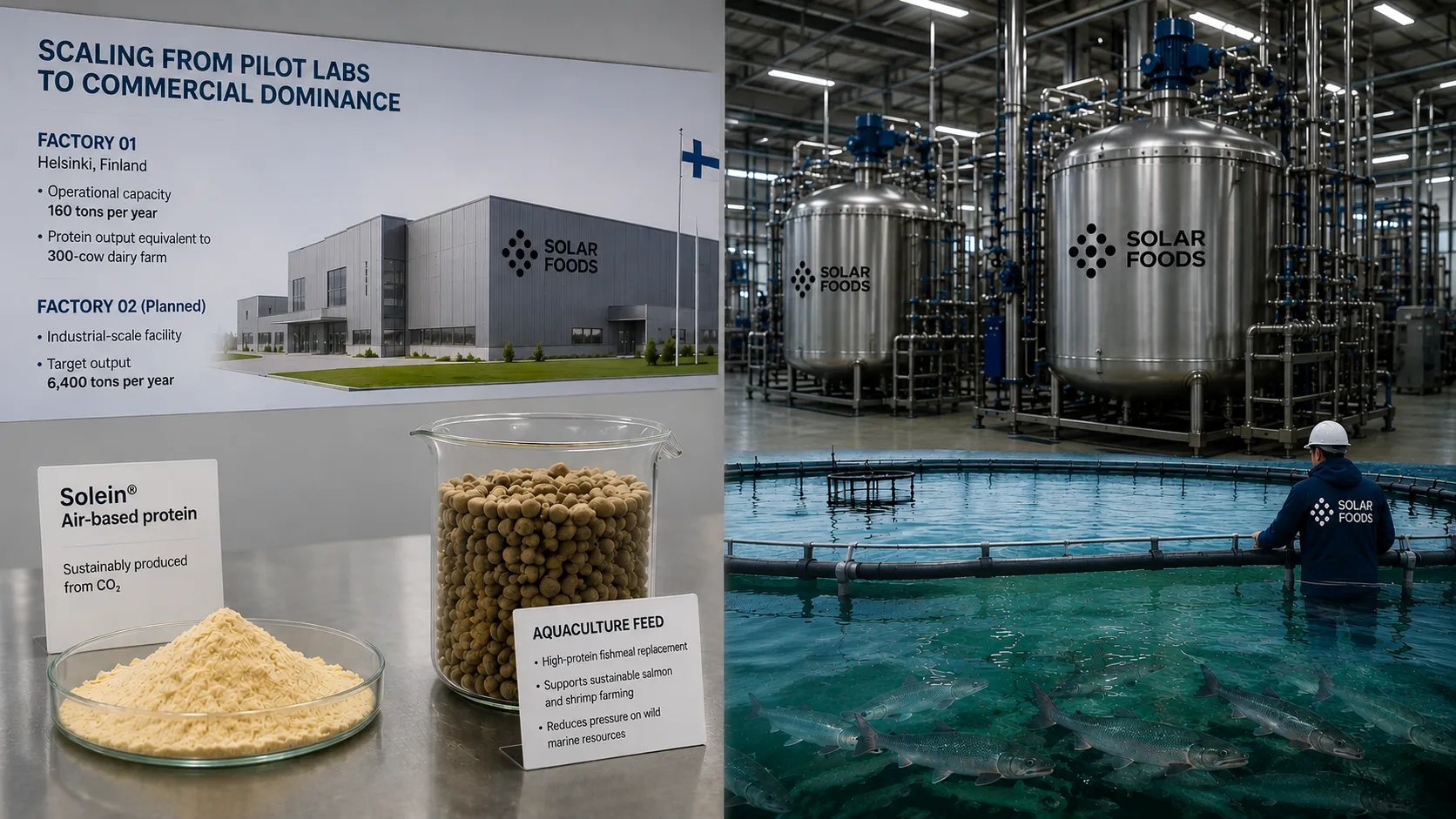
In the aquaculture feed market, this powder serves as a high-protein fishmeal replacement for commercial salmon and shrimp farming. It is a critical pivot point, given that global overfishing has pushed marine-based feed prices to historic highs.
The technology is also making major waves in the pet food formulation industry. Brands are looking for premium, hyper-allergenic, low-carbon protein ingredients for domestic dog and cat foods to satisfy massive consumer demand for sustainable pet products. For instance, companies like Germany's MicroHarvest are launching 15 distinct low-carbon pet products across Europe using this exact approach.
Finally, the ultimate frontier is human food ingredients. The powder acts as a drop-in protein enrichment for plant-based milks, meat alternatives, and functional protein bars. It provides a clean-label ingredient with a complete amino acid profile, altogether avoiding common soy allergens.
Regulatory dominoes are also falling rapidly. Following initial commercial approvals in Singapore, major food tech players are launching consumer products—including protein bars and functional shakes—in the United States and European markets.
As global populations rise toward an estimated 10 billion people by mid-century, the strain on traditional farming will hit an absolute ecological ceiling. By turning carbon emissions from a climate threat into a premium agricultural asset, these deep-tech startups are proving that the most lucrative way to future-proof the planet isn't just to reduce our footprint—it's to harvest the very air around us.