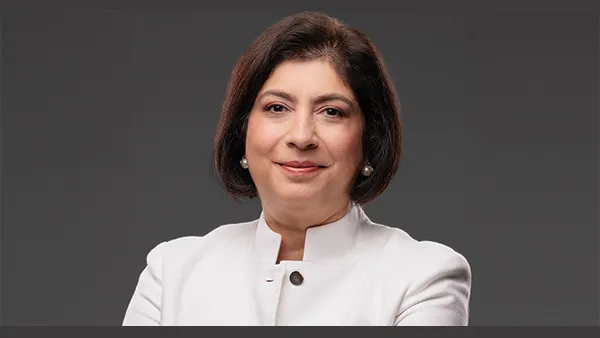
She Was Eleven Years Old When She Left Mumbai. She Is Now Running One of the Most Consequential Drug Companies on Earth.
In 1988, an eleven-year-old girl from Mumbai arrived in the United States with her family. She did not know then that she would become a kidney doctor, or that she would spend years at Amgen developing drugs, or that she would take the helm of a $120 billion biotechnology company, or that TIME magazine would name her one of its Women of the Year in 2026. She was just a child who had moved to a new country, carrying the particular mix of ambition and displacement that the best immigrant stories are made of.
Thirty-eight years later, Reshma Kewalramani is the CEO and President of Vertex Pharmaceuticals — one of the world's most formidable biotech companies, with $12 billion in 2025 revenue, up 9% year over year. She is, by every meaningful metric, the most powerful Indian-origin woman in American biotech — and one of the most consequential pharmaceutical executives in the world, full stop.
But the number that matters most in Reshma Kewalramani's story is not the revenue figure or the market capitalisation or the compensation package. It is a different number entirely.
When she was in medical school, the average age of death for a patient with cystic fibrosis was 27.
Today, a child who starts Vertex's medication in their youth can expect to live beyond 70.
That distance — from 27 to beyond 70 — is the span of a life that Vertex's science has created. And Kewalramani, who has spent her career building toward that outcome, carries that number with her in every decision she makes.
The Doctor Who Decided the Lab Was Where the Action Was
Kewalramani's path to pharmaceutical leadership was not the obvious one. She graduated from Boston University in 1998 — Phi Beta Kappa, Summa Cum Laude — through the university's demanding seven-year combined undergraduate and medical programme. She completed her internship and residency at Massachusetts General Hospital. She did her nephrology fellowship through the MGH-Brigham and Women's Hospital combined programme. She was, by every standard measure, a physician on the conventional academic medicine track: teaching, treating patients, working in the lab.
And then she made a decision that her training had not quite prepared her for.
"I realised if I wanted to do that — drug discovery, clinical trials, make new medicines — that actually happens in industry, whether it's biotech or pharma. That's really the heart of where that action is," she told a Babson College publication ahead of a commencement address there.
That decision sent her to Amgen, where she built her expertise in drug development. Then, in 2017, to Vertex — first as Chief Medical Officer and Executive Vice President of Global Medicines Development, then, in April 2020, as President and CEO. She was the first woman to lead a large public biotechnology company in the United States.
She took the job during a global pandemic. The calendar was unkind.
She ran the company anyway.
The Playbook: Deep, Not Wide
What distinguishes Kewalramani's leadership strategy at Vertex from most pharmaceutical executives is a deliberate constraint that she has maintained against every pressure to expand.
She is known for a disciplined strategy, focused on going deep into a small number of diseases. Not a broad portfolio. Not dozens of therapeutic areas. A small number of diseases where Vertex can pursue not just treatment but transformation — not symptom management but the molecular end-state: the cure.
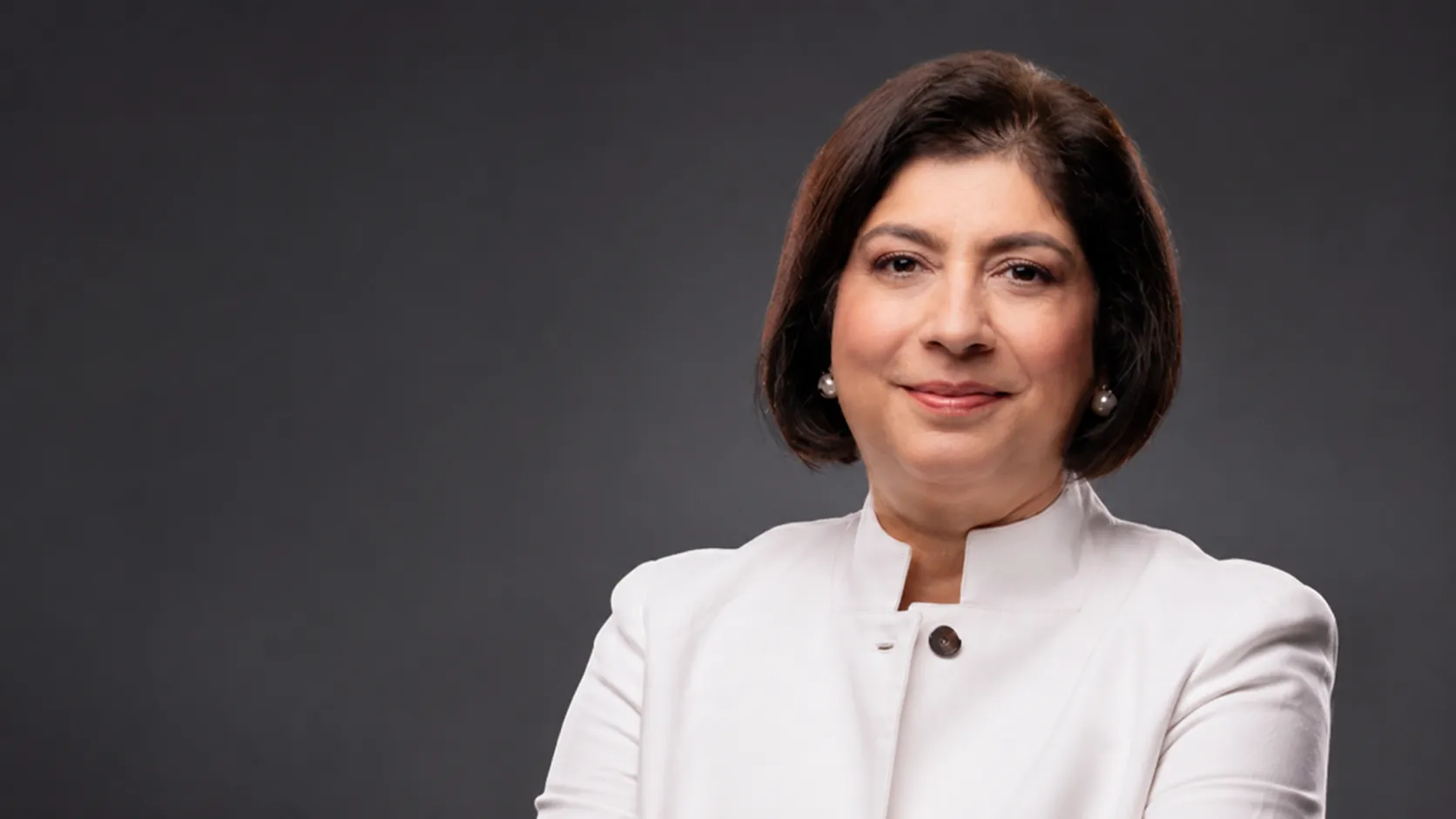
Cystic fibrosis is the clearest example. Vertex has five approved medicines that treat the underlying cause of CF — not the symptoms, the cause — including Trikafta and the newer Alyftrek. The CF portfolio generates the financial foundation that funds every other bet Vertex is making. It is the result of decades of scientific commitment to understanding one disease at the molecular level rather than spreading resources across many.
"We don't do incremental improvement, we innovate to transform or cure, and we serially innovate. We simply are relentless in that way, and our own history has taught us to be like that," Kewalramani told Babson.
The relentlessness is not rhetorical. It is the operating philosophy of a company that chose to build the world's first CRISPR gene-editing therapy, knowing that the regulatory, scientific, and manufacturing challenges of that path were significantly harder than following an existing pharmaceutical playbook.
Casgevy: The First Time Human History Changed at the Molecular Level
In December 2023, Vertex and CRISPR Therapeutics received US regulatory approval for Casgevy — the world's first therapy using CRISPR gene-editing technology. The approval covered sickle cell disease. In January 2025, it was extended to transfusion-dependent beta thalassemia.
Sit with what that means for a moment.
CRISPR — the gene-editing tool developed by Emmanuelle Charpentier and Jennifer Doudna, who won the Nobel Prize in Chemistry in 2020 for its development — allows scientists to edit DNA sequences with a precision that no prior technology could match. For sickle cell disease — a genetic disorder that causes red blood cells to deform into a sickle shape, blocking blood flow and causing severe pain crises, organ damage, and shortened lives — CRISPR offered the first genuine possibility of a cure rather than a management strategy.
Vertex, under Kewalramani, took that possibility through clinical trials, regulatory review, and to market. The result: a single treatment that can functionally cure patients of a disease they were born with, by editing the genetic error at its source.
The price is significant — Casgevy carries a list price of $2.2 million in the United States. Kewalramani has acknowledged directly that access is one of the defining challenges: the treatment has reached only a small fraction of the estimated 100,000 Americans with sickle cell disease. In December 2024, Vertex reached a deal with the Centers for Medicare and Medicaid Services to expand distribution. The access challenge has not been solved. It has been named and engaged with, which is different from ignoring it.
DJ Chow, one of the patients treated with Casgevy, told CNBC after his treatment that he was starting to let himself dream about doing things he had always wanted to do. That sentence — letting yourself dream, after years in which a disease defined the outer limit of what was possible — is the human meaning of what Vertex built.
Journavx: The First New Class of Pain Medicine in Over Two Decades
In January 2025, the FDA approved Journavx — Vertex's non-opioid pain medicine — for moderate-to-severe acute pain. It was the first approval of a new class of pain medication in more than twenty years.
The significance of this is difficult to overstate in the context of America's opioid crisis, which has claimed hundreds of thousands of lives and continues to devastate communities. Opioids became the dominant tool for acute pain management partly because there was nothing else at the appropriate level of effectiveness. The development of a non-opioid alternative that works for moderate-to-severe pain — not mild discomfort, but the level of pain that previously required opioids — represents a genuine inflection point in pain medicine.
Since the launch of Journavx in March 2025, more than 1 million prescriptions have now been filled across hospital and retail settings. One million prescriptions in roughly a year. That is not a niche product finding a limited market. That is a product that was needed, that worked, and that the medical system adopted at scale with a speed that reflects both the quality of the science and the urgency of the problem it addresses.
The Numbers Behind the Leadership
The financial performance of Vertex under Kewalramani's leadership tells the story of the science in the language of markets.
When she became CEO in April 2020, Vertex was valued at approximately $69 billion. Today, the company's market capitalisation has climbed to nearly $120 billion — nearly double in five years, in an industry that regularly disappoints investors with clinical failures and regulatory setbacks.
Vertex posted $12.0 billion in 2025 revenue, up 9% year over year. Her compensation for 2024 was raised to $21.5 million — a 4% increase reflecting what the Vertex board described as "exemplary leadership," including the $4.5 billion acquisition of Alpine Immune Sciences, the approval of Alyftrek, and the launch of Journavx.
She is the only woman in the peer group of CEOs leading biopharma companies with a market cap of at least $100 billion. The peer group includes Eli Lilly's David Ricks, Pfizer's Albert Bourla, Johnson & Johnson's Joaquin Duato, and Gilead Sciences' Daniel O'Day. She is the only woman in that room.
Five medicines approved under her leadership. Five more potential launches planned by 2028. The pipeline includes treatments for APOL1-mediated kidney disease, pain conditions beyond acute pain, and continued work in cell therapy for type 1 diabetes.
The Recognition — and Why It Is the Smaller Part of the Story
In 2026, TIME named Kewalramani to its Women of the Year list and its 100 Most Influential People list simultaneously. Fortune included her in its Most Powerful Women in Business ranking. Boston magazine named her one of its Most Influential Bostonians. Boston University awarded her an honorary Doctor of Science and invited her to deliver the commencement address at its 153rd graduation ceremony in May 2026.
These recognitions matter and are deserved. They are also, in an important sense, the smaller part of the story.
The larger part is a woman from Mumbai who decided that the place where medicine actually gets made is industry rather than the clinic, who spent twenty years building the expertise to do it at the highest level, who took the helm of a biotech company during a pandemic, and who has since overseen the world's first CRISPR gene-editing therapy, the first new class of pain medicine in a generation, and a pipeline that could, by 2028, have delivered five more approved medicines for diseases where patients are still waiting.
She once described a phone call from a mother whose daughter had died of cystic fibrosis before Trikafta was approved. The mother called to tell her: I've already lost my daughter. I will not lose my son. You have to go faster than you think you can.
That call is the throughline of Reshma Kewalramani's leadership. Not the revenue figure. Not the market cap. Not the TIME cover.
The mother on the phone. The son who needed Vertex to go faster. The science that made going faster possible.
That is the story. The rest is the evidence that it worked.


