
The 2026 French Open has been turned upside down after the shock exits of both Novak Djokovic and Jannik Sinner. What began as a tournament expected to be shaped by two of men's tennis' biggest names has quickly become something far less predictable and potentially far more significant. With the sport's most established contenders no longer in the draw, Roland-Garros is now offering a rare glimpse into what the next era of men's tennis might look like.
For years, major tournaments have largely revolved around a small group of players capable of consistently reaching the latter stages and controlling the biggest moments. Djokovic represented the final active link to one of the greatest generations in tennis history, while Sinner entered Paris as the player many viewed as the sport's present and immediate future. Their departures have removed not only two favorites but also the sense of certainty that often surrounds Grand Slam events.
Djokovic's dramatic five-set defeat to teenage sensation João Fonseca may ultimately be remembered as more than a major upset. It felt like a symbolic passing of the torch. For over a decade, Djokovic built a reputation for surviving pressure moments that overwhelmed almost everyone else. Seeing a teenager stand across the net and emerge victorious reinforces the idea that the next generation is no longer waiting patiently for opportunities. They increasingly believe they belong on the biggest stages now.
Sinner's exit carried a different but equally important message. The world No. 1 arrived in Paris as one of the leading contenders for the title but struggled physically amid demanding conditions. His departure served as a reminder that modern tennis remains one of the most physically punishing sports in the world. Even players at the peak of their powers remain vulnerable when tournaments stretch across two intense weeks of competition under challenging circumstances.
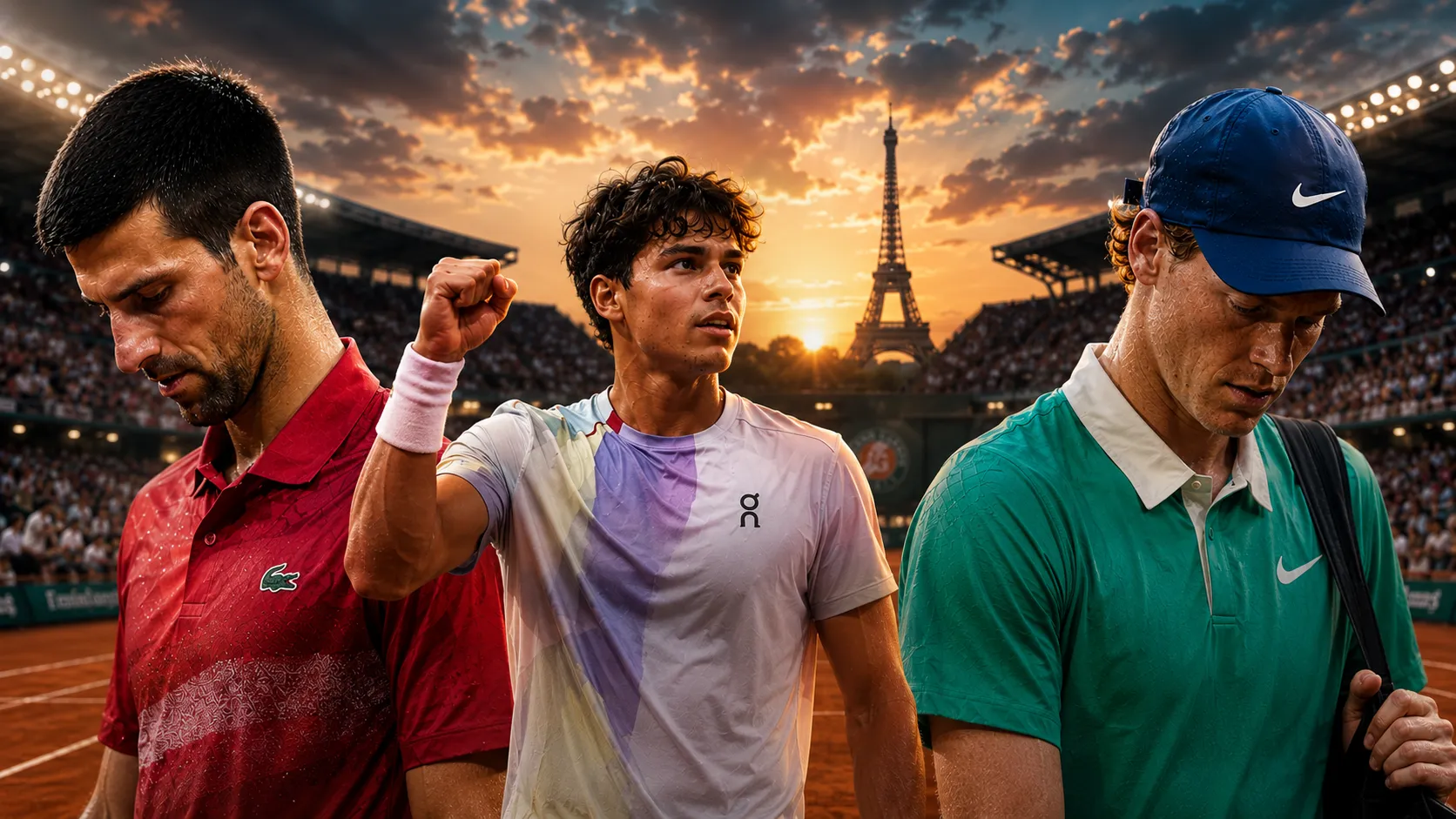
The immediate impact is being felt across the tournament itself. Players who may have started the fortnight with outside hopes suddenly find themselves staring at a genuine opportunity to compete for a Grand Slam title. Every remaining contender understands that moments like these are rare. When established champions fall and the draw opens up, belief begins spreading throughout the field, often creating the most memorable and unexpected tournaments.
Fonseca's breakthrough has emerged as one of the defining narratives of Roland-Garros 2026. Tennis has spent several years discussing who might eventually carry the sport into its next chapter. While one victory does not create a superstar overnight, defeating Djokovic on one of tennis' biggest stages instantly changes how the world views a young player. His run has become a reminder that future champions often announce themselves long before they begin collecting trophies.
Beyond Paris, the consequences could extend across the broader tennis landscape. Grand Slam performances influence rankings, confidence, sponsorship opportunities and future rivalries. Unexpected runs frequently become turning points in careers, while surprise exits can reshape conversations around dominance and succession. Roland-Garros is no longer simply about determining this year's champion. It has become a tournament that may help define the sport's next generation.
The biggest story, therefore, may not be who left the tournament early. It may be what their exits have made possible. For a sport often shaped by familiar names and predictable outcomes, the sudden absence of Djokovic and Sinner has created something increasingly rare: uncertainty. And with that uncertainty comes opportunity, fresh narratives and the possibility that tennis is witnessing the beginning of its next great chapter.