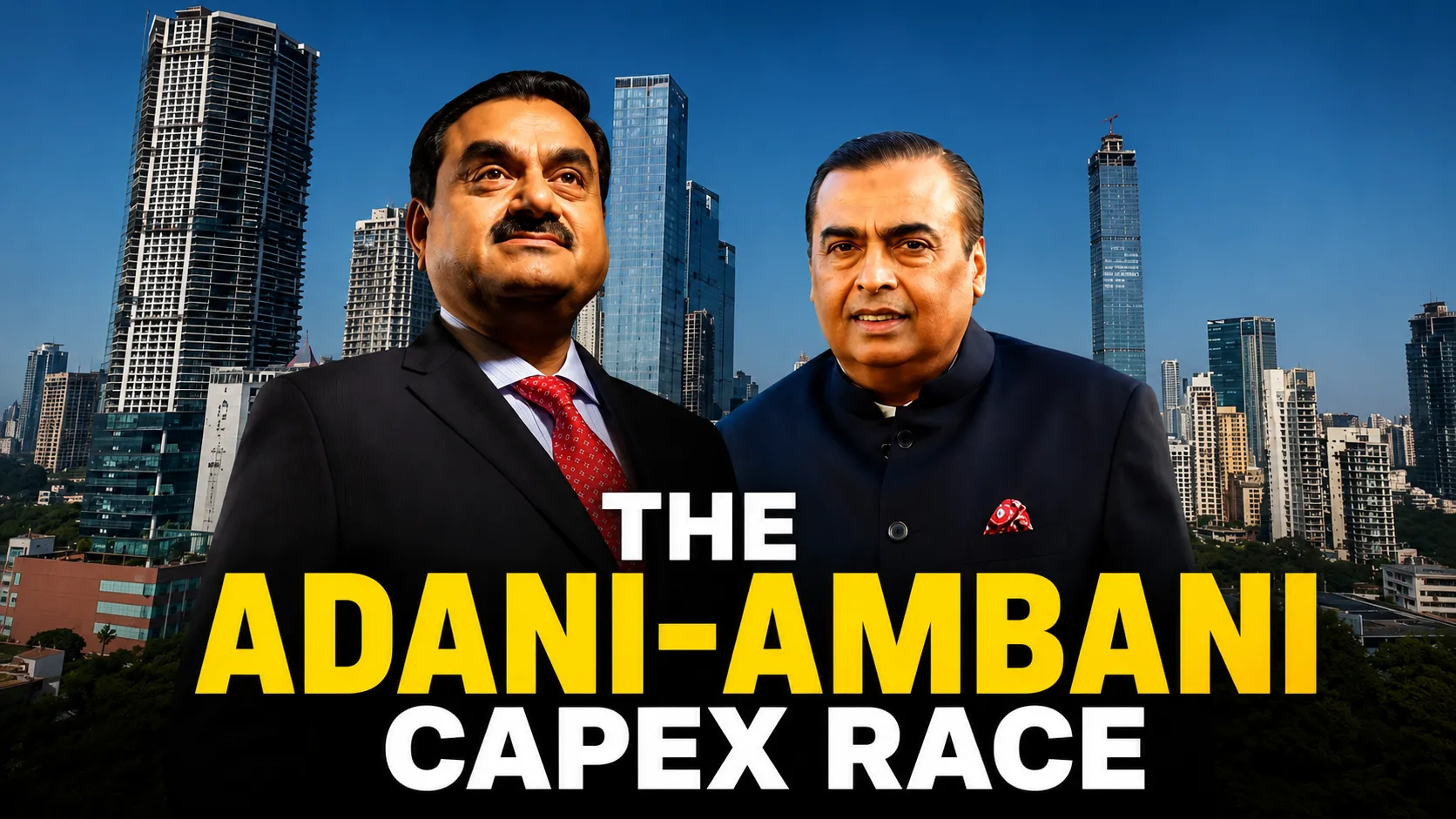
Most people who follow Indian business news can name Mukesh Ambani or Gautam Adani without a second thought. Far fewer could name the current president of FICCI, or explain what the Confederation of Indian Industry actually does on a given Tuesday. That asymmetry is not an accident — it reflects the fundamentally different kind of power these organizations wield. Where India's billionaire industrialists make headlines through the scale of their personal fortunes, the country's apex industry chambers operate several layers below the surface, working the machinery of policy, regulation, and diplomacy that determines whether the headline-grabbing announcements of any given Union Budget actually change anything for the businesses that have to live with the rules.
In 2026, that quieter work has become unusually visible. The Confederation of Indian Industry, the Federation of Indian Chambers of Commerce and Industry, and the Associated Chambers of Commerce and Industry of India — CII, FICCI, and ASSOCHAM, respectively — have spent the past several months positioning themselves as active participants in shaping India's economic reform agenda, rather than passive commentators reacting to decisions made without them. Understanding how these three organizations work, and why their current moment matters, requires understanding what they actually are.
Three Chambers, One Overlapping Mission
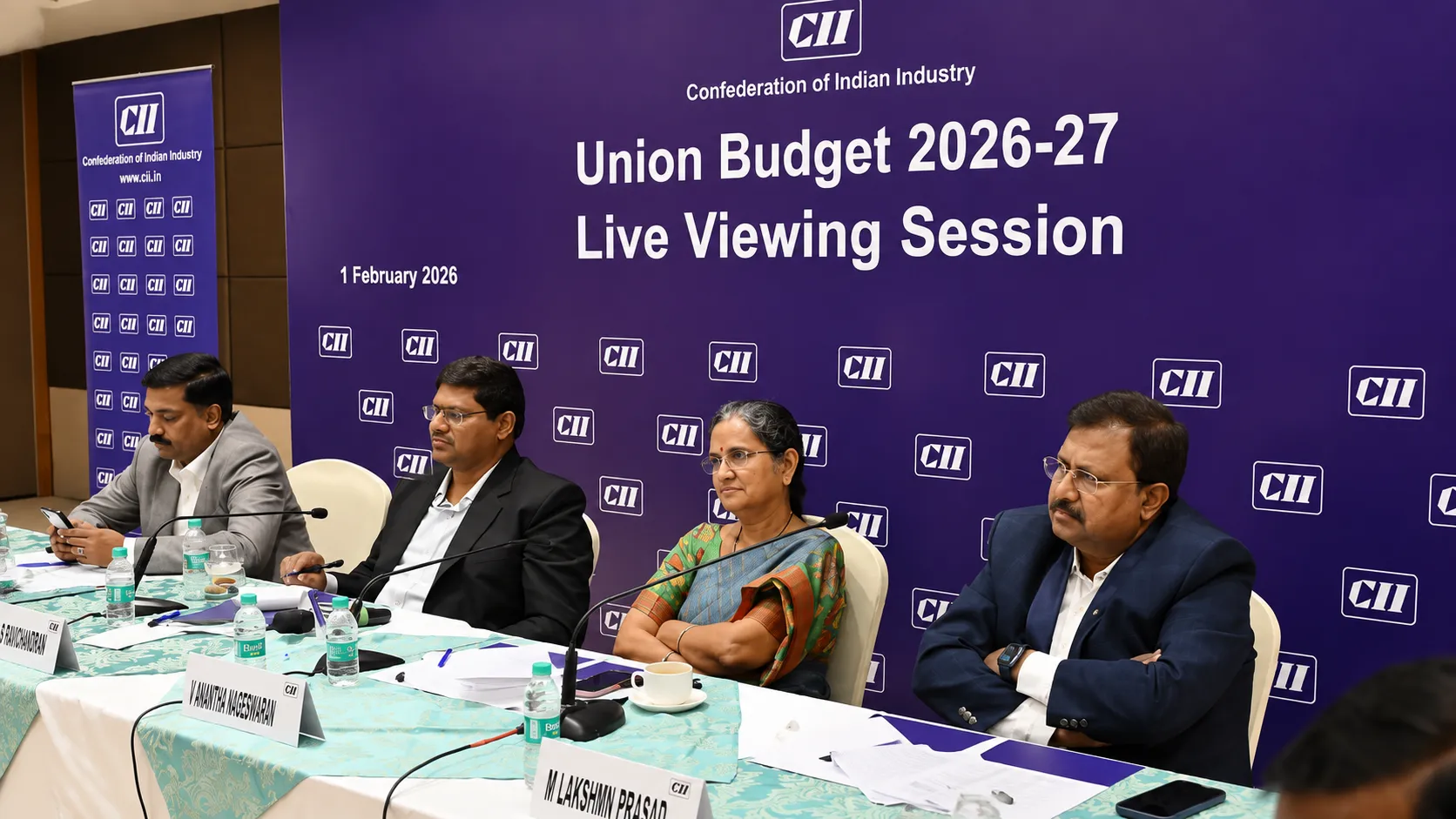
CII, FICCI, and ASSOCHAM are non-governmental trade associations, each representing different, overlapping slices of Indian industry and commerce. ASSOCHAM is the oldest of the three, tracing its founding back to 1920, built originally to represent the interests of trade and commerce during the final decades of colonial rule. FICCI followed as a broader federation representing chambers of commerce across the country, while CII grew into perhaps the most internationally recognized of the three, frequently serving as the voice Indian industry presents to foreign governments and multinational investors.
In practice, the three organizations' work overlaps substantially, and businesses of a certain size often hold membership across all of them simultaneously. Their core function has always been to represent industry's collective voice to government — lobbying, in the neutral sense of the word, for policies that support business growth, while also serving as a conduit running the other direction: helping government understand how proposed regulations will actually land once they reach the shop floor, the boardroom, or the export desk.
The Post-Budget Ritual, and Why This Year Was Different
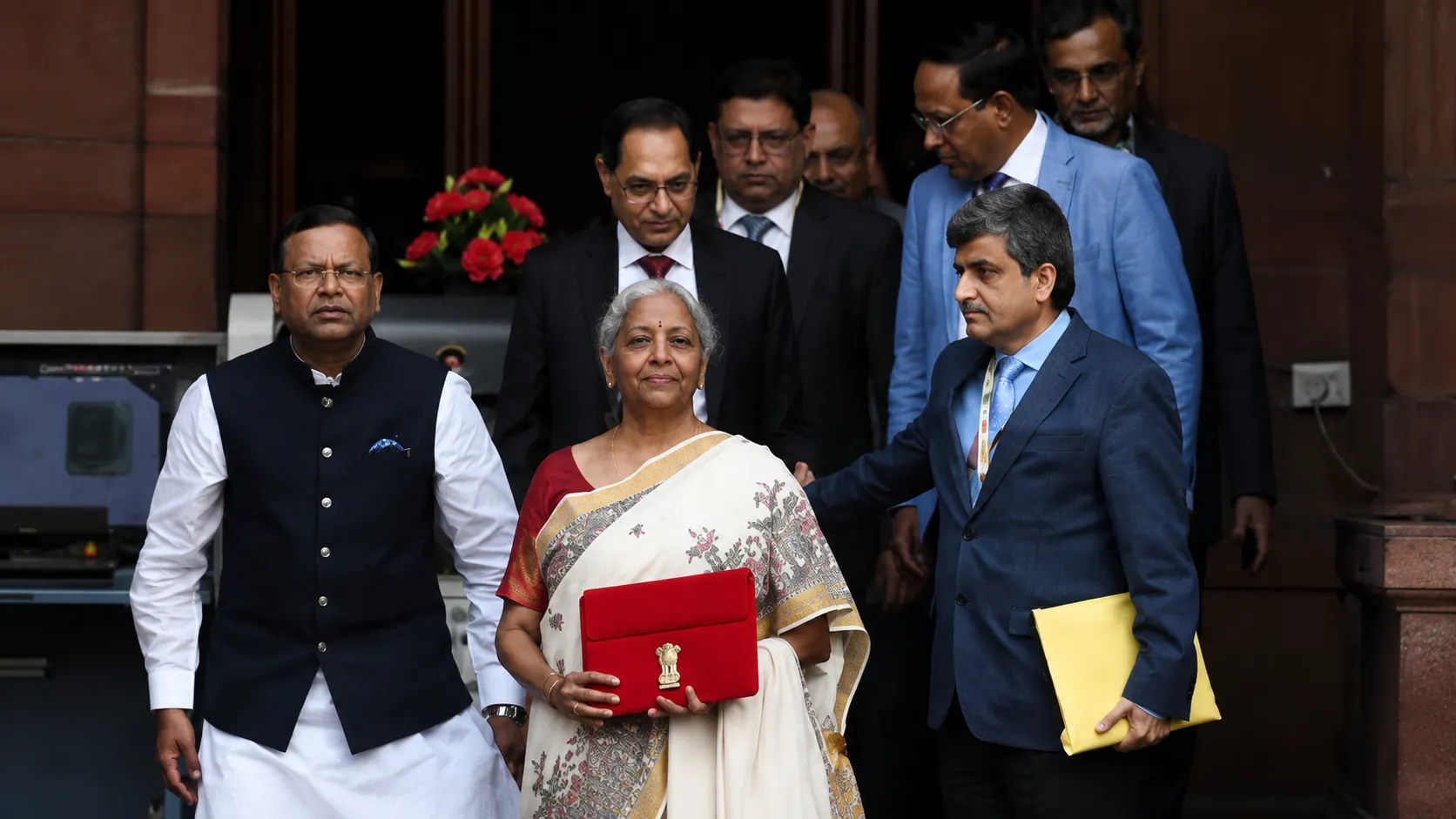
Every year, following the presentation of the Union Budget, India's major industry chambers issue a familiar wave of statements: measured praise for whichever provisions align with their members' interests, gentle notes of concern about whichever provisions do not, and calls for continued reform. It is a ritual predictable enough that seasoned business journalists could often write the headlines before the statements are even issued. Following Budget 2026-27, FICCI's leadership followed that same script in broad strokes — welcoming the government's emphasis on manufacturing, MSMEs, infrastructure, and technology-driven growth, and framing the budget as a source of policy clarity and macroeconomic stability even against a backdrop of global uncertainty.
What made this year's response worth paying closer attention to was a specific concern FICCI's leadership raised alongside the customary praise: the need for effective coordination between the central government and India's state governments. Many of the budget's flagship schemes place growing implementation and financing responsibility on the states, a structural reality that can quietly determine whether an ambitious national policy actually reaches the businesses and citizens it was designed to help, or stalls somewhere in the gap between Delhi's announcement and a state government's capacity to execute it. Raising that concern publicly, rather than leaving it as a private grievance aired only in closed-door meetings, signaled a chamber willing to use its post-Budget moment for something more substantive than ceremonial applause.
The Unglamorous Work of Turning Rules Into Practice
Beyond the annual Budget cycle, the three chambers have spent 2026 doing something considerably less visible but arguably more consequential: working jointly with the Securities and Exchange Board of India through an Industry Standards Forum designed to translate new market regulations into workable compliance standards. This is the kind of institutional plumbing that almost never makes headlines, precisely because it succeeds by being invisible — when it works well, businesses simply comply with new rules smoothly, without the friction, confusion, and costly missteps that tend to follow poorly implemented regulation.
The Forum's basic premise is straightforward: rather than SEBI designing implementation standards for new regulations in isolation and then handing them down to industry to interpret as best it can, the three chambers work alongside the regulator on a pilot basis to help shape those standards before they are finalized. It is consultative regulation-writing rather than top-down rule-imposition, and while it produces none of the drama of a Budget announcement, it is precisely the kind of collaborative process that determines whether ambitious regulatory reform actually improves the ease of doing business or simply adds another layer of confusion for companies already stretched thin managing compliance.
It is worth noting that this kind of consultative regulation-writing represents a meaningful departure from how Indian financial regulation has often worked historically, where rules were more commonly drafted by regulators in relative isolation and then imposed on industry with limited room for pre-implementation feedback. SEBI's decision to invite CII, FICCI, and ASSOCHAM together into a standing forum, rather than consulting each chamber separately or not at all, suggests a regulator increasingly convinced that industry input during the design phase of a regulation produces better compliance outcomes than industry complaints after a rule has already taken effect. Whether that model expands to other regulators — the Reserve Bank of India, for instance, or sector-specific bodies overseeing telecom and energy — may prove to be one of the more consequential, if underreported, governance shifts to emerge from this period.
Looking Outward: Trade Missions and India's Global Ambitions
While much of this institutional work happens domestically, the three chambers — FICCI in particular — have kept up an active international calendar throughout 2026, leading trade missions and business delegations to markets that reflect India's expanding trade ambitions beyond its traditional partners. Delegations to Uzbekistan and business missions to Singapore have reinforced the chamber's role as a bridge between Indian industry and markets that India's government has identified as strategically important, whether for Central Asian connectivity or Southeast Asian trade and investment ties.
These missions rarely generate the same coverage as a headline-grabbing bilateral trade agreement signed between heads of government, but they perform a necessary function underneath those larger agreements: connecting individual Indian companies, many of them mid-sized businesses without the resources to independently scout opportunities in unfamiliar markets, with counterparts and opportunities abroad. A government-to-government trade agreement creates the possibility of expanded commerce; it is often chambers like FICCI that do the practical work of turning that possibility into actual contracts, partnerships, and market entries for individual firms.
Trade missions of this kind also serve a quieter diplomatic function beyond commerce. When a chamber delegation visits Tashkent or Singapore, it typically travels alongside, or shortly before, more formal government-to-government engagement, effectively pre-negotiating the private-sector relationships that make a subsequent political agreement meaningful rather than symbolic. A trade framework signed by two governments without any accompanying private-sector groundwork risks becoming a document that generates headlines but little actual trade; a framework preceded by chamber-led business matchmaking is far more likely to translate into contracts signed within months rather than years.
The Broader Vision: Viksit Bharat by 2047
Running through much of the chambers' public commentary this year is a shared reference point: India's stated ambition to become a developed nation by 2047, the hundredth anniversary of independence, an aspiration commonly referred to in policy circles as Viksit Bharat. Industry leaders across CII, FICCI, and ASSOCHAM have consistently framed their engagement with government — whether on Budget policy, SEBI regulation, or international trade missions — as contributions toward that longer-term goal, rather than isolated reactions to individual policy announcements.
That framing matters because it recasts the chambers' work from a series of disconnected advocacy efforts into a more coherent, long-horizon project: helping steer India's economy toward developed-nation status over roughly two more decades, a timeline long enough that today's Budget reactions and SEBI consultations are best understood as incremental steps rather than complete solutions in themselves.
Why This Quiet Work Deserves More Attention
It is easy to understand why industrialists like Mukesh Ambani and Gautam Adani dominate business coverage of India, while the presidents of FICCI, CII, and ASSOCHAM remain relatively unknown outside specialist business circles. Personal fortunes make for compelling headlines in a way that regulatory consultation processes never will. But the work these three chambers do in 2026 — pressing for Centre-state coordination on Budget implementation, co-designing compliance standards with SEBI, leading trade delegations to Uzbekistan and Singapore — represents exactly the kind of institutional infrastructure that determines whether India's larger economic ambitions translate into outcomes that ordinary businesses actually experience.
A Union Budget can announce ambitious plans for manufacturing, MSMEs, and infrastructure. A Prime Minister can sign an aspirational trade framework with a foreign counterpart. But it is chambers like FICCI, CII, and ASSOCHAM, working in the unglamorous space between announcement and execution, that determine whether those ambitions survive contact with the messy reality of implementation — whether a state government has the administrative capacity to deliver a centrally designed scheme, whether a new SEBI regulation is written in a way businesses can actually comply with, whether an Indian mid-sized manufacturer actually finds a buyer in Tashkent or Singapore.
The MSME Question Running Through Everything
One thread runs through nearly all of the chambers' 2026 advocacy, whether the topic is Budget policy, SEBI regulation, or international trade missions: the position of India's micro, small, and medium enterprises, commonly referred to as MSMEs, within whatever larger reform is being discussed. MSMEs form the backbone of Indian employment and, unlike the large listed conglomerates that dominate business headlines, rarely have in-house teams capable of independently navigating complex new compliance requirements or scouting export opportunities in unfamiliar foreign markets. Every time FICCI, CII, or ASSOCHAM pushes for simpler compliance processes, clearer Centre-state coordination, or accessible trade missions to new markets, it is this much larger and much less visible population of businesses that stands to benefit most directly, even though the announcements themselves are typically framed around broader macroeconomic goals.
That MSME-centric lens also helps explain why the chambers have placed such emphasis on regulatory clarity and implementation coordination rather than simply lobbying for lower taxes or looser rules in the abstract. A large conglomerate can absorb the cost of a confusing new regulation by hiring more compliance staff. A small manufacturer in a tier-two Indian city typically cannot, which means unclear or poorly coordinated policy tends to fall hardest on precisely the businesses India's growth strategy depends on most heavily for employment generation.
In a business media landscape dominated by wealth rankings and headline-grabbing deals, the steady, procedural work of India's industry chambers rarely gets its due. But as India pushes toward its stated 2047 ambitions, it is worth remembering that the distance between a promising Budget announcement and a functioning policy outcome is covered, in large part, by organizations most people outside the business press could not name — quietly doing the work that decides whether reform is real.
The next major test of that quiet infrastructure will likely arrive with the following Budget cycle, when this year's promises on manufacturing, infrastructure, and MSME support come up for their first real accounting. Whether FICCI, CII, and ASSOCHAM can point to tangible implementation progress by then, rather than simply renewing the same hopeful statements, may say more about the strength of India's reform trajectory than any single policy announcement made in New Delhi this year, and it is that accountability, more than any single press release, that will determine whether 2026 is remembered as a year of genuine follow-through or simply another year of well-intentioned statements, quietly renewed each year and just as quietly forgotten, awaiting the next Budget cycle to begin the entire cycle all over again from the very beginning.