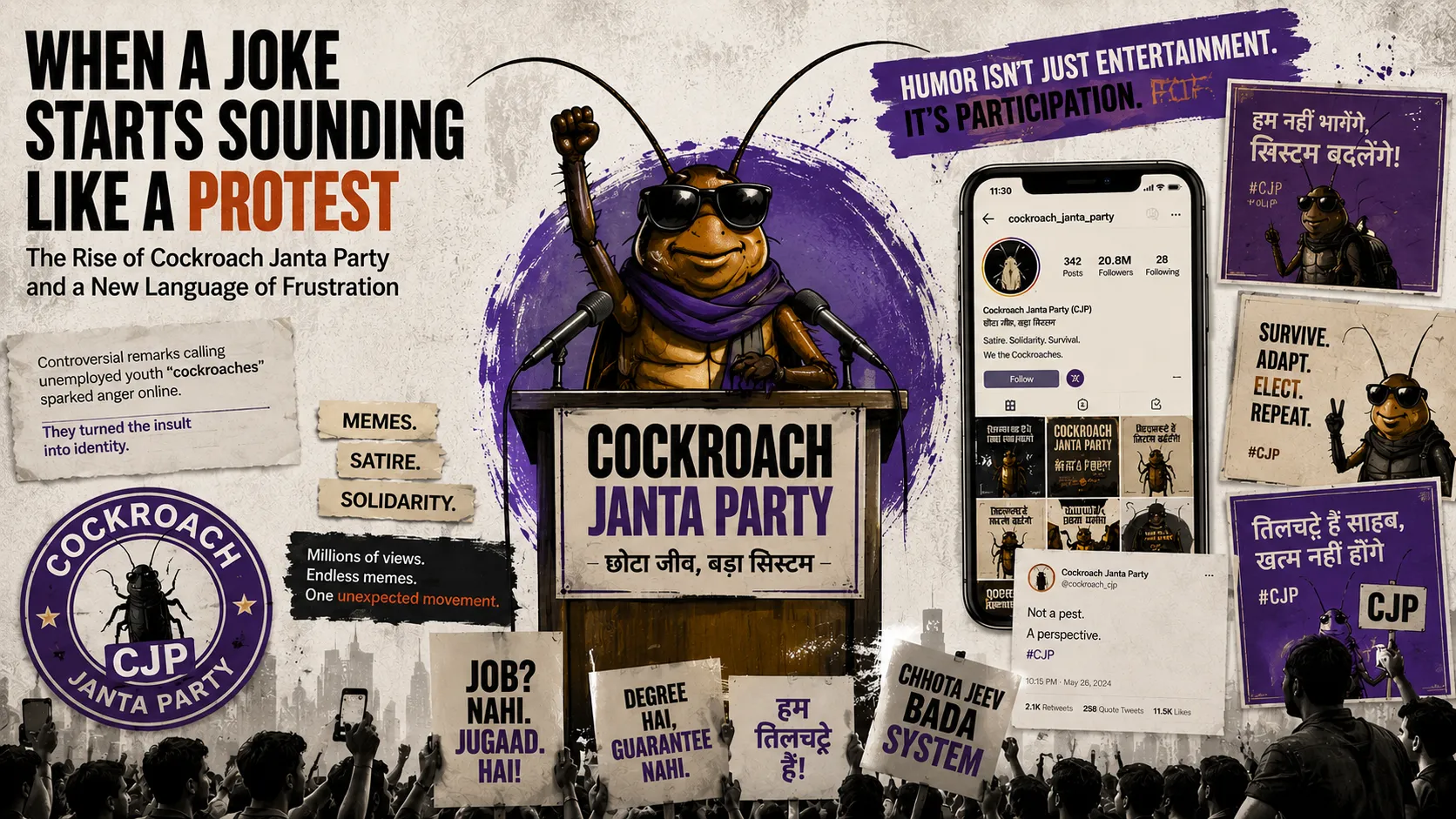
For years, public frustration in India often followed relatively familiar pathways. Anger surrounding unemployment, rising costs, competitive pressure and uncertainty frequently entered national conversations through protests, political commentary and headline-driven debates because traditional systems largely determined how dissatisfaction became visible. Younger generations certainly participated in these discussions, but many emotions often remained scattered across personal experiences, isolated social media posts and everyday conversations rather than gathering inside one recognizable space.
Then something unusual happened. A movement built around a cockroach suddenly began attracting millions of views, endless memes and enormous online participation. At first glance, the Cockroach Janta Party (CJP) looked like exactly the kind of internet phenomenon modern audiences frequently create and abandon within days strange, absurd and almost impossible to explain seriously. Its imagery felt ridiculous. Its language felt satirical. Its identity felt intentionally exaggerated. Yet beneath the humor, people increasingly appeared reacting to something much larger than a meme itself.
The movement reportedly emerged after controversial remarks comparing unemployed youth to "cockroaches" triggered anger online. But rather than responding through conventional outrage, creators behind the movement did something unexpectedly different: they embraced the insult itself. Instead of rejecting the label, they converted it into identity, satire and participation. What followed increasingly surprised observers. Millions began engaging. Pages rapidly expanded. Memes multiplied. Conversations spread. What initially looked like internet comedy suddenly started resembling something much harder to dismiss.
Viewed independently, Cockroach Janta Party may initially appear like another bizarre social-media trend destined to disappear once attention shifts elsewhere. Viewed through a broader impact lens, however, it increasingly raises a more uncomfortable question: what happens when humor becomes one of the only languages through which young people feel heard?
Historically, political expression often depended upon structure. Movements frequently required organizations, institutions and visible leadership before broader public participation followed. Protest itself frequently involved physical spaces because visibility often depended upon scale and coordination. Increasingly, however, internet culture appears changing those rules entirely. Younger communities increasingly organize through humor. Satire increasingly becomes participation. Memes increasingly become emotional shorthand. Irony increasingly becomes a way of saying serious things without sounding serious at all.
This shift increasingly matters because younger generations today frequently navigate pressures extending far beyond isolated political debates. Employment uncertainty, examination stress, rising living costs, delayed milestones and highly competitive environments increasingly continue shaping everyday experience. Much of that frustration frequently exists quietly beneath ordinary life. People continue studying, working and participating normally while carrying anxieties that rarely fit inside headlines. As a result, communities occasionally connect not around formal ideologies but around emotions they immediately recognize.
Perhaps that explains why a movement built around an insect unexpectedly began feeling relatable to so many people. Because sometimes people are not responding to symbols themselves. They are responding to recognition. They are responding to a feeling that someone translated a frustration they already carried into a language simple enough for millions of others to understand immediately.
And perhaps that is why this story increasingly feels larger than internet satire alone. Because history frequently shows that cultural shifts occasionally begin in forms people initially struggle to take seriously. Sometimes they begin through art. Sometimes through music. Sometimes through humor. And occasionally they begin through something as strange as a meme page built around a cockroach.
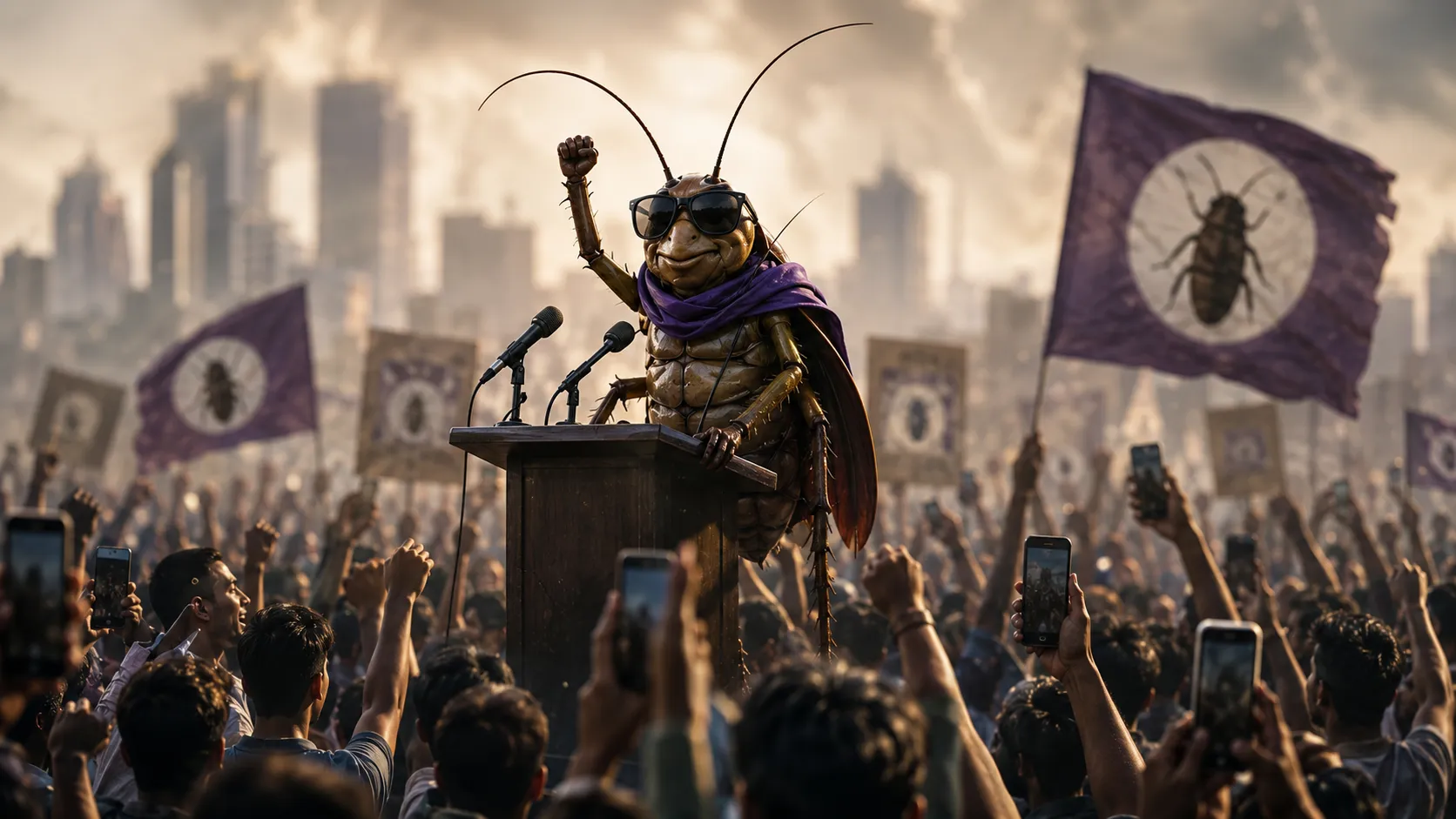
Another important dimension emerging beneath the Cockroach Janta Party phenomenon increasingly involves how internet communities themselves now behave during periods of uncertainty. Historically, social groups frequently formed around geography, institutions or physical environments because people often built shared identities through neighborhoods, workplaces and educational spaces. Increasingly, however, digital environments appear functioning differently. Online communities now frequently organize around emotion rather than proximity. Individuals who may never meet physically increasingly participate inside spaces built around common frustrations, humor and shared experiences. This shift increasingly matters because emotional participation often creates stronger momentum than formal organization itself. People frequently join movements not because they fully agree with every idea involved but because participation itself provides recognition. The broader significance increasingly suggests digital communities increasingly operate as emotional ecosystems where belonging itself occasionally becomes more important than structure.
Part of the fascination surrounding the movement also increasingly appears connected to changing ideas surrounding political language itself. Historically, political communication frequently depended upon seriousness because authority often appeared linked with structure, policy language and institutional tone. Public debates frequently followed recognizable formats where legitimacy itself depended upon appearing measured and formal. Increasingly, however, younger audiences appear responding differently. Online environments frequently reward relatability over structure and immediacy over formality. Satire increasingly functions as communication because humor often reduces distance between people and difficult realities. This transition increasingly matters because language itself frequently influences participation. Communities occasionally engage not because discussions become simpler but because conversations suddenly begin feeling accessible.
Another layer beneath this story increasingly involves the role algorithms now play in shaping collective attention. Historically, public conversations frequently moved through editors, television channels and institutional gatekeepers because these systems largely determined which narratives reached wider audiences. Increasingly, however, social platforms frequently amplify engagement itself rather than traditional authority structures. Humor, absurdity and emotionally resonant content frequently travel faster because platforms often reward interaction rather than institutional significance. As a result, movements occasionally achieve visibility through cultural momentum before traditional systems fully understand what is happening. The broader significance increasingly suggests visibility itself increasingly follows entirely different rules than previous generations experienced.
The movement also increasingly raises broader questions surrounding how younger people process disappointment and uncertainty itself. Historically, frustration frequently appeared through visible forms involving demonstrations, organized campaigns or collective action occurring through structured environments. Increasingly, however, digital generations frequently navigate uncertainty through highly different experiences involving constant comparison, online visibility and continuous exposure to information. Pressures involving careers, economic expectations and social mobility increasingly continue operating quietly beneath everyday life. Humor occasionally becomes an adaptive mechanism because satire frequently allows people to acknowledge difficult realities without feeling overwhelmed by them. This increasingly matters because emotional expression itself often changes across generations before institutions fully recognize those changes.
Perhaps the most interesting question beneath this entire phenomenon increasingly involves what happens next. Internet culture frequently creates moments that disappear as quickly as they emerge, yet occasionally certain ideas continue expanding because they touch realities already existing beneath the surface. Whether Cockroach Janta Party remains a temporary internet phenomenon or evolves into something larger may ultimately matter less than what its popularity already revealed. Millions of people do not suddenly participate in conversations simply because a symbol becomes funny. Participation frequently grows when symbols unexpectedly express emotions communities already carried long before they appeared online. The broader significance increasingly suggests that beneath memes, absurdity and satire, societies occasionally reveal truths that more formal conversations struggled to recognize first.
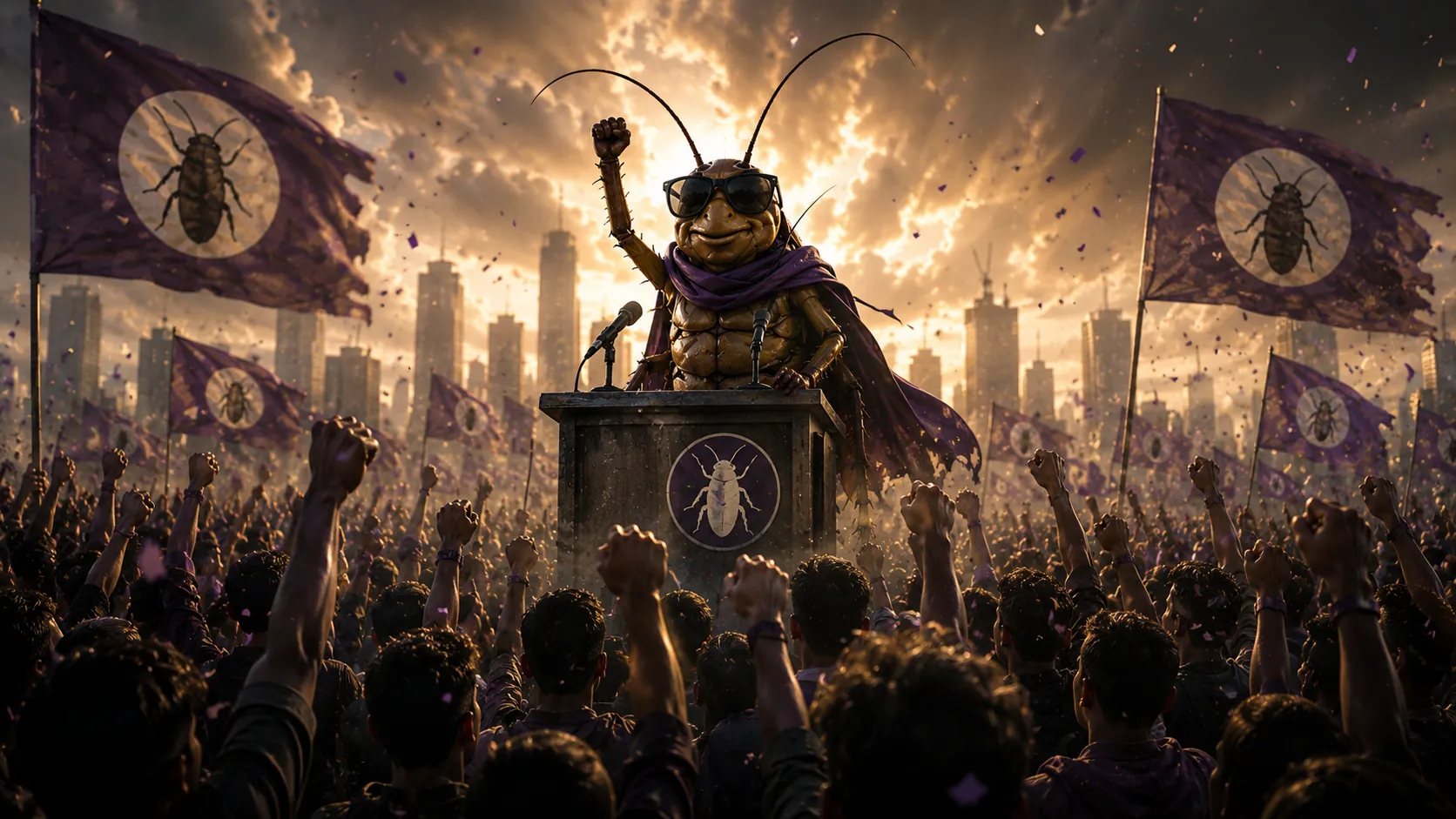
The larger impact story therefore may not simply involve viral posts or follower counts. Increasingly, it may involve recognizing that younger generations are changing not only what they say, but how they say it. Because in digital cultures where attention moves faster than institutions, jokes occasionally stop being jokes and quietly begin becoming social signals.