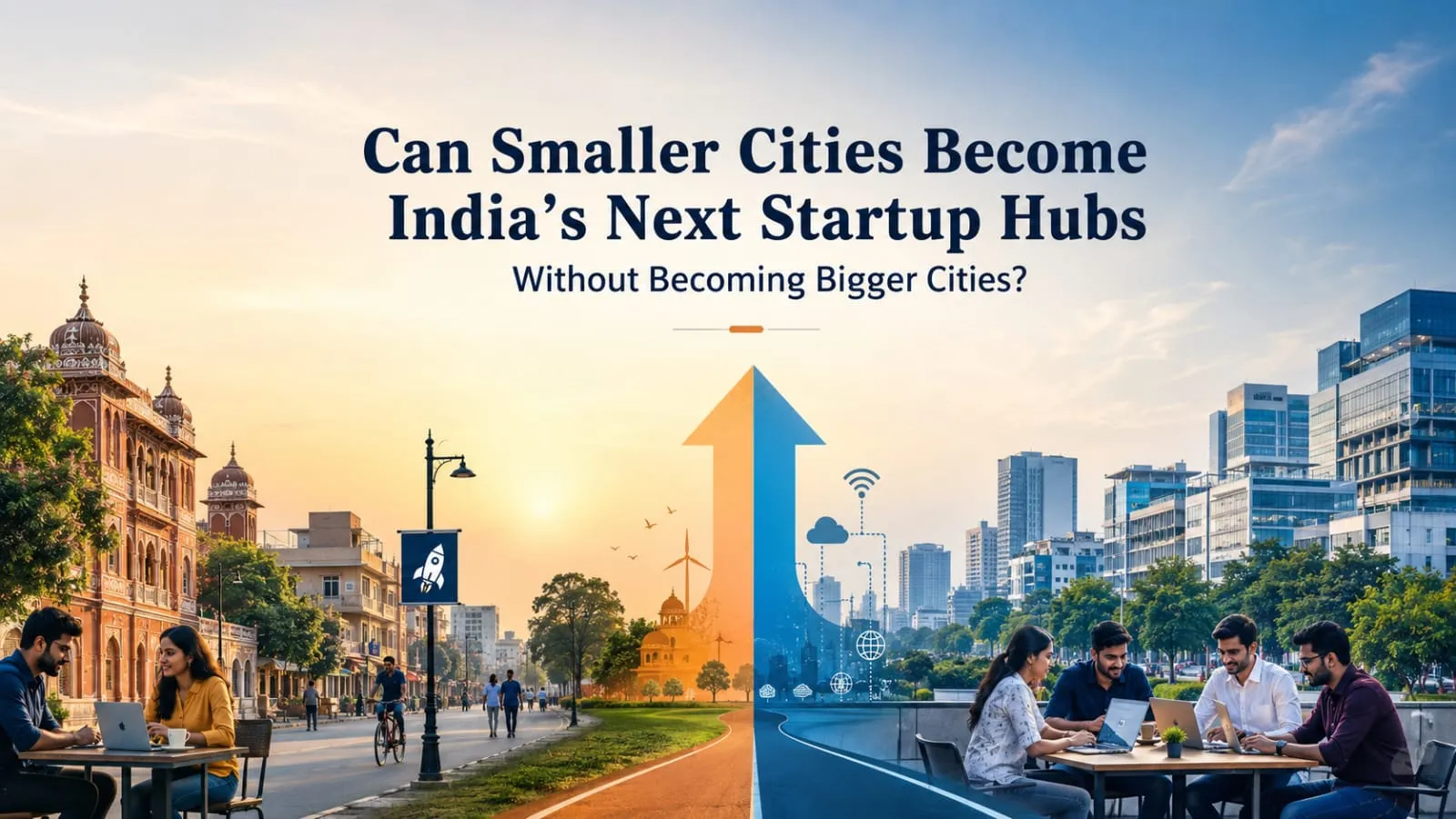
Why India’s Tier-2 Cities Are Building A Different Startup Story Instead Of Repeating Bengaluru Or Mumbai
For years, India’s startup map looked remarkably predictable. Bengaluru became the technology capital, Mumbai evolved into a financial and startup center, Hyderabad expanded through large technology ecosystems and Delhi-NCR developed into a major entrepreneurial corridor because talent, capital and infrastructure naturally clustered around a handful of large urban regions. Founders frequently moved toward metro cities because opportunity itself appeared concentrated there. For many entrepreneurs, relocating often felt less like a decision and more like a requirement because startup ecosystems traditionally followed density.
Something different now appears to be unfolding beneath that long-standing pattern. Across India, cities such as Indore, Jaipur, Kochi, Coimbatore, Surat, Bhubaneswar, Chandigarh and Ahmedabad are beginning to appear more frequently inside conversations surrounding entrepreneurship and technology. What initially looked like scattered startup activity is beginning to resemble a larger structural shift because smaller cities are gradually emerging as meaningful innovation ecosystems. The interesting part, however, is that these cities do not appear interested in becoming smaller versions of Bengaluru.
That distinction may ultimately define the entire story.
Viewed independently, startup growth across Tier-2 locations may initially resemble another phase of economic expansion. Viewed through a broader impact lens, however, another question begins surfacing beneath the headlines: can smaller cities become technology ecosystems without repeating the very urban problems larger startup hubs now struggle with? Because rapid success frequently creates its own challenges once growth itself begins reshaping cities faster than infrastructure can adapt.
For decades, startup ecosystems frequently depended on concentration because physical proximity created advantages difficult to replicate elsewhere. Founders benefited from investor networks, talent pools, educational institutions and ecosystem visibility because entrepreneurship often relied heavily upon relationships and access. Large cities naturally attracted momentum because opportunities frequently expanded where existing systems already operated at scale.
The digital economy quietly changed several of those assumptions. Remote collaboration, cloud infrastructure, distributed teams and creator-led professional networks have reduced dependence on geography because many businesses increasingly operate through systems no longer tied entirely to location. Startup founders today can build products, access customers and hire teams without remaining physically embedded within traditional technology corridors. Visibility itself increasingly behaves differently from previous entrepreneurial generations.
Lower operating costs have also become a major advantage for smaller cities. Office spaces, housing expenses and employee costs frequently remain significantly lower than metro environments because Tier-2 ecosystems operate under very different economic structures. Founders increasingly recognize that lower costs occasionally create longer runways because businesses spend less energy managing expensive urban overheads. In startup environments, sustainability frequently matters as much as growth itself.
But economics alone does not explain this transition.
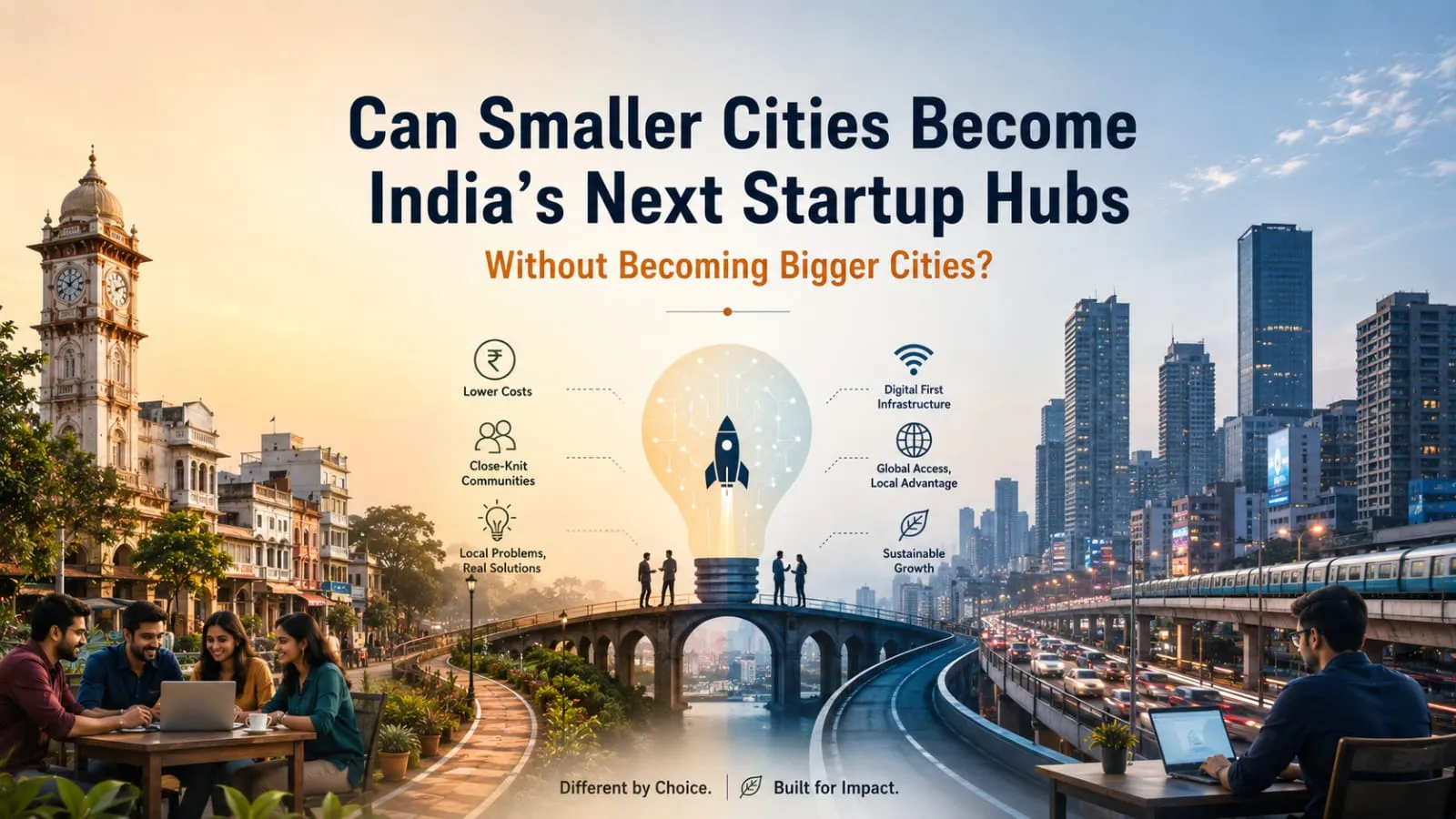
Another important force behind this shift involves problem-solving itself. Entrepreneurs frequently build stronger businesses when they understand local realities because proximity often creates insight. Smaller cities increasingly produce founders solving issues involving agriculture, logistics, regional commerce, education and healthcare because many entrepreneurs now build around environments they understand deeply. Instead of copying Silicon Valley playbooks, many startup ecosystems increasingly appear growing around regional realities.
This creates a very different entrepreneurial culture. Traditional startup hubs frequently rewarded scale and speed because investor expectations often favored rapid expansion and aggressive growth. Tier-2 ecosystems increasingly appear emphasizing practicality because many founders build around sustainability and local demand before expansion itself becomes the priority. The result occasionally creates businesses designed around long-term viability rather than visibility alone.
Another overlooked factor involves quality of life. Larger technology hubs increasingly struggle with congestion, expensive housing, long commute times and infrastructure pressure because urban expansion frequently creates unintended consequences. Smaller cities increasingly offer environments where professionals can access opportunities without sacrificing affordability and community. Younger founders increasingly appear asking whether growth necessarily requires adopting metropolitan lifestyles entirely.
Government initiatives and digital infrastructure have quietly accelerated this movement too. Startup incubators, innovation centers and local entrepreneurship programs are expanding because policymakers increasingly recognize that economic growth concentrated only around major metros creates imbalance. Broadband access and digital ecosystems continue reducing barriers because startup infrastructure increasingly extends beyond traditional urban boundaries.
Perhaps that explains why this conversation feels larger than startup geography. Because beneath discussions involving Tier-2 cities ultimately exists another reality involving development itself. India spent years building startup ecosystems around concentration because large cities frequently appeared like unavoidable destinations. A different possibility now appears emerging: perhaps opportunity itself no longer needs everyone moving toward the same places.
The larger impact story therefore may not simply involve smaller cities becoming startup hubs. It may involve recognizing that India’s next innovation chapter could emerge through places building differently rather than simply building bigger.