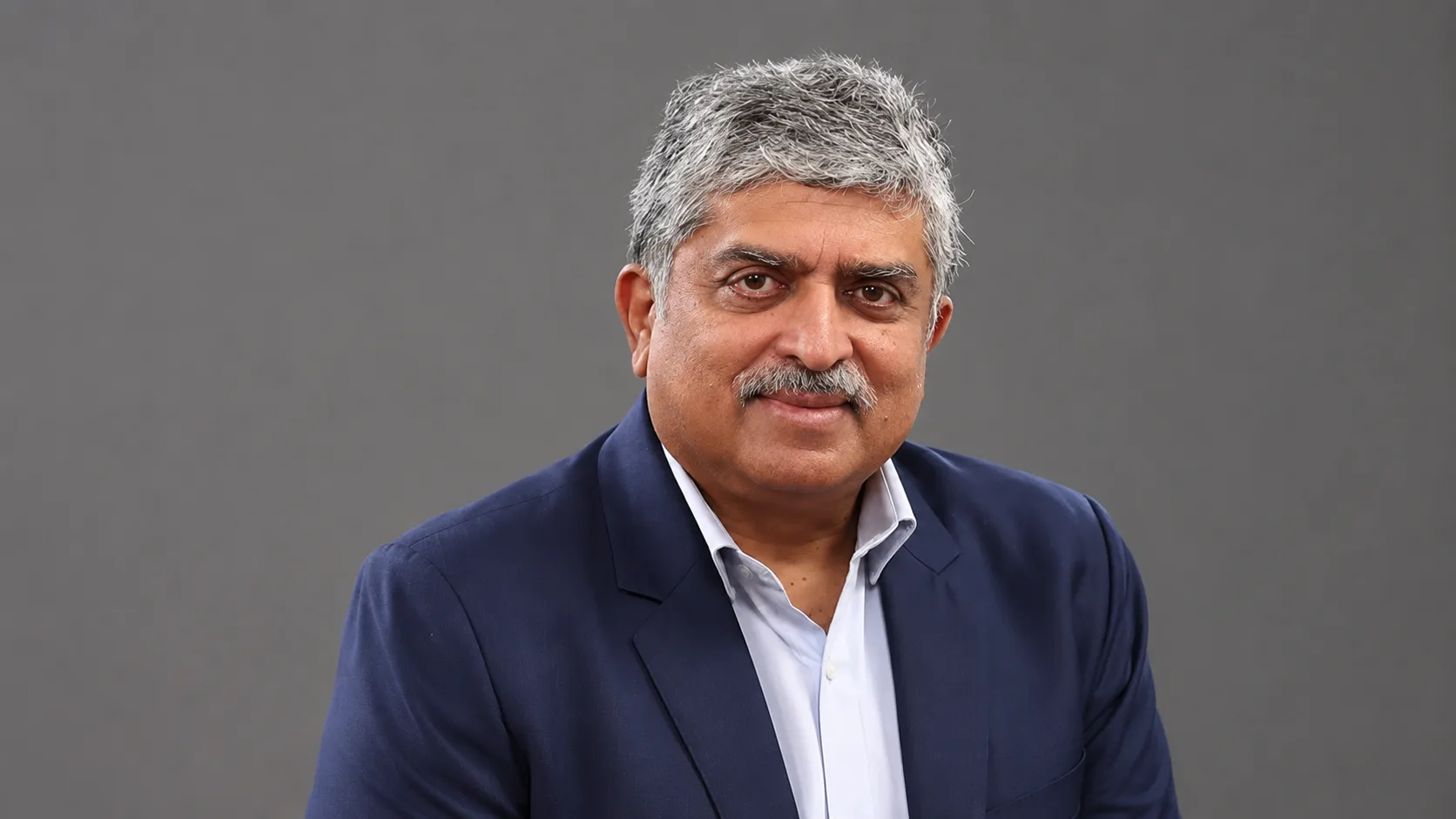
When the Prime Minister's Office wants a problem solved that involves scale, technology, and a system straining under the weight of hundreds of millions of users, there is a recurring name that gets called upon: Nandan Nilekani. The Infosys co-founder, who built his reputation first as one of the architects of India's IT services boom and then as the driving force behind the Aadhaar biometric identity programme, has now been asked to take on a new and arguably even more politically sensitive challenge — fixing the National Testing Agency and the broader examination ecosystem that has been rocked by a series of paper-leak controversies.
The task force, constituted under the Prime Minister's direct instruction, arrives at a moment of genuine crisis in public confidence around India's centralised examination systems. For a generation of students who sit for competitive examinations that determine access to medical colleges, engineering institutes, and a wide swathe of government jobs, the integrity of the testing process is not an abstract administrative concern — it is the difference between years of preparation paying off or being rendered meaningless by systemic failure.
A SYSTEM UNDER STRAIN
The National Testing Agency was established with a clear and, in principle, uncontroversial mandate: to conduct standardised, transparent, and merit-based entrance examinations for higher education institutions and various recruitment processes, replacing a previously fragmented landscape of multiple, inconsistent testing bodies. In theory, centralising this function should have improved consistency, reduced duplication of effort for students who previously had to appear for multiple, overlapping exams, and created economies of scale that could fund better security and administrative infrastructure.
In practice, the NTA has instead become a lightning rod for public frustration, following a string of incidents in which examination papers were allegedly leaked prior to test dates, raising serious questions about the security of question paper distribution, the vetting of examination centre staff, and the overall governance architecture surrounding what is, by any measure, one of the largest and highest-stakes testing operations in the world, given the sheer volume of candidates who sit for NTA-administered examinations each year.
The political and social fallout from these controversies has been significant. Students and parents' groups have staged protests, opposition parties have used the issue to question the government's competence in managing large-scale public systems, and there has been sustained media scrutiny of the specific mechanics of how papers were allegedly compromised — ranging from insider leaks at printing and distribution stages to more localised instances of malpractice at individual examination centres. Against this backdrop, the government's decision to bring in an outside figure with a strong technology and systems-design background, rather than relying solely on internal bureaucratic reform, signals an acknowledgment that the problem may be structural rather than merely a matter of individual misconduct.
WHY NILEKANI, SPECIFICALLY
Nilekani's selection is not without precedent, nor is it difficult to understand in the context of his career trajectory. His most consequential public-sector contribution prior to this assignment was his leadership of the Unique Identification Authority of India, the body responsible for building and rolling out Aadhaar — India's biometric identity system that today covers well over a billion residents and has become foundational infrastructure for everything from welfare benefit disbursal to banking know-your-customer processes to, increasingly, digital public services more broadly.
What made the Aadhaar project notable, beyond its sheer scale, was the specific approach Nilekani brought to it: a preference for building robust, decentralised technical architecture that could scale reliably, paired with a strong emphasis on security and fraud-prevention mechanisms built into the system's core design rather than bolted on as an afterthought. That combination — scale, security-by-design, and a systems-engineering mindset rather than a purely administrative one — is precisely what the examination reform challenge appears to call for.
Government officials familiar with the rationale behind the appointment have pointed to Nilekani's track record of translating complex, large-scale technical challenges into workable public infrastructure as the primary reason for entrusting him with this mandate, rather than leaving the reform process entirely to the existing bureaucratic structures within the Ministry of Education and the NTA itself.
WHAT THE TASK FORCE IS LIKELY TO EXAMINE
While the full terms of reference for the task force are still being finalised and details are expected to be made public in the coming weeks, the broad contours of what such a reform effort would need to address are not difficult to anticipate, given the nature of the problems that have been publicly documented. Question paper security is an obvious starting point — examining how papers are set, printed, transported, and distributed to examination centres, and identifying vulnerabilities at each stage of that chain where leaks or tampering could occur.
Equally important is the question of examination centre governance: how centres are selected, how staff are vetted and trained, and what real-time monitoring or auditing mechanisms exist to detect irregularities during the examination process itself rather than after the fact. Technology-enabled solutions — ranging from more sophisticated encryption and access-control systems for digital question banks to real-time surveillance and anomaly-detection systems at examination centres — are widely expected to feature prominently in whatever recommendations eventually emerge from the task force's work.
There is also likely to be scrutiny of the NTA's organisational structure itself: whether the agency has the staffing, technical expertise, and institutional independence required to manage an operation of this scale and sensitivity, or whether structural changes — potentially including a more decentralised model, enhanced oversight mechanisms, or a fundamentally redesigned technology stack for exam administration — are needed to restore public confidence over the medium term.
A related administrative development that has accompanied the task force's formation is the reported reassignment of Vineet Joshi, a senior official previously associated with the Higher Education Department, in what appears to be part of a broader administrative reshuffle tied to the reform push. While the precise scope of this personnel change and its relationship to the task force's mandate remains to be fully clarified through official channels, it is being read by observers as a signal that the government intends to pair the technical reform effort under Nilekani with parallel changes in the administrative leadership overseeing the examination ecosystem.
THE STAKES: WHY THIS MATTERS BEYOND EDUCATION POLICY
It would be a mistake to view this reform effort purely through the lens of education policy. The integrity of large-scale, centralised public examination systems touches on several dimensions of governance credibility that extend well beyond the immediate cohort of students affected by any single exam cycle. First, there is the question of social mobility and meritocracy: standardised entrance examinations are, for millions of Indian families, one of the primary mechanisms through which talent and hard work are meant to translate into access to higher education and career opportunities, regardless of socioeconomic background. When that mechanism is perceived to be compromised, it strikes at a foundational promise of the system — that effort and ability, not connections or corruption, determine outcomes.
Second, there is a broader governance credibility dimension. The National Testing Agency, as a relatively recent creation, was itself part of a push toward centralising and modernising public administrative functions. If that flagship centralisation effort is seen to have failed on the specific dimension of security and integrity, it could complicate the broader case for similar centralisation efforts across other areas of public administration, where the argument for consolidation typically rests on claims of improved efficiency, consistency, and — crucially — better governance than a fragmented, state-by-state or institution-by-institution approach would offer.
Third, there is a technology and innovation dimension that is likely to resonate particularly strongly given Nilekani's own background. India has, over the past decade, built a considerable reputation for developing large-scale digital public infrastructure — from Aadhaar itself to the Unified Payments Interface that has transformed digital payments, to various other components of what is often referred to as the "India Stack." A successful, technology-driven reform of the examination system would reinforce the narrative that India's digital public infrastructure model — building robust, scalable, security-conscious systems for public services — can be extended into new domains beyond identity and payments. A less successful outcome, conversely, would raise uncomfortable questions about the limits of that model when applied to a domain as socially and politically charged as high-stakes public examinations.
THE CHALLENGES AHEAD
Despite the optimism that typically accompanies any Nilekani-led initiative, given his considerable track record, this particular reform effort faces distinct challenges that differ meaningfully from the Aadhaar project. Aadhaar, while enormously complex from an engineering standpoint, was in some sense building a system from a relatively clean slate — there was no pre-existing, deeply entrenched biometric identity infrastructure that needed to be dismantled or reformed in place. The NTA reform effort, by contrast, involves modifying an already operational, high-stakes system in real time, without the luxury of pausing examination cycles while a new architecture is designed, tested, and rolled out.
This creates an inherent tension between the urgency of restoring public confidence quickly — given the ongoing political pressure and the anxiety of students and families awaiting the next examination cycle — and the more deliberate, iterative pace that robust systems engineering typically requires to avoid introducing new vulnerabilities while attempting to fix existing ones. How the task force navigates this tension, and whether it opts for a phased rollout of reforms versus a more comprehensive overhaul, will be closely watched by education policy analysts and technology observers alike.
There is also the question of institutional buy-in. Reform efforts of this nature often require cooperation not just from the central testing agency itself, but from state governments, individual educational institutions, examination centre operators, and a wide range of other stakeholders who may have varying degrees of enthusiasm for changes that could increase compliance burdens or reduce operational flexibility they have historically enjoyed. Building consensus across this fragmented stakeholder landscape, while maintaining the pace of reform that the political moment seems to demand, will require not just technical expertise but considerable diplomatic and coalition-building skill.
WHAT SUCCESS WOULD LOOK LIKE
Ultimately, the success of this initiative will likely be measured not by the sophistication of the task force's eventual recommendations on paper, but by tangible, verifiable outcomes in subsequent examination cycles: a demonstrable absence of leak incidents, transparent and rapid response mechanisms in the rare cases where irregularities do occur, and — perhaps most importantly — a restoration of public trust among the millions of students and families who depend on these examinations being conducted fairly.
For Nandan Nilekani personally, this assignment adds another chapter to a career that has increasingly blurred the line between private sector technology leadership and public sector systems reform. Whether this latest chapter becomes as celebrated as his role in the Aadhaar rollout, or becomes a cautionary tale about the limits of applying private-sector systems thinking to deeply entrenched public institutions, will depend on execution details that are only beginning to take shape. What is not in doubt is the scale of the challenge, nor the political stakes riding on its resolution.
THE STUDENT PERSPECTIVE: TRUST DEFICIT ON THE GROUND
Speak to students preparing for competitive examinations, or to the coaching institutes and parent communities that surround them, and a consistent theme emerges: exhaustion. Many aspirants spend years preparing for a single examination attempt, often relocating to coaching hubs, foregoing other opportunities, and placing enormous financial and emotional strain on their families in pursuit of a seat in a medical college or a premier engineering institute. When a paper-leak controversy surfaces, it is not merely an administrative embarrassment — it directly threatens to invalidate that multi-year investment of effort, forcing re-examinations, prolonged uncertainty, and, in some cases, litigation that can delay academic calendars by months.
This lived reality is precisely why the task force's work carries weight far beyond typical bureaucratic reform exercises. Any recommendations that emerge will be judged not by policy circles alone, but by an unusually engaged and vocal constituency of students, parents, and coaching institutes who have, over the past several examination cycles, demonstrated a willingness to mobilise publicly when they perceive the system to have failed them. That level of public engagement adds urgency to the task force's mandate, but it also raises the bar for what will be considered an acceptable, credible set of reforms.
A TEMPLATE FOR OTHER PUBLIC SYSTEMS?
If the Nilekani-led task force does succeed in meaningfully reducing the incidence of examination malpractice while maintaining the scale and accessibility benefits that centralisation was originally meant to deliver, the resulting framework could plausibly serve as a template for other high-stakes public systems facing similar integrity challenges — from professional licensing examinations to recruitment processes for various government services. In that sense, while the immediate mandate is narrowly focused on the National Testing Agency, the broader implications of this reform effort could extend well into how India approaches the security and governance of large-scale public assessment systems more generally in the years ahead.