
For much of India’s digital banking journey, the conversation around financial inclusion centered on access. Policymakers focused on opening bank accounts, expanding branch networks and building digital infrastructure capable of connecting millions of people to formal financial systems. Over time, programmes linked to Jan Dhan, Aadhaar and UPI dramatically expanded participation and transformed how banking services reached users across the country. By scale alone, India’s financial infrastructure story became one of the most significant digital inclusion efforts globally. Yet as banking systems increasingly move toward app-based platforms and intelligent technologies, a more complicated challenge is beginning to emerge. Access alone may no longer guarantee participation. Increasingly, the question is becoming whether people can comfortably interact with the systems designed to serve them.
That distinction matters because digital inclusion and usable inclusion increasingly appear to be very different realities. Millions of people may technically possess bank accounts and digital access, yet navigating financial systems can remain difficult for users less familiar with technology interfaces, standardized communication structures or English-language applications. Smaller communities frequently encounter challenges extending beyond internet connectivity itself. Elderly users, first-generation digital banking participants and regional-language speakers often experience barriers that traditional infrastructure expansion alone cannot solve. The challenge increasingly involves reducing friction and making systems feel intuitive enough to become part of everyday financial life.
Kerala’s Broader Digital Ecosystem Is Creating New Questions
Within that broader conversation, Kerala has increasingly emerged as an important setting for discussions involving artificial intelligence and inclusive digital systems. The state’s technology initiatives and AI ecosystem have increasingly emphasized applications tied not only to innovation but also to accessibility and public impact. Conversations emerging from regional AI discussions increasingly suggest a growing interest in understanding whether artificial intelligence can reduce barriers between technology systems and underserved populations.
Unlike many technology narratives focused exclusively on automation or productivity, several discussions within Kerala’s digital ecosystem increasingly frame AI through a social lens. The emphasis involves exploring whether technology can simplify interactions, improve usability and create systems that respond more naturally to diverse user needs. Financial inclusion increasingly appears to be part of that conversation because banking often represents one of the most important ways people interact with digital systems.
Kerala’s demographic profile also creates a particularly interesting context. The state combines relatively strong literacy and digital adoption with significant regional diversity, aging populations and extensive rural and cooperative banking networks. Communities often include users with very different experiences around technology and financial participation. As a result, accessibility itself increasingly becomes a practical concern rather than simply a design preference.
Banking BHASHINI May Signal Where Financial Systems Are Heading
One of the strongest indications surrounding this broader shift emerged through recent initiatives involving the Reserve Bank of India and the Digital India BHASHINI Division. Earlier this year, institutions began discussions around Banking BHASHINI, a multilingual language model intended to support communication across India’s banking ecosystem.
The larger objective extends beyond translation. Banking systems increasingly serve users communicating through dozens of languages and dialects. Traditional digital interfaces frequently require users to adapt themselves around technology structures. AI-enabled language systems increasingly introduce a different possibility by allowing technology to adapt around users instead.
For smaller communities, the implications may prove meaningful. Systems capable of understanding regional language interactions, supporting conversational banking requests and simplifying communication could gradually reduce barriers affecting participation. Rather than requiring users to navigate unfamiliar interfaces, future systems may increasingly interpret natural communication patterns directly.
Why Smaller Communities Experience Banking Differently
The realities surrounding banking often differ significantly outside major urban centers.
Across smaller communities, financial relationships historically developed through direct human interaction. Local branches, in-person support and community familiarity frequently created confidence around banking participation. For many individuals, trust evolved through relationships as much as technology.
As banking increasingly shifts toward digital systems, preserving that sense of familiarity becomes increasingly important. Technology systems may create efficiency, but participation often depends on whether users feel comfortable using them.
Artificial intelligence increasingly introduces possibilities around recreating some of those experiences digitally. Voice interfaces, conversational systems and personalized interactions could eventually create more familiar pathways around financial services.For first-generation digital users especially, that distinction could influence adoption itself.
Voice-Based AI Could Become Banking’s Next Accessibility Layer
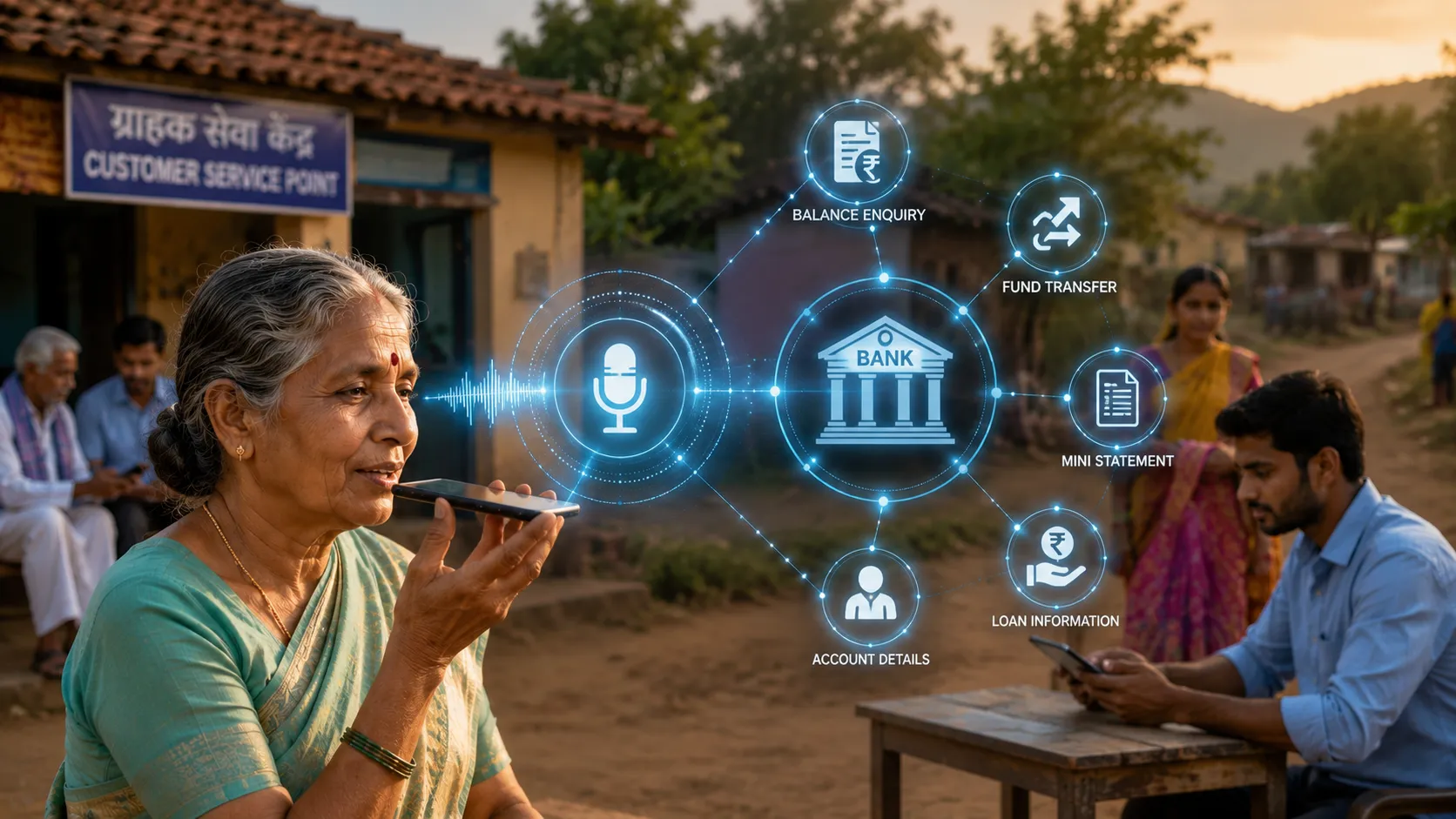
Several industry observers increasingly suggest the next major shift in digital banking may involve voice-enabled systems rather than interface redesign alone.
Historically, technology platforms required users to understand navigation structures and digital workflows. Artificial intelligence introduces a different possibility where systems increasingly understand natural communication patterns.The implications become especially significant across multilingual markets such as India. Voice systems capable of understanding regional languages and conversational patterns may reduce barriers surrounding literacy, interface familiarity and technology confidence.Instead of asking users to learn banking platforms, future systems may increasingly learn how users communicate.
That shift may ultimately become more transformative than digitization itself.
Financial Inclusion May Enter a New Phase
Historically, inclusion often focused on expanding access points.More branches.More accounts.More infrastructure.Artificial intelligence may gradually create a different chapter.Increasingly, inclusion may involve reducing complexity and creating systems capable of responding more naturally to people.Because financial systems ultimately depend on trust.And trust frequently begins when people feel understood.
The larger lesson emerging from Kerala’s broader AI conversations may therefore extend beyond technology itself.The future of inclusion may not simply involve bringing people into digital systems.Increasingly, it may involve building digital systems capable of understanding people first.