A Water Filter Campaign That Initially Looked Ridiculous Quietly Became A Bigger Story About How Attention Works In 2026
For years, legacy-brand marketing frequently followed a relatively familiar formula. Established companies often relied on consistency, category trust and carefully controlled messaging because longevity itself frequently represented credibility. Businesses built over decades frequently protected brand identity through highly structured campaigns, polished creative systems and predictable communication because consumers historically associated stability with reliability. As a result, many long-standing brands gradually entered digital environments believing that authority itself would naturally translate into continued relevance.
Yet beneath that traditional marketing logic, another transition increasingly appears unfolding. Across social platforms and younger audiences, attention increasingly seems operating according to entirely different rules because people frequently consume content inside ecosystems built around creators, memes and algorithmic discovery rather than traditional advertising systems. Content increasingly competes not simply with other advertisements but with internet culture itself. What initially looked like changing platform behavior increasingly resembles a broader shift involving how visibility itself increasingly functions.

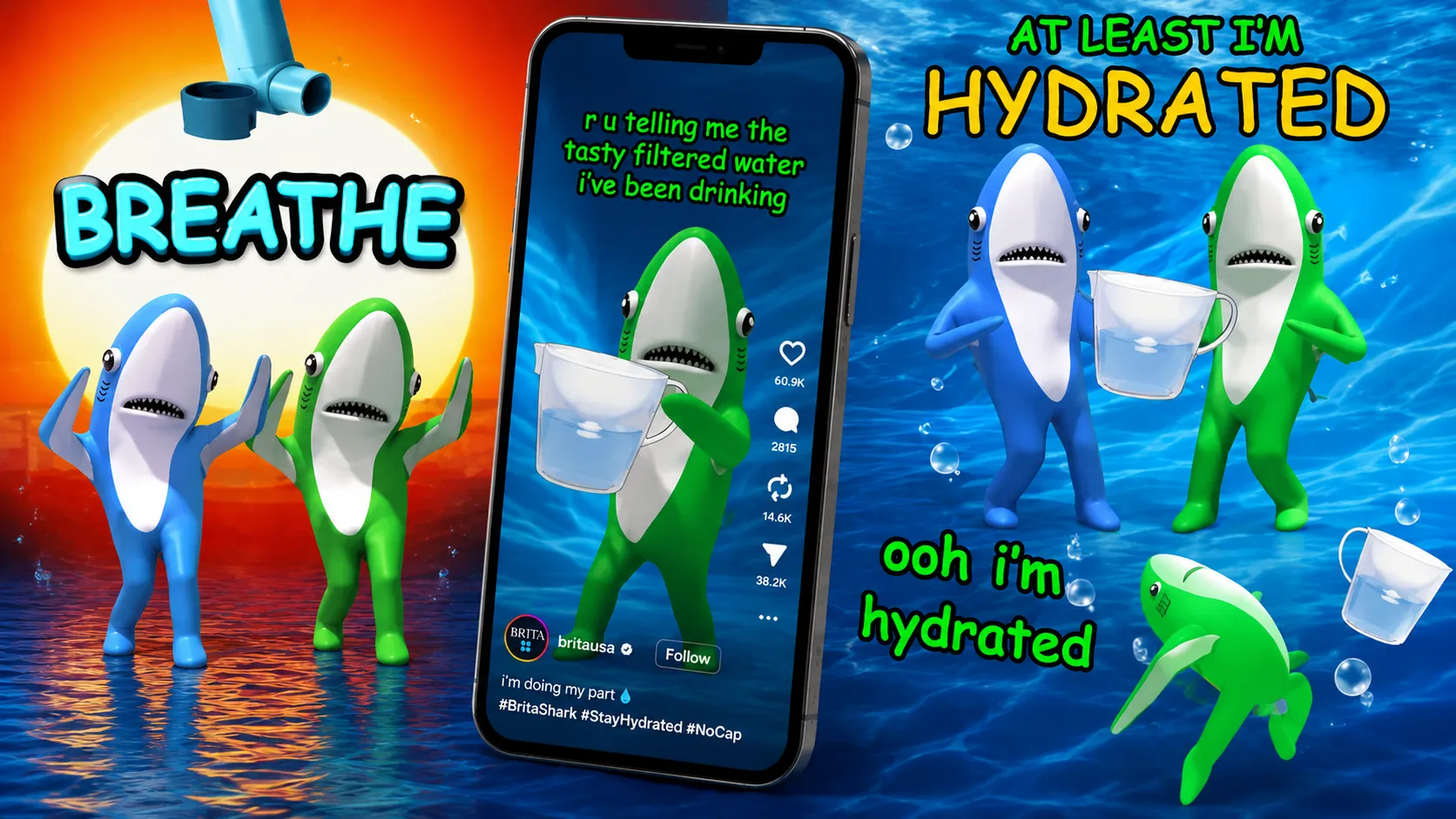
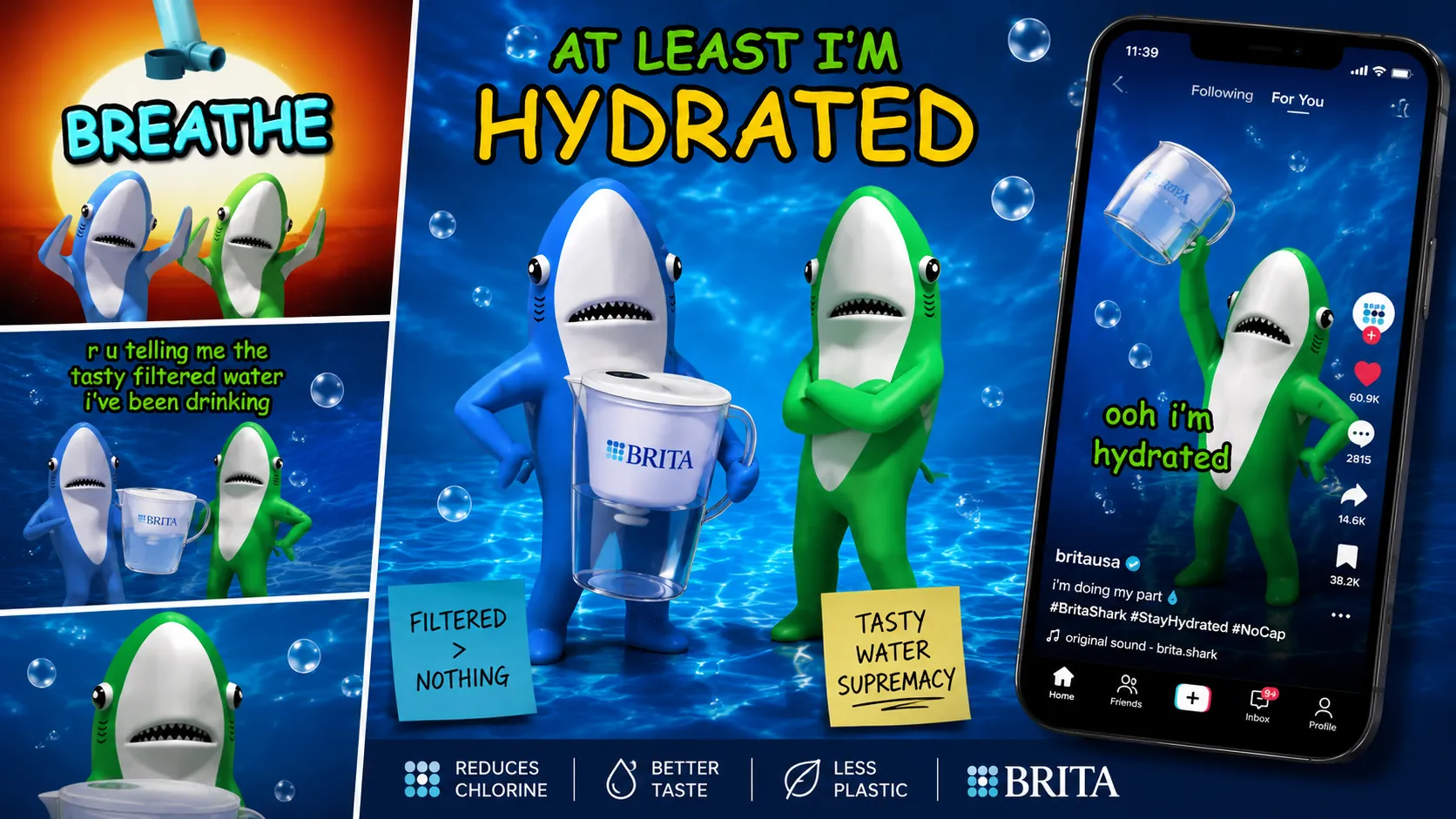
That broader transition unexpectedly became visible through Brita’s bizarre cartoon shark campaign, an intentionally chaotic and highly internet-native character that appeared dramatically different from traditional household-product marketing. Rather than presenting purified water through polished family environments or idealized lifestyle imagery, the brand reportedly leaned into absurdity and internet-style humor. The campaign initially felt strange, almost irrational and intentionally difficult to categorize. Yet that unpredictability increasingly became part of the appeal because audiences frequently responded not by treating it like advertising but by treating it like content.
Viewed independently, an unhinged cartoon shark may initially appear like another social-media experiment designed to chase younger audiences. Viewed through a broader impact lens, however, it increasingly raises a larger question: why are older brands increasingly acting less like corporations and more like internet personalities?
Historically, brands frequently communicated through authority because companies often controlled narratives and audiences primarily consumed messages passively. Advertising frequently depended upon interruption because visibility itself frequently represented advantage. Television campaigns entered people’s attention through dedicated spaces while businesses frequently built relevance through repetition and scale. Consumers frequently encountered brands occasionally rather than continuously.
Increasingly, however, digital environments increasingly appear functioning differently. Consumers frequently live inside content ecosystems where creators, communities and everyday users compete simultaneously for attention. Algorithms increasingly reward emotional response rather than institutional authority because platforms themselves frequently prioritize interaction. As a result, brands increasingly appear entering environments where behaving predictably occasionally becomes disadvantageous.
This distinction increasingly matters because younger audiences frequently possess highly developed advertising filters. Having grown up inside ecosystems saturated with sponsorships, product placements and endless content, many consumers increasingly recognize conventional marketing structures instantly. Polished campaigns frequently risk appearing invisible because audiences frequently continue scrolling before messaging itself fully arrives. Increasingly, unfamiliarity frequently creates stronger interruption than perfection.
Lesson One: Stop Looking Like An Advertisement Before People Scroll Away
Historically, marketing frequently depended upon immediate brand recognition because companies often attempted making advertisements visually obvious. Logos remained highly visible, product shots frequently dominated frames and communication itself frequently emphasized clarity because traditional systems rewarded recognizability.
Increasingly, however, recognizability frequently appears functioning differently online. Younger audiences increasingly continue interacting with content feeds where highly visible promotional structures frequently trigger avoidance. Rather than asking whether something appears professional, people increasingly appear asking whether something feels native to environments where they spend time.
Brita’s unusual shark reportedly worked partly because it initially felt difficult to categorize. It did not immediately communicate itself like a traditional product campaign. Instead, audiences frequently encountered something unexpected first and marketing second. That distinction increasingly matters because attention frequently follows curiosity before explanation.
The broader significance increasingly suggests many brands frequently lose people before messages even begin because consumers increasingly decide what to ignore within seconds.
Lesson Two: Internet Culture Increasingly Rewards Participation Rather Than Broadcasting
Part of what makes modern digital behavior particularly significant increasingly involves how audiences themselves interact with content. Historically, advertising frequently operated through one-directional structures because companies created campaigns while audiences primarily consumed them. Communication itself frequently moved outward because visibility depended upon reach.
Increasingly, however, participation increasingly appears becoming more powerful than exposure. Audiences increasingly remix content, create reactions and extend stories beyond original campaigns because internet culture frequently behaves collaboratively rather than passively. Consumers increasingly appear participating in moments rather than simply watching them.
This transition increasingly matters because content increasingly succeeds once audiences themselves begin carrying distribution. Campaigns frequently become stronger once people reinterpret them through communities and conversation rather than advertisements alone. The broader significance increasingly suggests businesses increasingly may need to create environments people want to join rather than campaigns people merely watch.
Lesson Three: Weirdness Increasingly Appears Becoming A Competitive Advantage
Historically, large brands frequently minimized unpredictability because consistency often represented trust. Marketing environments frequently prioritized broad appeal because businesses frequently attempted avoiding risk and misunderstanding. As a result, many campaigns increasingly began resembling one another because safety frequently created similarity.
Increasingly, however, digital culture increasingly appears rewarding distinctiveness. Strange ideas increasingly create stronger interruption because familiarity itself frequently blends together online. Consumers frequently remember highly specific experiences because unusual moments naturally create stronger recall than polished repetition.
Brita’s cartoon shark increasingly reflects this broader reality because absurdity itself frequently became part of visibility. The character reportedly succeeded not because it appeared rational but because audiences frequently could not ignore it. This increasingly matters because memorability itself frequently becomes scarce once content environments become saturated.
The broader significance increasingly suggests businesses increasingly compete less against category rivals and more against the endless sameness surrounding digital attention itself.
Lesson Four: Legacy Brands Increasingly Need To Behave Like Cultural Participants
Another important dimension emerging beneath stories like this increasingly involves assumptions surrounding relevance itself. Historically, established businesses frequently relied upon history because trust often developed through familiarity and long-term recognition. Longevity itself frequently represented advantage because people associated established names with credibility.
Increasingly, however, cultural relevance increasingly appears requiring continuous participation. Younger consumers frequently interact with brands not through advertisements alone but through communities, creators and digital environments operating continuously. Attention increasingly behaves like conversation rather than announcement.
This broader transition increasingly matters because companies increasingly appear functioning inside culture rather than outside it. Businesses frequently cannot simply observe internet behavior from institutional distance because audiences increasingly expect participation itself. The broader significance increasingly suggests relevance increasingly depends less upon history and more upon whether brands continue understanding where people already spend attention.
The Bigger Story May Not Be About A Cartoon Shark At All
Perhaps that explains why Brita’s campaign increasingly feels larger than one strange social-media experiment. Because beneath conversations involving animated characters and Gen Z marketing ultimately exists another reality involving institutional adaptation itself. Historically, businesses frequently succeeded by creating authority and maintaining consistency.
Increasingly, however, environments frequently reward flexibility, experimentation and participation because audiences increasingly appear responding differently from earlier generations. Legacy itself increasingly creates trust, yet trust alone frequently does not create attention. Attention increasingly appears earned through relevance itself.
The larger impact story therefore may not simply involve Brita creating one bizarre campaign or reaching younger audiences successfully. Increasingly, it may involve recognizing that many older businesses increasingly face the same challenge: learning how to participate inside internet culture without appearing like outsiders attempting to imitate it.