
His Name Was Sansão. He Survived Without His Legs. And He Changed Brazilian Law Forever.
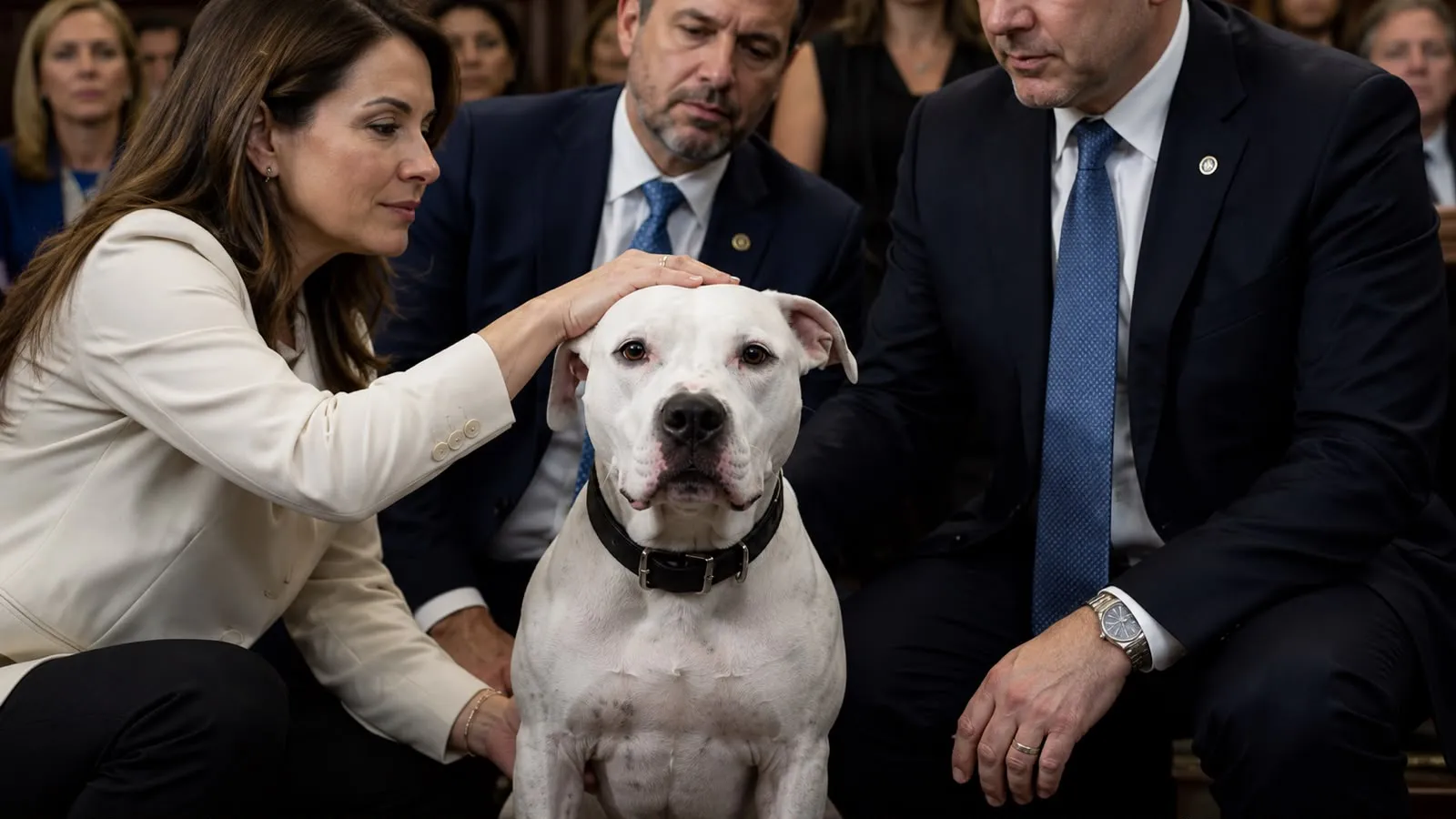
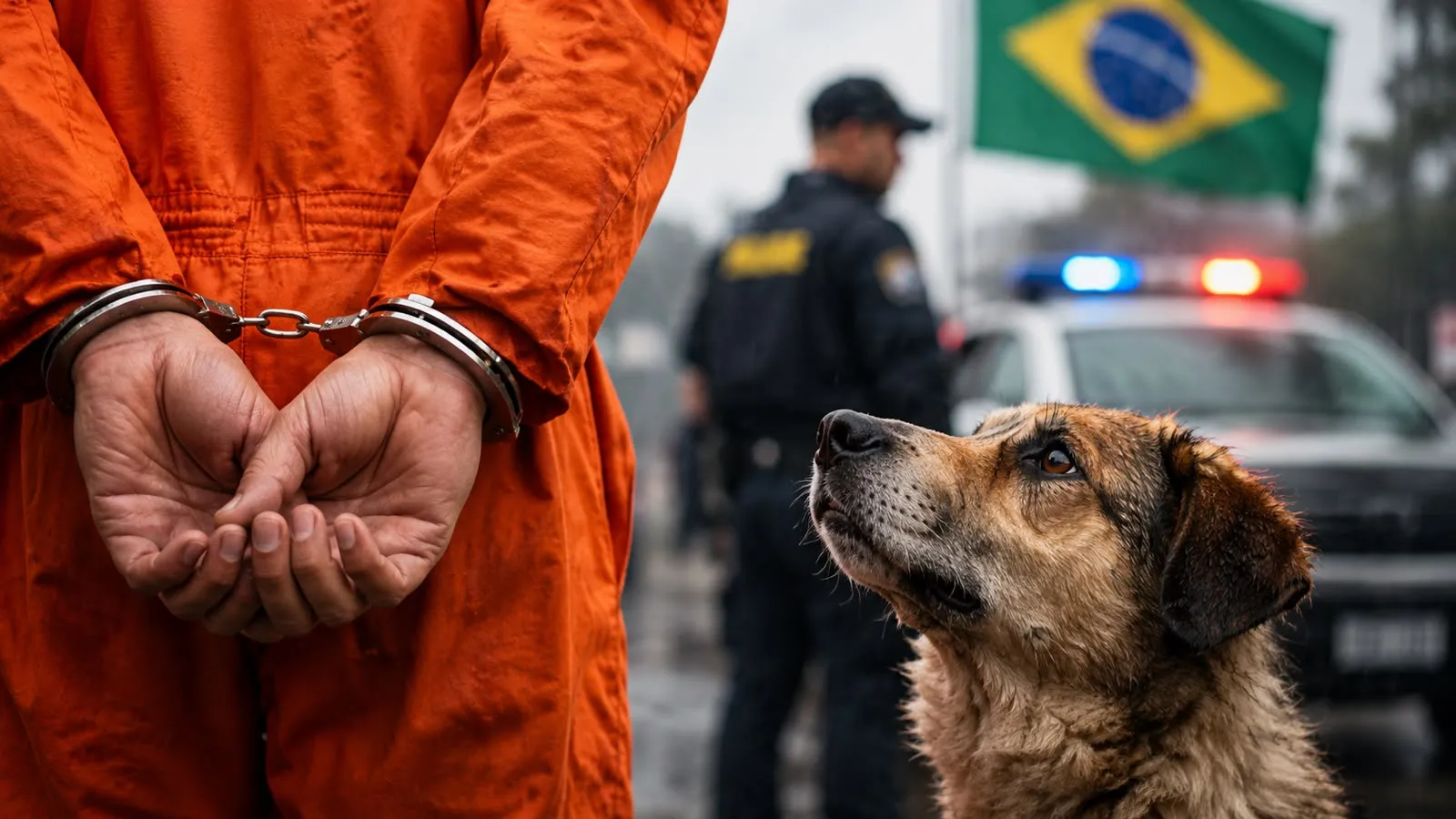
On July 6, 2020, in Brazil, two men took a sickle to a two-year-old pit bull and severed both of his hind legs. The dog survived. His name was Sansão — Samson in Portuguese, the biblical figure whose strength was taken from him. Both suspects were arrested.
And then something happened that Brazilian animal welfare advocates had been trying to make happen for years: the country moved with unusual legislative speed.
Within weeks of the Sansão case going viral across Brazilian social media, the National Congress passed legislation that fundamentally changed how Brazilian law treats violence against companion animals. President Jair Bolsonaro signed the bill into law on September 29, 2020. The legislation — Federal Law No. 14.064/2020, known from that day forward as the Lei Sansão — amended Article 32 of Brazil's Environmental Crimes Law (Federal Law No. 9.605/1998) by adding paragraph §1-A: a specific provision for crimes against dogs and cats, increasing the prison sentence from the prior maximum of one year to two to five years of imprisonment, alongside fines and a permanent prohibition on the convicted person keeping animals.
A dog lost his legs. A country changed its law. The dog gave his name to the change.
What the Law Actually Says — and What It Added
Before Sansão, Brazilian animal protection law rested primarily on Article 32 of the 1998 Environmental Crimes Law, which prohibited the abuse, mistreatment, injury, or mutilation of wild, domestic, or exotic animals. The penalty was three months to one year of imprisonment and fines. For animals outside the dog and cat category, that remains the penalty today.
The Lei Sansão created a specific, elevated legal category for companion animals. The new paragraph §1-A establishes that when the victim of animal abuse is a dog or cat specifically, the imprisonment penalty escalates dramatically — from up to one year under the general provision to a minimum of two years and a maximum of five years. The law also adds fines and the guardianship prohibition, which means a convicted person cannot legally keep animals — a critical enforcement tool for repeat offenders who previously received fines and returned home to continue abusing animals.
A subsequent legal development added paragraph §1-B, which bans cosmetic tattoos and piercings on dogs and cats and classifies them as abuse under the same elevated penalty framework. This provision, enacted in 2025 after several years of debate, addressed a specific and growing problem: the practice of putting permanent tattoos and body piercings on companion animals for aesthetic purposes, requiring anaesthesia, needles, and procedures that veterinary boards testified cause infection, chronic pain, and behavioural trauma — all for social media content.
Cosmetic tattooing or piercing a companion animal is now a crime on par with mutilation in Brazil, punishable by up to five years in prison, steep fines, and loss of custody. The practices are legally defined as abuse. The law is unambiguous.
Brazil's animal protection framework now also includes the broader constitutional provision of Article 225 of the 1988 Federal Constitution, which explicitly bans practices that subject animals to cruelty, giving animal welfare a constitutional foundation that most countries do not have. Ear cropping and tail docking — cosmetic surgical procedures that remain legal in many countries — are prohibited in Brazil as unnecessary under CFMV Resolution No. 877/2008 from the Federal Council of Veterinary Medicine, and classified as environmental crimes under the same legal framework.
Why a Pit Bull Named Sansão Changed What Years of Advocacy Had Not
The legislative response to the Sansão case was fast by Brazilian congressional standards — and the speed reveals something important about how animal welfare law changes in practice, rather than in theory.
Animal welfare advocates in Brazil had been pushing for increased penalties for companion animal abuse for years before 2020. The arguments were consistent: the prior maximum of one year was manifestly inadequate for what was actually happening to animals, judges were frequently substituting community service for imprisonment even under the existing law, and the absence of a guardianship prohibition meant that convicted abusers could legally continue keeping animals.
None of that advocacy had produced the legislative movement that a single viral case generated in weeks.
This is not unique to Brazil. Animal cruelty legislation in many countries has moved fastest when a specific, photogenic, named animal case generates public outrage that creates political pressure that converts years of stalled advocacy into swift action. In the United States, Michael Vick's dogfighting prosecution in 2007 accelerated state-level animal cruelty law reform. In the United Kingdom, the case of Baby the dog — beaten and left for dead in 2013 — contributed to the campaign that eventually produced the Animal Welfare (Sentencing) Act 2021, which increased maximum sentences from six months to five years.
Sansão was Brazil's moment. The difference is that Brazil's moment happened faster, with broader political consensus, and at the federal level — producing a national law with immediate effect, rather than a patchwork of state-level reforms.
The Enforcement Gap: Where the Law Ends and Reality Begins
Here is where the story becomes more complicated — and more important.
The Lei Sansão exists. The penalties are clear. The constitutional protection is in place. And Brazil rates an "F" on the Voiceless Animal Cruelty Index — a comprehensive assessment of animal welfare across legal frameworks, enforcement, and practice.
The distance between those two facts is the enforcement gap, and it has been documented in specific and painful detail throughout 2025 and 2026.
In January 2026, a ten-year-old community dog named Orelha — beloved in the neighbourhood of Praia do Forte in Florianópolis — was brutally beaten. He suffered severe cranial trauma and had to be euthanised. The investigation identified a 17-year-old as the primary aggressor. Three adults, including relatives and a lawyer, were indicted for witness tampering and attempting to silence witnesses. As of late January 2026, the case remained in the investigative phase — no convictions, and a community left demanding that the investigation not be obstructed by the accused's apparent social connections and resources.
The Orelha case is not an outlier. A Change.in petition demanding increased enforcement documented a pattern: Manchinha, beaten and poisoned by a security guard in a Carrefour supermarket in 2018; the Brotas Buffaloes case in 2021, where over 1,000 animals were left to starve on a farm, exposing the absence of oversight in mass cruelty cases; Joca, a dog who died in 2024-2025 due to corporate negligence during air travel; Abacate, a community dog executed with a gunshot in Toledo, Paraná in 2026.
"Despite legislative improvements, most notably the 2020 Lei Sansão, enforcement remains inadequate," writer Juliana W. documented on Medium in an account of the Orelha case. "Article 32 of the Environmental Crimes Law establishes criminal penalties for abuse, mistreatment, injury, or mutilation of domestic or wild animals, but the 2020 amendment specifically hardened consequences for crimes against companion animals... Yet theory and practice diverge dramatically."
The divergence is structural. Enforcement relies on municipal animal control services, which are frequently underfunded. Investigations require prosecutors' offices to prioritise animal cruelty cases against a backdrop of competing demands. Convictions require that courts treat the elevated penalties as the floor they are legally meant to be rather than as ceilings to be avoided through plea bargaining and penalty substitution. And when perpetrators come from wealthy or influential backgrounds, the Orelha case suggests, the risk of obstruction and delay is significant.
Brazil is home to an estimated 30 million stray dogs and cats concentrated in cities like São Paulo and Rio de Janeiro, where densities can exceed 200 strays per 1,000 residents in some favelas. The scale of potential animal cruelty cases vastly exceeds the enforcement capacity of the system designed to respond to them.
The Tension That Makes the Law More Complicated
Brazil's animal welfare situation sits inside a specific and uncomfortable tension that the Lei Sansão alone cannot resolve.
On one side: Brazil is a country with approximately 160 million companion animals — nearly one for every resident, one of the largest pet populations in the world. It has some of the strongest animal protection law on paper in Latin America, including constitutional protection, felony-level penalties for companion animal abuse, and bans on cosmetic procedures that remain legal in many more affluent countries. Its pet economy is valued at approximately R$60 billion annually.
On the other side: Brazil is the world's largest beef exporter and a top global poultry producer. It has a cattle herd of nearly 250 million animals, a poultry population exceeding 1.5 billion, and an industrial agricultural sector where welfare standards and enforcement are, by the documented assessment of independent auditors and NGOs, substantially weaker than the companion animal framework. A 2021 report by the Fórum Nacional de Proteção e Defesa Animal documented over 500 undeclared slaughterhouse violations in self-certified facilities.
The law that protects Sansão does not protect the cattle. The outrage that drives enforcement for companion animal cases does not transfer to industrial settings. This is not a uniquely Brazilian contradiction — most countries with strong companion animal protection laws have weak farm animal welfare frameworks — but in Brazil the scale of the contrast is particularly stark.
What the Law Has Changed — and What It Represents
It would be a mistake to conclude from the enforcement gap that the Lei Sansão has accomplished nothing. It has accomplished something specific and durable: it has changed the legal status of companion animals in Brazil from property whose mistreatment is a misdemeanour to living beings whose abuse is a felony.
That change matters symbolically and practically. Symbolically, it places Brazil's legal treatment of dogs and cats alongside the most protective frameworks in the world. Practically, it gives prosecutors and judges a legal foundation for serious consequences that did not previously exist — meaning that in cases where the political will to prosecute exists and the evidence is strong, the outcome can now be proportionate to the harm.
The cosmetic tattoo and piercing ban is a further extension of the same logic: that aesthetic practices which cause physical suffering to companion animals are not a matter of owner preference but a legal question of cruelty. The fact that this specific provision passed both houses of Brazil's congress almost unanimously suggests that the cultural consensus about what companion animals are owed has shifted significantly since the days when cruelty to pets was a misdemeanour and a fine.
The gap between the law and its consistent application is real and documented. It is also, in a genuine sense, the next chapter — the accountability challenge that follows the legislative achievement. Sansão the dog survived his attack. The law that bears his name has survived its first five years. The question that 2026 is beginning to ask is whether the enforcement infrastructure can be built to match the law's stated ambition.
The answer is not yet no. It is not yet yes. It is the kind of uncomfortable in-between that every legal reform lives in before the culture and the enforcement capacity catch up to the statute.
In the meantime, there are 30 million stray animals on Brazil's streets, a felony on the books, and a pit bull without legs whose name is now part of the country's legal history.