
ImpactSustainability10 MIN READ

BikeWo Green Tech Partners With Yubhas Renewables to Pilot Solar-Assisted Electric Three-Wheelers for Rural India

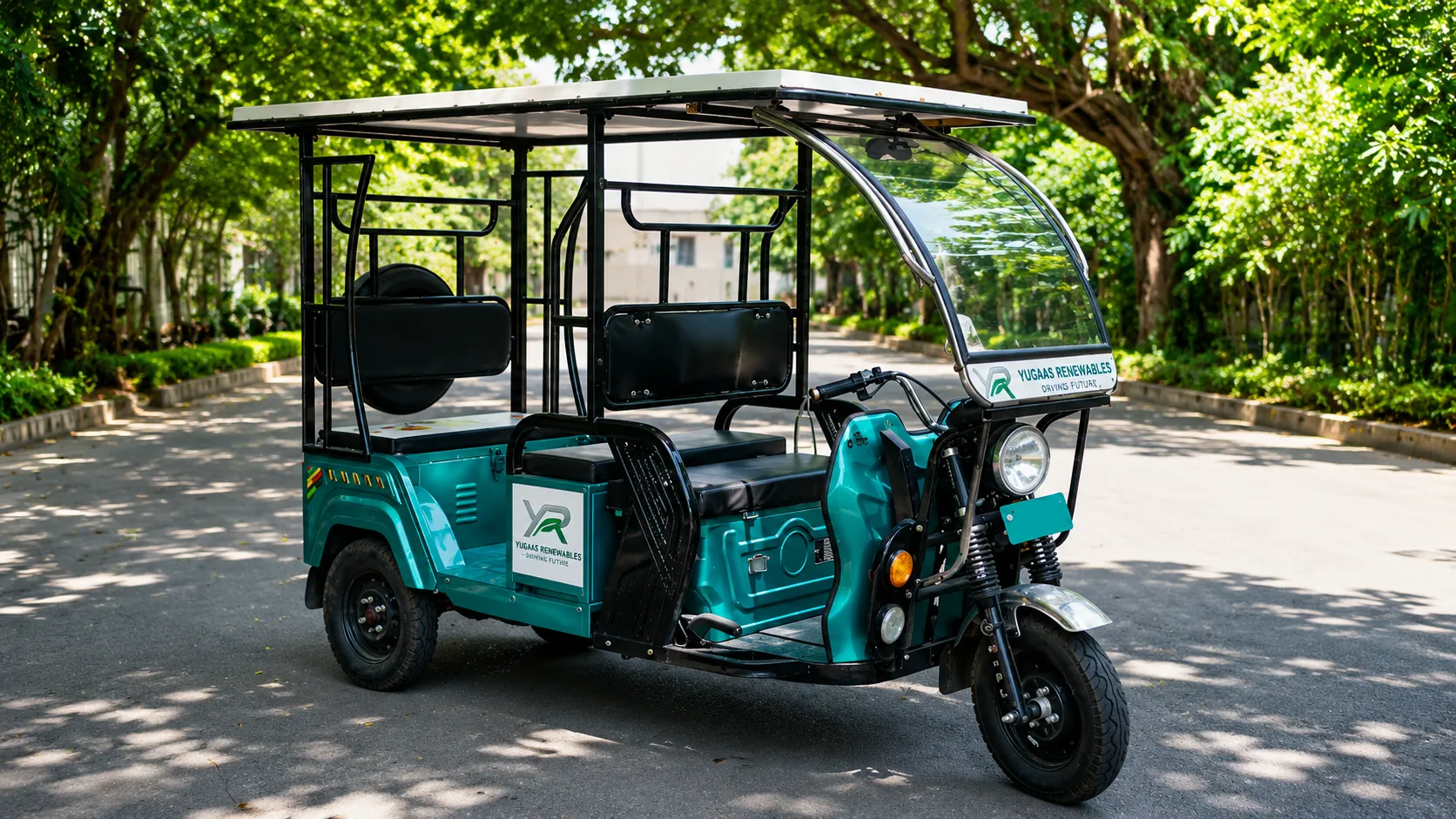
BikeWo Green Tech has partnered with Yubhas Renewables to pilot solar-assisted electric three-wheelers for rural and semi-urban mobility.

By Shaym Kumar · Author18 July 2026New
BikeWo Green Tech Partners With Yubhas Renewables to Pilot Solar-Assisted Electric Three-Wheelers for Rural India

India's push to extend clean mobility solutions beyond the country's well-served metropolitan markets and into its vast rural and semi-urban hinterland has gained a fresh data point, with BikeWo Green Tech Limited announcing a partnership with Yubhas Renewables Private Limited to begin operational validation of solar-assisted electric three-wheelers specifically engineered for rural and semi-urban last-mile mobility applications.

**What the partnership actually involves**

Under the terms of the collaboration, disclosed on July 17, 2026, BikeWo will leverage its existing rider network and operational expertise to field-test Yubhas Renewables' solar-assisted electric three-wheeler technology under genuine commercial operating conditions, ahead of the vehicle's planned wider market deployment. Rather than a purely laboratory or controlled-environment testing exercise, the pilot is explicitly structured to evaluate the vehicles under the kind of real-world commercial workloads and diverse operating conditions the vehicles would actually encounter if deployed at scale across India's rural transportation networks — a design choice that reflects a broader recognition within India's clean mobility sector that laboratory performance figures often diverge meaningfully from real-world operational outcomes, particularly for vehicles targeting the demanding, infrastructure-constrained conditions characteristic of rural and semi-urban India.
ChatGPT Image Jul 18, 2026, 11_34_25 AM.png

**The technical parameters under evaluation**

The pilot programme has been designed to assess a comprehensive range of performance parameters critical to the vehicle's eventual commercial viability. These include driving range under real-world load and terrain conditions, battery efficiency and degradation patterns over sustained use, payload capacity across the kinds of cargo and passenger applications relevant to rural last-mile mobility, ride quality and comfort, thermal performance — a particularly important consideration given the extreme temperature conditions many parts of rural India experience, especially relevant for solar-integrated vehicle systems where component heat management carries added engineering complexity — braking system performance, day-to-day operating economics, and overall mechanical reliability across the diverse operating conditions the vehicles will encounter across BikeWo's rider network. This comprehensive evaluation framework reflects the kind of rigorous, multi-dimensional testing protocol necessary before any new vehicle technology can credibly transition from pilot-stage validation to full commercial-scale deployment.

**Why solar-assisted propulsion matters for rural mobility specifically**

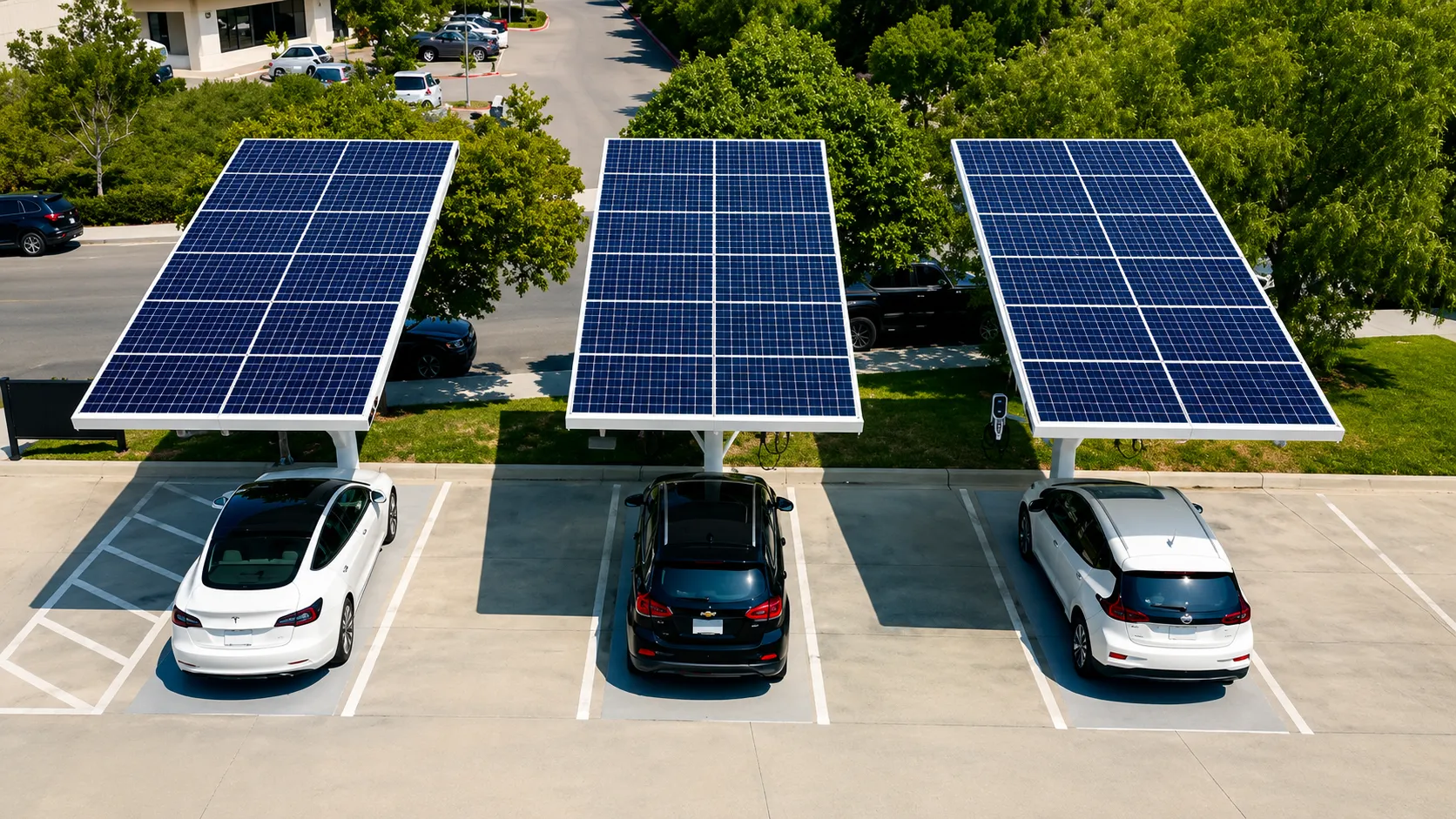
The specific choice to pursue solar-assisted, rather than purely grid-charged, electric propulsion for this rural mobility application reflects a deliberate engineering response to one of the most persistent infrastructure challenges facing electric vehicle adoption in rural India: the frequently unreliable or limited availability of consistent grid electricity and charging infrastructure across many rural and semi-urban areas, relative to the comparatively robust charging networks increasingly available in India's major metropolitan markets. A solar-assisted propulsion system, capable of supplementing or partially replacing conventional grid-based charging with onboard or auxiliary solar generation, offers a potentially compelling solution to this infrastructure gap, reducing — though not necessarily eliminating — the vehicle's dependency on consistent grid charging access, an especially valuable characteristic for a vehicle explicitly targeting rural markets where charging infrastructure investment has historically lagged behind urban centres.

**Leadership perspectives on the partnership's ambitions**

Commenting on the collaboration, Hiten Pal Saklani, Chief Executive Officer of BikeWo Green Tech Limited, framed the partnership within the company's broader strategic focus on continuously exploring innovative mobility solutions capable of improving operational efficiency while contributing to a more sustainable transportation future. Saklani specifically highlighted the opportunity the partnership provides to evaluate a promising clean mobility technology under genuine commercial operating conditions, while simultaneously exploring new avenues for rural entrepreneurship and livelihood generation — language that signals the partnership's ambitions extend beyond pure vehicle technology validation into a broader socioeconomic development dimension. Sai Satyam Pradhan, Founder and Chief Executive Officer of Yubhas Renewables, articulated a complementary vision centred on building what he described as a practical solar-assisted mobility platform specifically addressing the unique transportation needs of rural India — needs that, Pradhan implied, differ meaningfully from the urban and metro-focused design assumptions underlying much of India's broader electric vehicle development to date.

**The rural entrepreneurship dimension**

Beyond the core vehicle technology validation, the partnership carries a notably ambitious secondary objective: developing a broader rural entrepreneurship ecosystem built around the eventual commercial deployment of these solar-assisted vehicles. Both companies have indicated they are exploring initiatives to train rural youth across a range of relevant skills, including vehicle operations, maintenance, customer service, and broader business management capabilities, with the explicit goal of enabling trained individuals to become independent owner-operators generating sustainable livelihoods through vehicle operation, rather than merely serving as employees within a centrally operated fleet model. This owner-operator model, if successfully implemented at scale, could offer a meaningfully different economic development pathway compared to more centralised, fleet-owned electric mobility deployment models that have characterised much of urban India's electric three-wheeler and last-mile delivery vehicle expansion to date.

**Potential financing support through MUDRA**

Adding further substance to the rural entrepreneurship ambitions underlying this partnership, both companies have indicated the initiative may facilitate access to financing support through the Pradhan Mantri MUDRA Yojana, the government's flagship micro-finance scheme designed to provide affordable credit access to small and micro entrepreneurs who might otherwise struggle to secure conventional bank financing for vehicle purchase or small business capital needs. Access to MUDRA-scheme financing, subject to standard eligibility requirements and individual lender approval processes, could meaningfully lower the capital barrier facing prospective rural owner-operators looking to acquire one of these solar-assisted vehicles, potentially accelerating the pace of adoption beyond what would be achievable through cash-purchase-only or conventional commercial financing models alone.

**Envisioned use cases beyond passenger transport**

The companies have outlined a notably broad range of potential applications for the trained entrepreneur-operator model extending well beyond conventional passenger transportation, including agricultural logistics support, village-level goods delivery services, improved last-mile access to healthcare facilities in underserved rural areas, and other essential last-mile service applications where reliable, affordable local transportation infrastructure remains limited across much of rural India. This multi-use-case framing reflects a broader recognition within India's rural mobility and logistics sector that a single vehicle platform, deployed through a distributed owner-operator network, can address multiple distinct unmet transportation needs simultaneously, potentially offering considerably stronger unit economics for individual operators able to serve multiple use cases through a single vehicle investment, compared to a narrower, single-application-focused deployment model.

Our vision is to build a practical solar-assisted mobility platform that addresses the unique transportation needs of rural India.
The Impactful Global Indian Editorial Desk

**Positioning within India's broader rural EV push**

This partnership arrives amid a broader wave of policy and private sector attention directed at extending India's electric vehicle transition beyond its current urban-metro concentration into the country's much larger rural and semi-urban population base — a strategic priority given that rural and semi-urban India collectively represents the substantial majority of the country's population and, correspondingly, its total addressable transportation market. Government officials at various industry conclaves have separately urged component manufacturers to scale up manufacturing quality specifically to support this kind of rural EV expansion, while state governments including Haryana have pushed auto component firms to localise EV supply chains — broader policy signals that suggest partnerships like the BikeWo-Yubhas Renewables collaboration are likely to be just one of several similar rural-focused clean mobility pilots emerging across India's electric vehicle ecosystem over the coming months and years, as both established players and newer entrants race to capture the considerable, largely untapped opportunity presented by rural electric mobility adoption.

**BikeWo's broader positioning in India's EV landscape**

This partnership also needs to be understood within the context of BikeWo Green Tech's own broader corporate trajectory within India's electric vehicle ecosystem. Having previously built its business around electric two-wheeler manufacturing, distribution, and dealership expansion — including capital deployed toward funding electric two-wheeler inventory for dealer networks and establishing new dealership stores across multiple Indian states — the company's move into piloting solar-assisted electric three-wheelers alongside Yubhas Renewables represents a natural category extension, leveraging BikeWo's existing rider network, dealer relationships, and operational expertise in electric mobility to explore an adjacent vehicle category and, notably, an adjacent geographic market segment specifically targeting rural and semi-urban customers rather than the urban-centric customer base that has historically anchored much of India's organised electric two-wheeler retail activity.

**What success would look like for this pilot**

For a pilot programme of this nature, success is likely to be measured less by any single dramatic breakthrough and more by the steady accumulation of reliable operational data demonstrating that the solar-assisted three-wheeler platform can perform consistently and economically across the genuinely challenging range of conditions found across rural and semi-urban India — from extreme heat and dust exposure to inconsistent road quality and limited access to formal service and maintenance infrastructure relative to urban markets. Should the pilot demonstrate strong results across the key parameters under evaluation, the logical next step would involve scaling deployment across a broader geographic footprint and a larger cohort of trained owner-operators, potentially positioning both BikeWo and Yubhas Renewables as early movers in what could become a significant new category within India's broader electric mobility ecosystem — one specifically designed around the infrastructure realities and economic needs of rural India, rather than adapted from urban-first vehicle designs originally engineered for India's better-resourced metropolitan markets.

**Yubhas Renewables' broader clean-tech positioning**

Yubhas Renewables' involvement in this partnership reflects the company's broader stated mission of developing innovative solar-assisted electric mobility solutions specifically calibrated to India's rural and semi-urban markets, a niche positioning that distinguishes the company from the broader field of Indian EV manufacturers who have historically prioritised urban and metro market entry given the more established charging infrastructure and higher near-term purchasing power available in those markets. By deliberately targeting the comparatively underserved rural mobility segment from the outset, Yubhas Renewables appears to be pursuing a differentiated market entry strategy that avoids direct head-to-head competition with the numerous, well-capitalised electric two- and three-wheeler manufacturers already competing intensely within India's urban EV markets, instead betting that solving the specific infrastructure and affordability challenges facing rural mobility can unlock a large, currently underserved market opportunity with comparatively less direct competitive intensity, at least in the near term.

ChatGPT Image Jul 18, 2026, 11_37_38 AM.png

**Financing innovation as a critical enabler**

The explicit exploration of MUDRA scheme financing within this partnership underscores a broader truth about rural clean mobility adoption in India: technology alone is rarely sufficient to drive meaningful adoption without a correspondingly accessible financing pathway that matches the economic realities of prospective rural customers, who typically have more limited access to conventional formal credit channels than their urban counterparts. Pairing vehicle technology innovation with deliberate attention to financing accessibility — rather than treating financing as a secondary consideration to be addressed only after the core technology has been validated — reflects a increasingly common and arguably necessary approach among companies genuinely serious about achieving scaled adoption within India's rural markets, where affordability and financing access frequently represent the binding constraint on adoption more than pure technology performance or product-market fit considerations alone. If executed successfully, this integrated approach to technology validation, entrepreneurship training, and financing access could position the BikeWo-Yubhas Renewables partnership as a template other rural clean mobility ventures look to replicate as India's electric vehicle transition continues extending into previously underserved geographic and demographic segments of the country. For now, the partnership remains firmly in its validation phase, but the ambition it signals — clean mobility purpose-built for rural India, backed by a genuine entrepreneurship and financing pathway — reflects where much of the next chapter of India's EV story is likely to be written.

**A broader signal for India's climate-tech investment landscape**

Partnerships of this kind, blending vehicle technology validation with social impact objectives like rural entrepreneurship and livelihood generation, have increasingly caught the attention of India's growing climate-tech and impact investment community, which has shown rising interest in ventures that can demonstrate both environmental and social return alongside conventional commercial viability. Should the BikeWo-Yubhas Renewables pilot generate compelling early data, it could plausibly attract further investor interest specifically drawn to this dual environmental-and-social value proposition, potentially accelerating the pace at which both companies are able to scale their rural mobility ambitions beyond the current pilot phase. For an investment community increasingly attentive to measurable social and environmental outcomes alongside financial returns, a well-documented rural mobility pilot of this kind offers exactly the kind of tangible, verifiable impact narrative that has become central to climate-tech capital allocation decisions.

TagsBikeWo Green TechYubhas RenewablesSolar EVRural MobilityElectric Three WheelersClean MobilityEV IndiaSustainable Transport

Reader reviews

Sign in to rate and review this article.
Loading reviews…