The End of a 15-Year Founder-Led Era
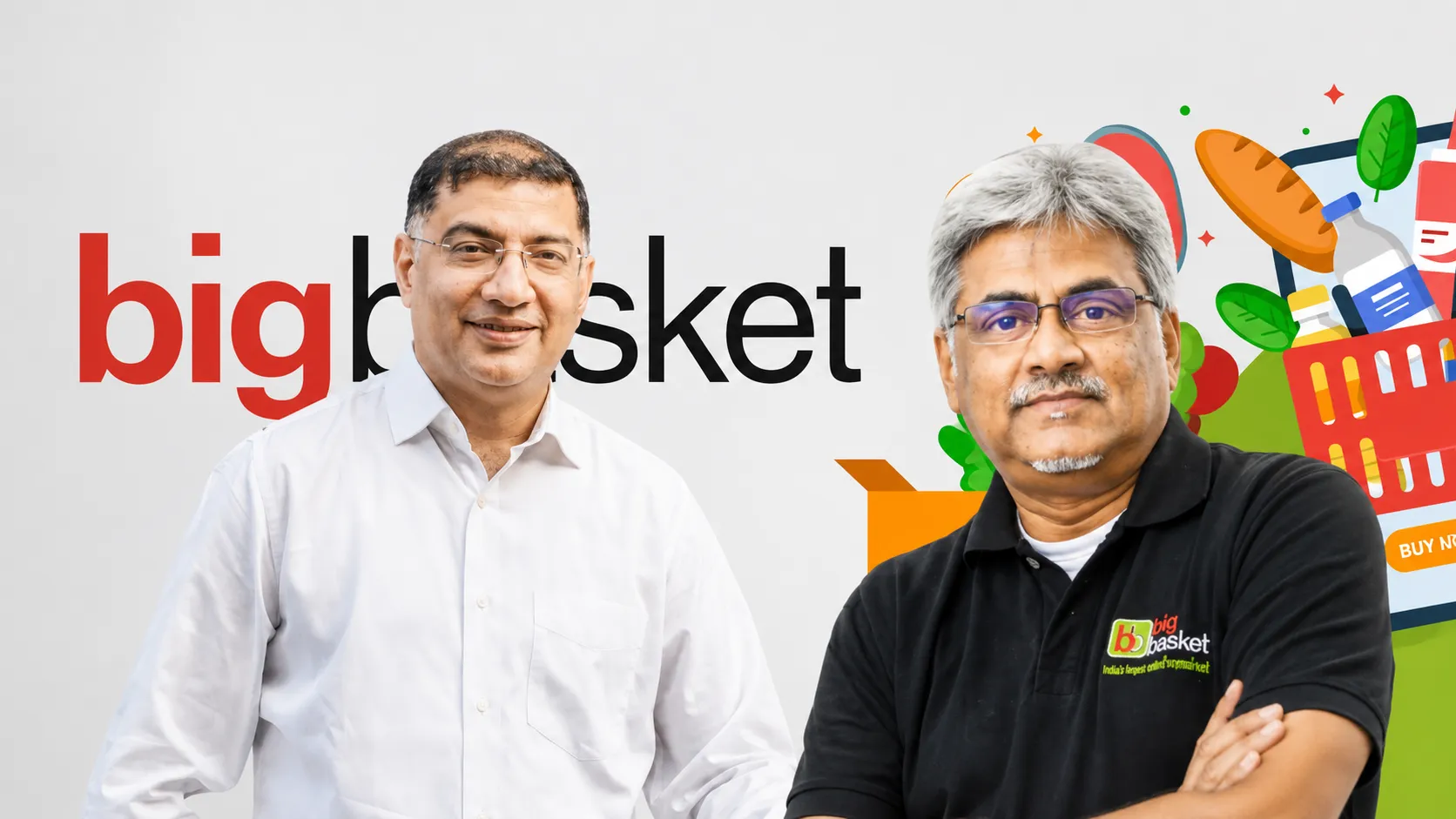
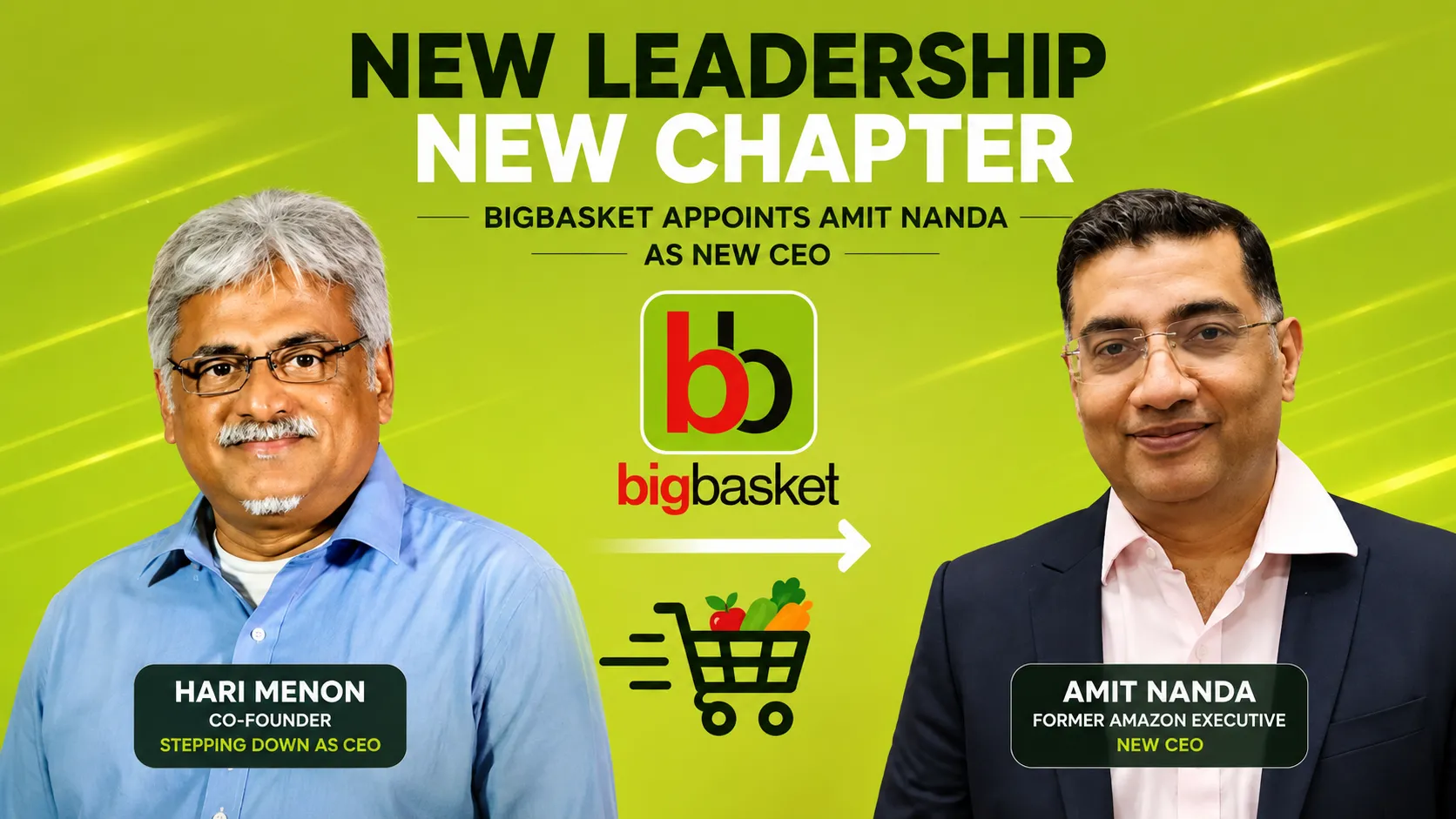
BigBasket co-founder Hari Menon has stepped down as chief executive officer, marking the end of a nearly 15-year run at the helm of India's largest online grocery platform . The Tata Group-owned company has appointed Amit Nanda, a former Amazon India executive with over 11 years at the e-commerce giant, as the new CEO .
Menon, along with co-founder Vipul Parekh, will continue to serve on the company's board and mentor the new leadership team . Menon turns 65 in November 2026, which would have triggered the Tata Group's mandatory retirement age .
The leadership transition comes at a time when BigBasket is fighting to defend its position in a market that has fundamentally changed. Once the undisputed leader in online grocery, the company is now battling rivals like Blinkit, Swiggy Instamart, Zepto, Flipkart Minutes, and Amazon Now in the fast-growing quick commerce segment, where speed, store density, and operational efficiency have become the key differentiators .
The Quick Commerce Pivot That Cost BigBasket Time
Menon's admission about the company's slow response to quick commerce is remarkably candid. "I was in complete denial mode at that point in time," he told the Times of India. "I kept saying, why would somebody need anything in 10 minutes? But if I give it to you in 10 minutes, you'll gladly take it" .
BigBasket initially focused on scheduled deliveries and was slow to adopt quick commerce because of concerns over its economics . By the time the company fully pivoted in August 2024, rivals had already established strong market positions .
The delay was compounded by BigBasket's decision to operate separate interfaces for scheduled grocery deliveries and quick commerce. Menon said, "We probably lost six months there. We should have gone straight to one quick commerce door" .
The impact of that delay is visible in the numbers. According to Tata Sons' FY25 annual report, BigBasket's B2C unit reported a 3% decline in turnover to ₹7,673 crore, while its B2B unit recorded a 7% fall to ₹2,227 crore . Losses at the B2C unit widened to ₹1,851 crore from ₹1,267 crore a year earlier .
Amit Nanda's Mandate: Profitability and Market Share
Nanda's appointment signals Tata Group's intent to strengthen execution as the company scales its quick commerce operations . The mandate is clear: arrest losses, strengthen BigBasket's position in the fast-growing quick commerce market, and improve margins .
Nanda brings more than two decades of experience across e-commerce, consumer goods, and technology. He most recently served as Director of Selling Partner Services at Amazon India, where he worked closely with sellers and marketplace operations .
Menon said Nanda's "deep understanding of consumers, strong track record of building and scaling businesses, and extensive experience across e-commerce and consumer sectors make him uniquely positioned to lead bigbasket for its journey ahead" .
Nanda himself acknowledged the challenge and the opportunity. "Combining BigBasket's customer-first values with the trusted legacy of the Tata Group creates a strong foundation for the future," he said in a statement. "I have deep admiration for the organization Hari and the team have built - particularly its powerhouse private labels" .
The Financial Pressure at the Top
BigBasket's performance has become a flashpoint in the wider governance battle at the top of the Tata Group . Tata Trusts chairman Noel Tata has raised questions over losses at BigBasket and other new ventures, linking them to Tata Sons chairman N Chandrasekaran's prospects for a third term .
Last month, Tata Digital CEO and BigBasket chairman Sajith Sivanandan presented a plan to the Tata Sons board to cut losses across the digital portfolio . Menon dismissed concerns that funding scrutiny could affect operations, saying, "I'm just ignoring all the noise. Frankly, it doesn't impact us operationally at all" .
Despite the challenges, BigBasket said it ended FY26 with around 60% revenue growth, underscoring continued momentum . The company currently operates more than 850 dark stores and plans to add around 250 more this year . Its rapid-delivery arm, BB Now, runs around 500 dark stores and fulfils roughly 450,000-500,000 orders a day .
What Menon Built: The Legacy
Menon's entrepreneurial journey began long before BigBasket. He and his co-founders launched Fabmart in 1999, when online shopping was virtually unheard of in India . The venture failed to gain traction, and they pivoted to a chain of physical grocery stores called Fabmall, which was eventually sold to the Aditya Birla Group in 2007 .
In 2011, with smartphones becoming common and internet connectivity improving, the founders returned to the idea and launched BigBasket . This time, the market was ready.
The company focused on four key metrics: fill rates, on-time delivery, in-stock availability and freshness. By 2014, it had achieved its targets across all four . Today, 93% of BigBasket's fruits and vegetables come directly from farmers, built through a network of 40,000 farmers and over 100 collection centres .
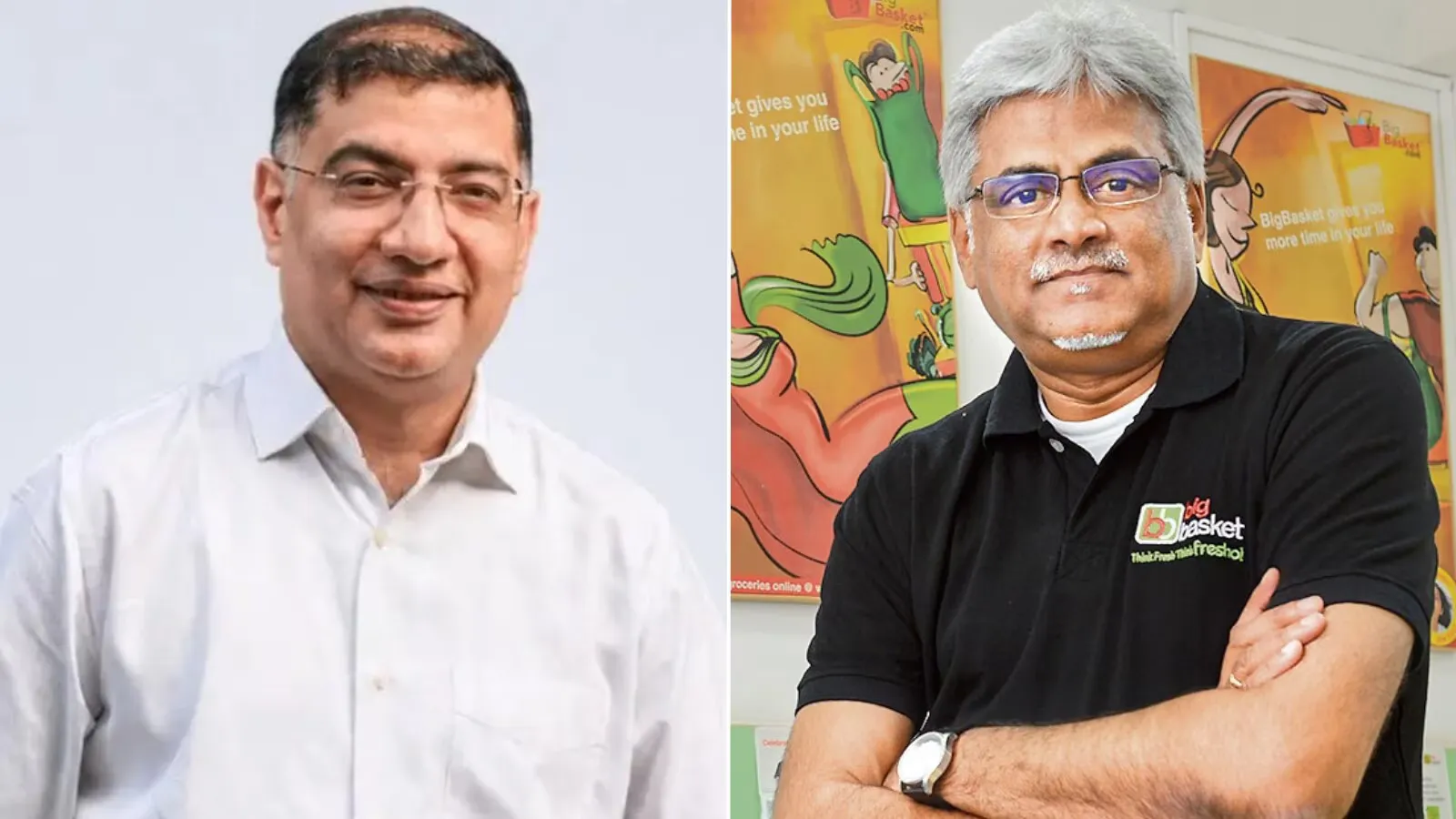
A former BigBasket CHRO once called Menon "a people person at heart and a true blue-blooded retailer professionally" . Unlike several startup founders who built businesses around technology alone, Menon focused on the complexities of inventory, supply chains, sourcing, and customer trust in a category where margins were thin .
The Road Ahead: Profitability First
When asked about his advice to the new leadership team, Menon told Financial Express that the fundamentals don't change . Customer trust remains the most important thing. Private labels, which contribute roughly 30% of revenue, are a major strength . The focus should be on scaling sustainably while preserving those strengths .
Menon's own assessment of the company's priorities is clear: "The most important objective is profitability. Scale is critical, but profitable growth is even more important. If we can sustain healthy growth while improving economics, we will be in a very strong position" .
As he steps away from day-to-day operations, Menon plans to spend time building something in the music space. "I already have a studio and I'm exploring ideas around that," he said . He will continue to support BigBasket from the board, describing it as his "baby" .
The bigger story is that the era of founder-led companies transitioning to professional management is accelerating in India's startup ecosystem. BigBasket is the latest—and one of the most significant—examples of this shift. In Menon's case, the founder who was ahead of his time in 1999 and right about online grocery long before most people believed in it found himself on the back foot during the industry's next major transition . The Tata Group is betting that an Amazon veteran can help the company catch up to the market that Menon helped create.