The $100 Million Signal
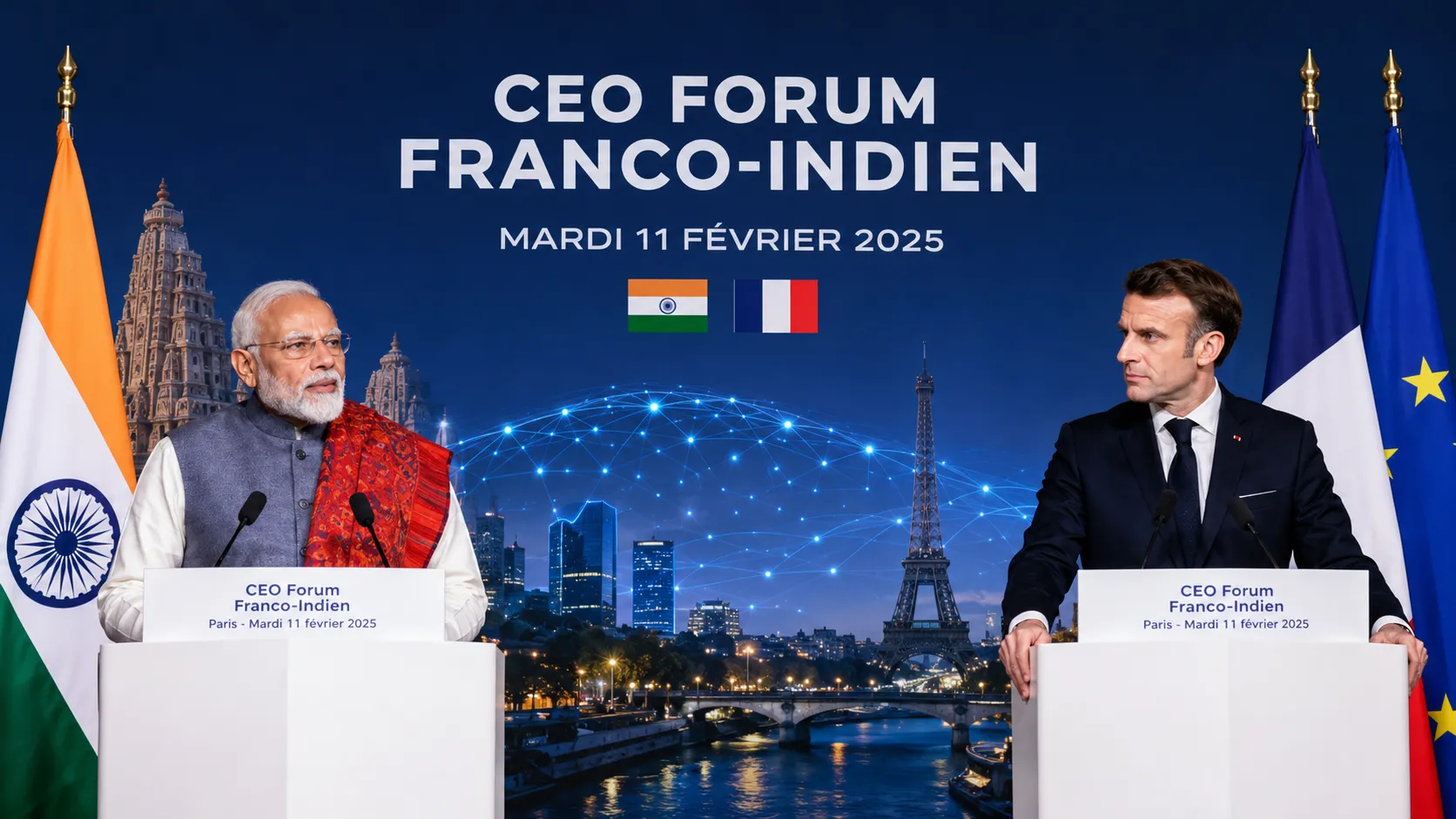
On June 14, 2026, Prime Minister Narendra Modi and French President Emmanuel Macron stood side by side at the Palais des Expositions in Nice, inaugurating the maiden edition of Bharat Innovates 2026 . The setting was deliberate. For the first time, India's premier innovation showcase was being held outside India, in the heart of Europe .
The three-day event brought together 120 Indian deep-tech startups, over 350 investors, and 500 global stakeholders, including CEOs, industry leaders, and venture capital firms . The message was unmistakable: India is no longer just a consumer of technology. It is a contributor of solutions .
By the end of the first day, more than 30 partnerships had been signed. Thirteen French universities signed agreements with 11 IITs and the Indian Institute of Science . IIT Madras and IITM Global alone exchanged nine MoUs worth nearly $100 million in expected value creation . These were not ceremonial agreements. They were commercial, actionable, and backed by serious financial commitments .
The Commercial Conversations That Replaced Curiosity
For Indian deep-tech founders, the shift in tone was palpable. Bhaktha Keshavachar, founder and CEO of Chara Technologies, told Moneycontrol: "The biggest takeaway for us is the interest and commitment from the government of India in putting this event together. We are seeing interest from customers and distributors for deployments in Europe" .
Srinath Ravichandran, co-founder and CEO of Agnikul Cosmos, noted that conversations with European stakeholders have become more substantive. "A few years ago, people were curious that an Indian company was building rockets. Now they are asking technical questions about engine architecture and launch frequency—the same questions they would ask a European or American company" .
The shift from curiosity to commercial engagement was a recurring theme. Founders reported that discussions had moved from awareness-building to customer introductions, market-entry conversations, and co-development opportunities . Having government backing added credibility when walking into conversations with large European players, opening doors that would otherwise take years to build independently .
The Defence Partnership: From Buyer to Co-Developer
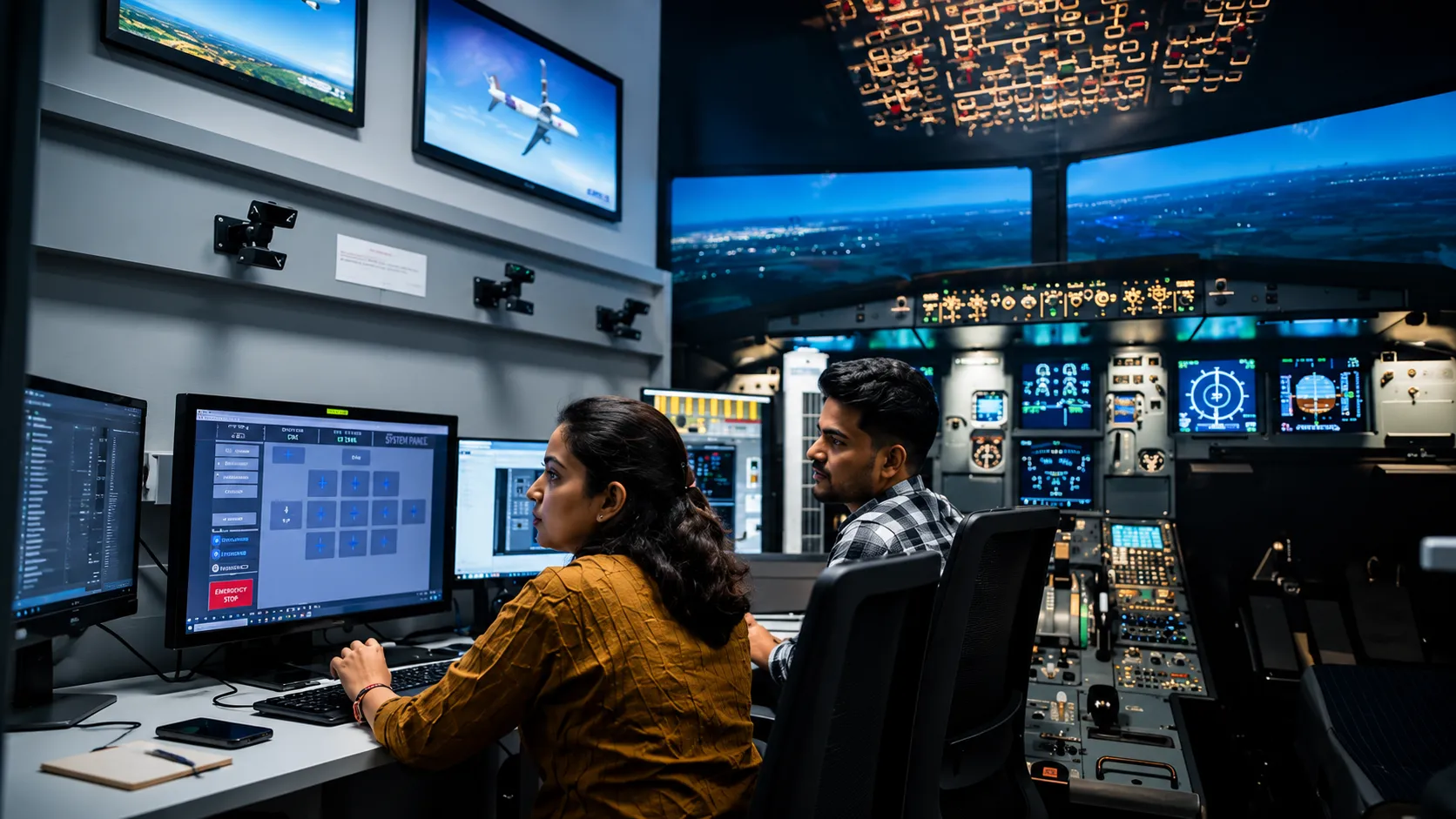
For decades, the India-France defence partnership was defined by iconic platforms such as Rafale fighter jets and Scorpene submarines—platforms procured, delivered, and operated . Bharat Innovates 2026 suggested that era is closing, and a different one is beginning, one centred on deep-tech collaboration, advanced manufacturing, and the technologies that will define future warfare .
The defence and dual-use companies at Nice came with products, IP, and in several cases, operational deployments. India's drone ecosystem—including ideaForge, Raphe mPhibr, BotLab Dynamics, and EndureAir Systems—addresses a gap that every NATO member is scrambling to fill after Ukraine demonstrated the asymmetric lethality of low-cost autonomous systems . India's UAV ecosystem, built largely without foreign dependency, produces platforms at price points and in operational conditions that Western manufacturers struggle to match .
The electro-optics and sensor companies, led by Tonbo Imaging, addressed a similar gap. Tonbo's thermal sights and precision seekers are already deployed on Indian platforms. The question in Nice was whether European defence integrators would treat them as suppliers, not just as interesting exhibits .
The Strategic Technologies That Matter
Perhaps the most strategically significant presence at Bharat Innovates was in semiconductors. AGNIT Semiconductors, India's first Gallium Nitride RF semiconductor company, builds end-to-end materials-to-modules integration for defence, space, and radar systems . Gallium nitride is the material that powers next-generation radar and electronic warfare systems. An Indian company with end-to-end GaN capability, displayed in front of Safran and Thales, is an offer of supply chain diversification at a moment when Europe is trying to reduce its semiconductor dependence on East Asia .
Quantum security was another frontier. QNu Labs demonstrated a hybrid quantum security system combining Quantum Key Distribution and post-quantum cryptography. Its CEO told ANI in Nice: "The world is in grave danger today, AI and quantum computers are going to break encryption, which underpins our digital economy" .
Space startups also made their mark. Digantara Industries builds space domain awareness platforms for defending orbital assets. GalaxEye develops multi-sensor satellite imagery for all-weather earth observation. Dhruva Space provides integrated satellite platforms and ground station services. OrbitAID Aerospace builds on-orbit satellite servicing and refuelling capability .
The Architecture Behind the Summit
The startup-level shift is mirrored at the platform level. India has issued a Letter of Request to France for 114 Rafale fighter jets valued at approximately Rs 3.25 lakh crore. But unlike the 2016 buy of 36 jets in flyaway condition, only 18 under the new MRFA programme will be sourced that way. The remaining 96 will be manufactured in India, with Tata Advanced Systems already building a fuselage production facility in Hyderabad .
The objective is the same as that seen at Bharat Innovates: moving India up the value chain from assembly and acquisition towards ownership of technology, manufacturing capability, and supply chains. Safran and India's Gas Turbine Research Establishment have formed a joint venture to co-develop a new engine for the AMCA Mk II stealth fighter, with significant technology sharing and IP arrangements with Indian partners .
The Real Test
The unresolved source code question will be the clearest measure of how far that acceptance goes. France has so far not agreed to transfer access to key elements of the Rafale's mission software, including the mission computer and electronic warfare architecture, limiting India's ability to independently integrate indigenous weapons . The real measure of the new India-France framework will not be counted in agreements signed in Nice, but in whether India gains the ability to design, modify, and eventually export technologies it has co-developed .
That question carries weight well beyond France. India has long sought to avoid dependence on any single defence supplier, a lesson made sharper by the operational constraints it faced with Russian equipment after 2022 . The companies that stood on the floor in Nice are the foundation of a different answer: one where India is not simply diversifying its import sources, but building the capability to need fewer imports altogether.
The Bottom Line
Bharat Innovates 2026 marked a turning point in India-France relations. For the first time, India arrived at a global technology summit not with a wish list but with leverage—IP, manufacturing capacity, and technologies that Europe needs. The 120 startups, 30 partnerships, and nearly $100 million in commercial deals are not the end of the story. They are the beginning of a deep-tech corridor that could reshape how India engages with the world.
As French President Emmanuel Macron remarked: "The question is no longer if India innovates, but who will innovate with India" . Bharat Innovates provided a clear answer: France intends to be that partner. And India is no longer waiting for permission to lead.