
The Questions That Valuations Cannot Answer
The standard vocabulary of the startup world — unicorn, decacorn, valuation, ARR, multiple, exit — is a vocabulary of financial abstraction. It is enormously useful for the specific purpose of allocating capital, tracking investment performance, and benchmarking companies against each other and against historical precedents. But it is almost entirely silent on the questions that matter most from a social and economic development perspective: Are these companies making people's lives measurably better? Are the benefits they generate distributed equitably? Are they building the capabilities that the broader economy needs to prosper? Are they changing, in any durable way, the conditions that shape ordinary people's opportunities?
India's 132 unicorns, valued collectively at over $350 billion, demand to be examined through both lenses — the financial lens that their investors appropriately apply and the social lens that a society invested in its own development must also apply. When both lenses are engaged simultaneously, the picture that emerges is more complicated, more interesting, and more consequential than either lens alone would produce.
The financial story is well-documented. The social story — the ways in which India's unicorns are shaping employment, infrastructure, policy, culture, and the next generation's expectations — is told less systematically but is, in many ways, more important.
Employment: The Hidden Scale
The employment impact of India's unicorn ecosystem is systematically underestimated in public discourse, which tends to focus on the direct employment numbers that companies report. Direct employment at unicorns — the engineers, product managers, designers, sales staff, operations teams, and support functions employed directly by the companies — numbers in the hundreds of thousands across the ecosystem.
But the indirect employment impact is larger by an order of magnitude. Consider Swiggy: the company directly employs tens of thousands of people, but the gig economy of delivery workers, the restaurant ecosystem it has created and sustained, the packaging suppliers it sources from, the logistics infrastructure it has built and that serves other clients, and the entire downstream service economy that has emerged to serve Swiggy's operations together employ many times the direct headcount. This pattern repeats across every unicorn that operates a marketplace, a platform, or a supply-chain-intensive business model.
The quality of the employment matters as much as the quantity. The jobs created within unicorn companies — particularly the technology and operations roles — are jobs that build transferable skills, that are connected to global compensation standards, and that offer career trajectories extending far beyond the originating company. An engineer who spends five years at Razorpay, building payment systems at scale, exits with capabilities that are genuinely scarce and globally valued. This is qualitatively different from the employment created by many traditional industrial investments, where skills may be more context-specific and less portable.
The regional distribution of unicorn employment is also evolving. While the earliest unicorns concentrated their hiring in Bengaluru and Mumbai, the maturing of the ecosystem has distributed employment across India. Remote work has extended the geographic reach of unicorn hiring further still — a Razorpay engineer based in Bhubaneswar is receiving Bengaluru-level compensation while contributing to the cost of living and the intellectual life of their home city. The aggregate effect is a redistribution of the productivity gains of the digital economy that older industry structures would never have produced.
Digital Infrastructure and the Policy Demonstration Effect
India's unicorns have been, in several important domains, ahead of government in demonstrating what is possible with digital infrastructure — and in doing so, they have shifted the government's understanding of what it should be building. This demonstration effect runs in both directions, and its consequences extend well beyond the specific companies involved.
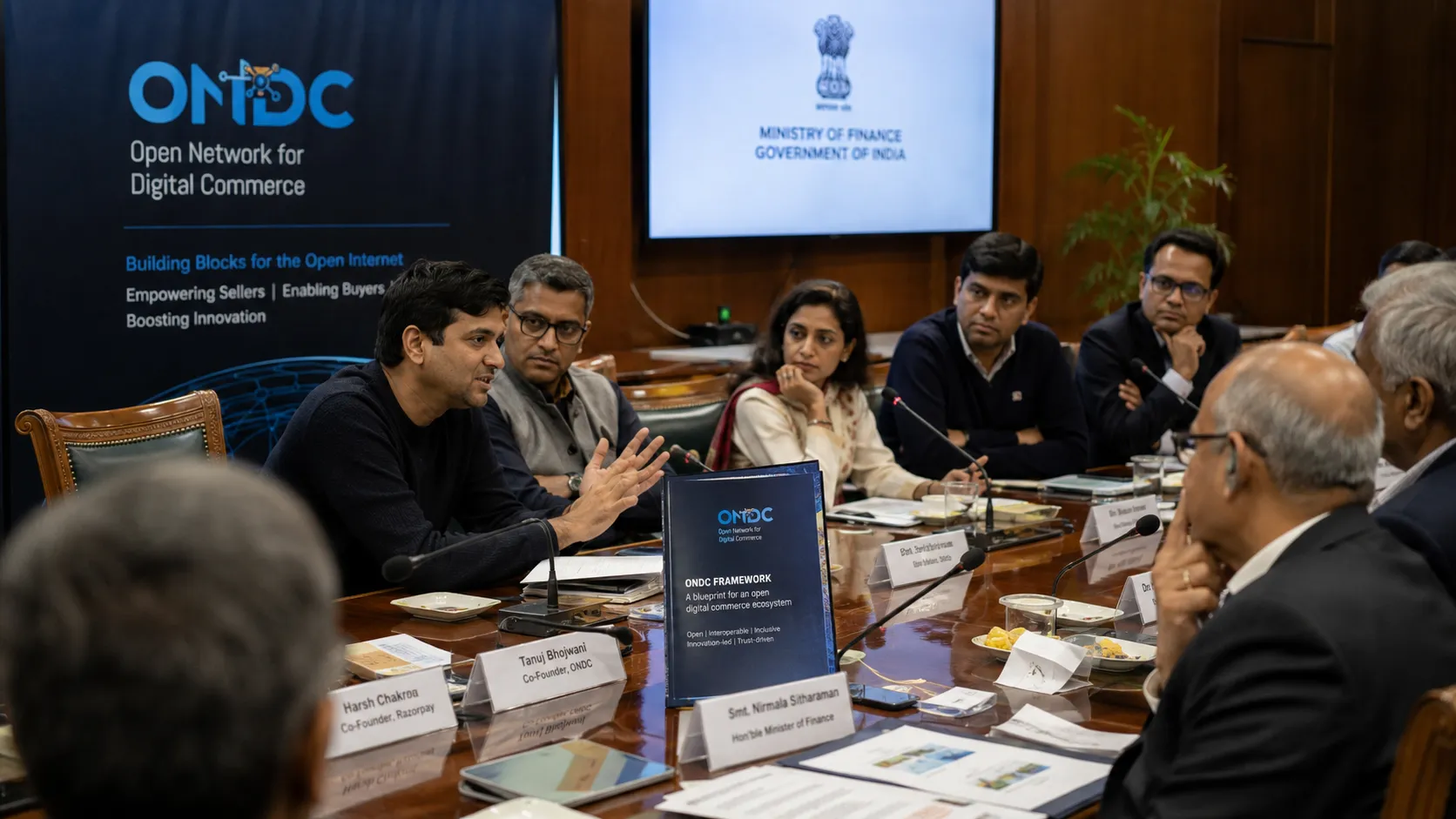
Razorpay's development of payment infrastructure that made it possible for any Indian business, however small, to accept digital payments online preceded the policy evolution that made UPI universal. But the commercial success of digital payment businesses demonstrated to policymakers that the infrastructure investment required to make digital payments universal would be rewarded by adoption — and that adoption would generate the data, the trust, and the behavioral change needed to support a more ambitious digital economy vision. The Account Aggregator framework, which allows individuals to share their financial data with entities of their choosing to unlock credit and other services, is partly a policy response to what fintech companies demonstrated was possible when financial data could be made accessible.
In healthcare, the success of telemedicine platforms — accelerated dramatically by the pandemic but sustained by genuine user preference for the convenience and accessibility of remote consultation — has shifted the policy conversation about how India's healthcare system should be structured. The National Health Stack and the Ayushman Bharat Digital Mission are building on a demonstrated foundation of consumer acceptance for digital health services that private sector innovation established.
In education, the success of edtech platforms during the pandemic demonstrated a level of consumer willingness to pay for digital learning that surprised policymakers who had assumed education would remain primarily a public sector domain. While the edtech correction of 2022-23 revealed that many platforms had overstated their sustainable market size, the underlying behavioral shift — the normalization of digital learning as a complement to or substitute for traditional classroom education — has proven durable.
The Next Generation's Expectations and Why They Matter
Perhaps the most consequential impact of India's unicorn ecosystem is the one that is most difficult to quantify and the most important to understand: the transformation of what a generation of young Indians expects from their professional lives and what they believe they can build.
The expected value of an engineering career in India, measured in the most expansive possible sense — not just income but autonomy, impact, social recognition, and the quality of the problems available to work on — has been transformed by the unicorn generation. Before Flipkart, the modal expectation for an IIT graduate was a career in corporate services, the public sector, or migration to the United States for graduate school and then a technology career. After Flipkart, and after the cascade of unicorns that followed it, the expected career space expanded dramatically: founding a startup became a mainstream aspiration rather than an eccentric one, and the social validation available to founders became comparable to what corporate careers offered.
This expectation shift has compound effects. Young people who expect to found companies study their founders' choices more carefully, develop their own entrepreneurial instincts more deliberately, and interpret their early career experiences through the lens of what they might do with the capabilities they are building. They are also more selective about the employment choices they make: companies that offer interesting problems, learning opportunities, and the cultural conditions that make the leap to founding easier will attract better talent than those that offer only compensation.
For The Impactful Global Indian, the next generation's expectations are the most important leading indicator of where Indian innovation is headed. When a generation of the country's best young people believes, deeply and specifically, that building a startup is one of the best things they can do with their time and talent, the innovation that results will be unlike anything India has produced before. The unicorns have built this belief. The economy and society that belief produces will be their most enduring legacy.