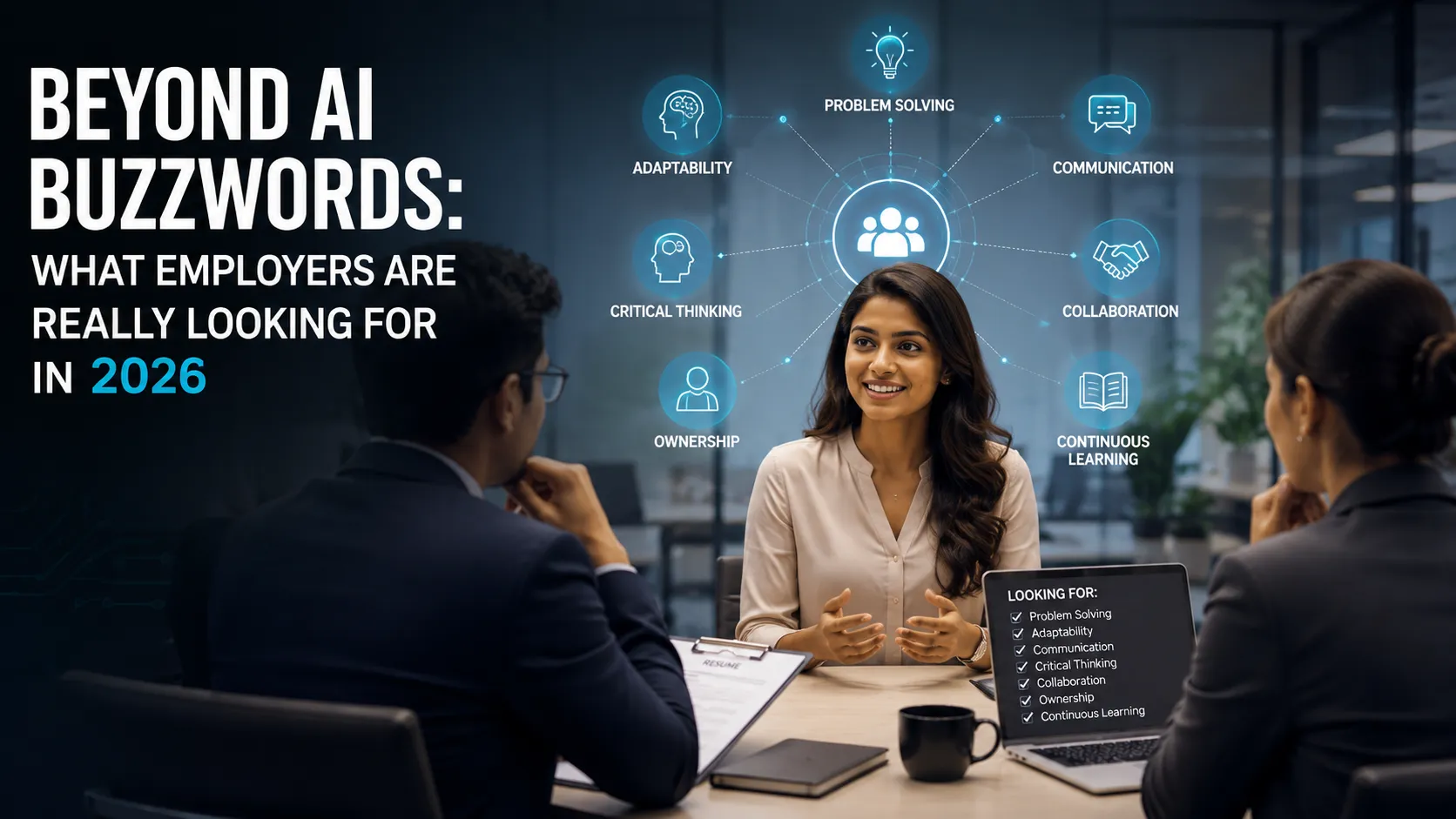
Artificial Intelligence May Be Reshaping The Workplace, But The Most In-Demand Professionals In 2026 Are Not Necessarily The Ones With The Most AI Certifications. Employers Are Increasingly Looking For Something Far More Practical: People Who Can Turn Technology Into Results.
Over the past two years, artificial intelligence has dominated nearly every conversation about the future of work.
Executives have discussed AI strategies in boardrooms, employees have rushed to learn new tools and educational platforms have launched thousands of courses promising to prepare professionals for an AI-driven economy. Job descriptions increasingly mention artificial intelligence, while LinkedIn profiles are rapidly filling with AI-related skills and certifications. In many industries, the pressure to appear AI-ready has become almost unavoidable. The result is a labor market saturated with AI terminology, where everyone seems eager to demonstrate familiarity with the latest technologies.
Yet employers are beginning to look beyond the buzzwords.
As organizations move from experimentation to implementation, hiring priorities are becoming more practical. Companies are discovering that knowing how to use an AI tool is very different from understanding how to create business value with it. Employers are increasingly less interested in whether candidates can talk about artificial intelligence and more interested in whether they can solve problems, improve processes and drive measurable outcomes. The distinction may seem subtle, but it is becoming one of the most important shifts shaping hiring decisions in 2026.
This evolution reflects the maturation of the AI economy.
The early phase of adoption rewarded curiosity and experimentation because businesses were still learning what artificial intelligence could do. The next phase is focused on execution. Organizations now want employees who can integrate AI into workflows, improve productivity and generate tangible results. Technical knowledge remains valuable, but it is no longer sufficient on its own. Companies increasingly seek professionals capable of combining technology with judgment, communication and business understanding.
The implication is clear.
The most attractive candidates in 2026 are not necessarily those with the longest list of AI tools on their resumes. They are the individuals who can demonstrate how those tools create meaningful impact.
Employers Want Problem Solvers, Not Prompt Collectors

One of the most significant hiring shifts involves how organizations evaluate AI skills.
During the initial wave of enthusiasm, simply knowing how to use generative AI tools often differentiated candidates. Today, that advantage is rapidly disappearing. AI platforms have become widely accessible, and basic proficiency is increasingly viewed as a standard expectation rather than a competitive edge. Employers assume many applicants understand prompting, content generation and common automation workflows.
What companies struggle to find are problem solvers.
Organizations want professionals who can identify inefficiencies, redesign processes and apply technology strategically. The value no longer lies in operating a tool. It lies in recognizing where the tool should be used and understanding when it should not. Employees capable of connecting technology to business objectives are becoming significantly more valuable than those who focus solely on technical functionality.
This shift mirrors previous technology cycles.
Knowing how to use spreadsheets did not automatically create business value. Understanding how to analyze data and make better decisions did. Artificial intelligence is following a similar trajectory. The technology itself is becoming increasingly accessible, making human judgment more important rather than less.
As a result, employers are evaluating outcomes rather than tool familiarity.
The question is no longer "Can you use AI?"
It is "What can you achieve with it?"
Human Skills Are Becoming More Valuable, Not Less
One of the biggest misconceptions surrounding artificial intelligence is the belief that technical capabilities will replace human skills.
In reality, many employers are moving in the opposite direction. As routine tasks become increasingly automated, qualities such as communication, creativity, leadership and critical thinking are becoming more important. Technology can generate information, but people remain responsible for interpreting that information and acting upon it effectively.
This is particularly evident in collaborative environments.
Modern workplaces require employees who can work across departments, explain complex ideas and build alignment around decisions. AI may assist with research, analysis and content creation, but organizations still depend on people to navigate ambiguity, manage relationships and lead teams. These responsibilities become even more important as technology increases the speed of decision-making.
Employers increasingly describe these capabilities as durable skills.
Unlike technical tools that evolve rapidly, human-centered abilities remain relevant across changing technologies and industries. Professionals who combine technical literacy with strong interpersonal capabilities often become more adaptable and resilient over time.
That combination is becoming one of the most sought-after profiles in the labor market.
Adaptability Has Become A Core Job Requirement
The pace of technological change is influencing hiring decisions in another important way.
Employers recognize that the tools used today may look very different a year from now. New AI platforms emerge constantly, existing systems evolve rapidly and workflows continue changing. In such an environment, hiring based solely on current technical knowledge becomes increasingly risky.
Adaptability is therefore becoming a critical competitive advantage.
Organizations want employees who can learn quickly, embrace change and continuously develop new skills. The ability to acquire knowledge often matters more than the knowledge itself. Candidates who demonstrate curiosity, flexibility and a willingness to experiment frequently stand out because they are better equipped to navigate future disruptions.
This trend is visible across industries.
Whether in marketing, finance, healthcare, software development or operations, employers increasingly prioritize learning agility. They understand that future success depends on teams capable of evolving alongside technology rather than resisting it.
In many ways, adaptability has become the defining workplace skill of the AI era.
Industry Knowledge Is Becoming More Important
Another emerging hiring trend involves domain expertise.
As AI tools become more powerful, organizations increasingly value professionals who understand specific industries and business contexts. Artificial intelligence can generate recommendations, but it often lacks the nuanced understanding required to apply those recommendations effectively. Human expertise remains essential for evaluating outputs and making informed decisions.
This creates opportunities for professionals across multiple sectors.
Healthcare organizations want people who understand medicine and can leverage AI responsibly. Financial institutions need employees who understand regulation and risk management. Manufacturing companies seek professionals who understand operational realities. In each case, industry knowledge becomes a powerful complement to technological capability.

The combination is particularly valuable because it is difficult to automate.
AI can process information, but contextual judgment often depends on experience and domain understanding. Employers increasingly recognize that technology delivers the greatest value when paired with deep subject-matter expertise.
The future workforce is therefore likely to reward specialization as much as technical literacy.
The Bigger Story
Viewed narrowly, hiring in 2026 appears heavily influenced by artificial intelligence.
Viewed more broadly, the labor market is undergoing a more nuanced transformation. Employers are not simply searching for AI experts. They are searching for individuals capable of applying technology effectively while maintaining the human skills necessary to drive business outcomes. Technical proficiency remains important, but it is increasingly being treated as one component of a broader professional toolkit rather than a standalone advantage.
This shift represents a natural evolution of technological adoption.
As AI becomes embedded in everyday workflows, familiarity with the technology becomes expected rather than exceptional. Competitive advantage moves elsewhere—to judgment, adaptability, communication and problem-solving. The professionals who thrive will likely be those who understand both technology and people.