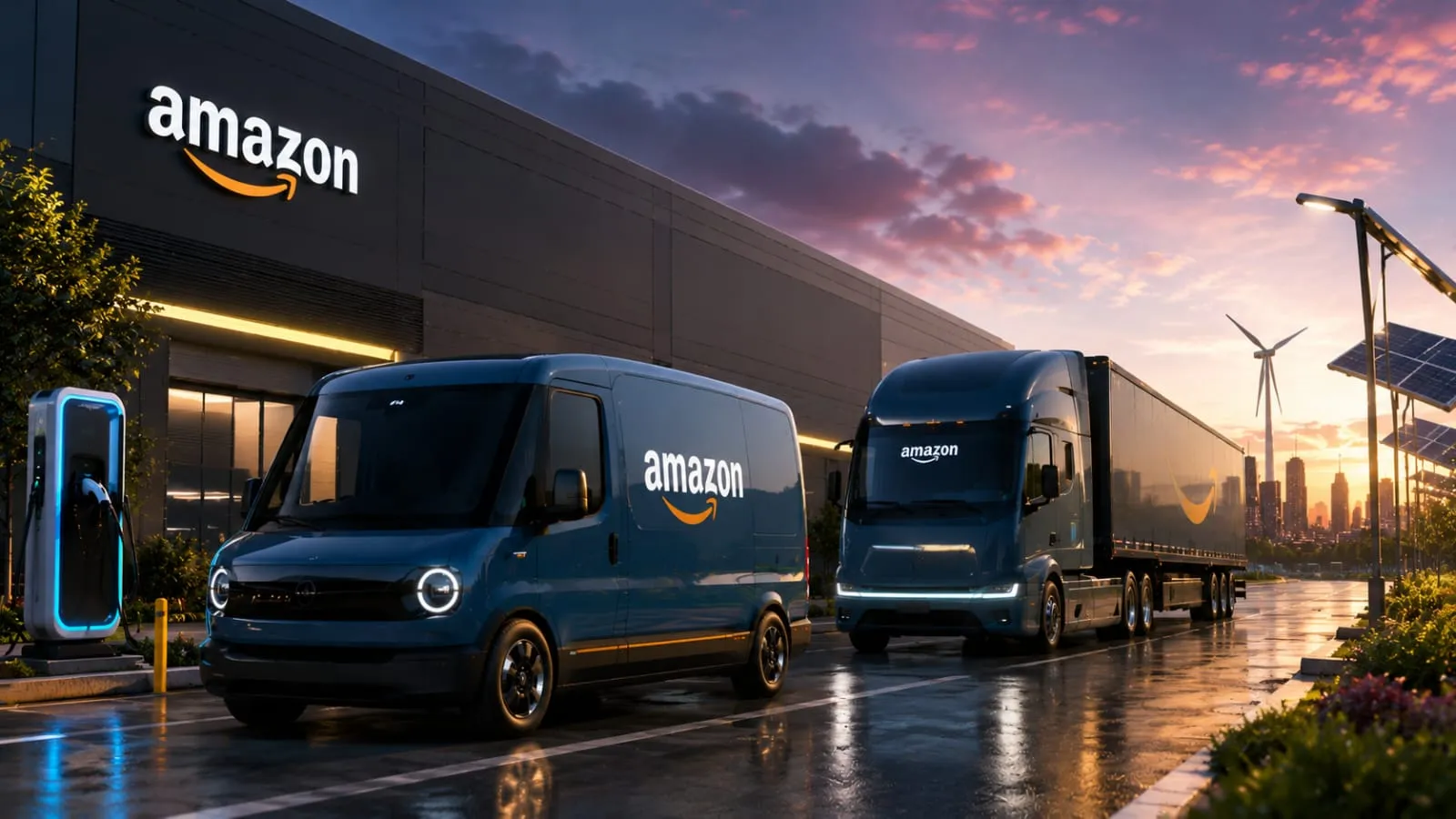
For decades, the movement of goods has been one of the largest contributors to transportation emissions.
Every online order, warehouse transfer and last-mile delivery depends on an enormous network of vehicles moving products between cities, states and countries. As e-commerce expanded, so did the environmental footprint of logistics. Millions of delivery vehicles now operate across global supply chains, making transportation one of the most important areas for companies seeking to reduce emissions.
Amazon believes the answer lies in electrification.The e-commerce giant has announced plans to deploy 100,000 electric delivery vans globally by 2030 while also expanding its electric transportation footprint in India with more than 1,000 electric trucks. While the headline numbers are impressive, the real significance of the announcement extends far beyond Amazon itself. It represents a glimpse into how the future of global logistics may evolve over the coming decade.The Scale Behind Amazon's Electric Ambition.Few companies move products at Amazon's scale.
Every day, millions of packages travel through its vast network of fulfillment centers, sorting hubs and delivery stations. Maintaining that network requires one of the world's largest transportation operations, including vans, trucks, aircraft and partner fleets.Replacing conventional vehicles across such a massive ecosystem is not a symbolic exercise. It is a large-scale industrial transformation.
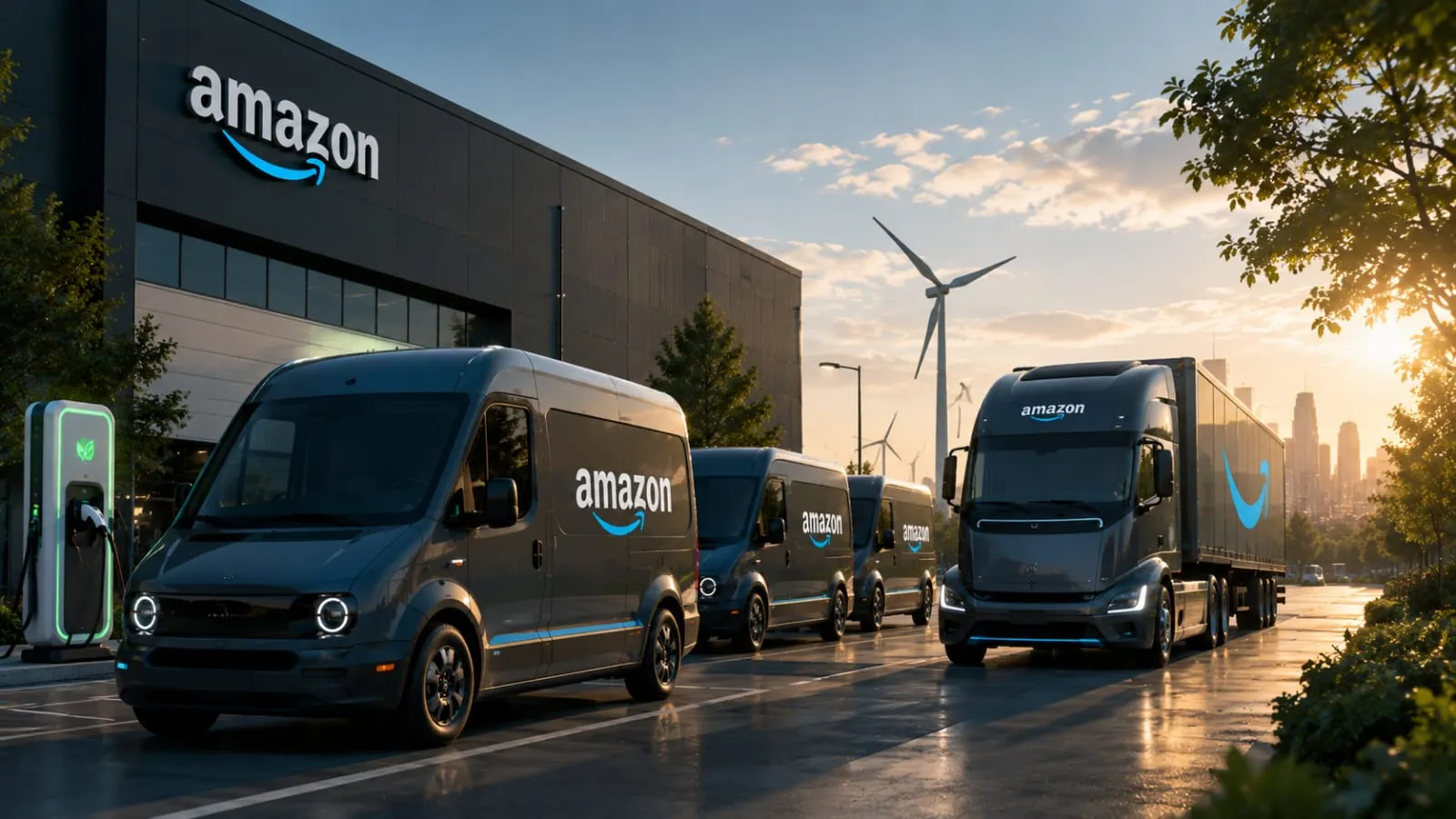
A fleet of 100,000 electric delivery vans would rank among the largest commercial EV deployments ever attempted. These vehicles are expected to handle last-mile deliveries, which represent one of the most visible and emissions-intensive parts of the logistics chain. By transitioning these operations to electric mobility, Amazon hopes to significantly reduce the carbon impact associated with package delivery.
The company's India plans are equally noteworthy. Deploying more than 1,000 electric trucks reflects a growing recognition that sustainability efforts cannot stop at small delivery vehicles. Heavy-duty transportation plays a crucial role in moving goods between warehouses and urban centers, making truck electrification a critical part of the larger puzzle.
Why India Has Become A Key Market
India is rapidly emerging as one of the most important battlegrounds for electric mobility.
The country has one of the world's fastest-growing e-commerce sectors, with millions of new consumers entering the digital economy every year. As online shopping volumes increase, logistics networks must expand alongside them.
That growth presents both opportunities and challenges.
Traditional transportation systems rely heavily on diesel-powered vehicles, which contribute significantly to emissions and air pollution. For companies operating at scale, transitioning to electric fleets offers a way to support growth while addressing environmental concerns.
Amazon's decision to deploy over 1,000 electric trucks in India highlights the country's strategic importance within its global operations. It also aligns with broader efforts by policymakers and industry leaders to accelerate EV adoption across commercial transportation.Unlike passenger vehicles, commercial fleets often travel predictable routes and return to designated hubs, making them particularly well suited for electrification. As charging infrastructure improves and battery technology advances, logistics companies are increasingly viewing electric transportation as a practical business decision rather than merely an environmental initiative.
The Economics Of Going Electric While sustainability is often the headline, economics may ultimately drive adoption.Electric vehicles typically require lower maintenance than internal combustion engine vehicles because they contain fewer moving parts. Fuel costs can also be significantly lower when electricity replaces diesel or gasoline.
For a company operating thousands of vehicles, even modest savings per vehicle can translate into substantial financial benefits over time.
As battery prices continue to decline and charging networks expand, electric fleets are becoming increasingly competitive from a cost perspective. Companies that successfully transition early may gain operational advantages while reducing long-term exposure to fluctuating fuel prices.This is one reason why electrification is attracting attention across the logistics industry. What initially began as a sustainability initiative is increasingly becoming part of broader business strategy.Amazon's investment reflects growing confidence that electric transportation can support both environmental goals and operational efficiency.
A Signal To The Entire Logistics Industry.Large corporations often influence industry trends far beyond their own operations.
When a company with Amazon's scale commits to deploying tens of thousands of electric vehicles, suppliers, manufacturers, infrastructure providers and competitors pay attention.Vehicle manufacturers receive stronger demand signals. Charging infrastructure companies gain confidence to invest. Fleet operators begin evaluating similar transitions. Policymakers see evidence that commercial electrification is becoming economically viable.In this sense, Amazon's announcement acts as a catalyst.
The move may encourage other logistics providers to accelerate their own sustainability plans. Competitors seeking efficiency gains and environmental credibility may find it increasingly difficult to ignore electric transportation as adoption scales across the industry.The ripple effects could extend throughout the broader supply chain ecosystem.The Infrastructure Challenge Still Remains
Despite the momentum, significant challenges remain.
Building an electric fleet at this scale requires extensive charging infrastructure, careful route planning and reliable power availability. Fleet operators must coordinate vehicle deployment, charging schedules and maintenance systems while ensuring that delivery performance remains unaffected.India presents unique opportunities but also unique complexities.Urban congestion, diverse delivery routes and varying infrastructure readiness mean that large-scale electrification requires thoughtful execution. Success will depend not only on vehicle availability but also on investments in charging networks and supporting technologies.However, the pace of innovation across the EV ecosystem suggests these challenges are becoming increasingly manageable. Battery performance continues to improve, charging times are falling and governments are introducing policies designed to encourage cleaner transportation.More Than A Sustainability Story.It is tempting to view Amazon's electric vehicle push purely through the lens of environmental responsibility.
But the bigger story is about how commerce itself is changing.
The future of logistics will likely be shaped by automation, artificial intelligence, advanced supply chains and electrified transportation working together. Companies are no longer simply moving products from one location to another. They are redesigning entire delivery networks around efficiency, resilience and sustainability.Amazon's plan to deploy 100,000 electric delivery vans globally and more than 1,000 electric trucks in India represents a major step in that transformation.The vehicles themselves matter. But what matters even more is what they symbolize: a future where clean transportation becomes a standard part of global commerce rather than a niche experiment.As e-commerce continues expanding and sustainability becomes a business necessity rather than a marketing advantage, the companies that master electrified logistics may define the next era of global trade.